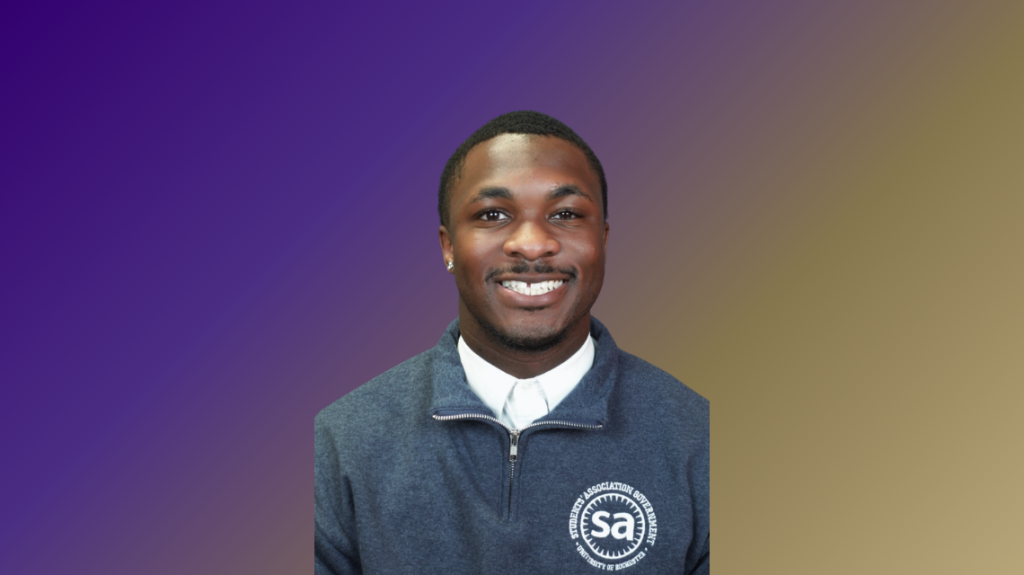
By: Sammy Randle
My experience with the NextGen Summer Policy Academy (SPA) was one of the most meaningful parts of my college experience because it gave me a chance to learn about public policy in a way I hadn’t been able to before. At the University of Rochester, I have taken courses that have helped me understand government, inequality, and how institutions affect people’s lives. However, there are not many courses focused specifically on public policy. SPA helped fill that gap by giving me direct experience with policy, public service, and the process of creating solutions to real problems.
The program started in Washington, D.C., where I attended workshops, panels, and networking events with professionals from government, nonprofit organizations, and the private sector. Hearing from people working in different parts of public service helped me understand that there are many different ways to build a career in policy. It also gave me a better idea of how government, nonprofits, and private organizations can work together to address public problems. The networking opportunities were especially valuable because they allowed me to ask questions, hear about different career paths, and learn from people already doing the work.
After Washington, D.C., I spent two weeks in Seattle at the Evans School of Public Policy and Governance. This part of the program was especially meaningful because I learned in a school where public policy and public service are the main focus. Since I do not have many opportunities to take policy-specific courses at my own university, being at the Evans School allowed me to see what studying public policy at the graduate level could look like. At the Evans School, we discussed issues such as food insecurity, housing insecurity, and access to resources. These conversations helped me understand how connected public problems are. For example, someone facing housing insecurity may also struggle with access to food, transportation, health care, or education. I learned that understanding a problem is only the first step. Public policy also requires thinking about what can realistically be done, what barriers may exist, and whether a solution can actually work for the people it is meant to help.
Another important part of the program was the group of students I learned alongside. Students came from different universities, parts of the country, backgrounds, and areas of interest. Everyone brought something different to the conversations. Hearing so many perspectives made the program stronger because people often raised ideas or concerns that I had not thought about before.
Being around people with different experiences also helped me become a better listener. SPA showed me that public service is not about walking into a room believing you already have the answer. It requires asking questions and being willing to listen to people who may see an issue differently. There were times when another student shared a perspective that changed the way I thought about a problem. That taught me how important it is to have different voices involved when policies are being created. The relationships and connections I built throughout the program were also a major part of the experience. I met students interested in education, government, nonprofit work, research, and many other areas of public service. Even though our interests were different, we all shared a desire to make an impact. I hope the relationships built during SPA continue in the future. I can see many of us sharing ideas, supporting one another, and possibly working together later in our careers.
Overall, the program gave me much more than information about public policy. It gave me the opportunity to practice thinking like a policymaker, learn from professionals in different sectors, use new policy tools, and learn from students with different experiences. The time in Washington, D.C., the experience at the Evans School, and the relationships I built made public policy feel more real and possible for me. Most importantly, SPA gave me the exposure I had been looking for and helped me feel more prepared to continue toward a career in public service and policy.