Skip to content

Reducing Child Marriage Through Community Intervention

An empty classroom with wooden desks and a blackboard

Evans faculty Isabelle Cohen co-authored an article in the journal Nature that looks at how a northern Nigerian program is helping to dramatically reduce child marriage rates. “Pathways to Choice” is a woman and Nigerian-led program run by the Centre for Girls Education that uses a range of community approaches to support girls schooling. By working with engaged community and religious leaders, the Pathways program provides girls with safe-space groups, remedial education, and help reenrolling in school or vocation training.

Isabelle brought her background as an economist with nearly fifteen years’ experience working in developing countries to figure out how best to conduct quality research and evaluate the program’s impact. The research team surveyed 1,181 unmarried girls between 12 and 17 years-old across 18 communities before half of communities were randomized into the program in 2018, then surveyed the same girls again after the program had ended in 2020. They found that 79% of girls in communities that participated in the program remained unmarried, compared with only 13.8% in communities who did not.

Isabelle and her colleagues concluded that the Pathways program increased the perceived value of girls’ education and reduced the stigma of delaying marriage. With more than 12 million girls marrying before the age of 18 every year, leading to less schooling and autonomy and greater health risks around childbirth, the results from the Pathways program offer promising solutions.

Currently, variations of Pathways are being tested in 40 communities in Kaduna State in Nigeria to further inform cost-efficient scale. The Centre for Girls Education is partnering with CARE to adapt the program in neighboring Niger. Both projects are funded by the Gates Foundation.

Read the Policy Brief

Summer Policy Academy 2026

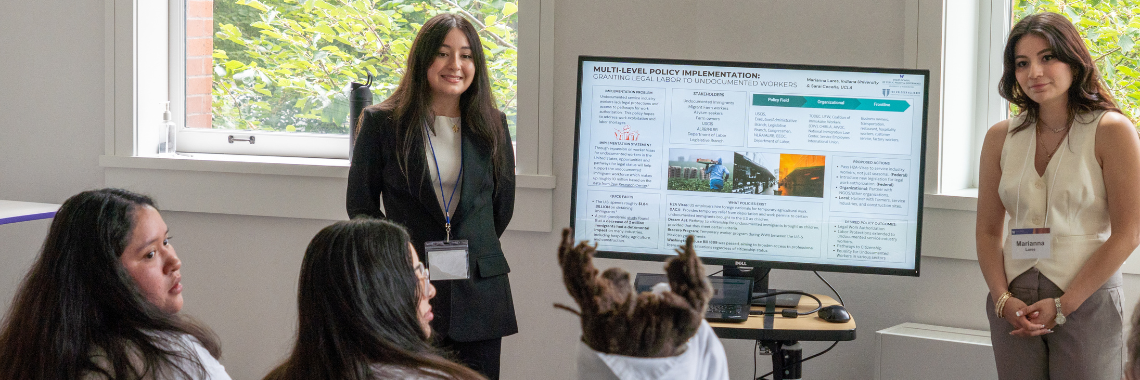
Two NextGen SPA students stand next to a screen with their presenation

Launch Pad for the Next Generation of Leaders

We are proud to welcome cohort for the 2026 Summer Policy Academy—a dynamic group of emerging change makers, aspiring public service practitioners, and future leaders committed to shaping thoughtful, impactful public service and policy fields.

After a highly competitive selection process, these individuals stood out not only for their academic excellence, but for their curiosity, leadership, and dedication to addressing complex societal challenges. Their diverse perspectives and experiences will enrich this year’s Academy as we explore pressing policy issues, engage with leading experts, and develop innovative solutions for the public good.

The Summer Policy Academy continues to serve as a launchpad for the next generation of public service leaders, equipping participants with the tools, networks, and insights needed to drive meaningful change.

To our 2026 cohort: congratulations on this well-deserved achievement. We look forward to the ideas you will spark, the conversations you will lead, and the impact you will make.

Let the journey begin!

2026 NextGen Summer Policy Academy Students

Aaron Tolberd

Abigail Wells

Alejandro Schmidt

Alexander Aviña

Alicia Harris

Anh Thu Nguyen

Araceli Lopez Ayala Vanover

Brian Kum

Brianna Jackson

Chantel Chestnutt

David Nguyen

Deissy Mendez

Dwight Brown II

Gabriel Axon

Graciela Lora

Hannia Hernandez-Mendoza

Jocelyn Trinidad

Joseph Bashore

Kevin Ji

Madison Rainwater

Maya Moultrie

Sammy Randle III

Sanay Tufekci

Sara Castiblanco

Sebastian Vera Cuevas

Tamika Gomez-Rojas

Year One of Our Public Service & Policy Major

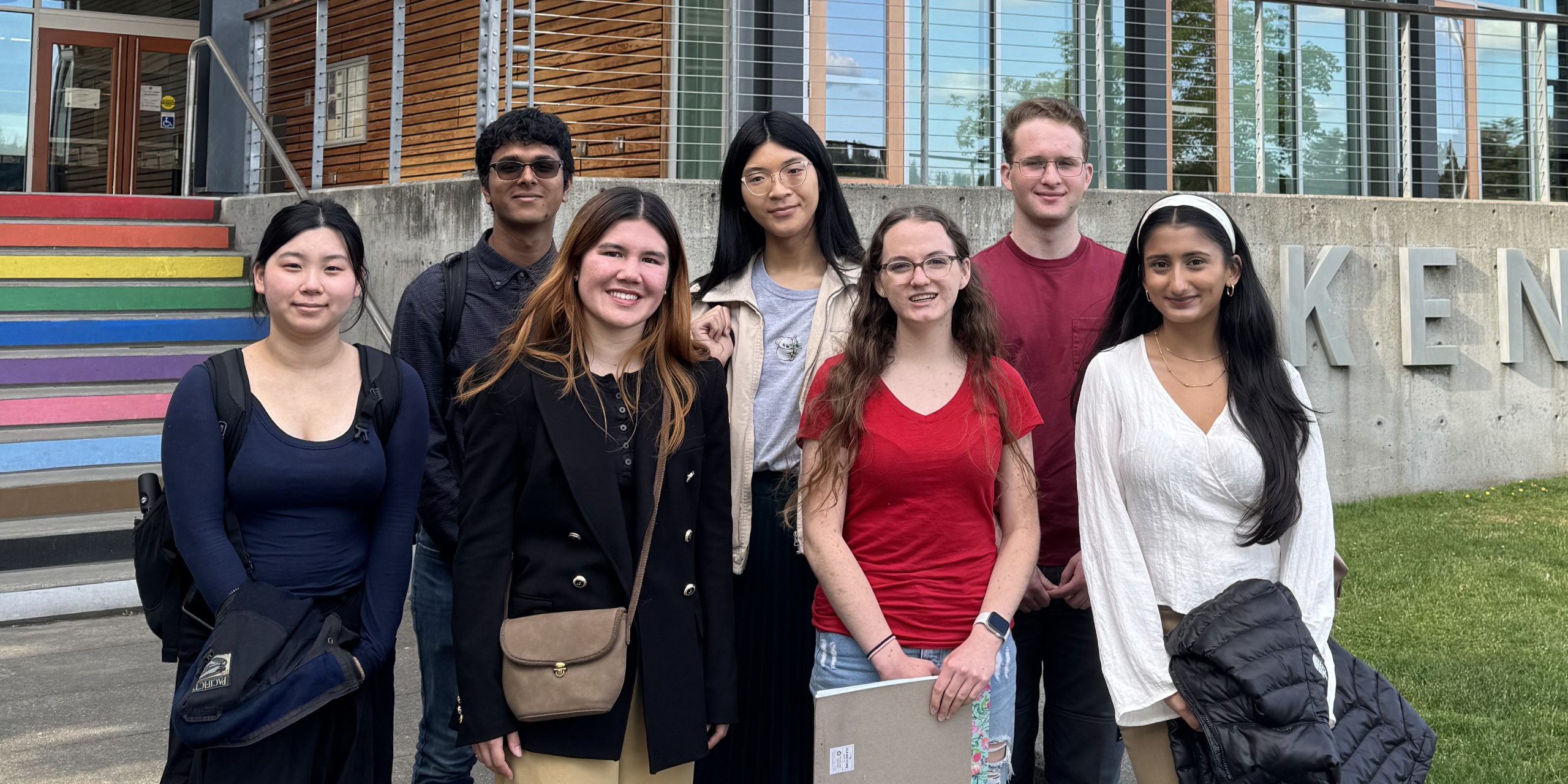
A group of students pose in front of a building with rainbow painted steps and the words "Kenmore City Hall" visible in the background

A Look at the First Full Year of Our Undergraduate Major

By Rachel Fyall, Associate Professor, Undergraduate Program Director

Happy Spring! I am now three months into my role as the Evans School’s Undergraduate Program Director. While we have offered a minor since 2019, the 2025-2026 academic year is the first full year of our undergraduate major. With new students declaring a Public Service and Policy (PSP) major each quarter, our current roster includes 61 undergraduate students in the major and more than 1,100 seats filled in our undergraduate PUBPOL courses by the end of the academic year. It is a joy to witness our undergraduate students become part of the fabric of Evans School life.

As the major grows, we have the opportunity to offer an increasing array of undergraduate courses. Our gateway course, Introduction to Public Policy & Governance, is now offered every quarter (including asynchronously over the summer). Mid-level courses range from the fundamentals of policy research and implementation to more specialized topics like Designing Equity in Health Policy. Upper-level students further hone their practical skills through more intimate courses focused on leadership, ethics, and negotiation. The diverse course offerings allow undergraduates to learn from both full-time Evans faculty and talented community instructors, who bring their practitioner lens to the classroom experience.

In June, our first six PSP undergraduate majors will participate in the Evans School’s Convocation Ceremony. This team of students is incredible, and a good representation of what we hope to encourage among our undergraduate cohorts: All six students are double-majors – ranging from Education to Public Health to Mathematics – showcasing the range of topics that a PSP major can complement. One of our graduating seniors will continue her public policy and leadership journey by enrolling in the Evans School MPA program!

As a culmination of their undergraduate studies, the graduating students recently completed a quarter-long intensive Policy Lab course, partnering with the City of Kenmore’s Deputy City Manager to develop an analysis of the city’s automated traffic ticketing system. The students presented their findings and recommendations at Kenmore City Hall in early March. The students found the Policy Lab experience especially meaningful because of the opportunity to connect with public service professionals, spend time in court, and experience firsthand the reality and challenges of working with government administrative data. They also valued working on a project with real-world implications.

Students are also making public service and policy connections outside of the classroom. During a recent evening at the HUB, the Evans School co-sponsored the Networks for Change event with the Department of Political Science. Policy experts – including Evans alum Jesse Warren, MPA ‘20, from King County – were matched with small groups of students around roundtables to talk about how to address collective and pressing issues together. Event participants came away with renewed energy for the work of government and governance.

We look forward to continued opportunities to develop our undergraduate offerings and experiences alongside the rest of the Evans community!

Learn More About the Public Service & Policy Major

Dean’s Forum: Learning from the Past

Dean's Forum Logo

How Immigration Policy Affects Communities

On February 26, 2026, Dean Jodi Sandfort hosted a conversation with panelists Dafeng Xu (Evans School) and Catherine Clement about the past efforts to curb immigration in North America and how those policies impacted communities, families, labor markets, and social relations. 

Event Speakers

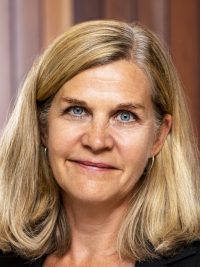
Dean Jodi Sandfort

Jodi Sandfort

Dean and Professor

Daniel J. Evans School of Public Policy & Governance

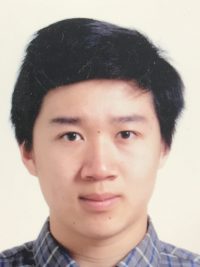
Dafeng Xu

Dafeng Xu

Assistant Professor

Daniel J. Evans School of Public Policy & Governance

Catherine Clement

Catherine Clement

Public Historian

Creator, Curator, Author of “The Paper Trail to the 1923 Chinese Exclusion Act”

Event Recording

Cohort 9 – Welcome to the Program!

We are thrilled to announce the 35 incoming fellows of Cohort 9 who are joining the IPPHL community! Selected from a record applicant pool of nearly 1200, this year’s cohort represents 20 countries in Africa, bringing expert perspectives from a wide range of programmatic areas at the country, state/province/regional, and local levels of public health leadership.

Beginning with Orientation, fellows will dive into fast-paced and rigorous public policy and leadership programming, complete hands-on experiential work with individual projects, and engage in rich discussions and learning opportunities with cohort peers, alums, and program partners.

Welcome, Cohort 9! We look forward to working with you and learning from you over the coming months.

Missed Opportunities: How Provider-Centric Data Systems Undermine Mothers in Kangaroo Mother Care

We are proud to share that Dr. Desalegn Tegabu Zegeye, Dr. Selorm Kutsoati, Dr. Wesley Oghera, and Dr. Ikrama Hassan, represented IPPHL at the GLOBEHEAL 2026 conference in Bali, Indonesia, delivering an impactful oral presentation during the session on Maternal, Child and Adolescent Health.

Their presentation, titled “Missed Opportunities: How Provider-Centric Data Systems Undermine Mothers in Kangaroo Mother Care” shared findings from Ethiopia, Kenya, Ghana, and Nigeria. The research highlighted critical gaps in how current Health Information Systems (HIS) fail to track the quality, adequacy, and post-discharge outcomes of Kangaroo Mother Care (KMC)—a lifesaving intervention for preterm and low-birth-weight infants. Notably, the team found that in some regions, fewer than 20% of KMC infants have recorded follow-up after discharge, leaving mothers without the support and data needed to continue care confidently at home.

A key outcome of their engagement was the introduction of the “KMC Passport,” a mother-held documentation tool designed to empower caregivers, bridge the gap between facility and home, and ensure continuity of care. The proposal generated vibrant technical dialogue and strong interest among researchers and policymakers for its potential as a scalable, low-cost solution ready for integration into national systems like DHIS2.

We extend our gratitude to the Ministries of Health in Ethiopia, Kenya, Ghana, and Nigeria for their collaboration, and to the conference organizers for the platform. IPPHL remains committed to supporting our network members across the African Continent that are strengthening health systems in areas such as advancing newborn survival through fellow-led, multi-country learning and innovation.

The Malaria Elimination Program in Cabo Verde

Adilson De Pina is the Head of Malaria Elimination Program in Cabo Verde’s Ministry of Health, and an alumnus of IPPHL’s Cohort 5.  

We sat to talk about Cabo Verde’s malaria elimination program, and discussed the measures being taken to sustain the country’s progress. Providing free access to malaria resources such as tests, prevention education, etc., are some of the steps that were taken and are still being taken to guarantee malaria elimination. 

Adilson shares his vision for Cabo Verde to remain malaria-free and details some of the initiatives he is currently spearheading to achieve this goal. He also talked about the possibility of the disease being reintroduced due to globalization, as Cape Verde is growing into a hub for many visitors. Efforts to counter this possibility include receiving malaria prevention resources at their point of entry, emphasizing the importance of getting tested, and providing free malaria testing and treatment for everyone. 

Besides working to ensure Cape Verde maintains their malaria-free status, Adilson is also working on an international partnership with other organizations to secure a grant proposal that reinforces their malaria surveillance activities. His team also hopes that this grant application will allow them to conduct scientific research to further explain why and how Cape Verde has zero malaria cases and learn how to sustain their efforts. 

Adilson worked with national and international stakeholders such as the WHO, the Global Fund, National Malaria Program, the National Institute of Public Health, etc., to attain this feat. He talked about the ease of working together to balance each party’s interest because they all had the same goal in mind, to eliminate malaria in Cape Verde. One difficulty he mentioned was the difference in tools and resources between international stakeholders and national stakeholders. They overcame this by adapting their data and results to the levels of their stakeholders to bridge the gap. 

Adilson’s advice for people coming into the field of public health, especially young people, is for them to be patient and wait to seize their opportunity when it is presented. In the meantime, they should take advantage of the vast resources they have at their disposal which will enable them to contribute a lot more once they get into the field. He also talks about the importance of leaving a mark, trying to improve from day to day, having a clear head, and staying humble. 

March 3 | South Seattle College Policy Camp

Exploring Public Policy, Public Service, and Pathways Forward

Tuesday, March 3, 2026 | 8:30 AM – 1:45 PM
South Seattle College — Brockey Center
6000 16th Avenue SW, Seattle, WA

The University of Washington’s Evans School of Public Policy & Governance, in partnership with Seattle Colleges and the Washington State Board for Community and Technical Colleges, is proud to host the inaugural Policy Camp—a half-day conference designed to inform, inspire, and empower undergraduates. The event introduces students to the field of public policy and highlights career pathways, with a focus on engaging promising and underrepresented students interested in public policy and careers in public service.

You will have the opportunity to:

  • Connect with students from Seattle Colleges and other Puget Sound institutions who are interested in public policy education and careers.
  • Engage with professionals working in policy and public service fields.
  • Explore career pathways made possible through public policy and public administration training.
  • Leave inspired to pursue public policy as an academic, personal, and professional path.

What is Public Policy?

Public policies are collective actions by government to address societal problems through laws, regulations, and programs. Public policies are proposed as solutions to public problems; however, sometimes they can be harmful, intentionally or unintentionally.  

The academic study of public policy and management combines knowledge from economics, law, political science, psychology, and other social sciences to understand the structure and function of government in society. Students build a toolkit to pursue public service in multiple contexts. They learn to analyze, design, implement, and evaluate public policies.  

People with public policy degrees work in the government, nonprofits, and private sectors as advocates, strategists, budget and program managers, analysts, directors, and more. 

Program At A Glance

  • Check-In and Light Breakfast 8:30 AM
  • Welcome + Framing 9:00 AM
  • What is Public Policy? 9:20 AM
  • Policy Hackathon: Interactive Group Work 10:00 AM
  • Break & Grab Lunch 11:30 AM
  • Lunch Panel: Student & Career Pathways in Public Service 11:45 AM
  • Resource Fair & Networking 1:00 PM

Key Program Elements

8:30 – 9:00 AM | Arrival, Check-In & Light Refreshments

Pick up materials, grab coffee, and get settled.

9:00 – 9:20 AM | Welcome & Framing: Why Public Policy? Why Public Service? Why Now?

Public service values, civic responsibility, and the urgency of policy today.

  • D’Andre Fisher, Associate Vice Chancellor, Seattle Colleges
  • Becky Corriell, Assistant Dean of Students & Learning Innovation

9:20 – 10:00 AM | What Is Public Policy?

An introduction to public policy, how it shapes our lives, and how change happens.

  • Professor Karin Martin, Evans School

10:00 – 11:30 AM | Policy Hackathon

Work in teams of 8–10 to apply a core policy analysis tool to a real-world issue, guided by trained facilitators and mentors. Build hands-on experience with policy analysis and explore the complexity of real-life problem-solving in public service.

11:30 – 11:45 AM | Break & Grab Lunch

After getting lunch, please return to your seat for the next segment.

11:45 AM – 1:00 PM | Lunch Panel: Student & Career Pathways in Public Service

Students and professionals share:

  • Career journeys and decision points
  • Challenges and lessons learned
  • Advice for entering public service and policy fields

Includes moderated Q&A

1:00 – 1:45 PM | Resource Fair & Networking 

Connect with programs, organizations, and opportunities related to:

  • Public service & policy education 
  • Civic engagement 
  • Workforce and green jobs 
  • Internships, fellowships, and career pathways 

1:45 PM | Conference Adjourns

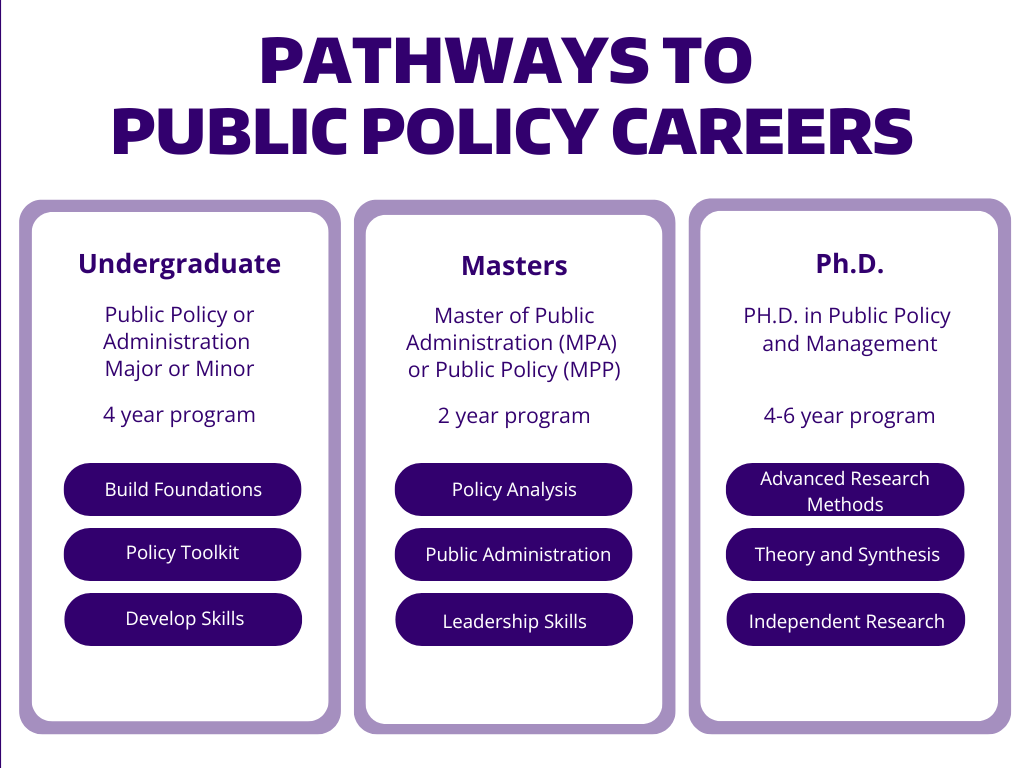
Undergraduate

Pursue a major or minor in Public Policy or Public Administration. These generally tend to be four year programs where you build strong theoretical frameworks through coursework, develop skills and build out your Policy Toolkit.  

Master’s Degree

Pursue a Master’s of Public Administration (MPA) or Master’s of Public Policy (MPP) degree. These programs are usually two years long and require a Bachelor’s Degree from an accredited college or university. Graduate students will develop their Policy Analysis Skills, be trained in Public Administration, and hone their Leadership Skills.  

Ph.D. 

Pursue a Ph.D. in Public Policy and Management. Ph.D. programs can be from four to six years long. Ph.D. students will learn and practice advanced research methods, deepen their mastery of theory and synthesis, and pursue independent research.  

A hackathon is a collaborative, fast-paced event where teams develop solutions to engineering or computing challenges. A policy hackathon applies this same model to social issues, focusing on solutions that can be advanced through public policy and public resources. Today, you’ll work alongside fellow students and industry professionals to engage directly in hands-on policy analysis and problem-solving.

Hear from current students and experienced public service professionals pursuing graduate degrees and/or careers in public policy and public service. Panelists will share their inspirations, personal experiences, and career journeys, offering insights into earning a graduate degree and preparing for impactful careers in public service.

Connect with community partners and agencies to learn about what graduate degrees and/or career opportunities in public policy and public service are available to you. Partner organizations will share resources and opportunities with attendees to help them take the next step in their Public Service journey.

Featured Speakers

D’Andre Fisher 

Associate Vice Chancellor, Seattle Colleges  

Prior to his appointment as the first Associate Vice Chancellor of the Division for Access, Community, and Opportunity at Seattle Colleges in June of 2022, D’Andre Fisher served as Associate Vice President for Equity, Diversity and Inclusion for North Seattle College from 2018 to 2022. 

Fisher has experience as a Diversity and Inclusion consultant, and prior to establishing his consultant firm, he served as the Special Assistant to the Vice President and Director of Operations in the Office of University Community at the University of Oklahoma (OU), working alongside Vice President Jabar Shumate to promote campus diversity and inclusion. In these positions, Fisher served as a liaison to faculty and staff departments with Diversity and Inclusion Programs, including Admissions and Recruitment, Student Sffairs, and the Center for Student Life. He assisted with the cultivation of faculty, staff, and alumni advisory boards for the Office of University Community and helped implement their recommendations. 

Fisher has a passion for working with college students and earned his Master’s in Adult and Higher Education from OU. Before his work in the Office of University Community, he served as Assistant Director of Diversity Enrichment Programs in OU Admissions and Recruitment. He met with thousands of high school students each year, primarily reaching out to under-represented minorities and students with low socioeconomic backgrounds. While there, Fisher co-founded the George McLaurin Male Leadership initiative, which is now supplemented by the Sylvia A. Lewis Women’s Leadership Initiative. These programs are now under the Office of University Community and annually bring approximately 150 prospective students to OU’s Norman campus for a conference that builds relationships with first-generation college students. Fisher has also served as an adjunct instructor in Human Relations. 

Becky Corriell 

Assistant Dean of Students & Learning Innovation, Evans School of Public Policy & Governance, University of Washington  

Karin Martin

Associate Professor, Evans School of Public Policy & Governance  

Karin D. Martin is a crime policy specialist whose areas of expertise are monetary sanctions, racial disparities in the criminal justice system, and decision-making in the criminal justice context. These issues come together in her current projects, which examine the use of money in punishment (e.g., fines, fees, restitution, etc.).
She is currently co-PI in a five-year research project examining the use of monetary sanctions in eight states and she has given testimony on the issue of criminal justice debt to the New York State Assembly and to the United States Commission on Civil Rights. 

Karin studied Psychology at Stanford University and worked in the non-profit sector in the San Francisco Bay Area before attending University of California, Berkeley where she earned an MPP, an MA in Political Science, and a PhD in Public Policy. She was a post-doctoral scholar in the Psychology Department at UCLA where she was also a Fellow with the Center for Policing Equity. She was Assistant Professor of Public Management at John Jay College of Criminal Justice and The Graduate Center of the City University of New York (2013-2017) and was a Visiting Professor at the Goldman School of Public Policy at the University of California, Berkeley, in 2016. 

Hackathon Facilitators

Arielle Weaver

Ph.D. Student, Evans School  

Arielle Weaver joined the Evans School Ph.D. Program in Public Policy & Management in 2021. Broadly, Arielle’s research interests are aligned with addressing issues of social equity, access, and opportunity for marginalized populations with an emphasis on women of color. Arielle seeks to bring a critical lens to her research, drawing attention to racial disparities resulting from policy and the policy process.

Prior to beginning her Ph.D. studies, Arielle had a career in Student Affairs and has experience in the areas of residence life, student conduct, leadership development, and mentorship for women of color. Through that work, Arielle had the opportunity to develop, advocate for, and mentor women of color student leaders, which informs her current research interests. 

Cam Turner, MPA Student, Evans School
Cam is a first-year MPA student at the Evans School of Public Policy and Governance. Their main interests are nonprofit management and social policy as it relates to families and youth, as well as disparities between rural and urban areas.
Prior to Evans, Cam worked as an advisor for the Passport to College Program assisting former foster and unhouse youth and as a student ambassador for the College of Arts and Sciences at WSU, where they completed their undergrad studies. They hold a Bachelor of Arts in Social Science.

David Suárez

Associate Dean & Professor, Evans School  

David Suárez, Ph.D., is a professor at the Evans School of Public Policy & Governance, University of Washington. His current research focuses on social sector organizations (nonprofits and foundations) and explores: how management strategy shapes organizational performance; the relationship between service-provision and social change activity; and the consequences of professionalization. He is particularly interested in cross-sector collaboration, advocacy, and civic engagement—issues that link social sector organizations to public agencies and the policy process. Ongoing projects include research on: the emergence and development of participatory grantmaking in foundations; the Civic Life of Cities – a multi-team project exploring how nonprofits contribute to the communities they serve; public-nonprofit partnerships in national parks and schools; monitoring and evaluation (M&E) practices in development NGOs; and the role of foundations in generating social change. 

His research has been supported by the Ford Foundation, the Spencer Foundation, the Aspen Institute, the Nonprofit Academic Centers Council, and the Bill & Melinda Gates Foundation. His work has been published in the Journal of Public Administration Research and Theory, the American Review of Public AdministrationAdministration & SocietyNonprofit and Voluntary Sector QuarterlyVoluntas, Sociology of Education, and many additional outlets. He teaches courses on public management, organizational theory, philanthropy, and leadership in the nonprofit sector. Prior to pursuing a career in academia, David worked briefly as an elementary school teacher for dual language learners in California (Spanish-English) and served as a Peace Corps volunteer in the Dominican Republic. 

Izzy Sederbaum

Postdoctoral Fellow, Evans School  

Isaac “Izzy” Sederbaum started the Evans School Ph.D. program in Public Policy & Management in 2019. His interests span a wide array of topics, including how policies often work to punish and criminalize queerness, particularly in young people; participatory action research (PAR); and the continued prevalence of wage theft in vulnerable communities.

Prior to joining the program, Izzy was a Research Associate in the Vera Institute of Justice’s Center on Youth Justice (CYJ), where he primarily focused on working with jurisdictions across the country to rethink their approaches to arresting and incarcerating youth for status offenses. Before Vera, he was a field researcher at the Center for Court Innovation and a research consultant for the Restaurant Opportunities Centers (ROC) United. He earned his master’s degree in Public Administration from the Evans School of Public Policy & Governance in 2014 and his BA in Community Development from Portland State University in 2011. 

Jill Lane

Faculty, Seattle Colleges; Planning Committee Member  

Jill Lane is a longtime faculty member within Seattle Colleges and a dedicated advocate for student‑centered learning and institutional collaboration. She served as interim president of North Seattle college from July 2023-July 2024, and has been with the college since 2005. She holds a Master of Arts degree in Political Science from North Carolina State University and a Bachelor of Arts degree in Political Science with a minor in Sociology from the University of North Carolina-Greensboro. At North, Lane has served in various roles, including co-accreditation liaison officer and chair of the North Seattle College Council. She previously served as faculty chair for North’s Assessment Committee and program coordinator for North’s Political Science program. She has been a full-time faculty member at North since 2018 and tenured since 2021. 

Larry Cushnie

Faculty, Seattle Colleges; Planning Committee Member 

Larry holds a doctorate in political science from the University of Washington and a masters in Sociology of Law from the International Institute for the Sociology of Law in the Basque Country. His teaching and research interests are interdisciplinary and span many aspects of American politics, political theory, law, social movements, and political resistance.

Since being hired in 2017, Larry has been building more courses within the political science department to offer students a wide-reaching experience as they prepare to transfer to a four-year institution. His teaching approach strives to be inclusive with an emphasis on social justice and political participation. 

Olivia Atkinson

Faculty, Seattle Colleges; Planning Committee Member 

Olivia Atkinson is a political science faculty member at Seattle Central College whose work centers on public policy, social movements, and civic participation. She is committed to creating inclusive, discussion‑driven classrooms where students explore the connections between policy decisions and lived experience. Atkinson’s teaching and research reflect a deep interest in how communities organize for change and how institutions can better respond to public needs. Her contributions to the planning committee draw on her experience designing collaborative learning experiences that bridge academic study and community engagement. 

Scott Allard

Professor, Evans School of Public Policy & Governance  

Scott W. Allard is the Daniel J. Evans Endowed Professor of Social Policy at the University of Washington’s Evans School of Public Policy & Governance, and served as Associate Dean for Research and Engagement from 2021 to 2025. At UW, Allard is an affiliate of the Center for Studies in Demography and Ecology (CSDE) and of the West Coast Poverty Center. Allard is a research affiliate of the Institute for Research on Poverty at the University of Wisconsin-Madison, where he served on the National Advisory Board from 2018-2020. He also served as a nonresident senior fellow at the Brookings Institution’s Metropolitan Policy Program from 2010 to 2020. He previously held faculty positions at the Maxwell School of Citizenship and Public Affairs at Syracuse University (2000–03), the Department of Political Science at Brown University (2003–08), and in the School of Social Service Administration at the University of Chicago (2008–14). 

His primary areas of research expertise are urban poverty, employment among low-skill workers, food security, safety net utilization, and the spatial accessibility of governmental and nongovernmental safety net programs. 

Tracy Furutani | Deputy Mayor, City of Lake Forest Park; Faculty, North Seattle College  

Tracy Furutani serves as the Deputy Mayor of Lake Forest Park and as a full-time faculty member at North Seattle College, where he teaches earth sciences, environmental sciences, chemistry, physics, anthropology and biochemistry.. His dual roles reflect a career dedicated to public service, environmental stewardship, and community‑based education. In local government, Furutani works on issues ranging from climate resilience to transportation planning, bringing a scientific lens to policy decisions. In the classroom, he emphasizes hands‑on learning and the importance of civic responsibility. His ability to connect policy, science, and community engagement makes him a valued facilitator and mentor.

Panelists

Yvette Gutierrez‑Morfin

Academic Operations & Strategy Manager, Evans School 

Yvette Gutierrez‑Morfin serves as the Academic Operations and Strategy Manager at the Evans School, where she oversees academic planning, program development, and strategic initiatives that support faculty, students, and staff. With a background in higher education administration and organizational leadership, she plays a central role in strengthening academic processes and advancing equity‑centered practices across the school. Gutierrez‑Morfin is known for her collaborative leadership style, her commitment to student success, and her ability to build systems that support inclusive and effective learning environments. 

Mara Rafferty

Executive Director, Washington Labor Education & Research Center  

Mara Rafferty (she/her) is the Director of the Washington Labor Education and Research Center at South Seattle College, where she helps run programs across the state that help people know how to exercise their rights at work and advocate to win new rights. Before coming to the LERC, Mara served as Lead External Organizer for the United Autoworkers union, Local 4121, where she helped lead thousands of workers in creating new unions and winning better working conditions. Before joining the UAW, Mara worked for multiple nonprofit and community organizations in the US and in the Middle East where she worked on civic and community education, as well as economic policy research. Mara has a Bachelor’s degree in International Relations and a Masters degree in Economics, and is a huge nerd who loves spreadsheets and data analysis. She’s proud to be the first transgender woman to serve in her position, and looks forward to continuing to make organized labor and higher education place where queer and trans people can thrive and be their best selves.

Jesse Johnson

Former Washington State Representative  

Jesse Johnson is the oldest of 4 siblings and a lifelong resident of Federal Way, a suburban city just south of Seattle. He is a double graduate from the University of Washington with a Bachelor of Arts in Political Science and a Masters of Education. At the UW, Jesse interned for Congressman Adam Smith and volunteered for the Obama campaign. Johnson was the youngest City Council member in his hometown Federal Way history when he first took office at the age of 27 after winning the election over a 2-term incumbent. He then ran and served as the youngest member in the Washington State Legislature, where he worked on community safety issues sponsoring police accountability legislation in addition to juvenile justice reform, addressing workforce development in the trades for young people and families struggling with housing insecurity across the state. Johnson’s values are rooted in equity and social justice. His focus comes from his close partnership with community in the South King County region, where he has also worked as a High School Career and College Counselor and in Workforce Planning and Development for the Seattle School District. He now serves as the Director of Outreach and Community Engagement for the Office of the State Treasurer working to address wealth inequity and close generational wealth gaps for historically and currently marginalized communities. Jesse is a proud husband to his wife Epiphany, a Family Medicine doctor, and father to two boys 3 year old Elijah and 1 year old Ezra.

Joseph Seia

Executive Director, Oceania Northwest  

Joseph Seia, MPA, has ancestral roots in Samoa, Tonga and Aotearoa. He has 20 years of experience in direct service and providing leadership oversight over nonprofits that serve most impacted populations. He is currently the Executive Director of Oceania NW. Joseph is an anti-racist community organizer that labors to build intergenerational spaces rooted in cultural belonging, healing justice and in the commitment to abolishing the cruelties of poverty.

.  

Logistics

Please dress comfortably. We’ll have light networking during the resource fair—dress as you’d like to present yourself.

Address and Phone:
South Seattle College
6000 16th Avenue SW
Seattle, WA 98106-1499
206.934.5300 or 206.934.6684
Parking Information

Bus Routes

Bus routes 128 and 125 stop in front of the Robert Smith Building (RSB). (See campus map.) You can call METRO (206.553.3000) or check the METRO Trip Planner for bus route schedules and times.

From I-5 or Route 99

  1. Take West Seattle Bridge to Delridge Way S.W.
  2. Drive south on Delridge Way S.W. to third light.
  3. At light, turn left onto S.W. Oregon.
  4. Take arterial to top of hill, veering right onto 21st Ave S.W.
  5. Take first left turn onto Dawson, continuing onto 16th Ave. S.W.
  6. Follow 16th Ave. S.W. for 1/4 mile to South Seattle College campus on left.

Northbound from South Suburbs

  1. At Southcenter, exit to Highway 518 West.
  2. Follow 518 West to Burien, where it becomes S.W. 148th.
  3. Continue on S.W. 148th to Ambaum Blvd., turning right onto Ambaum.
  4. Drive straight north six miles on Ambaum/16th S.W. to South Seattle College campus.

Michigan-Corson Exit (Off I-5, North or Southbound)

  1. Michigan-Corson exit.
  2. Right onto S. Michigan St.
  3. Follow Michigan to 1st Ave. Bridge, taking ramp onto bridge.
  4. Take FIRST exit (W. Marginal Way/South Park).
  5. Right at end of ramp; left at signal.
  6. Left at Highland Park Way (up the hill).
  7. Take first right turn onto Holden, continuing to16th Ave. S.W.
  8. Right onto 16th Ave. S.W., follow north one mile to South Seattle College campus.

From Northbound I-5 at Southcenter

  1. Take Exit 156 to Northbound Hwy. 599/Tukwila/W. Marginal.
  2. Hwy. 599 turns into Hwy 99. At stoplight after 5 miles, go straight
    (W. Marginal Way/Burien).
  3. Go under bridge, continue through signals and straight up Highland
    Park Way to top of hill.
  4. At first right turn onto Holden, continuing to 16th Ave.
  5. Turn right onto 16th Ave. S.W., follow north one mile to South Seattle College on right.

This event will be photographed. Signage will be posted at the registration table notifying all participants that the event will be photographed. If you would like to opt out of having your photograph taken, please check in with conference staff to obtain an opt-out sticker, and we will notify our team!

Prayer Room is located in Student Wellness Center, located next door to the Brockey Center!

Single-Stall gender neutral bathrooms are located by the north entrance of the Brockey Center by the bookstore.

This event is a low/no-tech space. We invite you to put your devices away during lecture and the policy hackathon. All materials will be provided for activities!

Stay Engaged and Explore What's Next

We gratefully acknowledge the support of our partners: Seattle Colleges, Washington State Board of Community & Technical Colleges, National Forum for Black Public Administrators – Seattle Chapter, and Seattle University.  

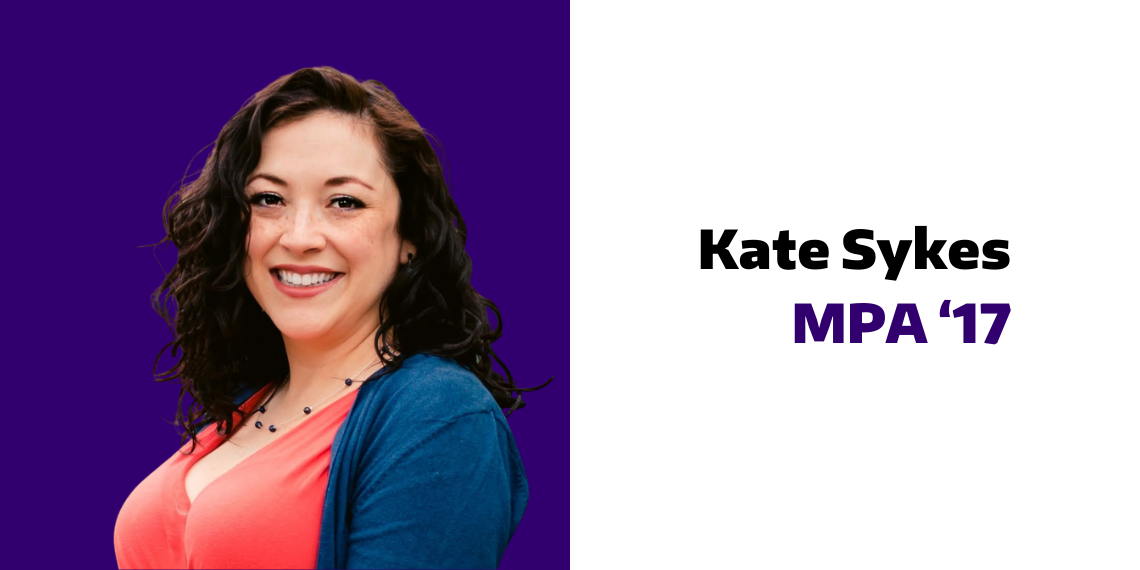
Look for the Helpers: Kate Sykes, MPA ’17

Kate Sykes

How MPA ’17 alum Kate Sykes found her way home to the Evans School to support the next generation

Long before she became Director of Student Affairs at the Evans School, Kate Sykes, MPA ’17, was a working professional trying to understand how institutions could better serve students like her.

As a first-generation college student balancing full-time work while pursuing her degree part-time, Kate experienced higher education from the inside out. She always knew her career would be in higher education, but as she looked at leadership across the field, she noticed something important. Many leaders held master’s degrees in education, which deeply informed their understanding of the student experience. Yet she saw gaps when it came to budgeting, stakeholder engagement, and systems-level decision-making.

“When it came time for me to consider a master’s degree, the two that made the most sense were a Master’s in Education or a Master’s in Public Administration,” she said. She chose Evans because she wanted more than participation in leadership. “I hoped it would prepare me not just to participate in higher education leadership, but to shape it.”

At Evans, that preparation came into focus.

Her coursework reframed public service not as a series of quick wins, but as sustained systems work. “My time at Evans really helped me better understand public service as systems work,” she reflected. “Impact often happens through structure and policy and sustained advocacy, rather than just quick wins.”

For Kate, that understanding was personal. As a student, she did not always know where to turn for resources, nor did she always feel institutions were built with her lived experience in mind. At Evans, she gained the analytical tools to change that reality for others. She learned to diagnose institutional challenges at the systems level and treat root causes rather than individual symptoms.

Specific courses remain vivid in her memory, as they do for many alumni. In PUBPOL 511 with Craig Thomas, memo writing sharpened her ability to communicate clearly and persuasively. In PUBPOL 512 with David Suarez, organizational management gave her a framework to understand how institutions function and where they falter. And in PUBPOL 526, program evaluation skills equipped her to assess initiatives, improve services, and build evidence-based proposals.

Those tools have shaped every step of her leadership journey.

In a previous role, Kate successfully grew her advising team by translating data into compelling narratives for engineering leaders who were experts in their own field but unfamiliar with the day-to-day realities of student advising. She has launched new academic programs, bridged communication gaps between faculty and students, and strengthened support systems by grounding decisions in policy analysis and evaluation.

When the opportunity arose to return to Evans in a leadership capacity, Kate saw something more than a job. She saw a chance to bring her Evans education full circle.

Today, as Director of Student Affairs, Kate draws directly on her experience as both alum and first-generation student. She anticipates pressure points. She translates institutional constraints. She advocates for policies and practices that better support student well-being.

“You are a whole person outside of this campus and outside of this experience,” she tells students. “My job is to support you as a whole person.”

Students are not just scholars, she emphasizes. They are partners, caregivers, professionals, and community members. Supporting the whole person is central to helping them thrive in the classroom.

Her commitment is especially strong in this volatile moment of sweeping changes across every field of public service.

“Yes, this is a really uncertain time for folks who want to be public servants,” she shared. “But because this is such an uncertain time, there is no more important time to have truly dedicated, value-driven leaders going into public service. This program pushes you to grow intellectually, emotionally, and personally. You will find yourself engaging in challenging, complex, and sometimes emotionally charged conversations in meaningful ways. I can’t think of a more important time to start building those skills. Our students are dedicated to building this skill set so they can affect meaningful change.”

In conversations with faculty and students, Kate often reflects on what sustains her. Giving in to despair would be easy. What keeps her grounded is the knowledge that she is helping educate those who will go on to create meaningful, lasting change.

“I may not affect meaningful, long-term change on a large scale,” she shared. “But I am helping support the education of people who will. And that means everything.”

She often thinks of Mr. Rogers’ advice to “look for the helpers.” In her view, there has never been a more important time to be one.

Kate believes an Evans education prepares students to lead in complex, imperfect systems without losing sight of their values. It pushes them intellectually and personally, equipping them to navigate power with responsibility and courage.

Her journey reflects the ripple effect of an Evans degree. It prepares graduates not only to serve the public, but to strengthen the institutions that shape future leaders. Now, as both alum and staff member, Kate ensures that Evans students are seen, supported, and ready to become the helpers our communities need most.

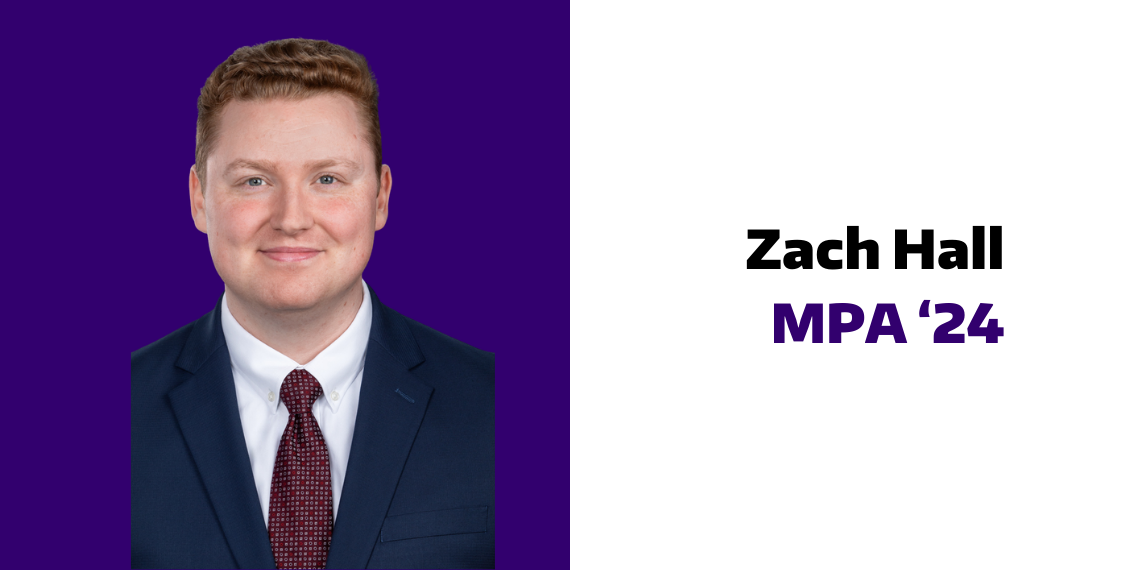
From City Hall to the State House: Zach Hall, MPA ’24

Long before Zach Hall, MPA ’24, stepped onto the floor of the Washington State House of Representatives, he learned a key lesson of elected office at the local level: asking good questions matters.

As a member of the Issaquah City Council, Zach came to see that questions do more than clarify policy details. They help shape conversations, surface priorities, and build shared understanding. That instinct to listen and engage thoughtfully became a defining feature of his leadership. At the Evans School of Public Policy & Governance, it was strengthened by a deeper understanding of processes.

“At Evans, I learned the value of following a clear policy process,” Zach reflected. “From defining problems to evaluating options to measuring success, policymaking is thoughtful, accountable, and iterative.”

In 2025, Zach was appointed to fill a vacancy in the Washington State House of Representatives. His Evans education meant he arrived in Olympia prepared. Coursework in policy analysis, mediation and negotiation, and managing the political process translated directly into legislative work. His capstone and studies in economics, statistics, and public finance gave him confidence in how to assess evidence and explain decisions.

“The rigor of the Evans School would prepare anyone to be at their best in Olympia,” he shared.

Zach believes the Evans School’s values of equity, courage, and service shape how he approaches his work, whether in hearings, stakeholder meetings, or conversations with constituents.

“Whenever I’m in a hearing or meeting, I’m reminded of that shared commitment and the need to serve with purpose,” he said.

One Evans lesson has been especially influential in his role as a legislator: the distinction between positions and interests. The mediation and negotiation framework he studied at Evans helps him guide conversations toward shared values, even when stakeholders begin from opposing viewpoints.

“That shift changes everything,” Zach noted. “It helps move conversations from conflict to collaboration.”

For students considering an MPA and a future in elected office, Zach sees the Evans School as preparation to lead with both discipline and compassion.

“An Evans School MPA is a fantastic way to show up with both head and heart,” he said. “You become more curious, more objective, and more driven by both values and rigor.”

His advice to current students is simple and sincere. “Don’t waste a single moment of your time at the Evans School. Take your studies seriously, connect with your cohort and teachers, and get involved outside of class. It’s over before you know it.”

Zach Hall’s path from city councilmember to state legislator reflects the impact of an Evans education. It prepares leaders who ask strong questions, follow thoughtful processes, and carry a clear sense of purpose into public service.

Evans Elected Officials Network

Are you an Evans alum and an elected official? Join the Evans Elected Officials Network, a sub-group of the Evans in Government Network. This network creates space for current and former elected officials to support one another in navigating the unique challenges faced in these leadership and governance roles. The group will provide opportunities to connect in-person around pressing topics, engage faculty as relevant, and inspire students interested in exploring running for office.

Join the Network