Dean’s Forum: Public Impact Research in Action
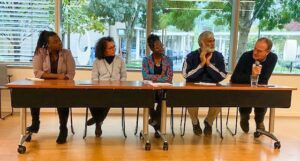
Partnering with Communities for Coastal Hazard Preparedness On December 2, 2025, Dean Jodi Sandfort hosted a conversation with panelists Ann…
Faculty
Weyerhaeuser Endowed Professor in Environmental Policy
Risk perception, communication, and decision making about environmental and health risks and policies, for climate change, coastal hazards, and AI.
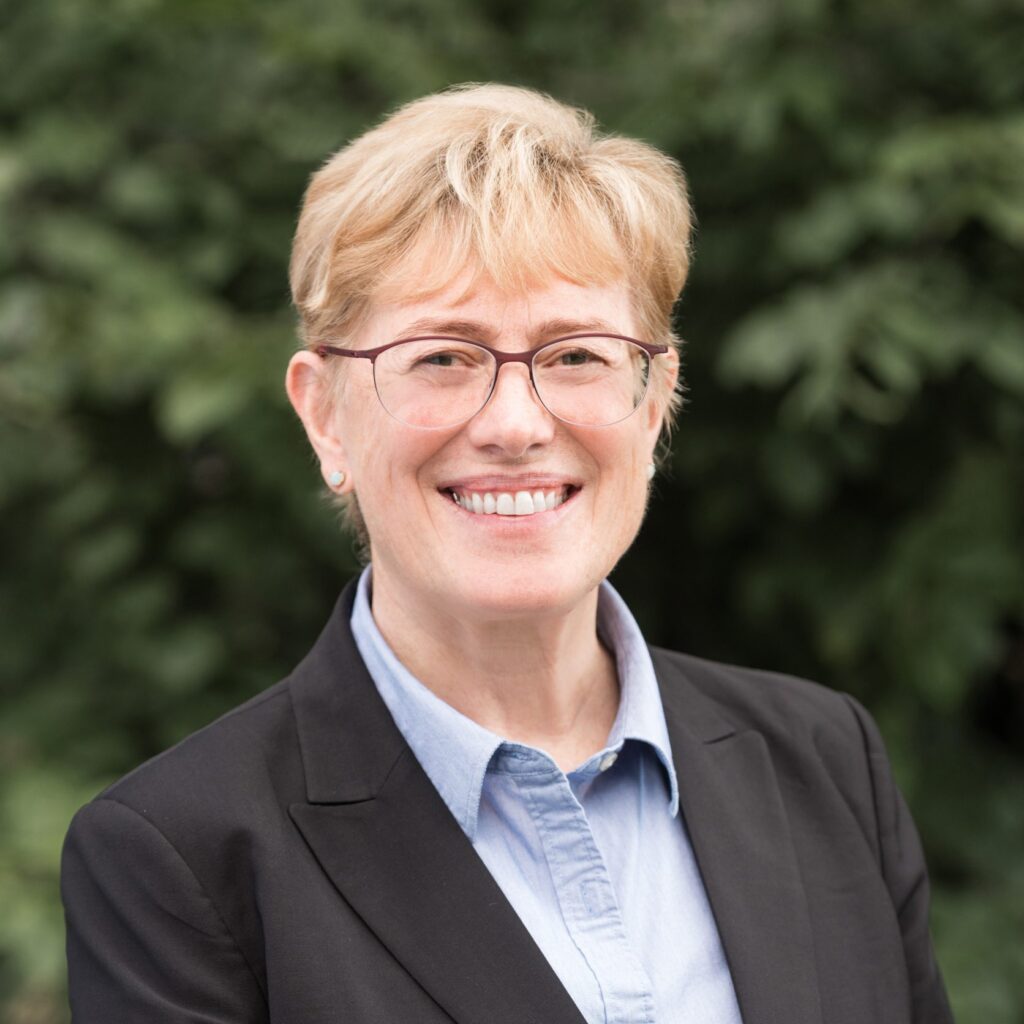
Ann Bostrom joined the Evans School faculty in 2007. Her research focuses on risk perception, communication, and management; environmental policy and decision making under uncertainty. She served on the faculty at the Georgia Institute of Technology (Georgia Tech) from 1992-2007, most recently as Associate Dean for Research at the Ivan Allen College of Liberal Arts and Professor in the School of Public Policy. Bostrom co-directed the Decision Risk and Management Science Program at the National Science Foundation from 1999-2001. While in this position she organized, participated in, and made presentations at national and international meetings on research and science policy, including but not limited to, the Subcommittee on Natural Disaster Reduction and the National Earthquake Hazard Reduction Program.
She has authored or contributed to numerous publications, including Risk Communication: A Mental Models Approach (Cambridge University Press, 2002), Risk Assessment, Modeling and Decision Support: Strategic Directions (Berlin: Springer, 2008), and National Research Council, Institute of Medicine, U.S. EPA Science Advisory Board, and U.S. EPA Board of Scientific Counselors reports. She also serves on the editorial board for Risk Analysis, as an Associate Editor for the journal Journal of Risk Research, and reviews for numerous technical journals. Bostrom has received research funding from the National Science Foundation, the U.S. Environmental Protection Agency, and the National Institutes of Health.
Bostrom is the recipient of several fellowships, including the American Statistical Association/National Science Foundation/Bureau of Labor Statistics Research Associateship (1991-92), Fulbright Graduate Research Fellowship and Lois Roth Endowment Fund grant for studies at the University of Stockholm (1989-90), and Patricia Roberts Harris Fellowship at Carnegie Mellon (1988-89). She is also the recipient of the 2020 Distinguished Educator award from the Society for Risk Analysis, and of the 1997 Chauncey Starr award for a young risk analyst from the Society for Risk Analysis for her work on mental models of hazardous processes. Bostrom is an elected fellow of the American Association for the Advancement of Science (AAAS), the Washington State Academy of Sciences (WSAS), and the Society for Risk Analysis. She is past president of the Society for Risk Analysis, past Chair of the AAAS Section on Social, Economic, and Political Sciences (Section K), and is a member of the Association for Public Policy Analysis and Management, the Society for Judgment and Decision-Making, and the American Association for Public Opinion Research.
Bostrom has served as an elected member on the Board of Directors for the AAAS and the Board of Directors for the Washington State Academy of Sciences. She has served previously on the Advisory Committee for Earthquake Hazards Reduction (advisory to the National Institute of Standards and Technology), on the Board of Scientific Counselors for the U.S. Environmental Protection Agency, on the National Renewable Energy Laboratory Decision Science and Analysis Technical Advisory Committee, and on the Advisory Committee for the National Center for Atmospheric Research Mesoscale & Microscale Meteorology Lab. Bostrom has served on numerous National Academies committees, and currently chairs its Roundtable on Artificial Intelligence and Climate Change.
At the University of Washington, Bostrom serves as Primary Research Area Chair for Environments and Populations in the Center for Studies in Demography and Ecology, and on the Governing Board of the Program on Climate Change. Bostrom also co-directs and is a co-PI on the NSF-funded Cascadia Coastlines and Peoples Hazards Research Hub (PI Peter Ruggiero at Oregon State University), and has co-led risk communication research with Dr. Julie Demuth in the NSF AI Institute for Research on Trustworthy AI in Weather, Climate, and Coastal Oceanography (AI2ES).
Bostrom holds a Ph.D. in Public Policy Analysis from Carnegie Mellon University, an M.B.A. from Western Washington University, a B.A. in English from the University of Washington, and completed postdoctoral studies in Engineering and Public Policy at Carnegie Mellon University and in cognitive aspects of survey methodology at the Bureau of Labor Statistics. She has also been a visiting professor at the University of Bergen DICE Lab, a long-time affiliate with the Center for Climate and Energy Decision Making at Carnegie Mellon University.
Decision-Making & Human Resources
Environmental Policy
Governance
Public Sector
Science & Monetary Policy
Partnering with Communities for Coastal Hazard Preparedness On December 2, 2025, Dean Jodi Sandfort hosted a conversation with panelists Ann…
We are excited to announce the launch of the Center on Risk and Inclusion in Food Systems (CRIFS). CRIFS’ mission…
The University of Washington Population Health Initiative announced the award of approximately $333,000 in COVID-19 economic recovery research grants to 18 different…
Researchers from the William D. Ruckelshaus Center, in collaboration with the University of Washington and EarthLab (Project Team), are working…