Skip to content

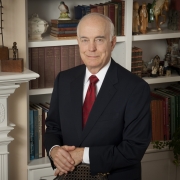
Thomas “Tom” Dean Waldron

Tom Waldron

Thomas “Tom” Dean Waldron

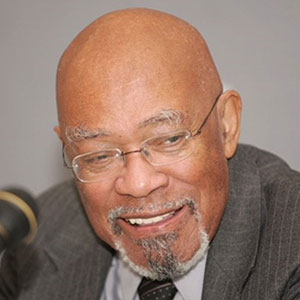
Tom Waldron of Seattle, CEO and Founder of Waldron, born September 22, 1949, was a philanthropist, loving husband, father, and loyal friend. He passed away on September 15, 2017, surrounded by family. He was survived by his loving wife Pamela of 35 years and two adult children, Paige and Andrew. He left behind a large family, close friends, and colleagues.

Tom served as a member of the Evans School Advisory Board starting in 2013, and as Co-Chair of the $50 million Campaign for the Evans School. In May 2017, Tom was appointed Chair of the Evans School Advisory Board.

Tom was an entrepreneur at heart. He started his company in 1983 and grew it to become one of the most prominent and well-respected consulting firms in the country, with offices across the Western U.S. and a dedicated team of colleagues who will carry on Tom’s legacy of innovation, leadership, and focus on the social sector.

Tom Waldron made a unique mark on all that he touched with his passion, innovative energy, creativity, generosity of spirit, empathy and compassion. There was nothing in which Tom involved himself that wasn’t better for his participation and benefited from his ever-fresh perspective. It was important to Tom to always stay in front, constantly reading, researching, connecting with those he admired, challenging the status quo and feeding his intellectual curiosity. This translated into all aspects of his life, whether being a loving spouse, an adoring father, a great business partner, an athlete, a trusted counselor, coach and advisor, a social-impact focused philanthropist, or simply just being a good man.

Tom had an unwavering belief that success in life meant helping others. He and his wife, Pamela, were consistently engaged in local and global philanthropic endeavors, including Tom’s service on the boards of the University of Washington Foundation, The Evans School, Global Partnerships, Pro Mujer, Seattle International Foundation, the Burke Museum, and many others.

He embraced people from all walks of life, all cultures, races, orientations, gender identifications, and socio-economic backgrounds, and both through his work and his volunteerism, he impacted virtually every important community issue as well as national and global efforts to improve health and alleviate poverty. His core values have been expressed though his work; our world benefits from his impact in bringing forth great leaders and greater leadership diversity in its public, private and social sector organizations, a fact of which he was very proud.

He was fiercely competitive, with an unstoppable will and endless tenacity; there was no problem he wouldn’t courageously step up to address, and in fact he embraced developing solutions to difficult problems. He always sought outcomes in alignment with his strong values; this is a part of the legacy he leaves to us now.

Tom’s love for life also extended to the outdoors, where he was an avid boater, sailor, water and snow skier, tennis player, and golfer.

He will be missed for his passion, honesty, and ability to bring out the best in everyone around him. May his memory be a blessing.

Walt Williams

Walt Williams

Walt Williams

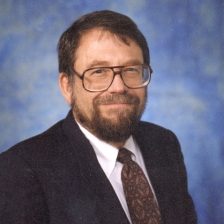
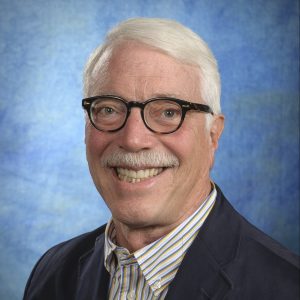
Walt (Walter) Williams led a full life of public service, with a résumé to match. For 35 years, the Professor of Public Affairs taught at the Daniel J. Evans School of Public Policy & Governance. He also served as the Research Director at the Institute for Public Policy and Management from 1970 to 1983, and as a visiting scholar at the London School of Economics and University of Bergen.

Prior to his UW career, Walt had received an accounting degree and a Master of Business Administration from the University of Texas. He served in the U.S. Army, got married, and started a family. He had appointments at Indiana University (where he earned his Ph.D. and taught) and the University of Kentucky, before he joined the Office of Economic Opportunity during President Johnson’s War on Poverty.

But above all, Walt Williams was a writer.

Walt’s writings explored the development of policy information in presidential decision-making and governing institutions. His works focused on good government, or his view of the lack of it, as the titles suggest: Honest Numbers and Democracy was published in 1998, followed two years later by Mismanaging America. After a return to the Institute for Public Policy and Management, to serve as Associate Dean for Graduate Programs from 1994 to 1997, he wrote a regular opinion column for The Seattle Times. He also contributed to the city’s other major daily, the Seattle Post-Intelligencer.

Then Walt returned to long form, with Reaganism and the Death of Representative Democracy (2003) and The Politics of Bad Ideas (2008). He spent time discussing his ideas about U.S. democratic ideals on radio and television, and frequently contributed to the editorial pages of the Washington Post, Los Angeles TimesNewsday, and Huffington Post.

Walt passed away in 2011, at the age of 78. He was survived by his wife, Jackie (Block) Williams; their sons, Stuart and David; two daughters-in-law; and three grandchildren – all of whom knew him as Buddy.

Hubert Locke

Locke Headshot

Hubert Locke

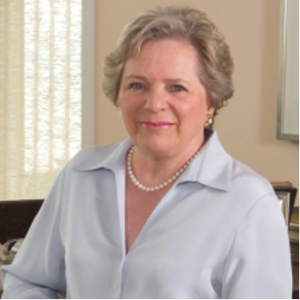
Hubert Gaylord Locke was a longtime professor and administrator at the University of Washington, where he served for five years as dean of the School of Public Affairs. Locke was a moral leader, an author, a Holocaust scholar, and an authority on police and urban affairs. He was described as “a sort of civic-wise-man-in-residence, counseling patience and understanding in politicians and offering a voice of reason on contentious issues from race relations to growth management” (The Seattle Times, July 9, 1995).

A Detroit native, Locke was born there on April 30, 1934, to Willa L. Locke (1909-1997) and Hubert H. Locke (1907-1998). His mother was a housewife and his father worked for 32 years in front of the open hearth at Ford Motor Company. Locke earned a bachelor’s degree in Latin and Greek from Wayne State University in 1955, and a bachelor’s in divinity from the University of Chicago in 1959. For 12 years he was minister of the Church of Christ of Conant Gardens in Detroit, which in 1958 had a membership of 23 parishioners, but which grew substantially under his leadership.

Continuing his education, Locke received a master’s degree in Comparative Literature from the University of Michigan in 1961. He said he never intended to be an administrator and intended to pursue a career as a clergyman. He was sidetracked, however, by studies of the Third Reich and the effects the Nazi government and churches had on each other. Three-quarters of the way through his doctoral studies in American Intellectual History, the civil rights movement caught his attention and he never finished his thesis. In 1962, he left school to become executive director of the Citizen’s Committee for Equal Opportunity, a civil rights organization in Detroit.

With full intentions of returning to the university to complete his doctorate in 1966, he was convinced by black leaders in Detroit to accept a position created inside the police department by Mayor Jerome Cavanaugh. He took the job, serving as Administrative Assistant to the Detroit Commissioner of Police and published The Detroit Riot of 1967, a definitive account of the worst civil disorder in twentieth-century urban America.

For the following five years (1967-1972) Locke served as Adjunct Assistant Professor of Urban Education and Fellow of the Center for Urban Studies at Wayne State University. In 1972, he became the first head of the new College of Public Affairs at the University of Nebraska-Omaha.

Locke came to the University of Washington in 1976, half time as assistant dean of the College of Arts and Sciences and half time in Public Affairs. In 1977, he became Vice Provost for Academic affairs and in this capacity worked closely with faculty and administrators of various departments, schools, and colleges, assisting them in management, program planning, and review.

As dean of the School of Public Affairs, the position he held from 1982 to 1987, he was praised by University of Washington President William Gerberding for serving through financially perilous times while maintaining excellence for the program.

After a sabbatical in 1988, Locke returned to the university and directed courses on ethics, administration of justice, and urban policy and resumed research on policing in western societies and studies of the Third Reich and the Holocaust. He retired from the university in 1999, as Dean Emeritus of the Evans School of Public Affairs.

Locke maintained a passionate interest in the Holocaust and the Third Reich throughout his career as a historian and an ethicist. In 1970 he was cofounder with Frank Littell of the Annual Scholars Conference on the Holocaust and the Churches. His research and publications on the role of the churches during the Holocaust have earned him national as well as international acclaim. In a speech at the Stockholm International Forum on the Holocaust in 2000, he alluded to the reason for his commitment to the topic: “Those of us who have devoted our professional careers to probing the record of the great calamity of the century which has just drawn to a close, take heart in the commitment of leaders of the world’s nation states not to let the lessons of that catastrophe be lost on the minds and hearts of the peoples of their countries …. If there is any hope for the world, it lies in recognizing and acknowledging our capacity as human creatures to wreak havoc and destruction on one another.”

Locke’s books on the topic include Learning from History: A Black Christian’s Perspective on the Holocaust, The Church Confronts the Fatherland, Exile in the Fatherland: The Prison Letters of Martin Niemoller, The Church Confronts the Nazi Barmen Then and Now, The German Church Struggle, and Searching for God in Godforsaken Times and Place.

In addition to his interest in the Holocaust and the Third Reich, Locke’s research and writing on the criminal justice system and justice in American society was extensive. He published widely on these topics and his essays appeared in The New York Times, The Journal of Criminology and Police Science, and the Journal of Urban Law. With funding from the National Science Foundation he conducted research on “Human Values, Technology, and Law Enforcement.” Under a grant from the National Institute of Mental Health, he has explored “The Police, Institutional Racism, and Change.” He was a frequent contributor to the Seattle Post-Intelligencer and The Seattle Times on local and national ethical issues.

In 1993 Locke was appointed by Governor Mike Lowry (1939-2017), along with Delores Teutsch, a former legislator, and Ruth Coffin Schroeder, past president of the League of Women Voters, to a Citizens Commission on Government Ethics and Campaign Finance Reform. The commission reviewed the role of the Public Disclosure Commission, which had been accused of mishandling the investigation of illegal campaigning. Locke also served as chair of the Washington State Sentencing Guidelines Commission, as chair of the Ethics Board of King County, and as co-chair of the Washington State Commission on Ethics and Political Accountability.

With a long and distinguished record of community involvement, Locke was frequently selected to sit on panels studying Seattle police activities. In 1999, 10 days after a Seattle detective was charged in a theft case, Mayor Paul Schell (1937-2014) named him as a consultant to a review panel chaired by King County Superior Court Judge Charles Johnson. It was the first review of the department in 15 years. In 2001, Schell again called on Locke to co-chair one of three review panels that investigated the Mardi Gras riot in Pioneer Square that left one young man dead. In 2007, Mayor Greg Nickels (b. 1955) named Locke to a panel of prominent citizens to review the handling of internal investigations in the police department and the performance of Chief Gil Kerlikowske.

In addition to his writing, public-speaking engagements, teaching, research, and civic appointments, Locke found time to serve on numerous local and national boards. From 1970 until 1981 he served as one of the first 12 directors of the Police Foundation created by the Ford Foundation to investigate police problems. For nine years he served as the first of two non-family members on the board of the Bullitt Foundation.

Among the local and national institutions on whose boards he served were the Russell Family Foundation, Lakeside School, Common Cause, the Institute of European Studies, the Pacific School of Religion, the Museum of History & Industry (MOHAI), the Seattle Symphony, National Council on Crime and Delinquency, Disciples Diversity House at the University of Chicago, Disciples Seminary Foundation at Claremont, the Washington State Judicial Conduct Commission, and Historylink.org, the online encyclopedia of Washington state history (this website). He also served on the Committee on Church Relations for the U.S. Holocaust Memorial Museum.

Hubert Locke received honorary doctorates from the University of Nebraska-Omaha, the University of Bridgeport, Richard Stockton College, Payne Theological Seminary of Wilberforce University, University of Akron, and the Chicago Theological Seminary.

The annual Hubert Locke Distinguished Service Award was established in 2002 at the University of Nebraska-Omaha to honor an individual who has demonstrated exemplary commitment to the ideas of public service through their professional activities, community service, and philanthropy. “The award is named in his honor because his distinguished record of public and community service represents the highest ideals of the College of Public Affairs and Community Service at the University.”

The Evans School of Public Affairs at the University of Washington has established the Locke Fellowship in Social Justice in honor of Hubert Locke’s years of service to the School of Public Affairs and to the field of social justice. There are three awards at $3,000 each to provide support for a student pursuing an internship in a non-profit organization devoted to domestic social justice issues.

Hubert Locke passed on June 2, 2018. He was survived by daughters, Gayle P. Simmons and Lauren M. Locke; one grandson, two great-grandchildren and a sister, Joyce Bridgeforth.
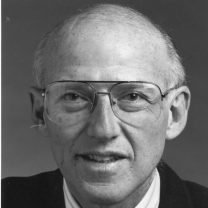
Marc Lindenberg

Marc Lindenberg

Marc Lindenberg

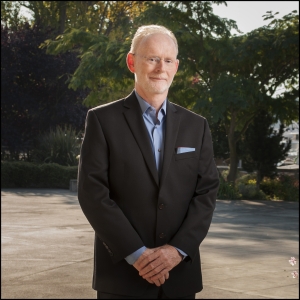
Marc Lindenberg’s long career of public service culminated in his tenure as dean of the Daniel J. Evans School of Public Policy & Governance at the University of Washington from 1998 to 2002. Prior to joining the school, which had been called the Graduate School of Public Affairs when he was named dean, Dr. Lindenberg served as senior vice president of international development at the Cooperative for Assistance and Relief Everywhere, (CARE USA). There, Lindenberg oversaw more than $400 million in relief and development programs in 36 countries.

Marc Lindenberg first learned about helping others at age 2, when he and his family moved to the Pittsburgh’s historic African-American community, the Hill District (the setting of The Pittsburgh Cycle, a 10-play series by August Wilson, another Pittsburgh transplant who called Seattle home). Lindenberg’s father, Sidney J. Lindenberg, became the executive director position at the Irene Kaufman Settlement, an agency that coordinated services between city, social, and religious organizations; his son felt the imprint for the rest of his life, becoming known for his commitment to humanitarian causes and international relief efforts.

Oscar Arias, a Nobel Peace Laureate and a former president of Costa Rica, praised the dean as “the epitome of a global citizen” shortly before Lindenberg passed away at age 56, in 2002. The same year, the Evans School dedicated the Marc Lindenberg Center for Humanitarian Aid, International Development, & Global Citizenship, where his legacy continues. He was survived by his wife, Cathy Strachan Lindenberg, their son and daughter, his sister Sue McClelland, and their mother, Ruth Ellen Zittel Lindenberg, a social work pioneer in her own right who died in 2004.

Lindenberg, who was born in Chicago in 1945, divided his career between international development organizations and the academic world. In addition to his time at the UW, he taught and researched at the John F. Kennedy School of Government at Harvard University and served as dean of the Instituto Centroamericano de Administración de Empresas (INCAE), a Harvard-affiliated business school in Costa Rica and Nicaragua. He also served on the boards of Oxfam America and the Desmond Tutu Peace Foundation, advised U.S. President Jimmy Carter and United Nations Secretary-General Kofi Annan, and planned strategy for the Gates Foundation and World Bank. His final book, Going Global: Transforming Relief and Development NGOs (2001), was nominated for numerous awards and prizes.

Upon Lindenberg’s death, UW President Richard L. McCormick summarized the dean’s contributions to the school.
“When he came to University of Washington, he brought a new way for a university to engage world problems, and it affected and influenced all of us.”

Morton Kroll

Mort Kroll

Morton Kroll

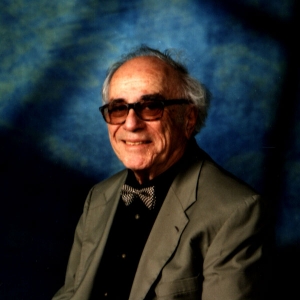
Morton Kroll focused his teaching on his two main passions, public service and the arts, and imbued it with his zest for life. As a professor at the Daniel J. Evans School of Public Policy & Governance, his favorite course was Public Arts Management.

“He had a twinkle in his eye, a lilt in his voice, and a spring in his gait,” a former colleague reminisced. “He looked straight at you when you talked, and he heard everything you said as well as everything you meant to say.”

In addition to a long career teaching political science and then progressing into public policy and management, Mort chaired the UW Faculty Senate, served as Associate Dean of Arts and Sciences and as the UW’s ombudsman, and directed the Hubert H. Humphrey Fellowship Program at the Evans School.

Mort passed away in 2004, at the age of 80. He was survived by his wife, Susan Kroll; a daughter, Julie Hunlock, and two sons, Jim Kroll and John Kroll; and his sister, Frances Ring. He was preceded in death by his first wife, Betty Rubinfier.

A camouflage expert during his World War II service in the U.S. Army, it is perhaps no surprise that he loved artwork and preferred to learn by listening.

“He loved to be with small groups of people and listen very carefully,” said his wife, Susan Kroll. “He had a way of listening and brought out what you had inside and emphasized it.”

Morton Kroll was born in 1923, in the Bronx, before his family moved to Los Angeles where he completed high school. Mort’s teaching career began soon after his military service; he returned to the University of California-Los Angeles, where he’d begun college, and earned a Ph.D. in political science. He received appointments at schools, including the University of Oregon and the University of Florida. In 1956, he joined the faculty at the University of Washington, where he spent the final 32 years of his career.

Initially, Mort solely taught political science, but in 1969, he was named a Professor of Public Affairs at the UW Graduate School of Public Affairs, the previous name of the Evans School. After a 32-year career at the UW, he retired in 1988. His passion for the arts continued, however, as he remained active with the King County Arts Commission (now called 4Culture) and 911 Media Arts.

Brewster C. Denny

Brewster Denny

Brewster C. Denny

In 1962, Brewster Denny founded the University of Washington’s Graduate School of Public Affairs (now the Daniel J. Evans School of Public Policy & Governance), where he served as dean until 1980. As the first school of public administration at a public university, Denny was passionate that a career in public service be accessible to all. In the founding documents of the school, Denny identified the purpose for offering degrees in public administration: “To improve the quality of the conduct of the public’s business by the preparation of mature, aware, committed, and intellectually well-equipped men and women for public service at all levels of government” and “to break new ground in the study of critical problems of public policy.”

The great-grandson of Arthur and Mary Denny, founders of Seattle and the University of Washington, Denny’s commitment to public service was unwavering. Denny held numerous public service positions, including: Naval service in World War II and the Korean War; Intelligence Analyst at the Department of Defense; advisor during the national security transition between the Eisenhower and Kennedy administrations; appointee to several presidential commissions and task forces; advisor to governors, mayors, and cabinet members; U.S. Delegate to the General Assembly of the United Nations; and advisor on science policy to the governments of Thailand, the Republic of Korea, the Philippines, and Jordan. Denny also served for decades as a trustee of The Century Foundation, a leading global policy think tank, and as a member of the Government Accountability Office Comptroller General’s Research and Education Advisory Panel.

Denny launched his impressive career after earning his bachelor’s degree from the University of Washington in 1945 and a master’s (1948) and doctorate (1959) from the Fletcher School of Law and Diplomacy at Tufts University and Harvard University.

Denny was a devoted husband and father. Throughout his life, Denny and his wife, Patricia, worked together on a wide variety of civic projects. He passed away in 2013 at age 88.  Patricia passed away in 2019 at the age of 93. They are survived by their only child, Maria Denny, a son-in-law, and two grandchildren.

Margaret Gordon

Margaret Gordon

Margaret Gordon

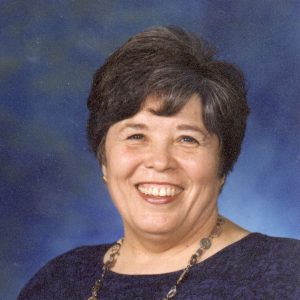
A groundbreaking scholar and accomplished administrator, Margo (Margaret) Gordon, was recruited to the University of Washington, where she became the first female Dean of the Graduate School of Public Affairs (now known as the Evans School) in 1988.

In her own pioneering research, Gordon focused on women’s attitudes toward rape and their adaptive behaviors. At the Evans School, she taught news media and public policy, as well as race, ethnicity, and public policy. Gordon’s research focused on the public’s declining trust in government, the news media and public policy, and women’s fear and self-protective behaviors.

She stepped down as dean in 1998 to continue her research and teaching.

Margo passed away on April1, 2021 at the age of 81.

Daniel J. Evans

Daniel J. Evans

Daniel J. Evans (1925-2024) ranks as one of the most distinguished leaders in the history of the state of Washington. Perhaps best known as governor from 1965–1977, he demonstrated a lifelong commitment to public service. He had longstanding ties to the University of Washington (UW) and exemplary experience in the fields of governance, education, and the environment.

Before entering politics, Evans was a civil engineer. After graduating from UW with degrees in civil engineering (BS ’48; MS ’49), he worked as a structural engineer for the City of Seattle, Associated General Contractors, and in private practice. In 1956, he entered politics as a member of the Washington State House of Representatives, where he served from 1956–1965.

He became governor of the State of Washington in 1965, ultimately serving an unprecedented three consecutive terms. He was recognized as “One of the Ten Outstanding Governors in the 20th Century” (University of Michigan study, 1981). After declining to run for office again, he assumed the presidency of Olympia’s Evergreen State College in 1977. From 1981–1983, he also served as chairman of the Pacific Northwest Electric Power and Conservation Planning Council. After the death of Senator Henry “Scoop” Jackson in 1983, Evans was appointed and then elected to the U.S. Senate. In 1989, he chose not to run for reelection.

Evans was actively involved in a large number of community and nonprofit organizations. He chaired the National Academy of Science’s Commission on Policy Options for Global Warming and co-chaired a delegation to monitor elections in Nicaragua with former President Jimmy Carter. From 1989-1994, Evans also served as a political analyst for KIRO radio and TV. He taught as a part-time lecturer at the Evans School from March 1989-1990, and headed his own consulting firm, Daniel J. Evans Associates.

He served on numerous corporate and civic boards, including Costco, Puget Sound Energy, and the Nature Conservancy. In 1993, he was appointed by Governor Mike Lowry to the Board of Regents for the University of Washington, where he has served as vice president (1995–1996), president (1996–1997), and chair of the Capital Assets Committee. His term on the Board of Regents ended in 2005.

Dan Evans was preceded in death by wife Nancy.

Nancy Bell Evans

Nancy Bell Evans

Nancy Bell Evans

Nancy Bell Evans worked tirelessly as a civic volunteer to bring energy, grace, and passion to public and nonprofit service. A leader and innovator, she was a founder and chair of the Friends of Cancer Lifeline, national chair of the First Ladies’ Mental Health Month, founding trustee of Planned Parenthood of Olympia, and founder of the Governor’s Mansion Foundation.

Her passion for music was reflected in her lifelong commitment to the arts. Evans was a co-founder and board member of the Governor’s Festival of the Arts and was a trustee of the Seattle Symphony Orchestra for nearly 30 years. In addition, she was a trustee of both the Washington State Capitol Museum and Patrons of South Sound Cultural Activities.

Evans was actively engaged in the community and served on the boards of the Benaroya Hall Music Center, Northwest Parkinson’s Foundation, and KCTS Public Television. Her commitment to higher education and the University of Washington was also noteworthy. She was a former member of the visiting committee for the School of Public Health and Community Medicine, a member of the Evans School of Public Policy & Governance Advisory Board, and an honorary co-chair of the Evans School’s Campaign.

A Spokane native, Evans earned a bachelor’s degree in music from Whitman College, where she served on the Board of Overseers for 14 years and its Board of Trustees for 14 years before being named Trustee Emeritus in 2008. She and her husband Daniel J. Evans were recipients of the 2001 E. Donnall Thomas Medal of Achievement from the Fred Hutchinson Cancer Research Center, the 2003 First Citizen’s Award from the Seattle-King County Association of Realtors and the Puget Sound Business Journal, and the 2004 Legacy Award from the Rainier Institute.

She was followed in death by her husband, and is survived by her three sons and nine grandchildren.