Skip to content

Increasing Teacher Diversity: James Bush, MPA ’10

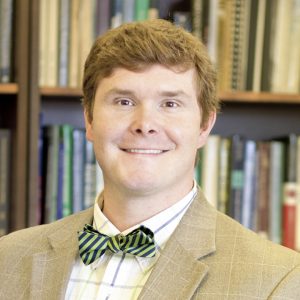
James Bush

As the district’s Chief of Equity, Partnerships, and Engagement of the Seattle Public Schools, what is one way you plan to ensure racial equity throughout the Seattle School District?

As the Chief of Equity, Partnerships, and Engagement my plan is to build from the existing work of Chief Dr. Keisha Scarlett and ensure that racial equity is embedded in all district processes, policies, and plans. At its core, our plan for educational equity will center on serving students furthest from educational justice. This includes supporting other district colleagues in using our racial equity analysis tool in the development and design of district programs such as our upcoming districtwide Black Studies classes.

What is something you have been most proud of, professionally?

Professionally, I am most proud of my appointment as Seattle Public Schools’ Chief of Equity, Partnership, and Engagement.

This appointment is the culmination and recognition of years of collaborative work with local government institutions and community partners. My original Seattle Public Schools role, as the Director of School & Community Partnerships, required that I use all my skills, experience and training to lift up a variety of complex and innovative projects. As the leader of an amazing team, we were able to push the system to better understand collective impact and the need to work directly with community partners, students, and families to ensure that students had access to programs and services to help them reach their goals.

What are the most critical problems faced by people who work in your field? How do you think these problems should be handled?

One of the most pressing issues in the field of education is the lack of diversity in our educational system. SPS has taken a variety of steps to increase the diversity of our teacher ranks with the creation of SPS’s Academy for Rising Educators. Additionally, our educational systems also need to develop new pipelines to recruit and retain public policy professionals who specialize in policy design, implementation, and evaluation.

What is your favorite memory from your time at the Evans School?

I have many fond memories of my time at Evans. Working with an amazing team on my degree project, serving as a mayor’s fellow, and building community with the Evan’s People of Color. As a lifelong Seattleite and Rainier Beach / Beacon Hill resident, having the opportunity to work on a degree project that directly serves my community was an experience that was aligned to my personal and professional goals.

Who has been your strongest influence in life? Why?

I am blessed to have grown up and be supported by a variety of community leaders. I have had a village that has guided me, lifted me, held me accountable, and pushed me to ensure that I achieve my personal and professional goals.

We’d love to learn more about you and your tremendous contributions to the public good, so we can share your story as we connect, learn and reflect. Share your story!

New Book and Lessons learned: Norman Rice, MPA ’74

“Gaining Public Trust: A Profile of Civic Engagement”

The Honorable Norman Rice, MPA ’74. was elected as the first African American mayor of Seattle in 1989 and served two terms earning him national acclaim. When Rice stepped into his role as mayor, the city was experiencing deep divisiveness and polarization. African Americans represented only 10% of the city’s population and the city was engrossed by the controversial issue of using school busing to achieve racial integration.

In his new book, Gaining Public Trust: A Profile of Civic Engagement, Rice shares his journey to leadership and public service, and what he’s learned about the critical importance of civic engagement through his notable successes in bringing Seattle’s divided city together.

As our communities navigate the COVID-19 response and recovery, and as our country continues to grapple with its long history of systemic racism and devastating inequities, the lessons Rice learned 30 years ago – during the city’s most contentious times – are still applicable today.

In his recently released book, he shares:

We need both civic and civil engagement. The skeptics among us might look around and say there is no chance for civic engagement that is civil these days because our politics have become so divisive. But I don’t believe that. I believe democracy survives only when we have meaningful engagement of the populace. It takes more than just voting or reading polling data. It is imperative to examine what it means to participate civilly in the political process and go back to the days when we actually solved problems by listening to each other and arriving at solutions together. It isn’t even so much a matter of bringing bipartisanship into the mix; it has more to do with people recognizing we all approach problems differently. Reaching agreement on the problem is just one step. We have to then find a way forward, despite our differences, to get to the solutions that work best.

With honest, thoughtful, and inclusive leadership, Rice successfully created ways to bring together government, businesses, community groups, and individuals to partner and improve the public school system, revitalize Seattle’s downtown, and strengthen neighborhoods.

Read more about the Honorable Norman Rice, his reflections on leadership, and his new book in the UW Magazine article, “Civic and Civil Engagement.

Data for Decision Making in Career and Technical Education

National Science Foundation logo

Data for Decision Making (D4DM): Incorporating Data-Informed Processes in Advanced Technological Education Pathways and Programs

Community and technical colleges (CTCs) are working diligently throughout the United States to recruit a diverse student body and boost completion rates at a time when the nation’s economy faces a shortage of technically prepared workers (Carnevale, Jayasundera & Gulish, 2016). At the same time, resource constraints limit data analysis to improve technical programs and pathways through which these students earn credentials. Many factors contribute to limited data use, including the lack of knowledge and awareness of relevant data sets, shortfalls in quantitative research capacity, and constraints in the ways data are used to tell stories about student success (Ewell, 2010; Kirby, 2015).

Growing the research capacity of CTCs by strengthening relationships between state systems, CTCs, and research universities, while simultaneously shifting organizational culture toward data-informed improvement (Phillips & Horowitz, 2017), is needed to facilitate proactive decision making to improve technical education pathways and programs. The data-informed decision-making processes studied in this research project will reverberate beyond improved student outcomes to strengthen technical workforces statewide and nationally. CTCs are poised, like never before, to use state longitudinal data systems (SLDS) to improve technical education; what is missing in their capacity to leverage such data to improve programs is what D4DM intends to address.

D4DM serves as the “connective tissue” among four unique resources in Washington State:

  • Washington has a robust network of NSF-ATE technician education grants with 18 colleges having received 35 NSF-ATE grants since 2008.
  • The state’s early adoption of a comprehensive LDS means Washington has one of the most robust data systems in the nation to link education and labor market data.
  • Washington State is a recognized innovator in pathways reforms, advancing guided pathways, and leads the nation in community college baccalaureate degrees in technical fields.
  • The University of Washington’s Evans School of Public Policy & Governance convenes a broad range of stakeholders across the state to collaborate on initiative that contribute to the public good.

D4DM is a three-year research project (2019-2022) funded by the Advanced Technological Education program within the National Science Foundation’s Division of Undergraduate Education (NSF Award #1902019).

D4DM’s four institutional partners are Seattle Central College, Green River College, Renton Technical College, and the University of Washington.

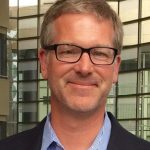
Grant Blume

Grant Blume is a faculty member at the Evans School of Public Policy & Governance. Grant is also an affiliate faculty member of the University of Washington’s Community College Research Initiatives (CCRI). Grant teaches courses on policy analysis, program evaluation, research methods, and public speaking. Grant’s current research agenda focuses on the intersections among public management, public policy, and issues related to education, race, and equity. He is the Principal Investigator leading a National Science Foundation grant investigating how community college technical faculty use longitudinal data for program improvement.

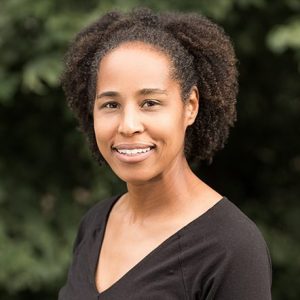
Elizabeth Meza

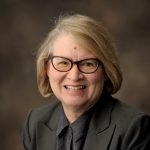
Elizabeth Meza, Ph.D. is a research affiliate at Community College Research Initiatives and senior research scientist at the Evans School for Public Policy and Governance at the University of Washington. Prior to joining the University of Washington Elizabeth spent eight years as an administrator and faculty member at several community colleges in Washington as an administrator and faculty member. Her research expertise centers around equity in higher education, community college policy and practice, and mixed methods research.

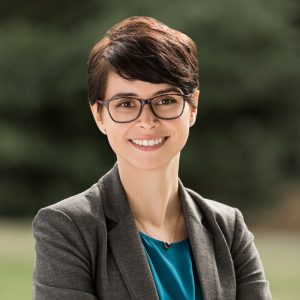
Balhan Headshot

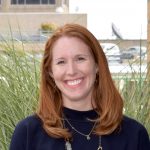
Dr. Krystle Balhan (she/her/hers) is a counseling psychologist and women’s studies scholar. She holds dual-appointments as tenured faculty in the Arts, Humanities, and Social Sciences Division and Director of Grants and Special Projects for Science, Technology, Engineering, Mathematics and Business at Seattle Central College, located on the traditional lands of the Coast Salish People. Dr. Balhan’s research and teaching interests are in improving and expanding accessibility of higher education especially for currently and formerly incarcerated students and diversifying the STEM fields and workforce to recruit and retain women and students identifying as Black, Indigenous, and People of Color.

Debra Bragg

Debra D. Bragg is the founding director of Community College Research Initiatives (CCRI) at the University of Washington and also founding director of the Office of Community College Research and Leadership (OCCRL) at the University of Illinois at Urbana-Champaign where she is an Edward William and Jane Marr Gutgsell Endowed Professor emerita. Dr. Bragg also leads Bragg & Associates, Inc., a consulting group dedicated to advancing more equitable outcomes in education and employment. Dr. Bragg’s research focuses on transitions and transfer from K-12 education to community colleges and universities, as well as employment. In 2015 she was named a Fellow of the American Educational Research Association (AERA), in 2016 Dr. Bragg received the Distinguished Career Award from the Association for the Study of Higher Education (ASHE). In 2019, Dr. Bragg was honored with the national Transfer Champion Award from the National Institute for the Study of Transfer Students (NISTS).

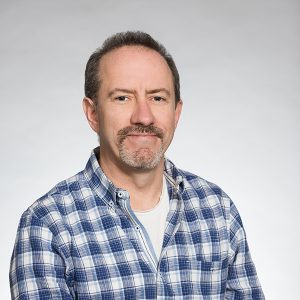
Hang

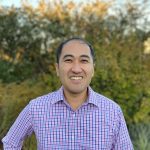
Kendrick (Ken) Hang is a founding faculty member of Green River College’s applied baccalaureate program in software development. Prior to teaching, Ken was a software engineer developing aircrew and tactics training systems for the naval aviation community, with a focus on instructional systems and aircrew performance measurement. He has a Bachelor of Science in Computer Science from the University of Virginia, a Master of Software Engineering degree from the University of Maryland University College, and a certificate in community college teaching from Seattle University. Ken’s professional interest areas include broadening participation in computing, data analytics, experiential learning, and agile in education.

Zachary Rubin, Ph.D. is the lead professor of the bachelors of applied science computer network engineering at Renton Technical College. Zak originates from Florida, did his undergraduate at Rose-Hulman, and his Ph.D. in computer engineering at the University of California, Santa Cruz (Go Banana Slugs!). Outside of instruction, He has a long history of engineering in entertainment, including work at Columbia Records, Blizzard Entertainment, IMAX, Oculus, and Burning Man.

Bill Zumeta

William Zumeta is a Professor at the Evans School of Public Policy and Governance at the University of Washington. He has held a joint faculty appointment in the College of Education since 1990. Zumeta teaches in the areas of policy analysis and public policies toward K-12 and higher education as well as education and the workforce.  He was a Senior Fellow of the National Center for Public Policy and Higher Education from 2005-2011 and has been a Fellow of the TIAA Institute since 2008. He was President of the Association for the Study of Higher Education, a national scholarly organization, in 2009-10. Professor Zumeta’s research has been supported by a wide range of government agencies, foundations, and national groups, including the National Science Foundation, U.S. Department of Education, Bill & Melinda Gates Foundation, Lilly Endowment, Pew Charitable Trusts, Alfred P. Sloan Foundation, Spencer Foundation, TIAA Institute, and many national bodies and state agencies. Zumeta holds M.P.P. and Ph.D. degrees from the Goldman School of Public Policy at the University of California, Berkeley, as well as a B.A. in Political Science from Haverford College.

Dr. Gabriel Mast

Gabriel Mast, Ph.D. is the Executive Dean for Instruction at Skagit Valley College. He has held several previous administrative positions in Washington’s community and technical college system and has served as both high school and community college faculty. He is currently a co-PI on several National Science Foundation grants working to improve equity and effectiveness in science and technical education. His professional interests include a strong focus on equity in higher education and his research is focused on institutional contributions to student success, and the role of higher education in social mobility and equity. Dr. Mast’s dissertation on the effectiveness of Washington State’s community and technical colleges was awarded the Washington Education Research Association’s Outstanding Dissertation of the Year Award. He earned his bachelor’s degree from Dickinson College, Master’s degrees from Brown University and the University of Wisconsin-Madison, and a Ph.D. from the University of Washington.

Contact

General inquiries about D4DM may be addressed to Grant Blume, Principle Investigator and Evans School faculty member, and Elizabeth Meza, Co-Principle Investigator and senior research scientist at the Evans School.

William D. Ruckelshaus Center

The Ruckelshaus Center is a joint effort of Washington State University and the University of Washington, created to foster collaborative public policy in the state of Washington and Pacific Northwest.

PUBPOL 515: Leading for Equity

PUBPOL 515: Leading for Equity

Introduces frameworks from organizational leadership research to provide a foundation for equity-centered leadership in the public sector. Critically examines normative organizational practices and provides foundational concepts about different types of diversity, ethical responsibilities of public leaders, and approaches to cultivating equitable and inclusive leadership practices.