Skip to content

Megan Utemei, EMPA ’25

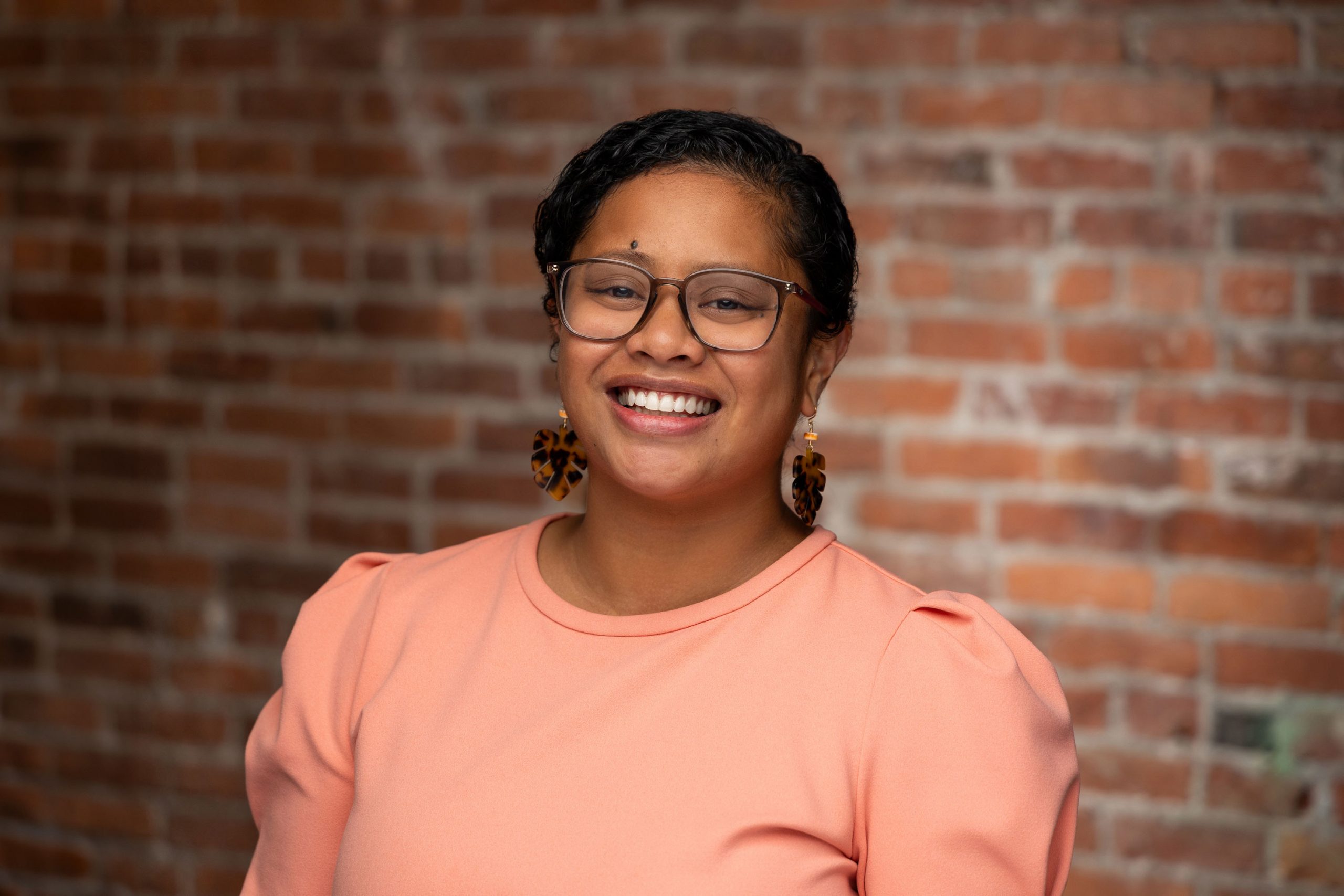
Megan Utemei

As the King County Outreach Director and a dedicated public servant, Megan has spent over eight years working in U.S. Senator Patty Murray’s office. She began her career as an intern in Congressman Adam Smith’s office and gradually advanced to work in Senator Murray’s office in Washington, D.C. Currently, she continues her work for Murray’s office in Washington state as the King County Outreach Director. She demonstrates dedication, resilience, and a deep commitment to public service throughout her career.

Megan, born and raised in the islands of Palau and Guam, brings a wealth of professional experience and a strong sense of identity and purpose. She completed the Evans School’s Executive Master of Public Administration (EMPA) program in March 2025, balancing full-time work and studies with grace, humor, and grit. She has effectively applied what she learned in the program, gaining new insights and a broader perspective to support her daily work.

Over the past 18 months, Megan’s cohort has become very close. Together, they supported each other through grief, newborn babies, and just through life. They continue to embrace their collective experiences. “They’ve become like family,” she says. She feels honored that her Cohort chose her to deliver the message, and she feels a great responsibility not only to represent herself but also to honor her colleagues, making it essential for her to convey the feelings and essence of their cohort in her speech.

What stood out most during Megan’s journey through the program was learning to lead in public service with empathy and kindness. She expressed, “The program taught me the importance of work-life balance and how crucial it is to give others grace because we are all going through something. That’s life.” At times, she could introduce real issues to the class and seek advice from the Cohort. Megan credits the Evans curriculum and faculty members, like Dean Jodi Sandford and Ben Brunjes, for helping her apply course content directly to her work. This experience has enriched her view on leadership, allowing her to appreciate its depth and complexity.

In her speech, Megan focuses on joy and the importance of continuing in public service. She states, “I want to be genuine and give people hope, even though things are really hard right now. Our work is important at every system level, and even though change may be slow, it is still happening.” She aims to help people recognize that, no matter their situation, they should not lose hope.

As Megan reflects on her journey at Evans and thinks about the future, she feels honored to speak on behalf of her cohort. “We have accomplished something challenging together, and I hope we all carry forward the lessons of compassion, courage, and community.” Looking ahead, Megan aims to continue supporting her peers and the broader Evans network.

Alumni Spotlight: Eduardo & Erica Campos, EMPA ’15

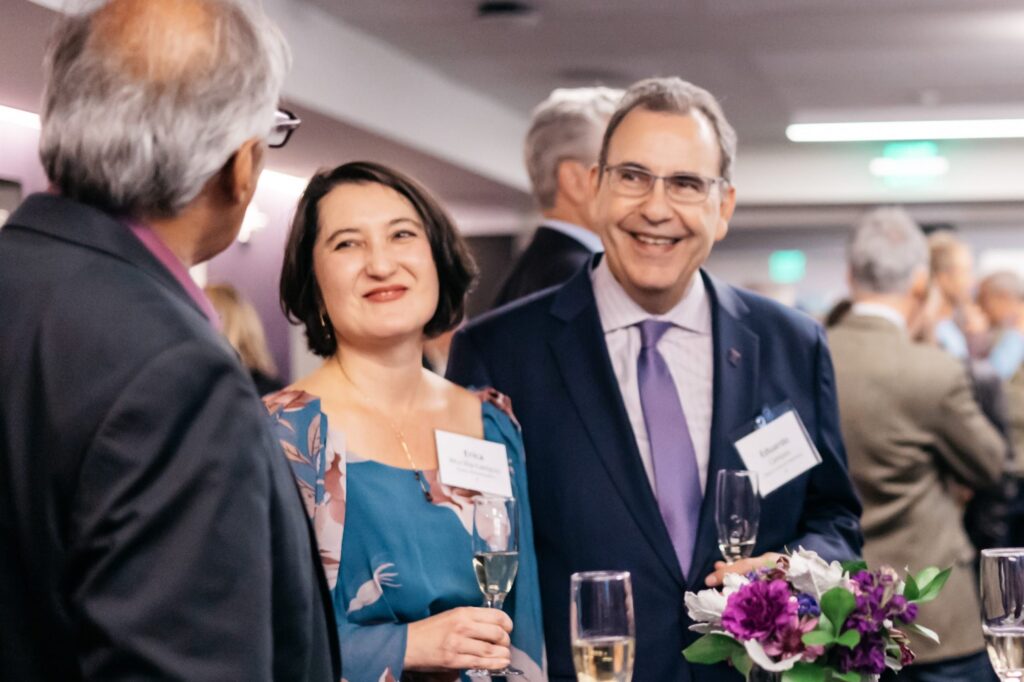
Eduardo and Erica Campos chat with a fellow Evans event attendee while holding glasses of champagne

With the flurry of spring EMPA applications underway here at the Evans School, we wanted to take a moment to celebrate and thank two amazingly committed EMPA alumni: Eduardo and Erica Campos.  

Eduardo Campos and his wife, Erica Campos, came to the U.S. from Brazil in 2003 to work for Microsoft. They quickly fell in love with the U.S. and realized it was where they wanted to put down roots. “As global executives, we were encouraged to pursue a business degree,” said Eduardo. “But we decided that was not our purpose — we wanted to have a broad impact in the community.”  

Both Eduardo and Erica were raised by families dedicated to public service. Erica’s father worked for a utilities department, and her mother was a public-school teacher and principal. Eduardo’s mother was also a teacher, and his father spent 35-years as a tax auditor in Brazil. The values of integrity and compassion, and a commitment to listening to diverse perspectives have driven their lives.  

“And that’s why we chose the Evans School,” said Eduardo. “Beyond critical thinking skill and academic rigor, the faculty helped us learn how to be better human beings, better professionals, and better citizens. And we practiced ways to compromise and bridge the divide on issues.” 

In 2015, the Camposes graduated from the Evans School’s EMPA program. And in 2022, after a long journey, they became U.S. citizens, voting in their first election that November. “It fulfilled our dream, to be able to participate in an important democratic system,” said Eduardo. 

Right after graduation, the Camposes decided they wanted to remain involved at the Evans School and became engaged volunteers and supporters. “We wanted to help other people realize their dreams to serve the community,” said Eduardo, who has served on various Evans School boards including the Advisory Committee since 2017 and the Dean’s Council since 2021. Erica is a member of the Evans School’s Community of Ambassadors.  

“As Dean of the Evans School, I’ve had the privilege to see the impact that Erica and Eduardo have made here at the school—their strategic guidance, their support for our campaign to renovate Parrington, and their hands-on partnerships with our programs, like hosting our Junior Summer Institute scholars for a site visit to Microsoft,” said Jodi Sandfort. “We thank them for their unwavering commitment to our mission and the next generation of leaders.”

Help spread the word about the Evans School’s EMPA, a work-compatible leadership program designed for mid-career public service professionals! The deadline to join the autumn 2024 cohort is May 15, 2024.

From Isolation to Connection: Lockdown Relationships Inspire New Professional Network

By: Lauren Domino (MPA ’11), Assistant Dean for Advancement & Innovation at the Evans School 

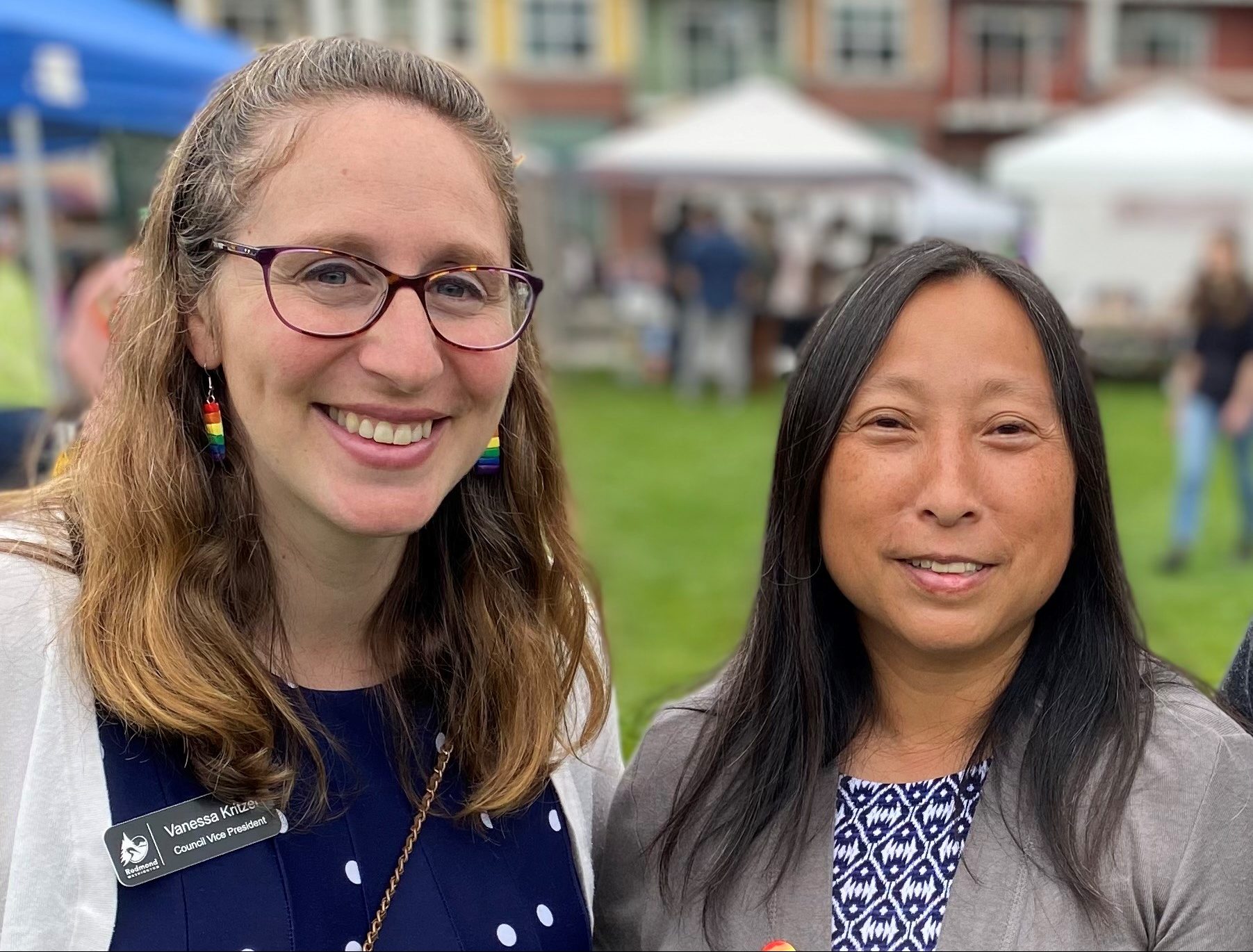
2020 was not the easiest year to begin a career as an elected official, but that’s the situation Vanessa Kritzer (MPA ‘17) found herself in as a newly elected member of the Redmond City Council.  “It was a challenging time – navigating this new role via virtual council meetings and facing multiple complex policy and budgeting issues. I started reaching out to other leaders that I respected to get a sense of how they were approaching it, and Janice Zahn was at the top of my list,” shared Kritzer. The two met a few years prior while Kritzer was still a student at the Evans School and serving on the National Women’s Political Caucus of Washington Board and connected over their shared Evans School experience.  

When Kritzer reached out during the early days of the pandemic, Zahn (EMPA ‘12) had already served on the Bellevue City Council for a few years and had begun a three-year term on the King County Board of Health in January 2020. “I was more than happy to connect with Vanessa and support her in this journey,” shared Zahn, who faced similar challenges of moving into lockdown and leading through the public health crisis. “I think back on this time and wonder, what could have been possible if I was able to dial into the Evans School to navigate this uncharted territory?” She recalled how her EMPA cohort was thirsty to continue working together after graduation in 2012 and self-organized “salons” around different topics – from public safety to affordable housing – to help springboard the work that they were each trying to advance.  

Kritzer and Zahn have kept in touch over the years – through the ups and downs of public leadership and reelection campaigns. Now, they’re thinking bigger about what’s possible. The two have come together with support from the Evans School team to launch the Evans in Government Network. The goal is to build a community of Evans Alumni who are working as government staff or elected officials to strengthen professional ties, support one another in addressing the pressing issues of today, and expand pathways to public service by connecting with the next generation of leaders. “I’m thrilled to create a space where we can come together and think about the most wicked problems we want to solve – and how we can work on innovative solutions that cut across cities, counties, and state policies,” shared Kritzer.  

Planning is underway for an Evans in Government Network launch event in March 2024. For more information or to sign-up, please visit the Evans School’s Alumni page

Supporting educational advancement and promoting economic empowerment to communities of color

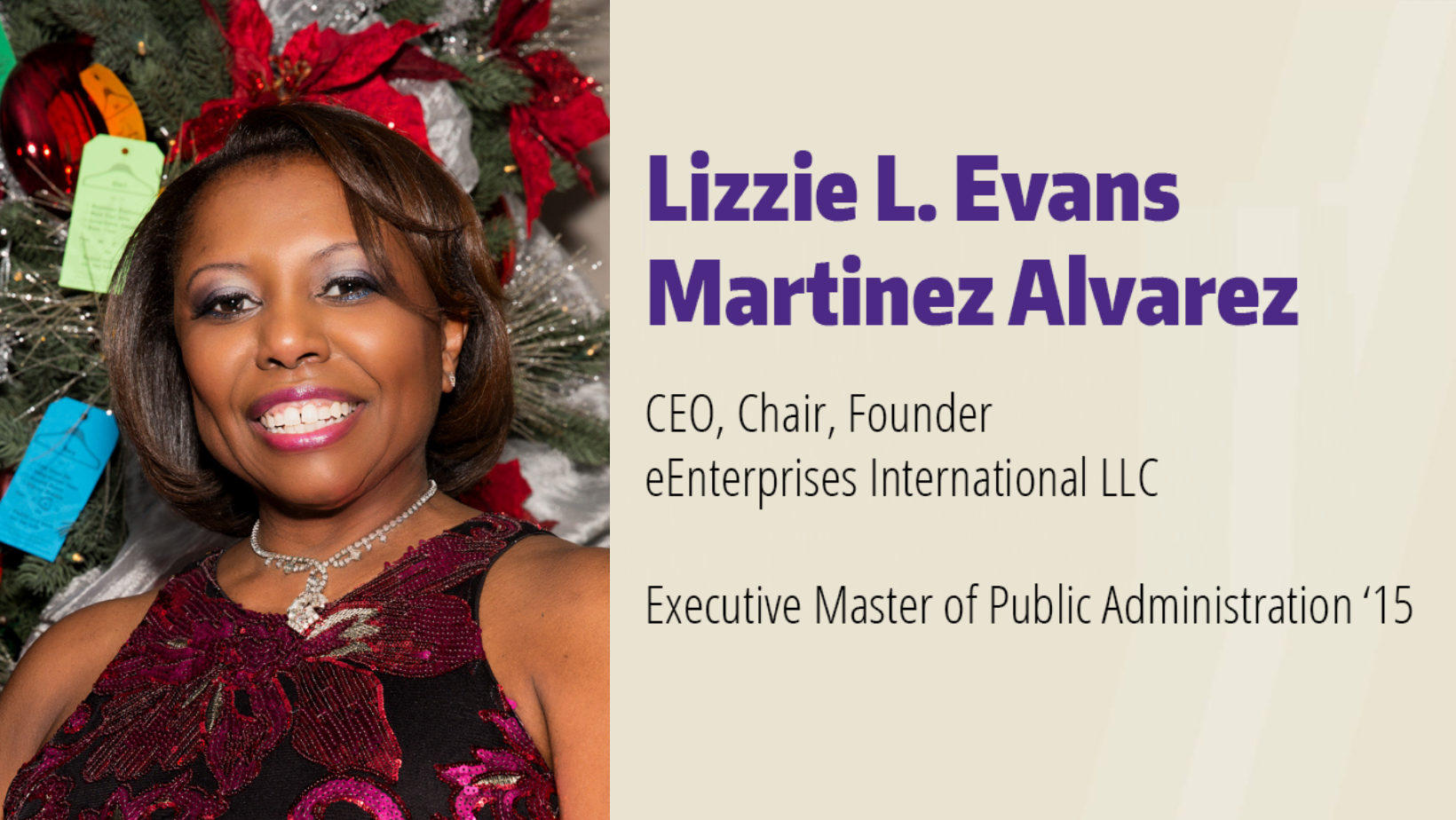
Lizzie L. Evans Martinez Alvarez

A Q&A with Lizzie L. Evans Martinez Alvarez, EMPA ’15

As a child, what did you want to be when you grew up? 

I started working when I was nine years of age picking peas on a sharecropper’s farm in East Texas. I was always playing banker with the younger siblings, trying to teach them how to save their monetary gifts and earnings. They trusted me because I always carried pocket change from working various odd jobs in the community. I was a natural born entrepreneur, always Enterprising for Profit$. Learn more about my passion for financial literacy.

How might that childhood Dream Job relate to what you do now? 

I created eEnterprises with the intent of leading a change within the community by sharing what I have been learning and discovering in my experiences in business, education, and life. My goal is to help students and young entrepreneurs discover their full potential in a manner that makes it more equitable for everyone. I now focus tirelessly on my volunteer work to empower youth in high schools by teaching financial literacy, entrepreneurship, and digital tools for businesses in the modern world. Serving as a Director-at-Large on the board of the Association of Federal Deposit Insurance Corporation Alumni, I continue to assist the Federal Deposit Insurance Corporation (FDIC) in expanding the Money Smart Financial Literacy program to the underserved youth and BIPOC communities.

What motivates you to get up in the morning and bring your absolute best to work every day and what is something you have been most proud of, professionally? 

“Nothing Beats a Failure but a Try,” an infamous quote of my late mother Dora Lee Evans, is the fuel to my flame. I received my commission as a bank examiner with the FDIC at age 36. Why bank examiner? Perhaps it was a rocky transition from childhood to adulting. For many adult years, I struggled with handling my personal finances. The financial illiterate “aha” moment did not come until I started volunteering with the Urban Financial Services Coalition – Los Angeles Chapter and teaching the importance of the FICO [credit] score at inner city high schools. One day while teaching credit awareness at Crenshaw High School in Los Angeles, CA, I realized the importance of assessing your needs versus your wants. It finally dawned on me that I did not have a budget, or a balance sheet, and I had 21 credit cards with balances. The experience from examining FDIC insured financial institutions prepared me to self-examine my own personal financial performance. In accordance with the Uniform Bank Performance Report, I received a “5” rating (the poorest) in the earnings, capital, and asset quality performances. I will not quit until I reach a FICO score of at least 750.

You’ve been a champion of Diversity, Equity and Inclusion throughout your career. Can you share how you are continuing to promote Diversity, Equity and Inclusion in your work and why?  

I received several distinguished awards of recognition for serving on the FDIC Chairman’s Diversity Committee throughout my 11-year stint. Since retirement from the FDIC in March 2009, I have volunteered tirelessly—providing professional development programs, supporting educational advancement, and promoting economic empowerment to communities of color at large. I earned an Executive MPA degree from the Evans School in 2015. In this program, I researched and wrote a policy paper titled “The Importance of Financial Literacy in Washington K-12 Public Schools.” The policy content is reflected in SSB5202 legislation signed by Governor Inslee on May 8, 2015 – which happens to be on my birthday.

Since May of 2015, I have been serving on the Financial Education Public Private Partnership Education Committee under the direct supervision of Dr. Pamela Whalley. I am taking my financial skills, abilities, and knowledge to deliver financial education to at-risk high school students and collegiate youth interns throughout Washington State and abroad in Ghana, West Africa. I serve as the Executive Director of the Financial Services Coalition, a 501(c)(3) co-founded in 2008 with intent to offer a public service to disadvantaged communities. The FSC-PS Charitable Foundation is now partnered as a professional affiliation of the UW Hubert H. Humphrey Fellows.

How does your Evans education impact how you approach your work today?

The Evans School’s education has positively impacted my personal values by forcing me to discover my core strengths. The invaluable work experience with cohorts from various sectors taught me how to collaborate and lead across boundaries. The nonprofit management knowledge expanded my bandwidth to research socioeconomic cures and ills using cost benefit analysis. The tools acquired during this accelerated 18-month study has help my organization to effectively deliver public services to BIPOC communities. Not only am I better suited to lead organizational change development in the 21st Century, but I now have an insatiable appetite for continuous improvement.

As you pursue your Doctorate degree in Higher Education Leadership at the University of Texas at Austin, what kind of research are you particularly interested in exploring? 

I am a first-generation learner (spanning from 400+ years of lineage) to obtain a higher education graduate degree with all rights, privileges, and honors pertaining thereto. While escalating from racial disparities and climbing to reach the pinnacle of corporate America, I realized the importance of Paying It Forward. I have overcome the barriers of systemic racism and workplace discrimination throughout my entire working career, ultimately peaking as a retired commissioned bank examiner at the FDIC.

In 2021, my servant leadership journey expands in bridging a pipeline for K-12 students to achieve higher education. STEM Pathways to Success is my doctorate mantra. I plan to research structural change in educational institutions through the lens of social justice, diversity, equity, and inclusion. Some of the key competencies that I will gain from studying Educational Leadership and Policy in the Ed.D. program at the University of Texas at Austin are listed below:

  • Social justice, inclusion, and equity foundations
  • Assessment, evaluation, and research
  • Law, policy, and governance
  • Organization and human resources
  • Leadership
  • Student success and learning
  • Technology in education

Dismantling racism in higher education is the key to unlocking the foundational freedoms that we all deserve and seek. It is time to heal the wounds from the past and enter the realm of equity, prosperity, and justice for all.

If you could give Evans School students one piece of advice, what would it be?

Take the “Road Less Traveled,” for it is not trodden and leads to boundless possibilities. If you want to make impact in 2021 and beyond, you must choose “The Road Not Taken” as quoted by poet Robert Frost. Discover your purpose and dare to do so something different from other people. Lead Change!

We’d love to learn more about you and your tremendous contributions to the public good, so we can share your story as we connect, learn and reflect. Share your story!
Randy Engstrom (EMPA ’09) on Seattle’s Creative Ecology

Randy Engstrom

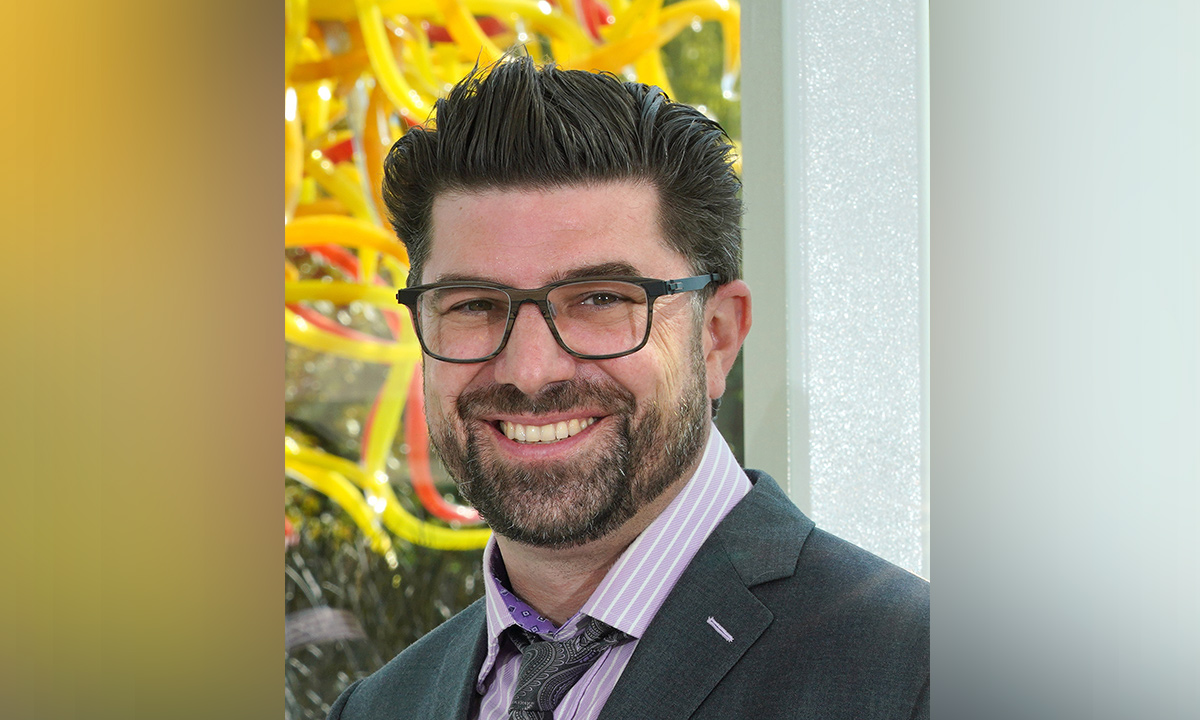
Randy Engstrom (EMPA ’09) has served as the Director of the Seattle Office of Arts & Culture since 2012 and in that time he has felt the impact of a shift in Federal Government priorities that has put more pressure and emphasis on interventions from local government. He is still determined and inspired and to explore solutions in promoting racial equality, educational access, climate and income equality.

This conversation has been lightly edited for clarity.

As the Director of the Office of Arts & Culture (ARTS) in the City of Seattle, I have been tasked with promoting the creative ecology of the city. In a climate where racial equality, educational access, climate, and income equality are at the forefront of issues in the public sector, I have led the ARTS through developments in public art programming, new programs and policies in arts education and racial equity through the arts.

The race and equity work promoted by ARTS led to great collaboration and innovation here across the city. ARTS shares and embeds staff positions within many departments to advance the department’s goals using arts as a vehicle. For example, the Office for Civil Rights has integrated arts and culture to advance racial justice and have used it to define and deploy changes, in addition to how they create artist’s stories. ARTS has also recently co-produced the Shape of Trust Program to advance racial justice. The goal of the project is to build a practice of racial equity within the workplace using experiential, arts-integrated learning for employees who supervise, manage and advise on human resources issues. To realize the project we commissioned a local theater artist to write a show based on feedback from the Citywide Race and Social Justice Initiative survey, using real stories about experiences with racial and sexual harassment. We then casted a team of actors and staged three readings, reaching over 1,200 City Staff. It was very powerful and very well received and a good example of arts-based strategies.

I am excited by ARTS’ increased focus on our creative economy and growing the creative industry in Seattle. The creative economy is the intersection between cultural development and economic development; investing in creative skills and understanding their role in the wider economy is more important now than ever.  With technological advances like automation and artificial intelligence gaining momentum and investment, it is equally important to invest in jobs that humans are uniquely qualified to do. Jobs that are not easily replaced by machines are those grounded in creativity, empathy, and storytelling. Our focus is on fields that center creativity, the human experience, and the creation and preservation of culture.

At the Evans School, I learned to emphasize strategy, frame my arguments, and communicate concisely. The Evans School taught me to think about organizational management by getting on the balcony, imagining the future, and mapping out a system with a plan.  To minimize room for interpretation, I learned to set up a framing narrative to add power to my proposals and improve their effectiveness in legislation or execution. I learned to communicate effectively, quickly, and briefly on incredibly detailed and intense issues.

I feel an urgency to provide pathways for people to serve the public and the community. We need nurture and include everyone who wants to contribute. I personally hope to continue contributing to the city, and I hope people can hear – and answer- the call of public service.