Skip to content

Art of Hosting and Harvesting 2024 Cohort

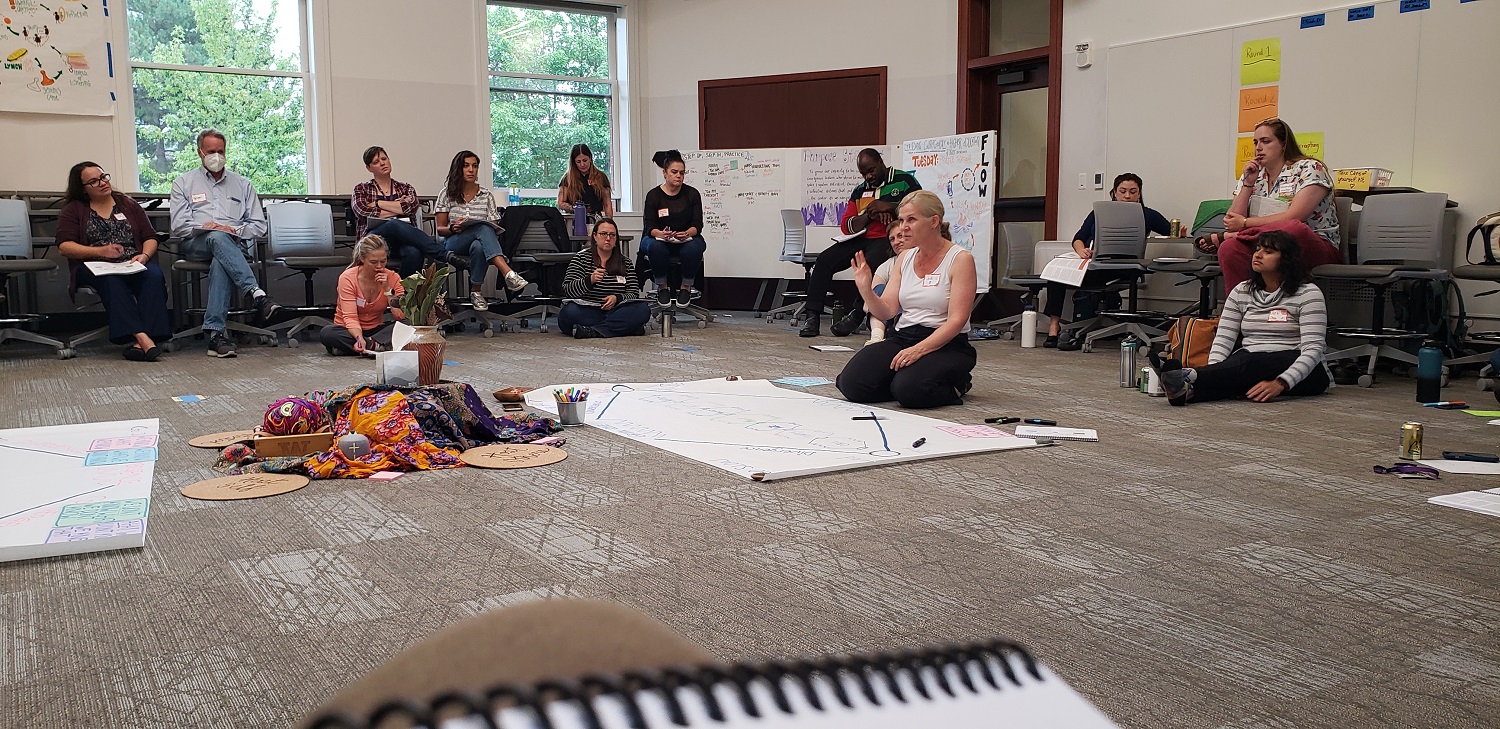
Leading Courageously in Higher Education: The Art of Hosting and Harvesting Conversations That Matter (affectionately called ‘Art of Hosting’) was called for leaders within and partners of the university and by the Evans School to support fundamental systems redesign.
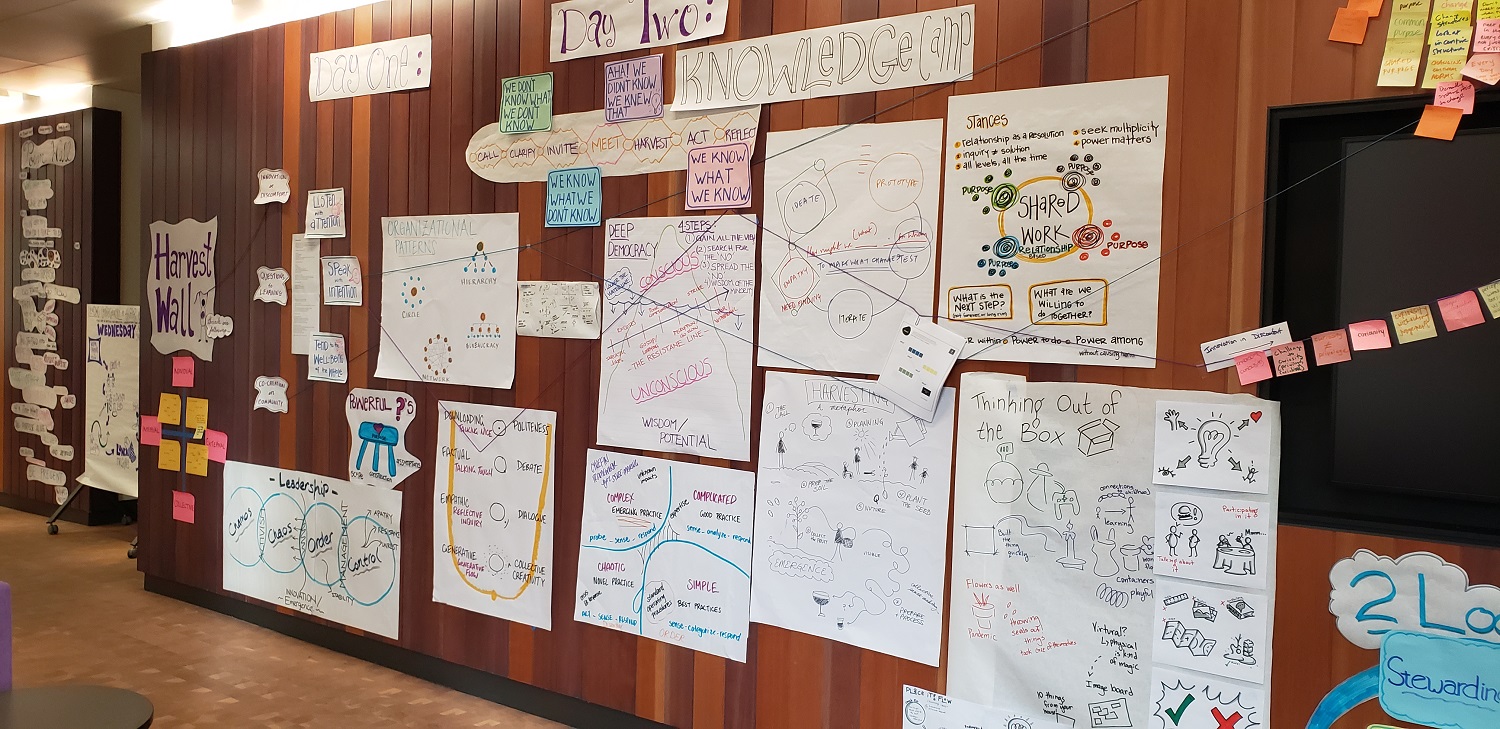
The Art of Hosting is both a methodology and a world view. It is held by an international community of practitioners who share with each other tried and true ways of engaging people in dialogue, understanding complex systems, and designing ways forward together. It is a powerful approach for actually walking the talk and guiding systems change in this era when we are striving to unlearn old practices and become anti-racist leaders of groups, organizations, and institutions.
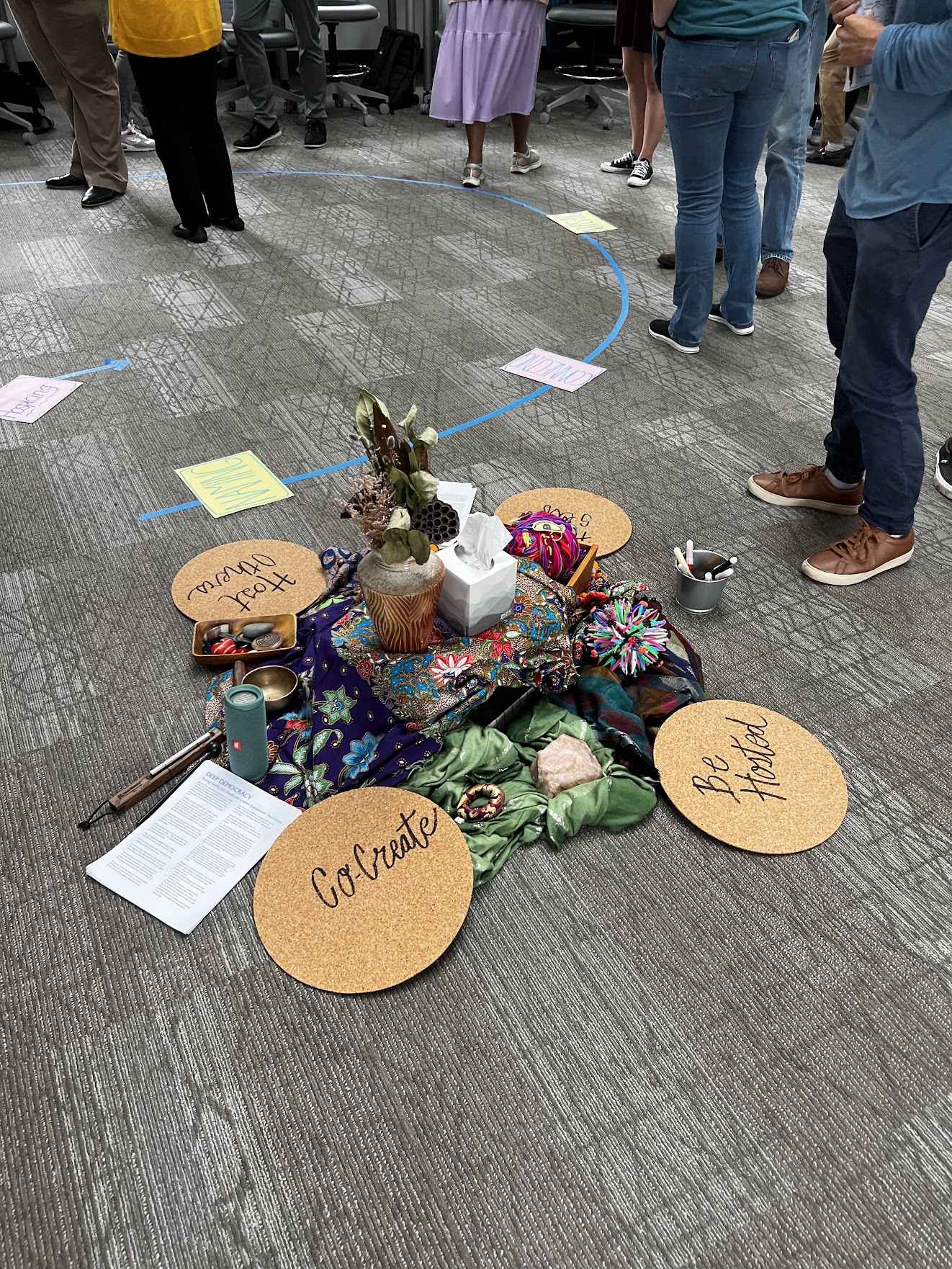
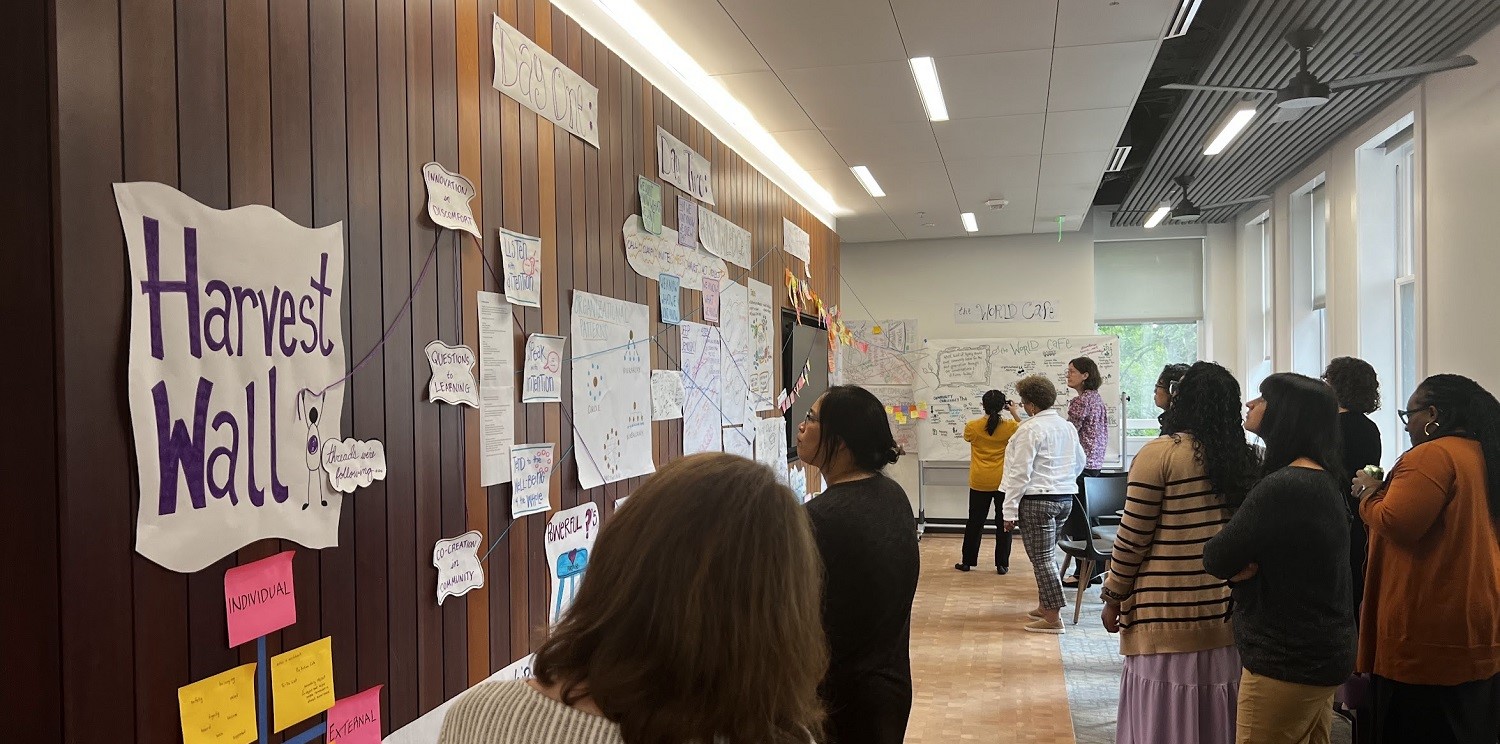
Throughout the 3-day training, participants learned hands on and participatory methods to explore powerful questions about both our personal leadership and goals for conversations that matter in our work and communities. The training was centered around the following purpose: to grow our capacity to be curious and courageous leaders who strive to make every space and system anti-racist, through our individual and collective actions that put humanity at the center as we navigate complexity. These methods and frameworks can be used to fuel innovation in higher education and public governance, helping us to understand more deeply how to decenter traditional sources of authority and invite in more voices to engage communities authentically.
Building Statewide Implementation for Paid Family & Medical Leave

As the state agency charged with implementing Washington’s Paid Family & Medical Leave (PFML), the Washington State Employment Security Department (ESD) must ensure the benefit’s implementation is done equitably to reach the full target population. From November 2022 to September 2024, EPIC hosted a human-centered design process to improve equitable access to the Paid Family & Medical Leave benefit for the employee beneficiaries who need to care for their family members or have time to recover from medical procedures. With ESD, EPIC laid the foundation of targeted and community-centric outreach, learning from the past and equipping ESD for the future.

Building the Next Generation of State Paid Leave Programs

In March 2023, nearly 50 state implementers, researchers, and advocates from across the country gathered over two days to discuss the impact and implementation of state-level paid leave policies. Convened by the Evans Policy Innovation Collaborative (EPIC), state leaders came from diverse settings, each at distinct stages in implementation. The convening was an opportunity for cross-state dialogue, to see points of synergy for ongoing paid leave implementation improvement and creative problem solving.

The following report provides a summary of the rich lessons that emerged from the convening, insights that have grown out of years of organizational and front-line implementation, paid leave research, and policy and community advocacy.

Read the Report

From November 2022 to September 2024, EPIC hosted a human-centered design process to improve equitable access to the Paid Family & Medical Leave benefit for the employee beneficiaries who need to care for their family members or have time to recover from medical procedures. In partnership with ESD, we laid the foundation of targeted and community-centric outreach, learning from the past and equipping you for the future. Our operational principles were to:

  • Build upon what was learned since 2020 about policy implementation from Consulting Lab analysis, research, and the Perigee pilot program;
  • Engage nonprofit service providers so they act as ambassadors for the program for families with whom they already have trusting relationships;
  • Create the ingredients for a durable engagement infrastructure that assures long-term implementation capability;
  • Develop an evaluation strategy that assure continuous quality assessment and improvement of this process to assure equitable access over time.

and support to ultimately improve public policy in the social services.

General inquiries about this project may be addressed to: evansepic@uw.edu.

Non-Motorized Boating Fatalities in Washington

The concern for the safety and well-being of non-motorized boating users has increased as the interest and participation in these activities has risen. Little research has been conducted around non-motorized boating risk and fatality.

From July 2021 to December 2022, EPIC documented the prevalence of boating fatalities and rescues in Washington state; comparing Washington’s rates of fatalities and rescues to other states and developing recommendations about effective and collective ways to increase boater safety in the state.

This report provides background into non-motorized boating activity in Washington State including an overview of existing research and Washington law; a study of non-motorized boating fatalities from Washington State Parks Boating Program’s Boat Accident Report Database (BARD) by county; feedback from stakeholders in the Washington State boating industry; comparisons between Washington State and other
states nationally using the National Recreational Boating Safety Survey (NRBSS); and recommendations for increased boater safety in Washington State.

General inquiries about the report may be addressed to: evansepic@uw.edu.