Skip to content

New Book and Lessons learned: Norman Rice, MPA ’74

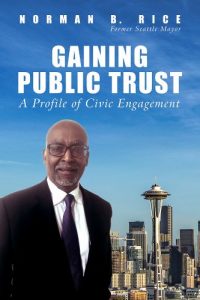
“Gaining Public Trust: A Profile of Civic Engagement”

The Honorable Norman Rice, MPA ’74. was elected as the first African American mayor of Seattle in 1989 and served two terms earning him national acclaim. When Rice stepped into his role as mayor, the city was experiencing deep divisiveness and polarization. African Americans represented only 10% of the city’s population and the city was engrossed by the controversial issue of using school busing to achieve racial integration.

In his new book, Gaining Public Trust: A Profile of Civic Engagement, Rice shares his journey to leadership and public service, and what he’s learned about the critical importance of civic engagement through his notable successes in bringing Seattle’s divided city together.

As our communities navigate the COVID-19 response and recovery, and as our country continues to grapple with its long history of systemic racism and devastating inequities, the lessons Rice learned 30 years ago – during the city’s most contentious times – are still applicable today.

In his recently released book, he shares:

We need both civic and civil engagement. The skeptics among us might look around and say there is no chance for civic engagement that is civil these days because our politics have become so divisive. But I don’t believe that. I believe democracy survives only when we have meaningful engagement of the populace. It takes more than just voting or reading polling data. It is imperative to examine what it means to participate civilly in the political process and go back to the days when we actually solved problems by listening to each other and arriving at solutions together. It isn’t even so much a matter of bringing bipartisanship into the mix; it has more to do with people recognizing we all approach problems differently. Reaching agreement on the problem is just one step. We have to then find a way forward, despite our differences, to get to the solutions that work best.

With honest, thoughtful, and inclusive leadership, Rice successfully created ways to bring together government, businesses, community groups, and individuals to partner and improve the public school system, revitalize Seattle’s downtown, and strengthen neighborhoods.

Read more about the Honorable Norman Rice, his reflections on leadership, and his new book in the UW Magazine article, “Civic and Civil Engagement.

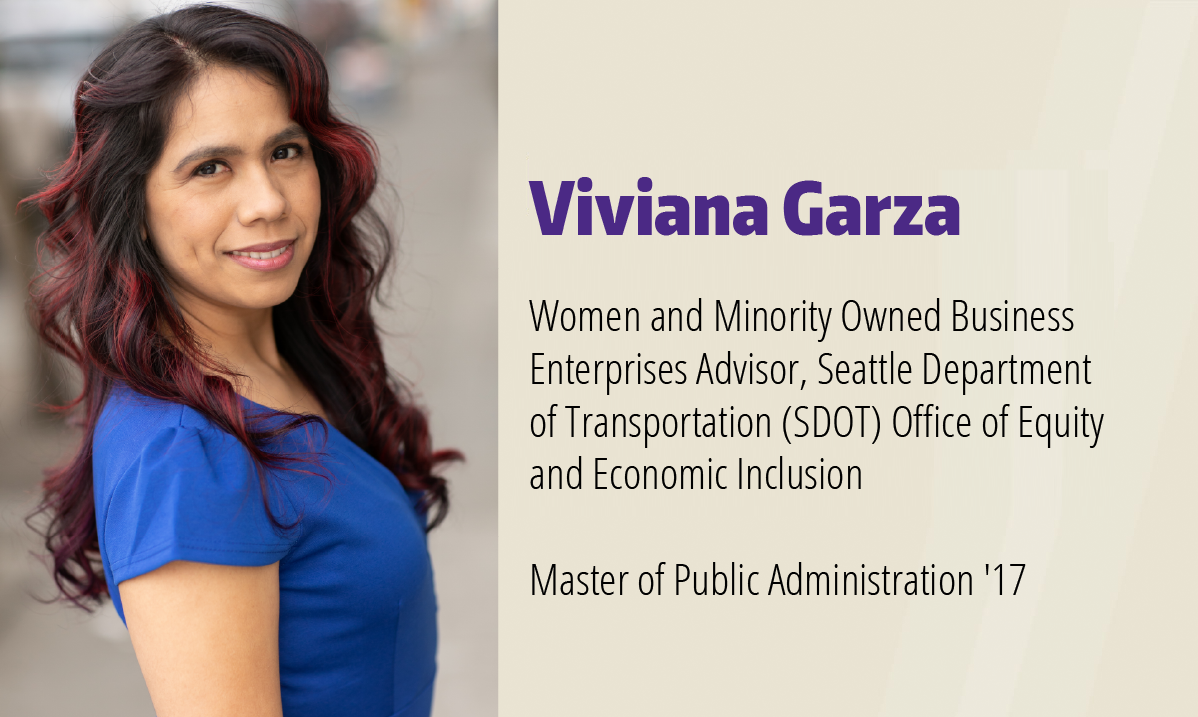
A north star rooted in racial equity & anti-racism: Viviana Garza, MPA ’17

Viviana Garza

Can you share a bit about the work you are currently doing – as a Women and Minority Owned Business Enterprises Advisor at the SDOT Office of Equity and Economic Inclusion – and what a typical day in your job looks like?

There isn’t a typical day in my job. My work spans multiple fields and areas of expertise and I get to engage with folx in the community as well as public officials and servants. The City of Seattle has a Women and Minority Owned Business Program (WMBE) which is a policy tool for increasing contracting equity within the City’s contracts focusing particularly on women-owned and minority-owned businesses, as those have been recognized as being significantly underutilized and underrepresented within City contracts. I manage and implement the WMBE Program within the Seattle Department of Transportation (SDOT), one of the City’s capital departments. The SDOT Women and Minority Owned Business Enterprises program seeks to eliminate internal barriers through fostering support of women- and minority-owned businesses from within SDOT and also by working externally to get information and resources to those firms.

My role can be at the most basic level categorized in internal engagement, external engagement, and data. I work with folx inside SDOT to improve and create processes and policies to increase equity in our contracts, as well as promote understanding of the WMBE Program and utilization of the tools for increasing that equity as a part of SDOT staff’s everyday work. I also work with community organizations and firms on an individual basis to help them navigate the City procurement process so they can gain access to resources and learn about upcoming anticipated projects to prepare for those opportunities.

To support all these efforts, I need to have a solid understanding of our SDOT spending and where our dollars are going. Therefore, I spend a good amount of time analyzing our data to determine where our typical avenues of spend are and come up with strategies to improve our contracting equity in that vein. I also work with other Departments, agencies, and community organizations through outreach events, taskforces, and other efforts to improve contracting equity throughout the City, County, and State. Priorities change daily and sometimes hourly, so I don’t have a typical day. But an example of one type of day can range from advising an SDOT project’s evaluation panel of experts regarding the prime’s Inclusion Plan, to meeting with a firm new to working with the City, to participating in a general meeting at a community organization, to meeting with an interdepartmental team to discuss policy changes for our Diversity Compliance system.

Every day brings new challenges and new problems to solve, and as long as I have my north star of rooting myself in racial equity and anti-racism, I know where to go.

What do you think the state of your field/organization will be in 2030? What will be the same, and what will be different?

It is hard to even speculate what the state of my organization will be in the upcoming year let alone in ten years, even more so for the field of equity work. I know that we are advancing in our technological abilities which has enabled us to reach individuals and groups that did not have access to our work in the past. That is at the same time bringing further to light the disparities in access that some organizations or people have. What I have seen is there is a greater emphasis on equity work as a whole in organizations, and while I think that is a good sign, I also am skeptical about the true intentions of these organizations – public, private, nonprofit and otherwise. There is a tendency for folx to become excited about something for a certain period of time before the excitement wears away and they turn to other interests. I am hopeful that the prioritization of racial equity, anti-racism, and decolonization will continue with firm roots, rather than empty words and false demonstrations of representation. My hope is that particularly those white folx in positions of power – men and women – can think about whether their actions are supporting, centering, and uplifting the Black and Indigenous folx and other people of color in their organizations, or are they simply following an “ethical business trend.” I am hopeful that more Black, Indigenous, and other people of color will be centered in conversations and that they are not solely called upon when people think about racial equity work.

What is something you have been most proud of, professionally?

I think I am most proud of where the SDOT WMBE program is currently in terms of the allies and interest that the Department has for the WMBE Program. We have had the largest number of WMBE Advocates who learned about our program in our trainings this year than any other, and I have implemented a WMBE Pathfinder award to acknowledge the SDOT staff who have been going above and beyond to help WMBE firms navigate the City’s resources and connect with the firms individually. Honestly, I am also most proud of how non-traditional it was for me to join this department and take on this role. I was a Sr. Strategic Data Analyst supporting this role for 5 months before I became the Interim WMBE Advisor where I learned in a trial by fire all the pieces of the program and work – from presenting to City Council, to putting on major outreach events and training programs, and to meeting with Senior Executives in SDOT, the City and other agencies about policy, strategies and tactics to move the needle for the minority- and women-owned business community. I am proud that I had the resilience to fight for the justness of the work, managing expectations from many different stakeholders, and built relationships, allies, and networks to support the WMBE Program within SDOT and externally. I don’t look for accolades and don’t do well with compliments, but one of the best compliments that I have received was from a leader in the women- and minority-owned business community who spoke honestly and frankly at a recent event and said “I am saying this to you, not just because she is here, but because it is true and I tell others this frequently: Viviana truly is an advocate for the WMBE community, and she truly does care about equity.” Whenever I hear from firms reaching out to me sharing they have heard that I am an advocate, regardless what their question is, to me that is the most I can ask for. If folx in the community are telling each other that I am someone to trust, that means more to me than any award I could ever receive.

UW and the Evans School are committed to Diversity, Equity, and Inclusion. How are you addressing Diversity, Equity, and Inclusion in your work and personal life?

Equity work is not something that I address in my work or personal life. Racial equity, anti-racism, and decolonization are parts of who I am. Since they are parts of me – from my upbringing from a Mexican-American family from Los Angeles who fought against gerrymandering and racism through lawsuits and the different organizations they supported and were a part of such as the Mexican American Legal Defense and Educational Fund (MALDEF), to focusing on integrating diversity and inclusion into my small private mostly white school and attending conferences such as the Chicano Latino Youth Leadership Project – I bring that knowledge and experience to what I do. For me, the personal is political and I don’t see a distinction between myself unlearning racism or learning about how to practice decolonization and integrating that knowledge into the policies and programs I work within at the City of Seattle.

What’s the next skill or knowledge set you want to add to your repertoire?

I recently obtained my Project Management Professional Certification and scored above target. So, I could say that I am now looking to achieve another certification going forward. However, in reality the next skill I would like to add to my repertoire quite honestly is relaxation and the knowledge of my value regardless of my output. I have never been able to relax, but I am learning that the constant desire for excellence and problem-solving is rooted in the racist capitalist idea that if we aren’t constantly improving, then we have no value within this economic system. A valued colleague recently told me that we are allowed to take a breath sometimes to fill ourselves with the peace, calm, and awareness that we can use to progress where we need to go.

Looking back on your Evans School experience, what stands out as the most impactful aspect and why?

The most impactful experience was being a part of the Evans Student Organization. I was able to work with many different stakeholders including my amazing volunteer team, start a number of initiatives including the utilization of students in the faculty hiring process, and engage with policy changes in the curriculum, including navigating the politics of selecting the graduation day speaker – allowing students the ability to protest without repercussion which then gave way to future conversations regarding engaging with graduates prior to the administration deciding on the speaker. We also created a structure that we thought would help future classes stay engaged with the administration, faculty, and students in a helpful way. Those conversations and the diversity of needs that the team had taught me better management skills and that I could be a “part of the system” and work for the community. I could even protest the very system I was a part of and stand by my principles while acknowledging the difficulties that the administration faced to make real changes. This engagement prepared me to be a leader who can go into places and get to the root of problems, lead with racial equity, and even if we don’t get what we want, be able to find ways to strategize to improve the outcomes for ourselves and others going forward.

How does your Evans education impact how you approach your work today?

The education – both formal and informal – I received at Evans taught me how to be an adaptable leader working with many different types of people and learning how to motivate them to a common goal. I learned how to listen to many different points of view and manage stakeholders in a collaborative and constructive way while centering the minoritized and historically ignored and dismissed peoples’ views. I learned about executive leadership, management, stakeholder management, policy creation, and constructive communication at Evans and all of this I bring to my work each day.

Rear Admiral Bill Center, MPA ‘78 receives 2020 UW Distinguished Alumni Veteran Award

In honor of Veteran’s Day 2020, Retired Rear Admiral Bill Center, MPA ‘78, was selected as the recipient of the University of Washington’s 2020 Distinguished Alumni Veteran Award. Congratulations on this well-deserved recognition, Rear Admiral Center!

Learn more about Rear Admiral Center’s life-long commitment and service to his country, the US Navy, and to the UW in the video below.

Celebrating the End of the Campaign for Evans

gif with purple You Did it and a gold background

Ten years ago, the University of Washington launched the Be Boundless — For Washington, For the World campaign, with the powerful idea that what you care about can change the world. Over this decade-long campaign, the Evans School community — our alumni, friends, faculty, staff, and students — invested a combined $50,453,543 in our school through the Campaign for Evans. Your investment helped to profoundly amplify the impact of the Evans School.

Today, in this time of tremendous societal upheaval marked by racial injustice and a worldwide health crisis, the work of Evans School students, alumni, and faculty is more important than ever. As we pause to celebrate the campaign’s completion and reflect on the many ways you helped change the world for the better, we also know there is much work ahead, in the months and years to come.

A Strengthened Community

3 purple team logo

4,095
Total Donors

first place medal

3,070
First Time Donors

purple piggy bank

$50,453,543
Total Raised

UW paper logo

19
New Endowments

students walking on campus

A TRANSFORMED EVANS SCHOOL STUDENT EXPERIENCE

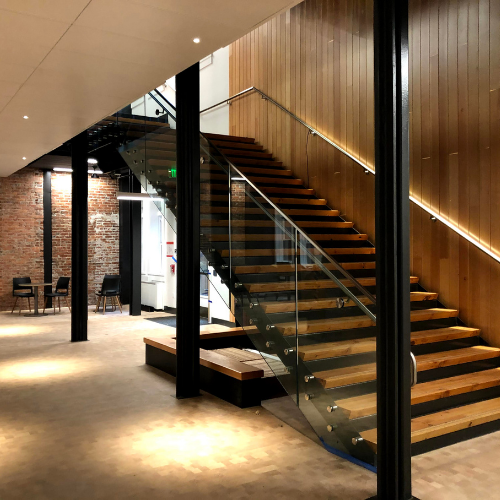
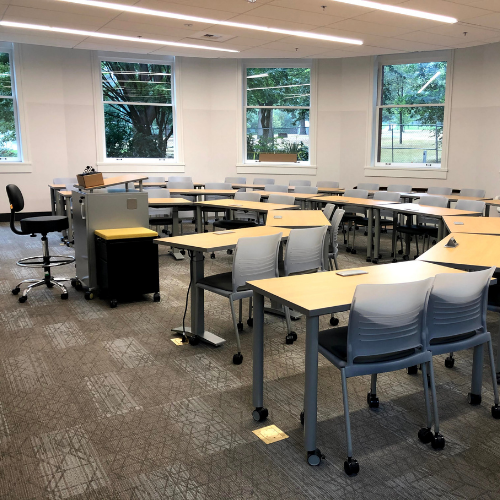
More than 500 Evans alumni, faculty, staff, and public service champions, along with the UW and the State of Washington, came together to contribute $24 million to transform the interior of Parrington Hall. Together, we have created innovative and inspiring spaces for Evans School students and faculty, so that they can bring innovative solutions to the world’s most challenging public problems.

Empty Classroom
Staircase
empty classroom
  • Parrington now boasts five large classrooms (more than doubling our classroom space), all of which are outfitted with the technology needed to prepare public leaders for the challenges of 21st century.
  • While you may be familiar with the iconic red brick exterior, the remodeled Parrington has turned GREEN, having achieved LEED Gold standards thanks to the energy efficiency of all new electrical, ventilation, and climate control systems.
  • Throughout the project, we upheld Evans’ commitment to diversity, equity, and inclusion by exceeding UW Equity standards for contracting with women and minority-owned businesses.
Graduation Ceremony

AN EXPANDED EVANS SCHOOL IMPACT

Evans School alumni are change-makers. Their impact is broad and deep – and has grown tremendously over the course of the campaign. In fact, 43% of ALL Evans Alumni graduated during the last ten years.

Moving forward, more students than ever before will have access to our school. Since 2010, donors have contributed nearly $6 million in student support funds. In addition to gifts that were put to use supporting students immediately, 17 new endowments have been established to provide fellowship funds for Evans students in perpetuity, including 4 new funds designated for Black, Indigenous, students of color or first-generation students. We are proud that today, nearly 40% of MPA students receive a fellowship award upon admission to the Evans School, enabling more students to pursue a degree and career in public service.

Washington State Ferry in motion

RESEARCH FOR THE PUBLIC GOOD

In addition to educating the next generation of public leaders, Evans School faculty are aiming their scholarly work towards some of society’s most pressing problems. Over the last ten years, Evans School faculty received more than  $30 million  in private grants to support their research. From the Evans School Policy Analysis and Research Group (EPAR), to the Minimum Wage Study, to a report on the Washington State Ferries’ Triangle Route, our faculty work collaboratively to apply evidence-based research with cutting-edge methods to solve problems.

In addition to research funding, individual donors provide an important source of support for the contributions of our faculty through endowed professorships and faculty fellowships. For example, in 2017, David Suárez became the inaugural recipient of the Colleen Willoughby Endowed Faculty Fellowship in Philanthropy & Civil Society. This fund has supported Dr. Suárez’s work, including his research on advocacy among community foundations in the U.S., and their ability to produce social change.

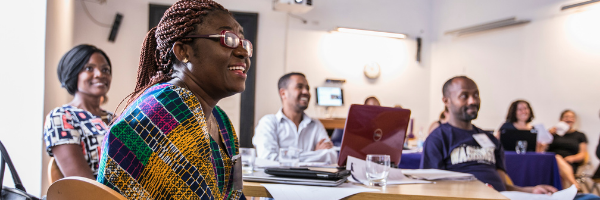
classmates laughing

A HEALTHIER WORLD

Since 2017, the Evans School’s International Program in Public Health Leadership (IPPHL) has trained 45 public health professionals across 18 African countries on how to craft policy solutions and identify and mobilize stakeholders to address public health challenges such as HIV/AIDS, maternal and child health, and infectious disease. Today, many program fellows and alumni are at the forefront of their country’s and region’s responses to the COVID-19 pandemic.

Funded by the Bill & Melinda Gates Foundation, IPPHL continues to increase in both scale and impact, including doubling the cohort size, expanded alumni opportunities through ongoing development, and new partnership development on the African continent.

a Purple Thank you with Mount Rainer Background

Thank you for the 50 million ways you’ve helped to broaden our school’s reach and deepen our impact over the last decade. It is because of the generosity of the Evans School community that we can and will take on the many challenges of today — and prepare for the challenges of tomorrow.

Make a Gift

WITH SPECIAL THANKS TO:

Our Campaign leadership — Bill ClappMaria Denny, the Hon. Daniel J. Evans and Nancy B. Evans, and Tom Waldron (in memoriam); Campaign council members John HoersterSri Remala KamdarMaggie WalkerColleen Willoughby; Members of our Evans School Advisory Board and Honorary Advisory Board; and Dean Emerita Sandra Archibald and Interim Dean Alison Cullen for their tremendous leadership.

Advocating for the Underrepresented

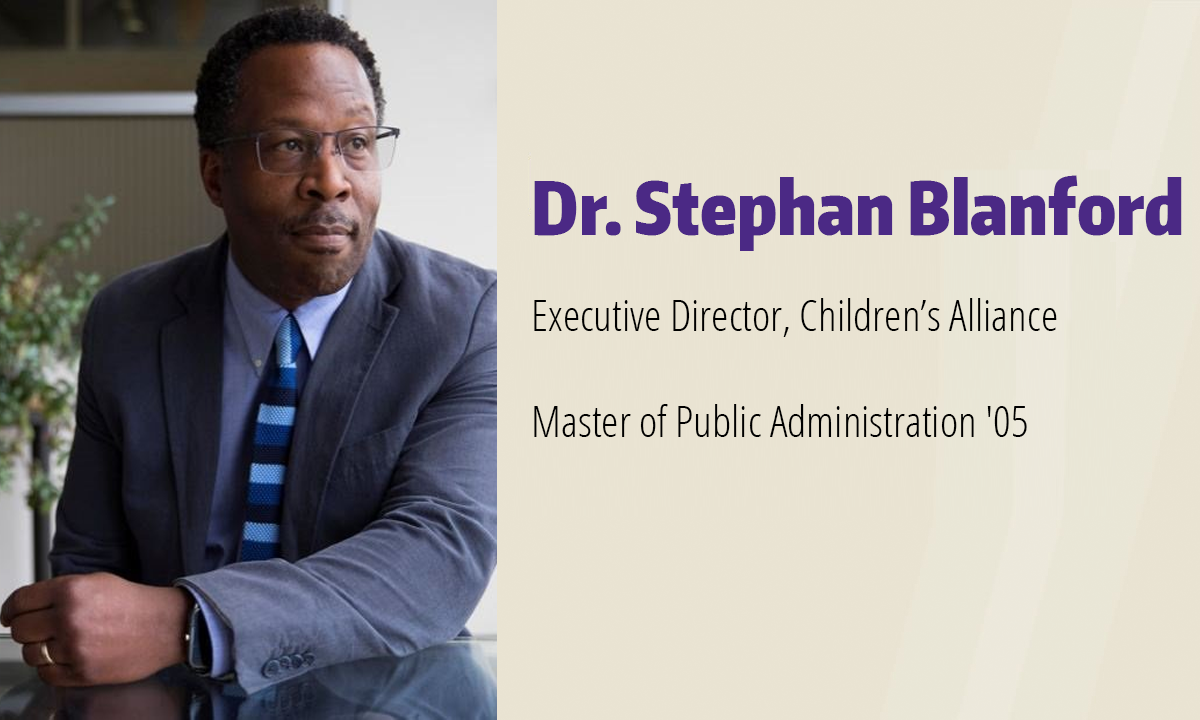
Dr. Stephan Blanford

As the Executive Director for Children’s Alliance, what is one advocacy and policymaking issue for children and families you are most passionate in solving (and why)?

Immediately upon assuming my role this summer, many stakeholders across the state alerted me to the perilous condition of childcare and early learning providers as a result of COVID-19. Since then, I’ve spoken to many members of the Washington Congressional delegation, State Legislators, philanthropists and department heads, trying to inform them how inattention to this issue will have long term consequences for our efforts to improve academic outcomes for all Washington’s children and imperil efforts to restart the state’s economy.

What contributed to your decision to pursue a career in support of the public good? Was there a defining moment in particular?

In all of the papers that I wrote at the Evans School (as well as my subsequent doctoral studies), I was interested in understanding the root causes of the inequities that we see in society, and the most potent strategies that leaders can use to address them. There has been no defining moment for this pursuit, but I frequently think about the emotions I felt while freezing on the National Mall with my family in January 2009, watching the first Obama Inauguration. It motivated me to pursue elective office myself (serving on the Seattle School Board), and has fueled my subsequent work, culminating in this new role.

What do you think the state of your field/organization will be in 2030?  What will be the same, and what will be different?

I suspect that because of this summer’s civil unrest, statewide childhood advocacy organizations will continue to shift their stance towards advocacy for children and families furthest from racial and social justice. For too long, these advocates and the institutions they targeted have pushed policies that did not take into consideration the historic neglect that many communities have faced, and have subsequently exacerbated gaps in outcomes. Hopefully, this is changing, and state legislatures are ready to listen to more racially equitable policy recommendations. I also hope that childhood advocacy organizations will adopt the stance taken by Children’s Alliance that we advocate “with children, families and communities and not for them.”

What is something you have been most proud of, professionally?

I’m probably most proud of my school board service – that I was elected with a record-setting margin of victory in a citywide race, and that I stayed true to my campaign pledge to think about and work on behalf of students who had been least well served by the school district. It meant that I was frequently ostracized by my colleagues and was on the losing end of too many 6-1 votes. But eventually, I was a part of some significant strides made by the district to focus on historically underserved students. It was the most difficult role I’ve ever held, but I feel that my sacrifice resulted in some positive progress.

What is the “GOAT” (greatest of all time) book you’ve read?

I am part of a BIPOC book group studying Ibram Kendi’s “How To Be An Antiracist” and trying to apply its principles to our respective positions of leadership. Given the tumultuous times that we are in, the book has been particularly instructive, challenging and revelatory, and I encourage all Evans School students and alumni to expose themselves and their practices to the concepts of anti-racist leadership in that book and other like it.

Who has been your strongest influence in life? Why?

The example set by my uncle, Staff Sergeant Clifford C. Sims, has been my biggest influence on my professional career. His story is almost unbelievable – after being orphaned and enduring a childhood of profound deprivation, he was drafted and served in Vietnam, where he made the ultimate sacrifice for others, throwing himself on an enemy grenade and saving the lives of many of his troops during a battle in Hue, Vietnam. He was given the highest award that a soldier could receive, the Congressional Medal of Honor, there is a large exhibit in his honor at the National Museum of African American History and Culture in Washington DC, and his example continues to inspire me to work on behalf of others.

If you could give Evans School students one piece of advice, what would it be?

The skills that you will acquire and the talents you can unleash as a result of enrollment in the Evans School are desperately needed in Washington state, the U.S. and the rest of the world. I hope that you never lose sight of the practical application of the theories that you’ve mastered, and how they can (and should be) brought to bear on some of society’s biggest problems.


We’d love to learn more about you and your tremendous contributions to the public good, so we can share your story as we connect, learn and reflect. Share your story!
Cultivating Leaders of Color: Florence Sum, MPA ’15

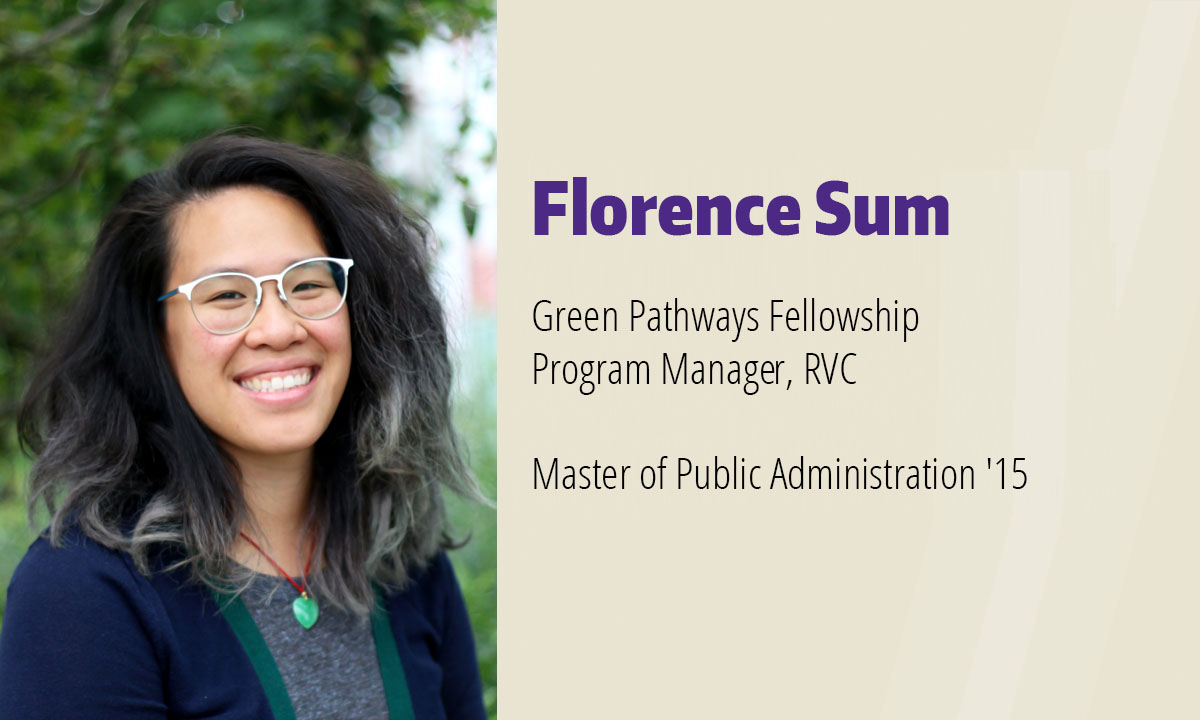
Florence Sum

As a Fellowship Program Manager at RVC – a nonprofit dedicated to building and supporting emerging nonprofit leaders of color – what are key takeaways you’d like everyone to know about your work? 

As reflected in RVC’s mission, in order to promote social justice, you must cultivate leaders of color, strengthen organizations led by communities of color, and foster collaboration between diverse communities. The key takeaway is by investing in Black, Indigenous, & People of Color, Disabled,  Trans, and Non-Binary folks, we will dismantle and transform the systems that target and harm these communities.

The work I am doing with leadership development through the Green Pathways Fellowship Program at RVC is what every workplace should be doing for everyone, especially leaders of color. This includes adjusting living wages and benefits for all positions based on the area they’re living in, including identities who are typically left out of workplace policies, ensuring that professional development is counted as paid hours, having a sizeable professional development budget, onboarding that equips employees to succeed (should be longer than 2 weeks), and creating a workplan for the first 6 months so employees are prepared and know what to do.

I believe that every person deserves to have their learning invested in, an environment that doesn’t scrutinize failure, paid a contribution that supports their livelihood, and a community to rely on.

BIPOC leaders know the solution to societal issues and the work I do is to support them to move issues in a way that honors the communities they are representing.

What is the biggest challenge you’ve had in your career and how did you address it?

As an East Asian-American, I have found that the white standard of communications for someone with a female appearance has been difficult in my career. There is a false sense of how people are supposed to communicate. Often, people are too concentrated on how people are communicating versus what they are communicating.

For example, when BIPOC people are speaking “passionately,” white people might feel attacked by the way content is delivered versus deeply listening to the message. Because of my outward appearance, people have assumed and desired my communication style to be soft, polite, quiet, and non-threatening. And, that’s not how I show up in spaces especially when I’m with folks whose values aligned. So, when people’s perceptions of me (especially those in power) and who I actually am don’t align, I have gotten in trouble. For a period of time, I was deflated.

However, I’ve learned to navigate this by being honest, vulnerable and transparent about who I am. I’ll name dynamics, try and open spaces for feedback, and hold myself accountable to my impact. I have learned and am continuing to learn how to reach people more effectively and clearly. I’m honing a habit where I ask people to repeat back what they heard or confirm my reflections to ensure we are all on the same page.

What are the most critical problems faced by people who work in your field? How do you think these problems should be handled? 

Especially for BIPOC-led nonprofit organizations, there is a lack of capacity and resources. And, there’s a direct correlation between the two – the more resources a non-profit has, the more capacity it has. My hope is that organizations are not signing up for too many projects and overworking their staff, but that’s another conversation. Unrestricted Grants or Funds are super helpful and is one way to help non-profits provide resources to those in need. Now is not the time for Foundations to reduce sharing their resources in hopes of maintaining their own financial security for decades to come.

Our world is experiencing both a global health crisis and a resurgence of racial uprising and organizing against the carceral state. The time to fight is now. We need to continue to organize and build the infrastructures that BIPOC communities have been fighting for. Now is the time to invest, because we cannot go back to the way the world once was prior to the pandemic: people should not be experiencing hunger, lack of access to healthcare, be concerned about their safety through institutions like the police or ICE, and experiencing houselessness.

UW and the Evans School are committed to Diversity, Equity, and Inclusion. How are you addressing Diversity, Equity, and Inclusion in your work and personal life?

Equity is a core value reflected in my work and in my work environment – RVC consists of all staff members who are people of color. We are wrestling with how anti-blackness shows up in our organization at all levels. RVC has shown me over the years their willingness and commitment to learn, be accountable to our mistakes, and make an effort to do better based on our learnings. These types of changes are slow and can be frustrating. The phrase DEI isn’t necessarily used at RVC because it’s just the thing we do and are continuing to do so. In all that we do, we are thinking about who is at this table, who are we not connected to, how can we make sure we are accountable and building those relationships with Black, Indigenous, and people of color communities and how are we showing up (is it in a transactional way or in an authentic way?). This occurs across the board from our HR policies and our programming.

In my personal life, the way I work towards liberation is getting educated, grounded, and practiced in transformative justice. One effort towards that is through my time with the Healing Education for Accountability and Liberation (HEAL) program. HEAL works to provide healing and accountability circles for incarcerated people – the first of its kind in Washington State. Drawing on restorative justice practices, we explore topics such as trauma, shame, resilience, accountability, structural and generational violence, and their impacts. The participants engage in a rigorous accountability process, unpacking the dynamics that led to the harm, and finally, dialoguing with people in our community who have experienced profound harm. The plan was to enter the prison in March but plans have changed and we are adjusting as a collective of facilitators to move this work forward. I’m excited as to where I will grow alongside an incredible team.

We’d love to learn more about you and your tremendous contributions to the public good, so we can share your story as we connect, learn and reflect. Share your story!