Skip to content

Theory to Practice: Addressing Inequalities in the Philanthropic Sector

Theory to Practice logo

Theory to Practice is an ongoing series of discussions hosted by the Evans School that brings together academics and researchers at UW with practitioners in the field to explore key policy, governance, and social sector topics.

As a sector, philanthropy is beginning to acknowledge and grapple with an inherent dissonance: though philanthropy’s intended purpose is to create positive change, it can also be a driver of continued inequity and harm. The policies and structures that support charitable giving have perpetuated wealth inequalities, and the practices that many philanthropic institutions have historically employed may cause harm to the communities they are trying to support.

On December 7, 2023, Maria Kolby-Wolfe, President and CEO of Washington Women’s Foundation, and David Suárez, Ph.D., an associate professor at the Evans School spoke about systemic challenges in philanthropy as well as new models that strive to reduce harm and shift power to communities closest to the work.

Resources

Speakers

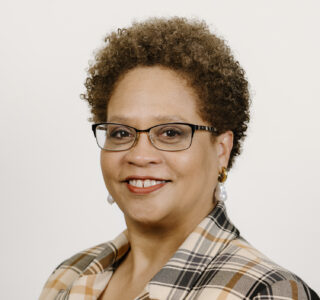
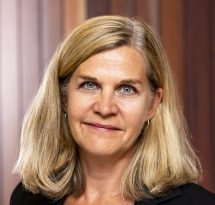
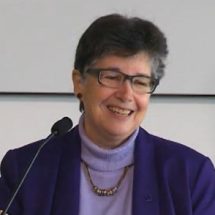
Maria Kolby-Wolfe

Maria Kolby-Wolfe is President and CEO of Washington Women’s Foundation (WaWF) and a part-time instructor at the University of Washington in Nonprofit Management. Prior to WaWF, Maria served in a variety of development and communication roles at Northwest Immigrant Rights Project, Seattle Symphony, Path with Art, ACT Theatre, the Museum of Pop Culture, and Swedish Medical Center Foundation. She is also an experienced board member, having served on the boards of TeamChild, Rainier Valley Food Bank, Allied Arts Foundation and the Global Leadership Forum. Maria was raised in Bellingham, Washington, graduated from the University of Puget Sound, and achieved doctoral candidacy in American History at Northwestern University. Her passions and beliefs align directly with her work: Food, Art, and Justice for All.

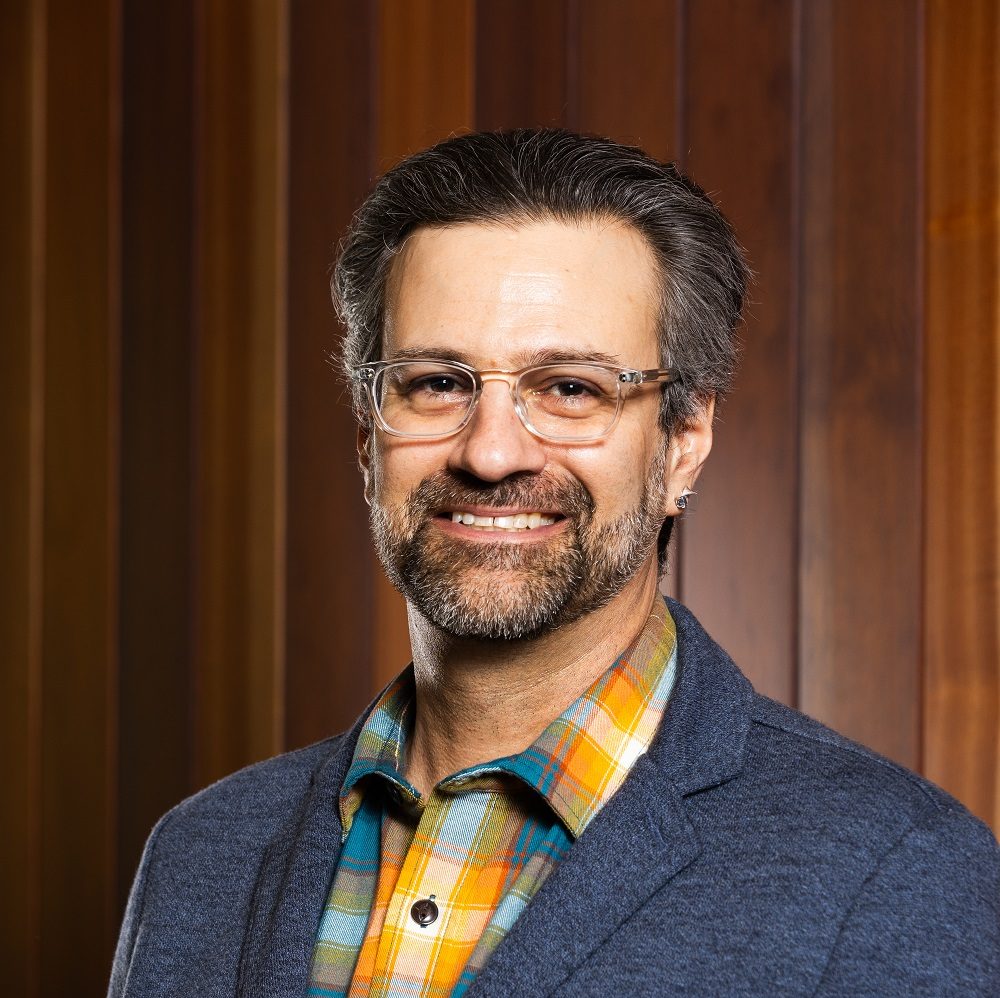
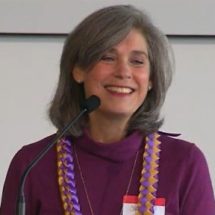
David Suarez

David Suárez, Ph.D., is an associate professor and the Colleen Willoughby Endowed Faculty Fellow in Philanthropy & Civil Society at the Evans School of Public Policy & Governance, University of Washington. His current research focuses on social sector organizations (nonprofits and foundations) and explore show management strategy shapes organizational performance, the relationship between service-provision and social change activity, and the consequences of professionalization. Ongoing projects include research on the emergence and development of participatory grantmaking in foundations, the Civic Life of Cities – a multi-team project exploring how nonprofits contribute to the communities they serve, public-nonprofit partnerships in national parks and schools, monitoring and evaluation (M&E) practices in development NGOs, and the role of foundations in generating social change.

From Isolation to Connection: Lockdown Relationships Inspire New Professional Network

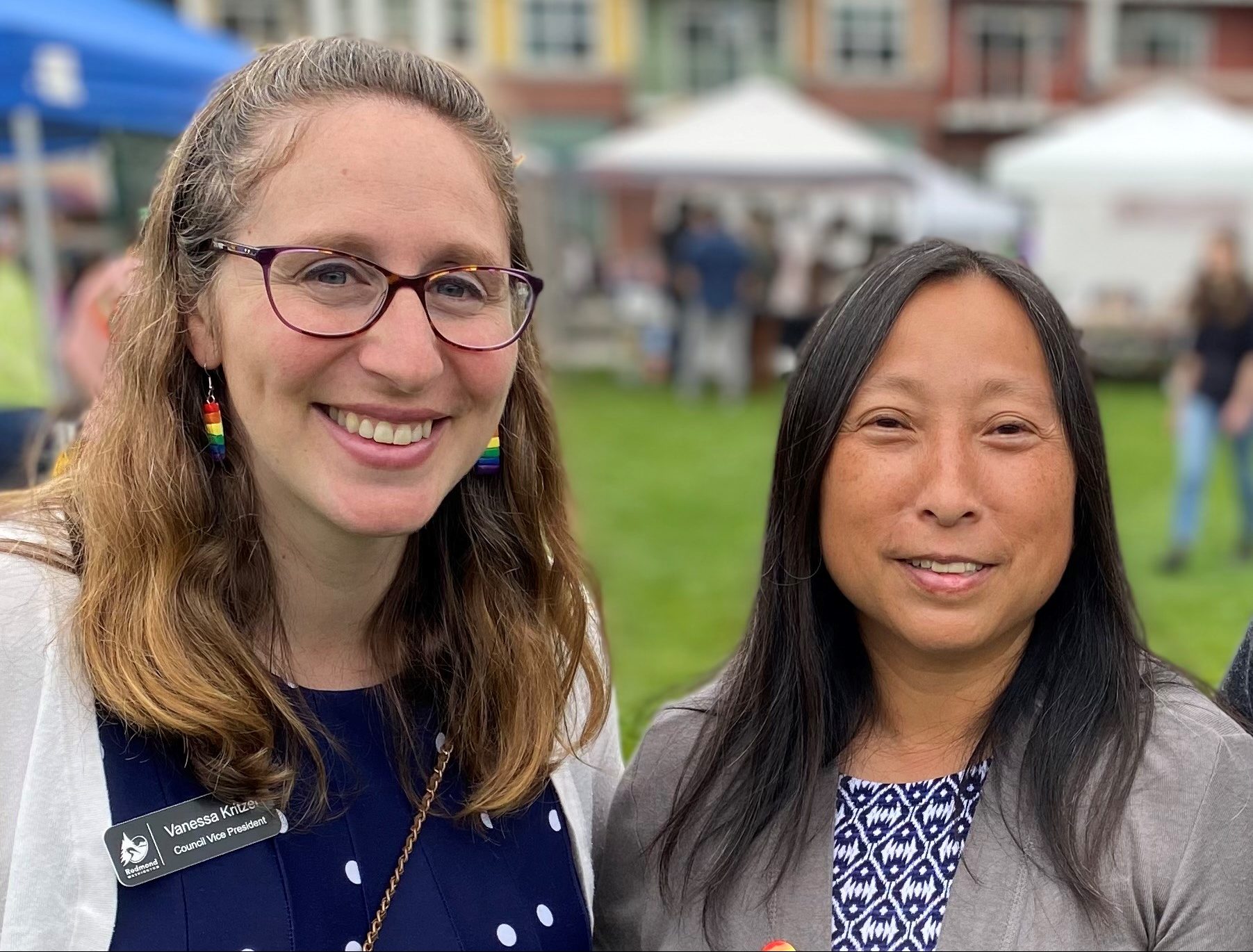
Vanessa Kritzer and Janice Zahn

By: Lauren Domino (MPA ’11), Assistant Dean for Advancement & Innovation at the Evans School 

2020 was not the easiest year to begin a career as an elected official, but that’s the situation Vanessa Kritzer (MPA ‘17) found herself in as a newly elected member of the Redmond City Council.  “It was a challenging time – navigating this new role via virtual council meetings and facing multiple complex policy and budgeting issues. I started reaching out to other leaders that I respected to get a sense of how they were approaching it, and Janice Zahn was at the top of my list,” shared Kritzer. The two met a few years prior while Kritzer was still a student at the Evans School and serving on the National Women’s Political Caucus of Washington Board and connected over their shared Evans School experience.  

When Kritzer reached out during the early days of the pandemic, Zahn (EMPA ‘12) had already served on the Bellevue City Council for a few years and had begun a three-year term on the King County Board of Health in January 2020. “I was more than happy to connect with Vanessa and support her in this journey,” shared Zahn, who faced similar challenges of moving into lockdown and leading through the public health crisis. “I think back on this time and wonder, what could have been possible if I was able to dial into the Evans School to navigate this uncharted territory?” She recalled how her EMPA cohort was thirsty to continue working together after graduation in 2012 and self-organized “salons” around different topics – from public safety to affordable housing – to help springboard the work that they were each trying to advance.  

Kritzer and Zahn have kept in touch over the years – through the ups and downs of public leadership and reelection campaigns. Now, they’re thinking bigger about what’s possible. The two have come together with support from the Evans School team to launch the Evans in Government Network. The goal is to build a community of Evans Alumni who are working as government staff or elected officials to strengthen professional ties, support one another in addressing the pressing issues of today, and expand pathways to public service by connecting with the next generation of leaders. “I’m thrilled to create a space where we can come together and think about the most wicked problems we want to solve – and how we can work on innovative solutions that cut across cities, counties, and state policies,” shared Kritzer.  

Planning is underway for an Evans in Government Network launch event in March 2024. For more information or to sign-up, please visit the Evans School’s Alumni page

2023 Leadership Awards & Celebration

Mount Rainier and the Milky Way

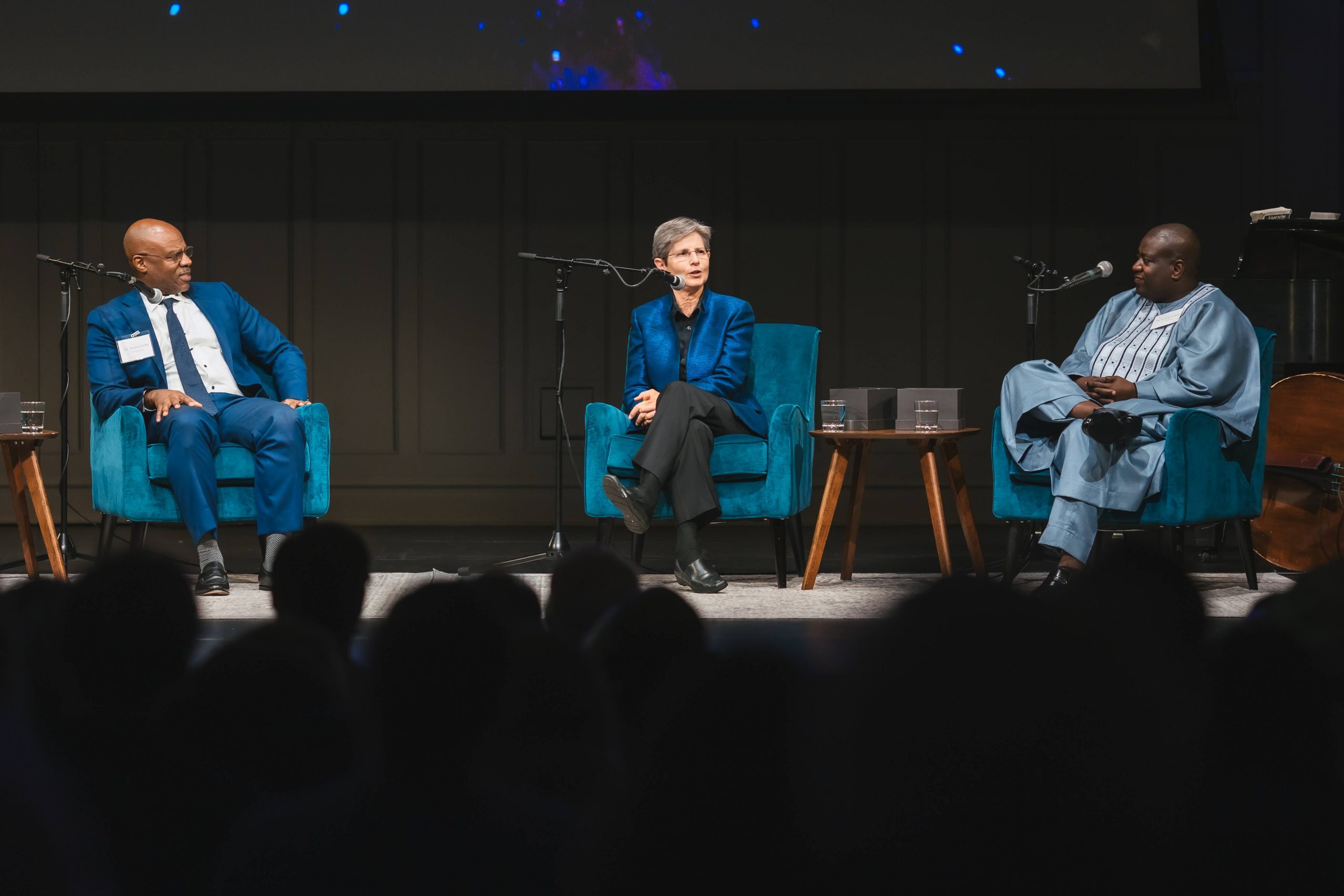
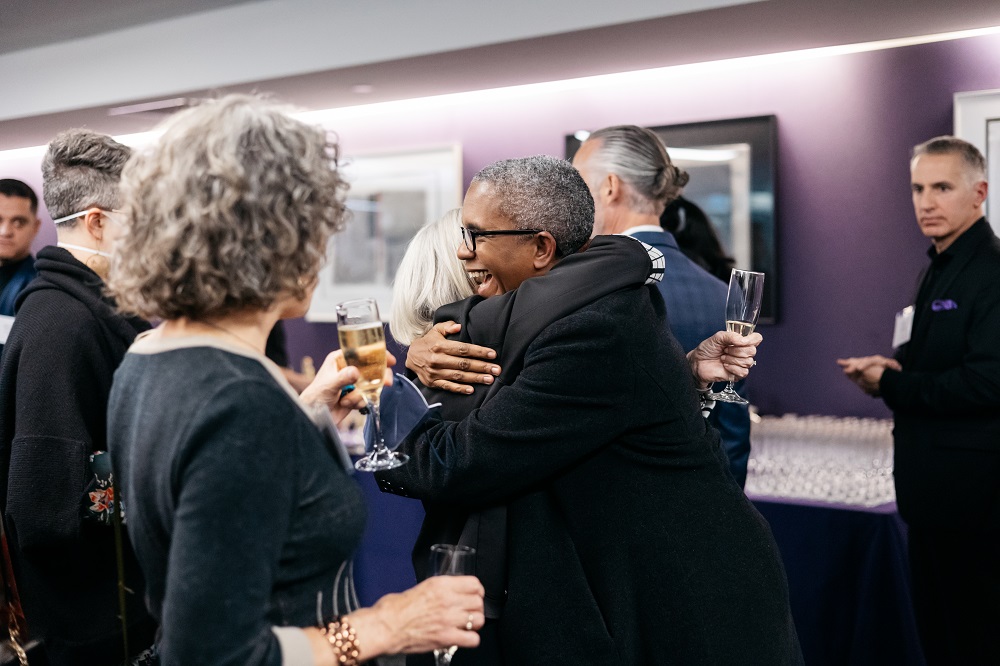
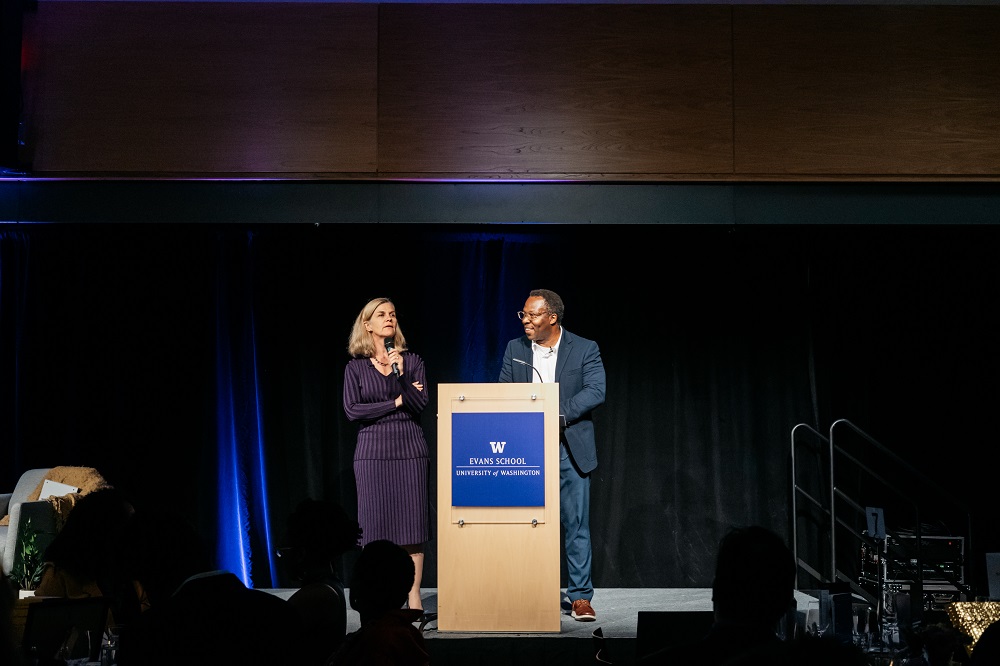
On October 18, 2023, the Daniel J. Evans School of Public Policy & Governance hosted the Public Leadership Awards & Celebration at Town Hall.

Honoring Public Service

Thank you everyone who joined us for the Public Leadership Awards & Celebration. We launched the Public Leadership Awards in conjunction with our 60th Anniversary in 2022, and we will continue it annually going forward. In these times, it is important to acknowledge and celebrate the courageous leadership happening to improve our communities and transform our public systems. It’s a moment to celebrate and to learn together, and to recharge for the continued work ahead.

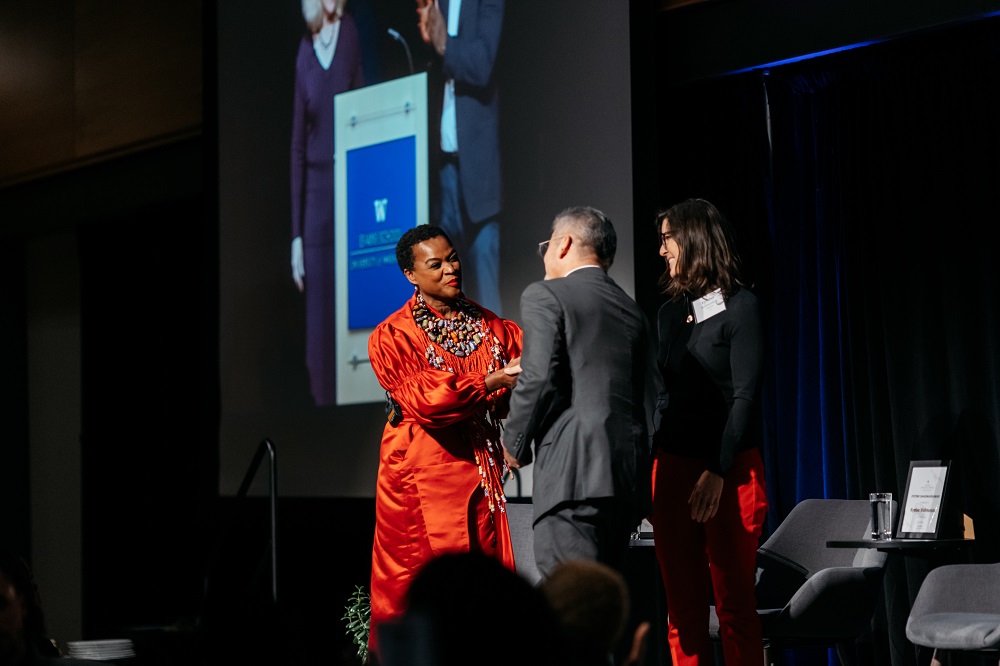
Throughout the evening, we had the opportunity to honor the work of our three Public Leadership Awardees Pa Ousman Joof, Anne Levinson, and Dr. Brent Jones. As Dean Jodi Sandfort shared in these challenging times, “it is important to acknowledge and celebrate the courageous leadership happening to improve our communities and transform our public systems.”

Expanding Pathways to Public Service

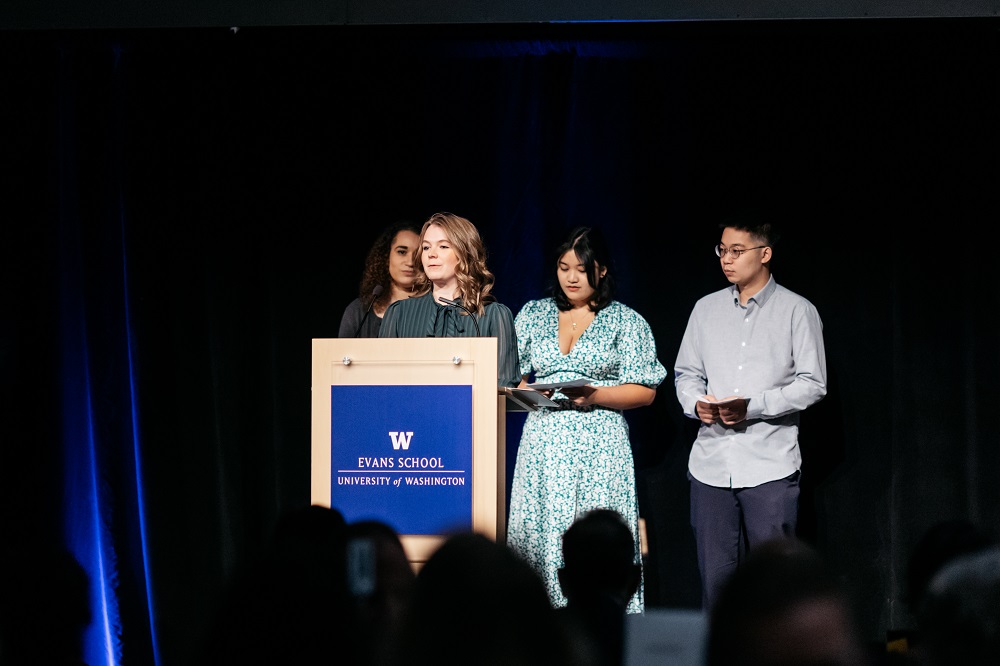
We also had the opportunity to watch a short video about Alex and Arielle’s experiences with the Evans School’s Junior Summer Institute (JSI) program this summer. We believe that access to a world-class public policy education should not be for the privileged few, yet we know many barriers exist and historical inequities persist. JSI is just one of the programs that Evans School is leading to expand pathways to public service and support students along a continuum of growth and learning.

Awardees

Dr. Brent Jones, Anne Levinson, and Pa Ousman Joof

It was an honor to celebrate the 2023 Public Leadership Awardees: Pa Ousman Joof, Judge Anne Levinson (ret.), and Dr. Brent Jones.

Research proves grassroots leadership is a critical component of any community’s wellbeing. The Community Catalyst Award recognizes a leader whose efforts impact not just any community, but one which they call home, too. This individual is celebrated for their consistent efforts to foster collaboration, amplify local voices with special attention to historically underrepresented groups, and maintain proximity to those who are impacted most by their work.

Pa Ousman Joof is the founder and Executive Director of the Washington West African Center (WAWAC). Since founding WAWAC in 2017 from his living room as a volunteer-run organization, he has worked to build the organization’s capacity, which now offers 10 key programs and serves more than 5,000 community members annually with a staff of six and a program center in Lynnwood. WAWAC provides culturally relevant services to the West African community in Washington, offering an After-School Program and Summer Camp for children, monthly Grandma hangout for seniors, Weekly Food Drive (Washington West African Market), Emergency Transportation, Language Interpretation/Translation, Outreach and Advocacy, A Drop-In-Center with case management with support for the West African community to apply for resources, including scholarships, jobs, unemployment, medical insurance and other government benefits.

Prior to founding WAWAC, like many immigrants, Pa worked various menial jobs and faced many struggles including eviction, disconnection of utilities, and no means to buy food or diapers for his children. Pa Ousman struggled and lived in fear of being deported for 18 years, only becoming a US citizen on September 7, 2022. These experiences inspired Pa Ousman to establish WAWAC to provide the services and support he needed but could not find as an undocumented immigrant to his people. Currently, Pa sits on several boards, including the Snohomish County Racial Equity Housing Advisory Board, City of Lynnwood Parks Love Co-Design team and Washington State Department of Health Collaborative Thought Partner, where he champions and advocates for Racial Equity.

The Systems Changemaker Award recognizes a leader with remarkable sensitivity to the future and courageous determination to do what is necessary today to inspire a better tomorrow. They use strategic and pragmatic leadership as a medium to create change. And while their individual influence can move mountains, this changemaker intentionally shares power and responsibility. They understand systems change is most achievable when conducted as a collective effort and are a trusted convener and facilitator of collaborative action.

For nearly two decades Judge Anne Levinson (ret.) has been an advisor to governments, non-profits, and foundations on issues including child welfare and juvenile justice, police accountability, campaign finance and disclosure, gender based violence, and gun violence prevention. Learning from research and the experiences of those most impacted, Judge Levinson leads multi-disciplinary reviews, builds coalitions, and recommends ways to redesign and improve systems, strengthen laws, policy, and training, and ensure effective implementation. She shepherded creation of a first-of-its-kind regional unit to more effectively implement court-ordered firearms removal from DV abusers and those at risk of harm to self or others; and comprehensive reforms of laws on protection orders, unlawful firearm possession, and oversight of law enforcement.

Previously, as a judge, Anne founded and presided over the country’s first municipal mental health court. She led consumer protection reforms and partnered with others to stop efforts to deregulate energy markets as chair of the Utilities and Transportation Commission. She chaired the Public Disclosure Commission, spearheading passage of legislation to strengthen the state’s Fair Campaign Practices Act, and co-chaired a bi-partisan blue-ribbon commission that recommended creation of the Department of Children, Youth, and Families. She served as a Special Assistant to Mayor Royer and as Deputy Mayor, Chief of Staff, and Legal Counsel for Mayor Rice, where she led several initiatives, including developing the first families & education levy, the first self-managed transitional housing for the homeless, the first transitional housing for women, enacting domestic partner benefits, reform of finance and contracting systems, and helped lead efforts to address the AIDS epidemic.

One of our state’s first openly LGBTQ public officials, she advocated for state laws providing rights and protections for LGBTQ individuals and families and chaired several campaigns that defeated attempts to roll-back those laws. During the litigation about relocation of the Sonics, she put together an all-female ownership group and led the negotiations to secure the Seattle Storm’s future in Seattle.

Anne graduated Phi Beta Kappa from the University of Kansas and received her law degree from Northeastern University School of Law. She is also a graduate of the University of Washington Cascade Institute’s Senior Management Program.

The Dean’s Leadership Award celebrates an individual or group committed to equity, radical courage, and uncompromising servant leadership. This leader is not afraid to run against the grain where required to support human dignity, embrace diversity, and foster democratic ideals.

Dr. Brent Jones is a visionary educational leader committed to fostering the success of all students through transformative cultural shifts and the revitalization of PreK-12 educational systems. As the superintendent of Seattle Public Schools, he oversees Washington state’s largest school district and champions an environment where every student can flourish.

With an extensive background in the public sector, Dr. Jones has cultivated a profound expertise in strategic planning, community engagement, change management, and human resources. His leadership roles span across notable institutions including King County Government, Kent School District, Seattle Colleges, Green River College, and the Seattle Public Schools system.

Notably, Dr. Jones has been instrumental in propelling Seattle Public Schools towards greater equity and innovation. He masterminded the implementation of a district-wide racial equity strategy, forging impactful public-private collaborations to expedite student advancement. Furthermore, his leadership culminated in the integration of racial equity considerations within collective bargaining agreements, the establishment of the Civil Rights Compliance Office, and pioneering initiatives in talent development and recruitment aimed at enhancing workforce diversity and employee engagement.

Dr. Jones has deep community roots and is a proud product of Seattle Public Schools and the University of Washington. He has earned master’s and Ph.D. degrees in Education Administration from the University of Texas at Austin.

Dr. Jones’ unwavering dedication to educational excellence, combined with his dynamic leadership, has left an indelible mark on the landscape of education in Washington state. His commitment to equitable, innovative, and inclusive education continues to shape the lives of students and educators alike.

Thank you for supporting the Evans School!

The evening helped raise critical funds to support the school’s mission of educating leaders, generating knowledge, and hosting communities to co-create solutions to pressing societal problems. It’s not too late to give and support this work – gifts of every size make a difference and are greatly appreciated!

Please visit our YouTube channel to view the full program or select segments.

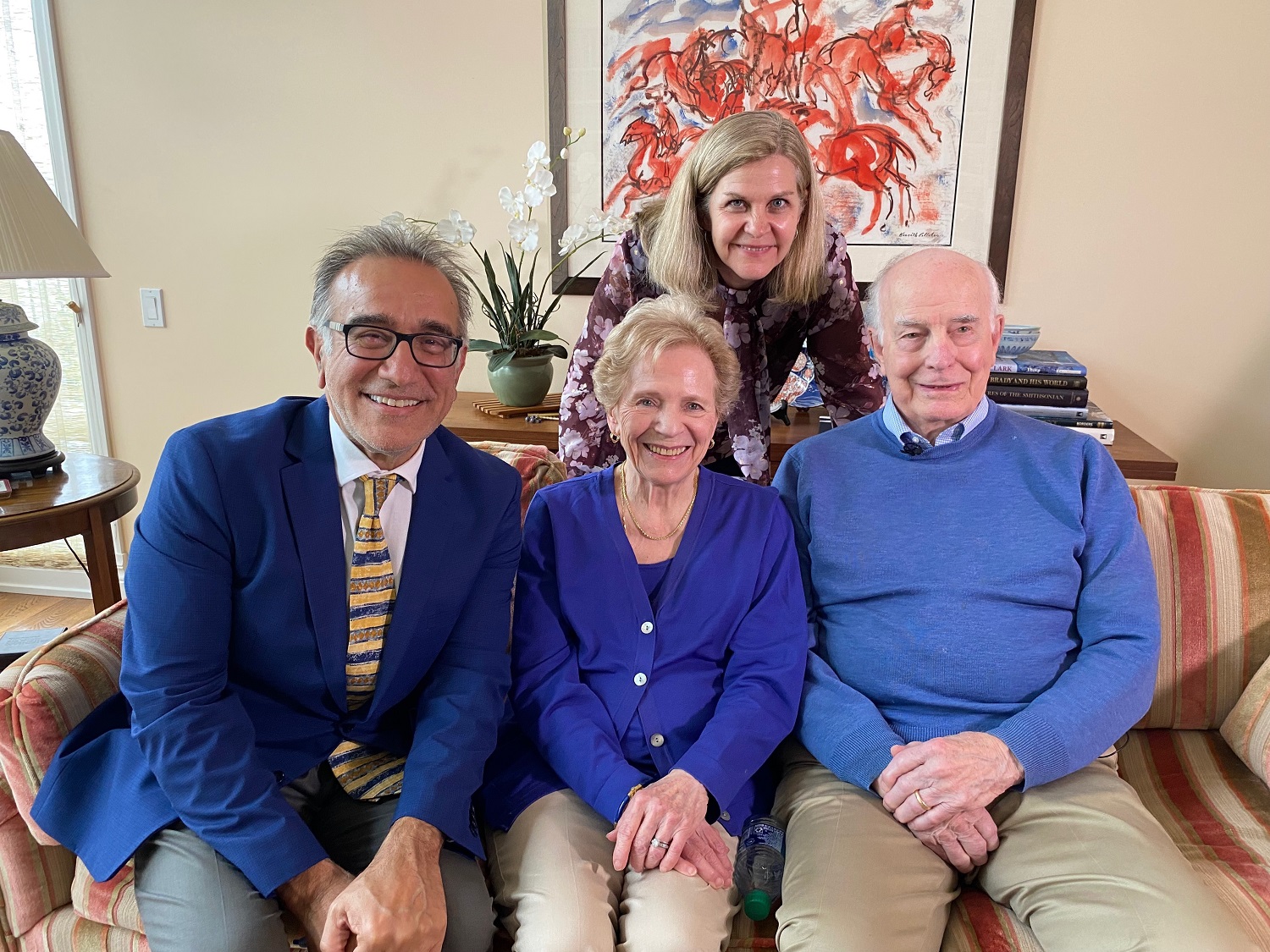
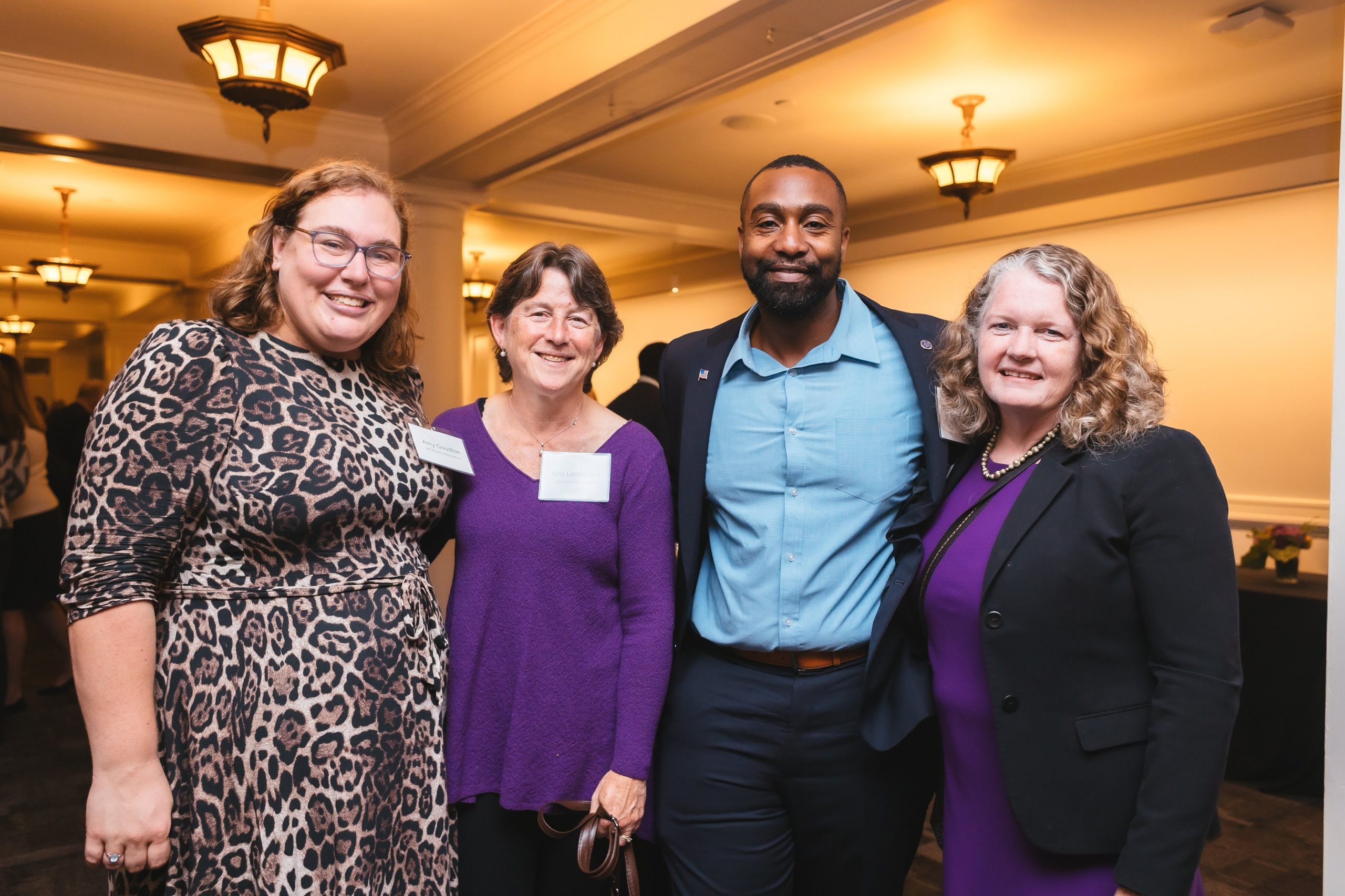
Four guests posing

UW Center on Risk and Inclusion in Food Systems (CRIFS) Launches

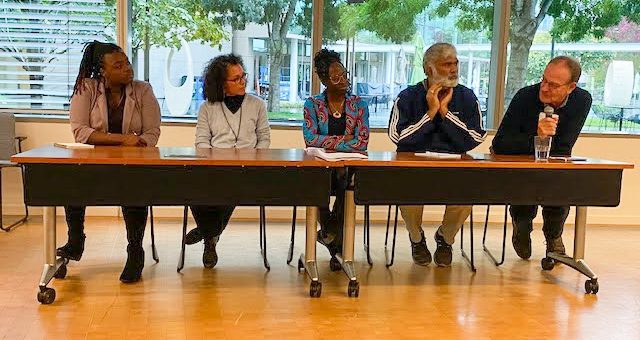
Five panelists sit in front of room
Panelists discussing SSP Commercialization and Income Diversification under Risk. From left to right, June Lukuyu (UW), Ana Paula de la O Campos (FAO), Saweda Liverpool-Tasie (MSU), Avinash Kishore (IFPRI), and Ken Giller (Wageningen)

We are excited to announce the launch of the Center on Risk and Inclusion in Food Systems (CRIFS).

CRIFS’ mission is to generate policy and action-focused research for improving the lives and livelihoods of small-scale agricultural producers (SSPs), inclusive of women, in low- and middle-income countries, through increased contributions of social, climate, and other scientists to advancing cost-effective strategies for managing risks and volatility as food systems transform.

The CRIFS launch kicked off on the UW campus with a technical workshop on measuring resilience in collaboration with UC Davis Professor Michael Carter and his USAID Feed the Future Lab on October 16. A day of small working group meetings was followed by a learning event co-hosted by CRIFS and the Gates Foundation, focused on topics central to investing in food systems facing heightened climate and associated risks in South Asia and sub-Saharan Africa. The event brought together a blend of donors, practitioners, and researchers to provide a common grounding in key concepts and definitions, current and projected climate risks faced by food systems actors, and the state of applied research.

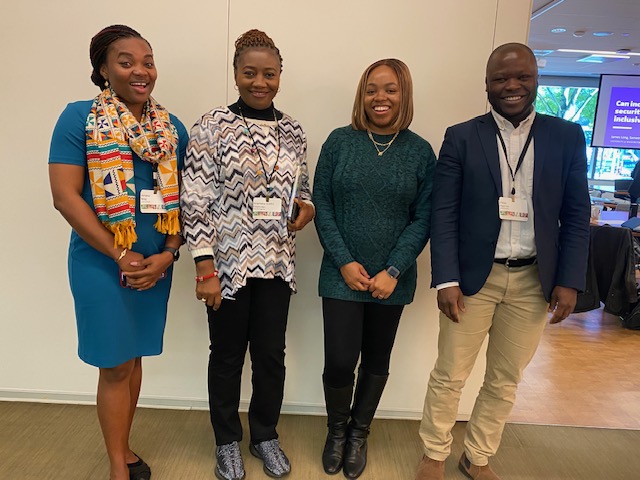
Amakaa, Nnemeka, Nnenna, and Peter posing at event
From left to right, Amaka Nnaji (UW), Nnemeka (Edith) Ihegwuagu (Agricultural Research Council of Nigeria (ACRN), Nnenna Ogbonnaya-Orji (UW), and Peter Agamile (UW)

Learning Event Sessions

The six sessions of the learning event covered the broad themes of risk measurement, sub-national heterogeneity, statistical vs. perceived risk, and decision-making under uncertainty, with a strong emphasis on perspectives and methods that embed gender and nutrition dimensions.

  • Session 1: Risk Fundamentals 1 – Biophysical food system risks and SSPs
    • Chris Funk (UCSB), Mario Herrero (Cornell), Tess Russo (BMGF), and Heidi Webber (ZALF)
  • Session 2: Bringing Risk, Nutrition, and Gender into South Asian Climate Platforms and Policies
    • Pramod Aggarwal (Borlaug Institute for South Asia), Prabhu Pingali (Cornell), and Shelly Sundberg (BMGF)
  • Session 3: Risk Fundamentals 2 – Decision-making and Behavior Change: Risk Perceptions, Poverty, and Risk Communication
    • Ann Bostrom (UW), Alison Cullen (UW), and Crystal Hall (UW)
  • Session 4: SSP Commercialization and Income Diversification under Risk: Institutions, Infrastructure and the Enabling Environment
    • Stanley Wood (BMGF), Ana Paula de la O Campos (FAO), Ken Giller (Wageningen), Avinash Kishore (IFPRI), June Lukuyu (UW), Saweda Liverpool-Tasie (MSU), and Shelly Sundberg (BMGF)
  • Session 5: Advancing Measurement of Post-Shock Resilience
    • Peter Agamile (UW), Michael Carter (UC Davis), and Jenny Frankel-Reed (BMGF)
  • Session 6: Can Increased Food Security Strengthen Inclusive Institutions?
    • Didier Alia (UW), James Long (UW), Sameer Shah (UW)

CRIFS to Address Key Elements of Decision-Making

There has been a steady supply of innovative agricultural technologies over the last few decades, but the rate of sustained uptake remains stubbornly low. This is due, in part, to technical knowledge about potential adaption strategies outpacing our understanding of SSP decision-making facing risks. Addressing this disconnect is urgent as climate change increases many SSPs’ exposure to flooding, drought, and extreme temperatures, which compromises rural household production and leads some families to cope by dipping into savings, selling livestock, or reducing food intake.

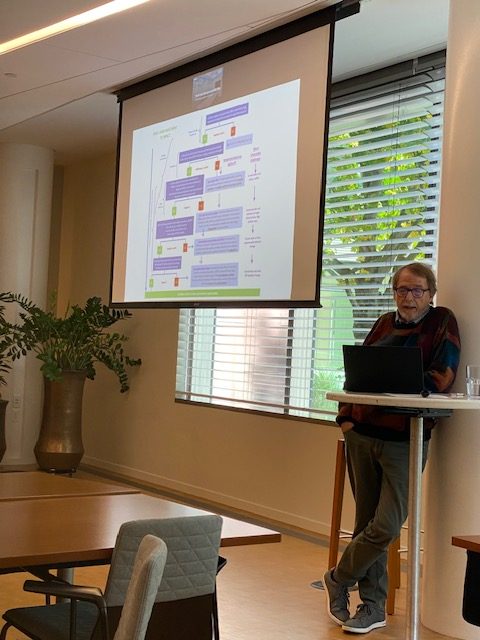
Stanley Wood presenting
Stanley Wood (BMGF) closing the learning event with reflections

Which is why CRIFS is interest in the bio-physical and political economy of food systems that matter as SSPs make daily decisions on risk/return trade-offs that affect their enterprise and livelihood trajectory. CRIFS is concerned not only with decisions made for managing extreme events, or climate shocks, but with the ongoing communication and choices that may either expose SSPs to excessive risk, or limit their investment potential and, in aggregate, hinder inclusive agricultural transformation.

Eastern Washington Road Trip

By Ray Im, Development Director

Across four days, eight counties, and 906 miles, we heard leaders from across the state share one consistent message: the importance of educational pathways to public service for Central and Eastern Washington communities.

In mid-May, Dean Jodi Sandfort and I embarked on a road trip through Central and Eastern Washington with stops in Quincy, Moses Lake, Yakima, the Yakama Nation, Spokane, and Leavenworth. Over four days, we were grateful to connect with more than 40 community and tribal leaders, elected officials, and UW and Evans alumni. Our goals were to strengthen relationships with local leaders across the state and learn how the Evans School can partner with them to serve community needs east of the Cascades.

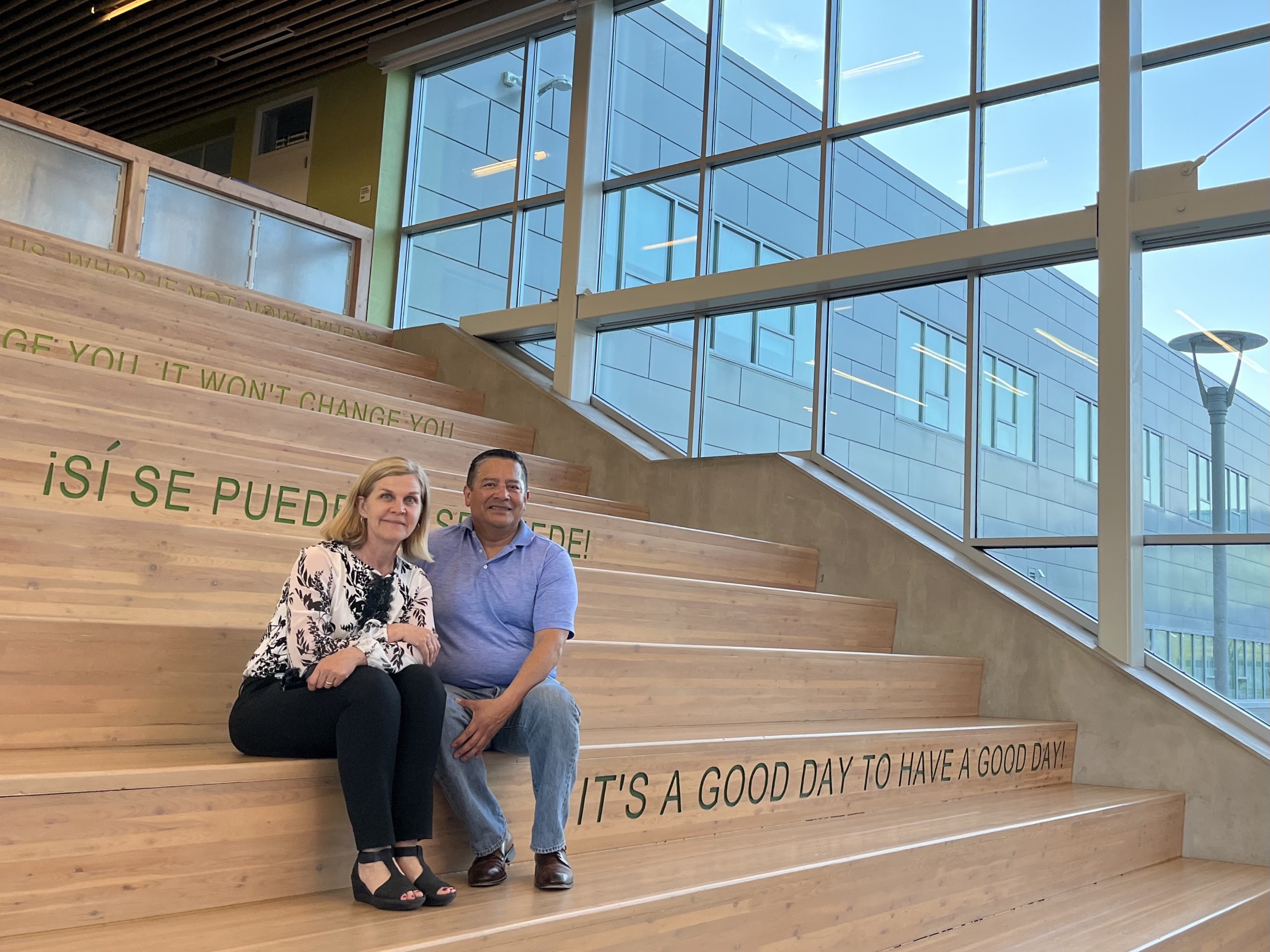
Our first stop in Quincy included dinner with community leaders from Moses Lake hosted by Washington State Representative Alex Ybarra, a lifelong Quincy resident and member of the Evans School Dean’s Council. During our stay we talked about the need to equip the next generation of local public leaders and Rep. Ybarra gave us a tour of the new Quincy High School. Built in 2019, the school serves close to 800 students with state-of-the-art learning environments and an extensive Career and Technical Education Department.

Dean Jodi Sandfort and Rep. Alex Ybarra at Quincy High School

Dean Jodi Sandfort and Rep. Alex Ybarra at Quincy High School

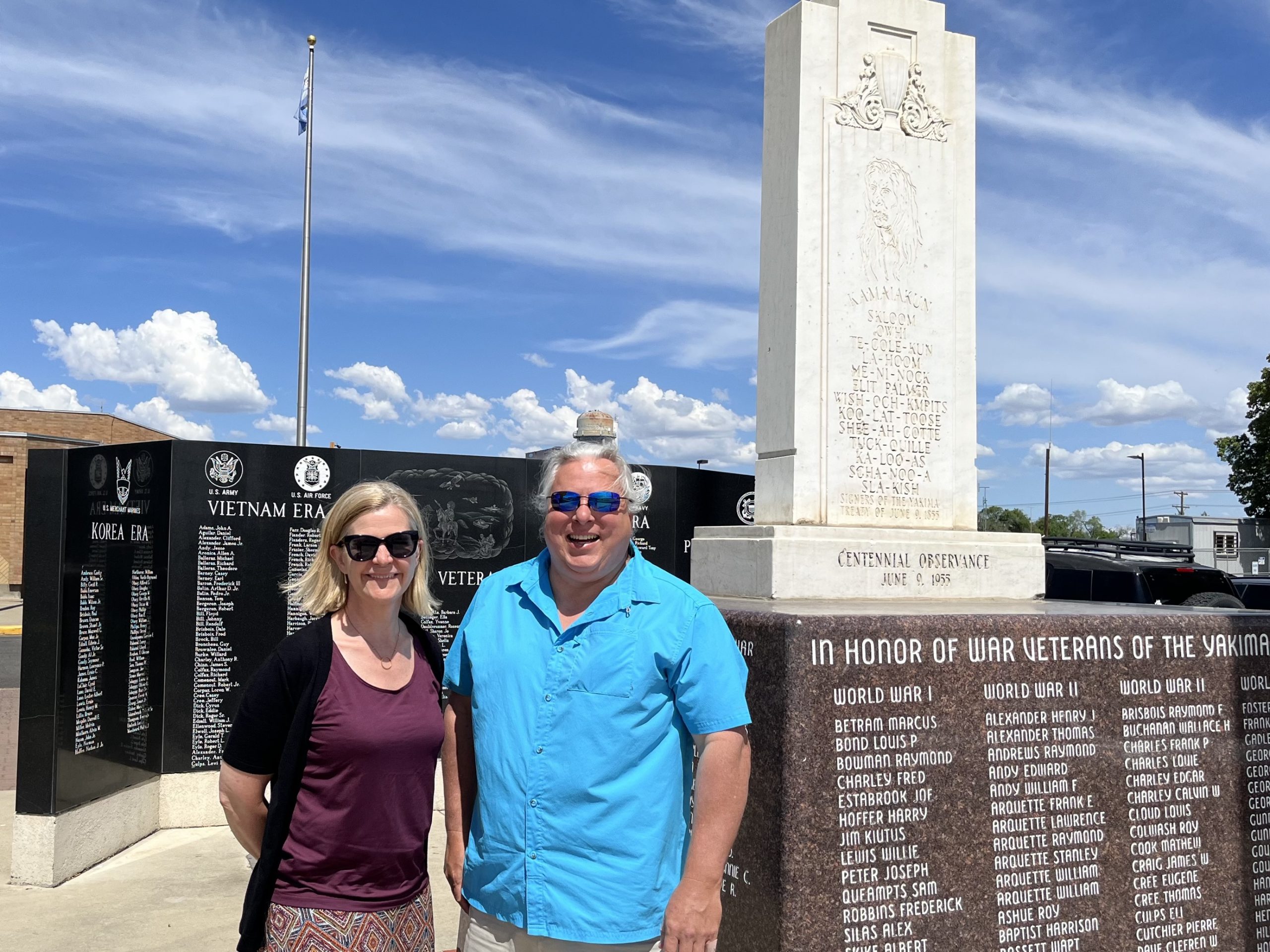
Dean Jodi Sandfort and Deans Council Member pose in front of Yakima War Veteran's monument

Dean Sandfort with Dean’s Council Member and Evans alum Paul Ward on the Yakama Nation

The next day, Tribal Council members and other Yakama leaders welcomed us at Yakama Nation Headquarters. We were joined by Paul Ward, an enrolled member of the Yakama Nation, long-time leader in fisheries and river habitat management, Evans alum, and member of our Dean’s Council. We explored potential partnerships that could serve the Yakama Nation through educational pathways for undergraduate students and emerging mid-career leaders.

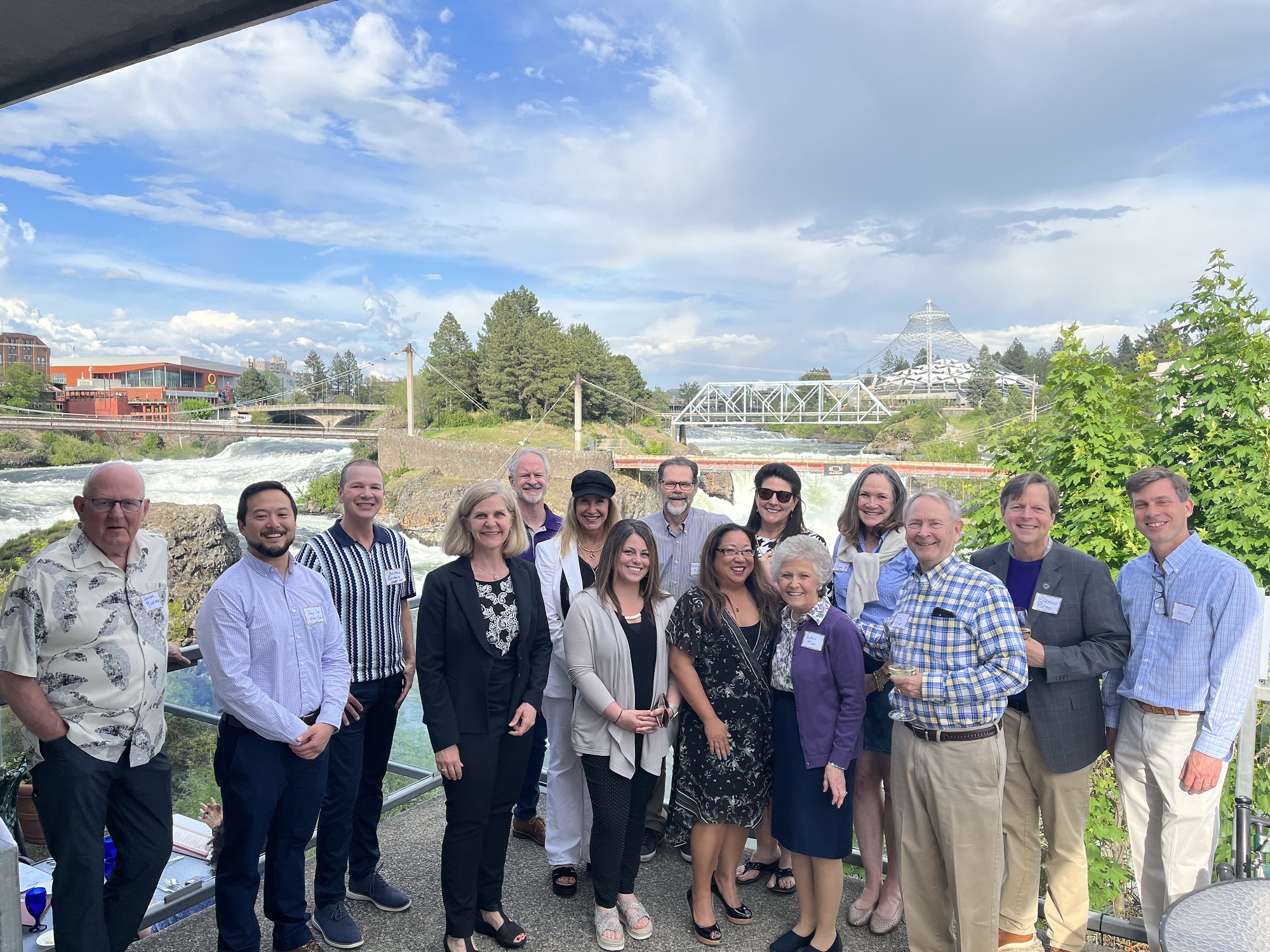
In Spokane, we met Annmarie Caño, Dean of the College of Arts and Sciences at Gonzaga University to share about our Junior Summer Institute and discuss the importance of summer immersion programs, especially for students from historically marginalized communities. We also hosted an evening reception with community and elected leaders as well as UW and Evans alumni.

UW alumni pose at Spokane waterfront

(above) Spokane Reception attendees, the author second from left

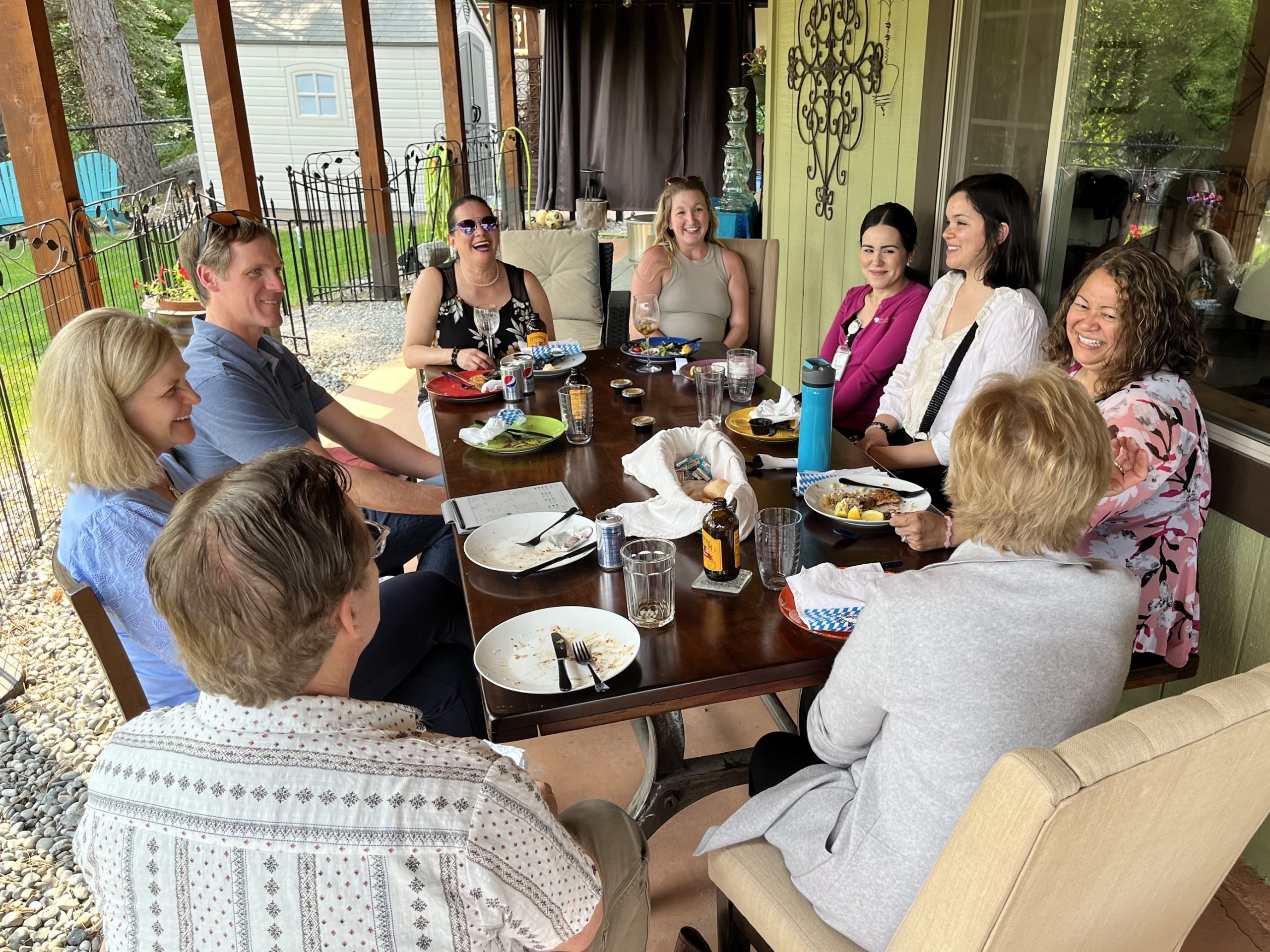
Alumni sitting in conversation around a table after a meal talking with Dean Jodi Sandfort

(above) Lunch in Leavenworth

Our last stop was in Leavenworth for lunch hosted by Ana Cortez, MPA ‘90, the City Manager for Carnation, Washington. We were joined by other Evans alumni working in agriculture and forestry fields as well as Mary Jo Ybarra and her team from Moses Lake/Quincy Community Health Center for a conversation about their involvement with the EPIC Paid Family and Medical Leave project. The lunch led to rich discussion centering community voices and highlighting cross-sector work. For the early-career professionals at the table, it was an opportunity to witness a real example of what a career in public leadership could entail.

Dean Sandfort and I reflect on this trip through Central and Eastern Washington with a sense of gratitude for new relationships that were started and existing relationships that were deepened. We also look forward to the work ahead to continue building educational pathways for public leadership to inspire public service and democratize public policy across Washington state.

Evans School Remains Among Best in the Nation

U.S. News & World Report’s 2024 Best Graduate Schools places the Evans School of Public Policy & Governance among the best schools in the nation and the world.  We are proud that our perennially ranked, top-ten graduate program continues to demonstrate the relevance of our curriculum, the influence of our alumni and the impactful research of our faculty. Having held a top-ten ranking concurrently for more than 10 years is a powerful reminder that the impact we make is real. 

Three of our specializations were also ranked in the top ten: Environmental Policy (2), Nonprofit Management (5), and Public Finance & Budgeting (9).   

Evans School Dean Jodi Sandfort noted: “Our strong national reputation is an important resource we draw upon in setting the direction of public policy education in our country at this time.  Our focus upon democratizing public policy and inspiring public service is being recognized as the next generation of strategies for public policy education. Our students benefit from our engagement with important questions and support for innovating new approaches to policy and management. Through these strategies, we are working to address the inequities built into our institutions and spark a shared belief in the sacred work of public service.”  

These rankings are released annually and are based on reputation and respect among peer institutions. 


Exciting Year for IPPHL

Group of IPPHL scholars engaged in conversation at a table in Parrington Hall

The International Program in Public Health Leadership (IPPHL) is celebrating its seventh year with the announcement of its next cohort, the return to international travel, and the creation of a new Summit gathering in Kenya to spotlight and support alumni in global collective action.

Public Health Leaders as Policy Leaders

IPPHL’s annual fellowship program provides an experiential eight-month learning journey for public health professionals as they design and lead critical policy and program implementation in their countries. Through a mix of online and in-person engagement, fellows work their way through a curriculum designed to build or expand on topics such as theory of change, policy analysis, stakeholder engagement, and personal leadership development.

Fellows identify evidence-based recommendations and plans for real-time implementation, graduating with a policy project ready for action. IPPHL offers a unique combination of approaches to integrate the policy and leadership curriculum including:

  • 1:1 advising relationship with approximately 20 Evans and UW faculty
  • A continent-wide peer network and collaboration opportunities with their cohort and 115 program alumni across Africa
  • Executive coaching for individual leadership development
  • Online and in-person engagement in Seattle and Africa (this year in Nairobi)

Cohort 6

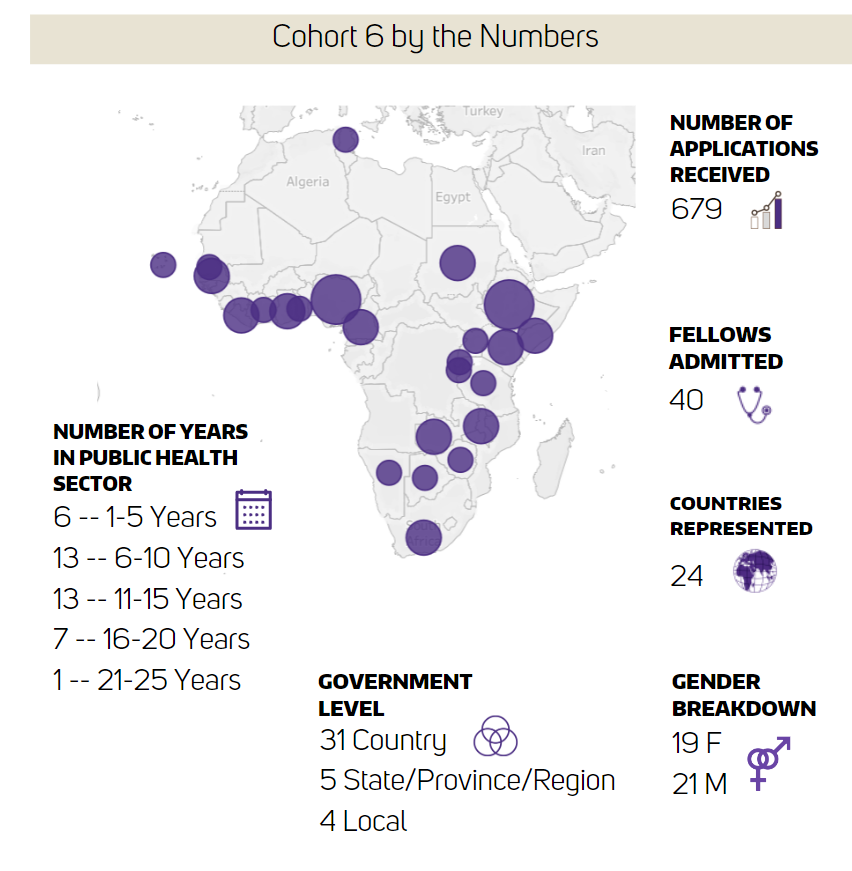
This year’s cohort of 40 fellows hail from 24 different countries and bring a range of expertise including HIV/AIDS, mental health, nutrition, health system strengthening, primary health care, and so much more. Primarily working at the country level within ministries of health, fellows lead in a variety of roles from medical officers to directors to chiefs of staff.

Cohort 6 by the numbers, a map of Africa that shows dots where each participant comes from

Beginning in March, fellows will participate in a series of live virtual sessions to set the foundation of policy analysis and begin development of their chosen policy or implementation challenge.

Past themes from these policy projects include the importance of strategies to increase access to healthcare services, with a strong focus on health equity. These strategies included developing community-based approaches and attending to the most vulnerable populations, including people living with HIV and those dealing with substance use disorders. Health systems strengthening themes also cut across many project areas from telehealth services, supply chain improvements, service coordination, and developing universal health coverage programs. Explore the full compilation of policy project memos from our 2022 cohort.

In June, we will return to international travel for the first time in three years, welcoming Cohort 6 to the Evans School and Seattle for two weeks of workshops and community connections. Fellows meet up again this August in Kenya for their capstone and graduation, entering our robust and active alumni network.

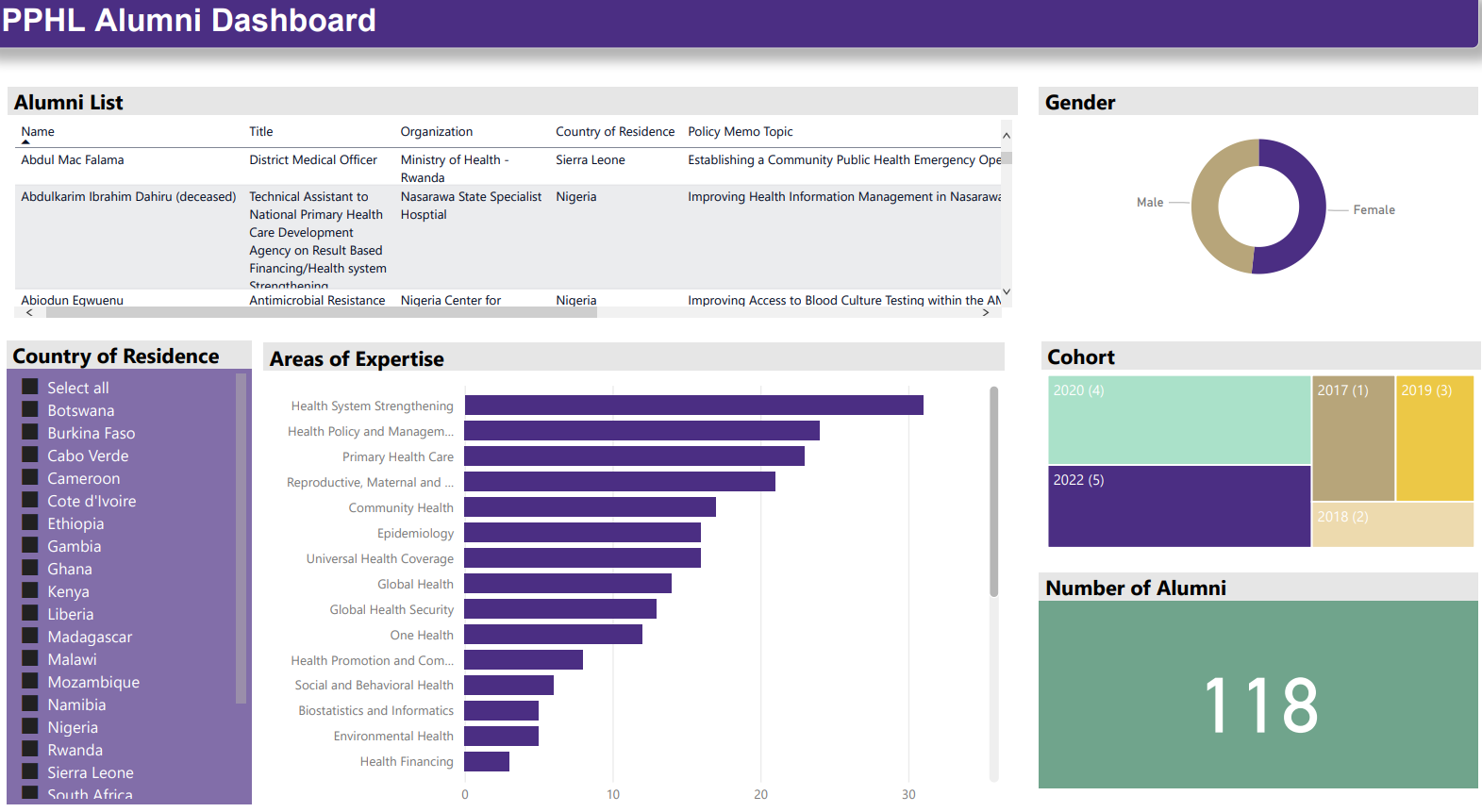
IPPPHL Alumni Dashboard

For the first time ever, IPPHL will host an all-alumni Summit in Nairobi, Kenya this September, bringing together over 150 alumni from 20+ countries across Africa for a series of activities and action. The Summit will launch our community into the next phase of collective action, solidify connections, co-create a shared vision for the future of IPPHL programming, and amplify the work and impact alumni are leading.

Our alumni expertise runs deep, and we invite you to explore our new Alumni Dashboard and imagine how your work might overlap or integrate. Do you have ideas or suggestions on ways to collaborate with the program or our alumni? Let us know: ipphl@uw.edu.

Evans School’s 60th Anniversary Celebration

Parrington Hall at Night

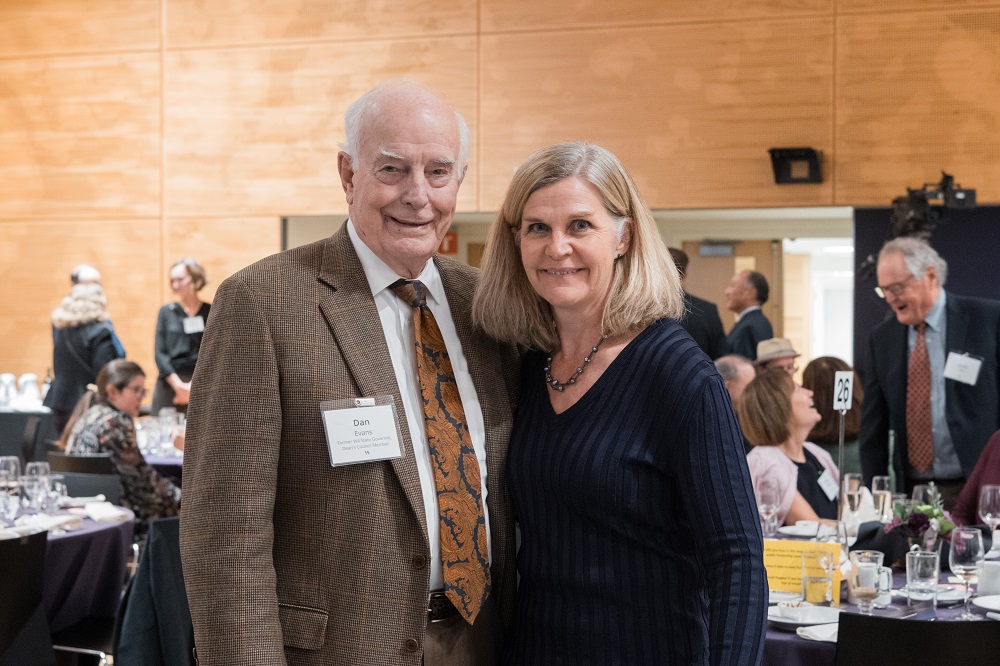
On October 27, 2022, nearly 400 guests joined the Daniel J. Evans School of Public Policy & Governance in celebrating six decades of inspiring public service.

Honoring the Past

In honor of our 60th anniversary, we commissioned a documentary about the life and legacy of our school’s namesake: Daniel J. Evans. Dan’s approach to bipartisan discussion and action have had a lasting, positive impact for Washingtonians. As he shares in the film, “Not all good ideas come from one side of the political aisle. I’ve never seen a Democratic highway or Republican school. These have to be done together, and that’s where the big successes have been.”

Celebrating the Achievements of Today

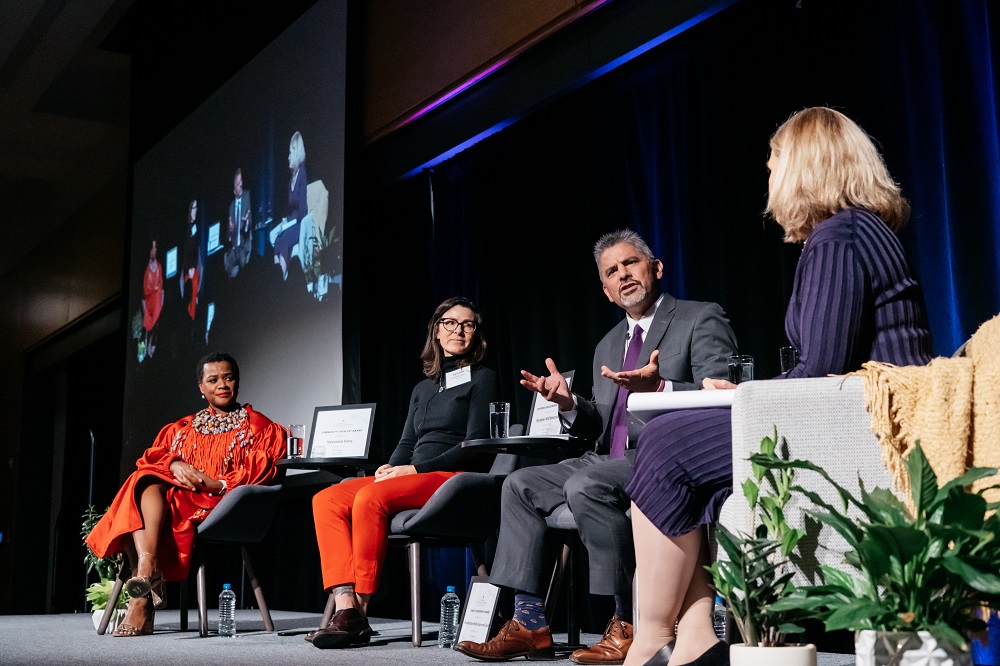
We launched a new tradition with the presentation of Public Leadership Awards—an opportunity to honor individuals aligned with the Evans School’s purpose to inspire public service and democratize public policy. Congratulations to 2022 recipients Veronica Very, Kymber Waltmunson, the Washington State Supreme Court, and Vicki Aken. During a powerful panel conversation, we heard more about the context for their work and the tools and practices they have developed to lead with integrity in the face of challenges.

Three awardees in conversation wtih Dean on stage

“In my own home state, and my own home city, and in almost 55 years of life, this is the first time I’ve been acknowledged and recognized, and the first time I’ve felt seen […] For my work to be recognized at such a time as this, it means that I get to have a conversation with my city, my state, and my nation about how it is that we’re seen—people who look like me.” -Veronica Very, Founder & Visionary at Wonder of Women International

From left: Awardees Veronica Very, Kymber Waltmunson, and Chief Justice Steven González, and Dean Jodi Sandfort

“‘Yay the auditor is coming!’ said no one ever. I think of my ways of getting grounded in the chaos and when overwhelmed are fairly practical. I have an appointment every afternoon that says, ‘look out the window.’ […] When you create space for yourself, you’re able to take that deep breath and to recommit to the challenge that is always in front of you.” -Kymber Waltmunson, King County Auditor

“My mother used to say, ‘if everybody likes you, you don’t have principles.’  In this world there are difficult issues and there will be people on two sides of it. And you can try to please everyone, or you can try to decide what’s right and do it regardless of what other people think.” Chief Justice Steven González, Washington State Supreme Court 

Award Receipients

Awardee Veronica Very

Research proves grassroots leadership is a critical component of any community’s wellbeing. The Community Catalyst Award recognizes a leader whose efforts impact not just any community, but one which they call home, too. This individual is celebrated for their consistent efforts to foster collaboration, amplify local voices with special attention to historically underrepresented groups, and maintain proximity to those who are impacted most by their work.

Veronica Very is founder and visionary of Wonder of Women International and the nation’s newest cultural destination experience, WOW Gallery. She is the visionary creator of the ‘Dear Sista, I See You,’ Healing Art Exhibition that unapologetically centers Black Women, Black Love, and the Black Community in the heart of Downtown Seattle’s economic corridor in Pacific Place Mall. Very inspires and encourages the healing of systematic and racial trauma in Black people by using an ancestrally guided framework of storytelling which builds community and spaces for reflection, renewal, restoration, and rejuvenation. Very is a force of a nature and the commitment she has demonstrated to justice and healing for the Black community is nothing short of incredible.

Awardee Kymber Waltmunson

The Systems Changemaker Award recognizes a leader with remarkable sensitivity to the future and courageous determination to do what is necessary today to inspire a better tomorrow. They use strategic and pragmatic leadership as a medium to create change. And while their individual influence can move mountains, this changemaker intentionally shares power and responsibility. They understand systems change is most achievable when conducted as a collective effort and are a trusted convener and facilitator of collaborative action.

Kymber Waltmunson is a 2004 graduate of the Evans School Masters of Public Administration program and currently serves as King County Auditor. In this role, Waltmunson has become a powerful agent for racial equity and systems change, completing impactful audits related to jail safety, the County’s paratransit program, the Sheriff’s Office traffic stop patterns, public defense management, homelessness, and more. Her commitment to changing the systemic issues that beguile our community from within her sphere of influence is remarkable.

Awardee Washington State Supreme Court, Represented by Chief Justice Steve C. González

The Dean’s Leadership Award celebrates an individual or group committed to equity, radical courage, and uncompromising servant leadership. This leader is not afraid to run against the grain where required to support human dignity, embrace diversity, and foster democratic ideals.

The Washington State Supreme Court is receiving this award for their work towards creating a more just legal system within the state of Washington. Beginning with a signed letter in 2020 pressing for change after George Floyd’s murder and continuing into today, the State Supreme Court is making strides toward racial justice by invoking policy change directly aimed at dismantling institutionally racist legal systems. Over the past two years, the Court has taken swift action; overturning decades-long hateful precedents, vacating tens of thousands of criminal convictions, ruling that law enforcement’s history of racial bias must be considered when determining whether police stops and seizures are legal, ordering pay raises to immigrant farm workers, and more.

Awardee Vicki Aken

The Dean’s Leadership Award celebrates an individual or group committed to equity, radical courage, and uncompromising servant leadership. This leader is not afraid to run against the grain where required to support human dignity, embrace diversity, and foster democratic ideals.

Vicki Aken serves as Country Director of the International Rescue Committee, based in Kabul, Afghanistan. Since earning her MPA from the Evans School in 2008, Aken has been an unrelenting leader for public service in countries like Sudan, South Sudan, Sierra Leone, Syria and Afghanistan. Before the collapse of the government in Afghanistan, Aken and the IRC worked with the Afghan people to increase community development, healthcare, education, and access to clean water and nutritious food. After the government collapse, Aken has remained in Afghanistan and tirelessly, despite personal safety concerns, committed to restarting and adapting programs so that her staff – primarily female and nearly 99% Afghan – can continue to work and attend school. Aken’s courageous service work makes her a leader to be impressed and inspired by.

Inspiring the Work Ahead

How can you act to help create the future we need? What does it take to lead from where you sit?

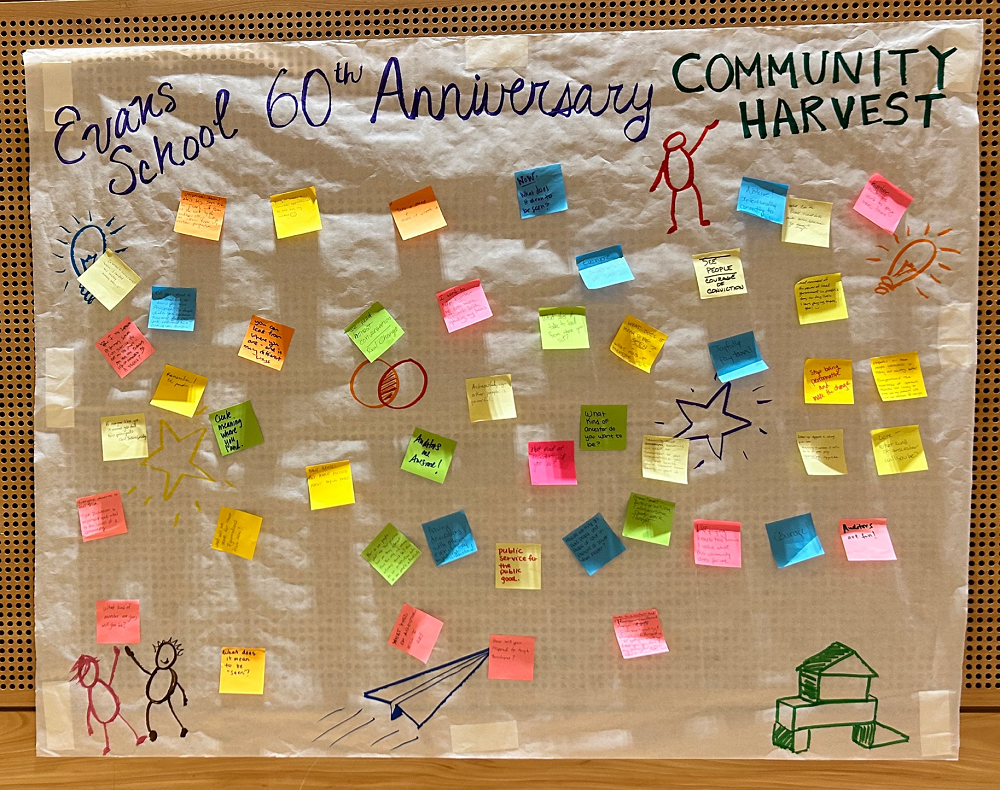
These are questions the Evans School invites you to grapple with in this moment for our society and our democracy. Folks who joined us shared sticky notes to harvest a bit of the rich conversations we had in response to these questions.

Evans School 60th Anniversary Community Harvest

As EMPA alum and Dean’s Council Member J. Eduardo Campos shared, “Beyond the critical thinking skills and academic rigor, the Evans School helped us learn how to be better human beings, better professionals, and better citizens.” 

Guided by our shared values of equity, courage, and service, the Evans School is educating leaders, generating knowledge, and hosting communities to co-create a more inclusive society. Your support and partnership help create a path to public service leadership for all who are called to serve–regardless of financial means.

Thank you to those who pledged gifts of time, talent, treasure, ties and testimony at the event. For those who haven’t yet, we hope you’ll join us today.

NextGen Civic Leader Corps Launch

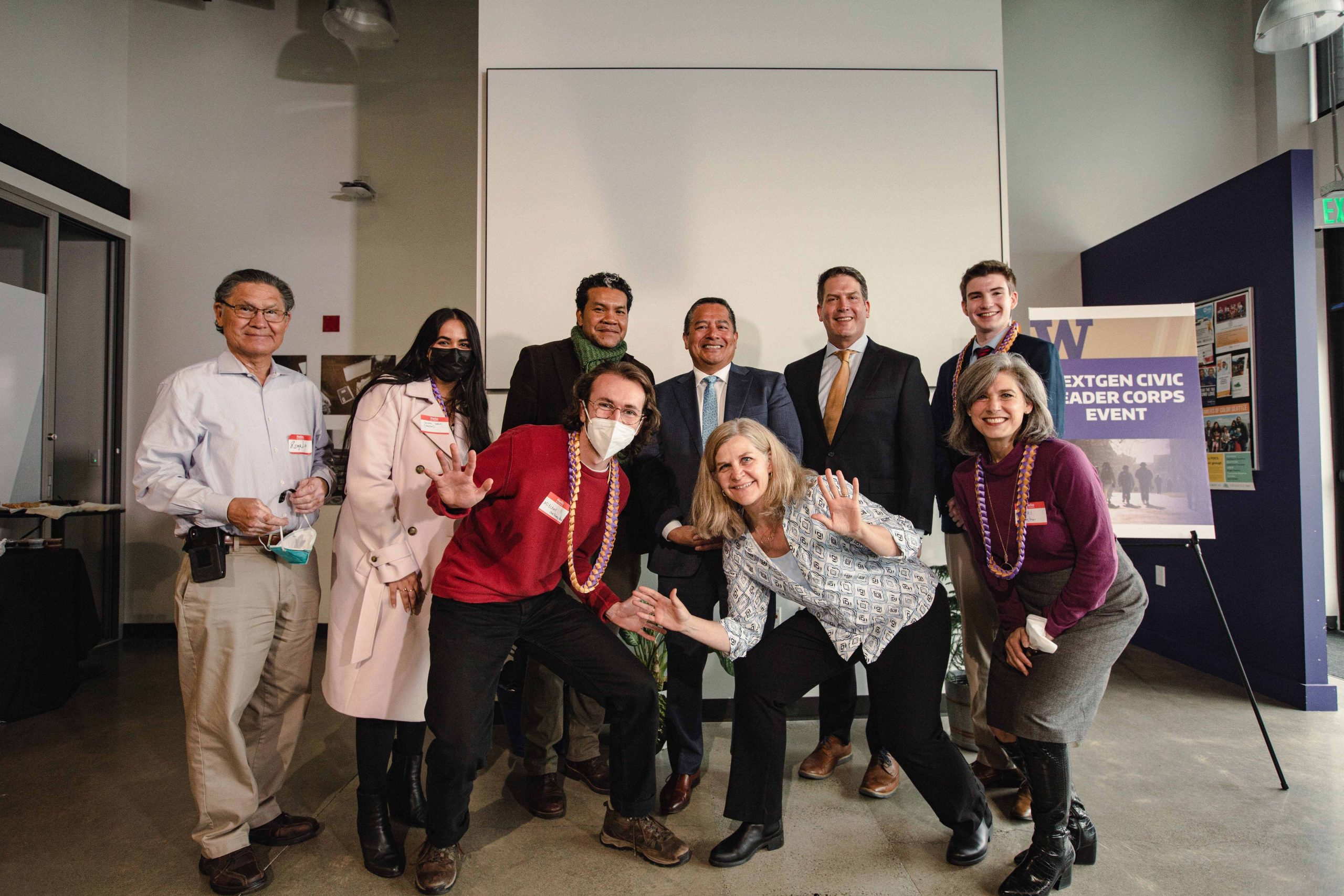
NextGen students and community leaders celebrate the launch of NextGen Civic Leader corps

On Friday, May 6, 2022, a formal launch and celebration of NextGen Civic Leader Corps program was held at the Othello-UW Commons. The new program, a collaborative effort between the Evans School of Public Policy & Governance and the Community Engagement & Leadership Education (CELE) Center is designed to allow undergraduate students to recognize and deepen their commitment to community engagement and public service.

Joining the celebration were university and community leaders who came together to honor and recognize students in the pilot program who completed program requirements. Featured speakers included UW President Ana Mari Cauce; Brian Surratt, president and CEO of Greater Seattle Partners; Alex Ybarra, Washington State representative for the 13th District; and Brett Hunt, director of Next Generation Service Initiatives at the Volcker Alliance.

Speakers reflected on the value of and commitment to public service and the importance of cross-sector collaborative approach to solving complex, societal challenges.

Sari Feinberg ’22, one of the students in the first UW cohort, shared:

Through the NextGen required coursework my fellow colleagues and I have much better understanding of just how complex and interconnected our world is and how society's wicked problems such as homelessness, global warming, and racism will in fact not be solved by a single non-profit, government, or corporation. These problems and many others require character-driven leaders with a social mission who collaborate and co-create solutions.

Speakers

Dean Jodi Sandfort

Jodi Sandfort
Dean
University of Washington
Evans School of Public Policy & Governance

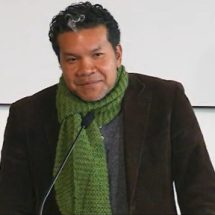
Brian Surratt, a man with dark curly hair with a white streak, wearing a brown corduroy coat and a large green scarf

Brian Surratt
President & CEO
Greater Seattle Partners

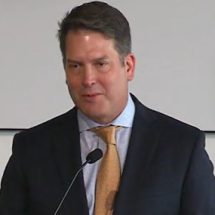
Brett Hunt, a white man with brown hair in a suit with blue shirt and yellow tie

Brett Hunt
Director
Next Generation Service Initiatives
The Volcker Alliance

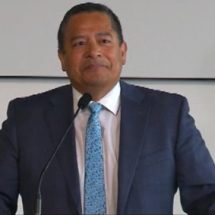
Alex Ybarra, a Latino man with short dark hair, wearing a blue suit, white shirt, and light blue tie

Alex Ybarra
Representative
13th Legislative District
State of Washington

Ana Mari Cauce

Ani Mari Cauce
President
University of Washington

Sari Feinberg, White woman with shoulder length greying hair wearing a purple blouse

Sari Feinberg
Class of 2022
NextGen Civic Leader Corps

Event Recording

Changing the Future of Colorado’s Healthcare: Hannah Sieben, MPA ’21

Hannah Sieben

After finishing her MPA in 2021, Hannah Sieben returned to her home state of Colorado, where she is using her experience and the skills she gained at the Evans School for the public good. In her current work as a Policy Analyst with Connect for Health Colorado, Hannah is working to create greater public health care access for all Coloradans.

Can you tell us a little about yourself?

The week that I graduated from Evans, I moved back to Colorado, adopted a puppy (Fig! 7 lbs of chihuahua/terrier perfection!), and started a new job. I love being in Colorado; my whole family is here, the mountains and sunshine are a great combo, and there is so much to see and do. In my free time, I’ve been participating in a Master Composter program (to teach Denverites how to start their own compost pile), reading for fun, and scouring Facebook Marketplace for my next DIY project.

What contributed to your decision to pursue an MPA degree? Was there a defining moment in particular?

After returning from Peace Corps service in Namibia, I worked as a civic engagement program manager at a nonprofit. I helped more than 5,000 high school students register to vote during this time, but I knew that I needed to learn so much more if I wanted to contribute to the vision and direction of an organization instead of just the day-to-day responsibilities if I wanted to have the career I was interested in. Pursuing an MPA seemed like the ideal way to gain experience and practice to complement my policy and legislative interests.

Looking back on your Evans School experience, what stands out as being particularly impactful while you were a student?

I was part of the Covid Cohort, MPA Class of 2021, so more than a year and a half of my time at the Evans School was virtual. While that alone was impactful, it also provided me the opportunity to collaborate with my peers in different ways. I learned so much about working as a team with people you may have never gotten to meet in person before, which has been an asset in my current position. I also served as the Vice President of External Affairs for the Graduate and Professional Student Senate and managed to rope in so many of my Evans peers to help us with our legislative priorities. Together, we passed important legislation to get graduate student representation on the Washington Student Achievement Council. All that to say, I was surrounded by incredibly smart and encouraging people at the Evans School, which gives me a lot of confidence about the future of public policy.

Can you share about where you work and your current role?

I’m currently working at Connect for Health Colorado, the official Marketplace for health insurance in Colorado, as a policy analyst. We are technically a non-profit but are really a quasi-governmental organization that implements the Affordable Care Act. I provide a wide range of research and support on policy and legislative issues, including advocacy, education, research, and analysis to help Coloradans get access to more affordable health care.

Can you tell us about some of the projects you are working on or excited about?

Colorado is truly a leader in the health insurance marketplace space, and it’s been inspiring to be a part of the policy and implementation team at Connect for Health Colorado. One of the most impactful projects I am working on is around providing low-income undocumented Coloradans with state-subsidized health insurance. We are the first state to implement this type of program and much of my research has been around the health needs, barriers to health care access, and the eligibility requirements of our undocumented communities. In 2023, more than 9,000 undocumented people will have affordable, quality health coverage for the first time! It’s amazing to lay the groundwork for other states to implement similar programs and really put our money where our mouth is when talking about equity and inclusion.

Are there any specific skills from your time at Evans that have been crucial to the work you are doing today?

One of the best things that I was able to practice at Evans was taking complex pieces of information and distilling them into something that non-policy people can understand. I have coworkers who specialize in communications and product development without a public health or policy background, so I use this skill all the time. I am also a confident public speaker, something that I practiced all throughout my time at Evans.

What are one or two resources that inspire you personally or professionally?

I recently read Dear America, Notes from an Undocumented Citizen by Jose Antonio Vargas. He later joined my colleagues and me to discuss his book and his organization, “Define American”, and to explain how he thought we could do our work in a better, more inclusive way. Both his book and organization really highlight the diversity and uniqueness of undocumented narratives.