Skip to content

Remembering Professor Pat Dobel

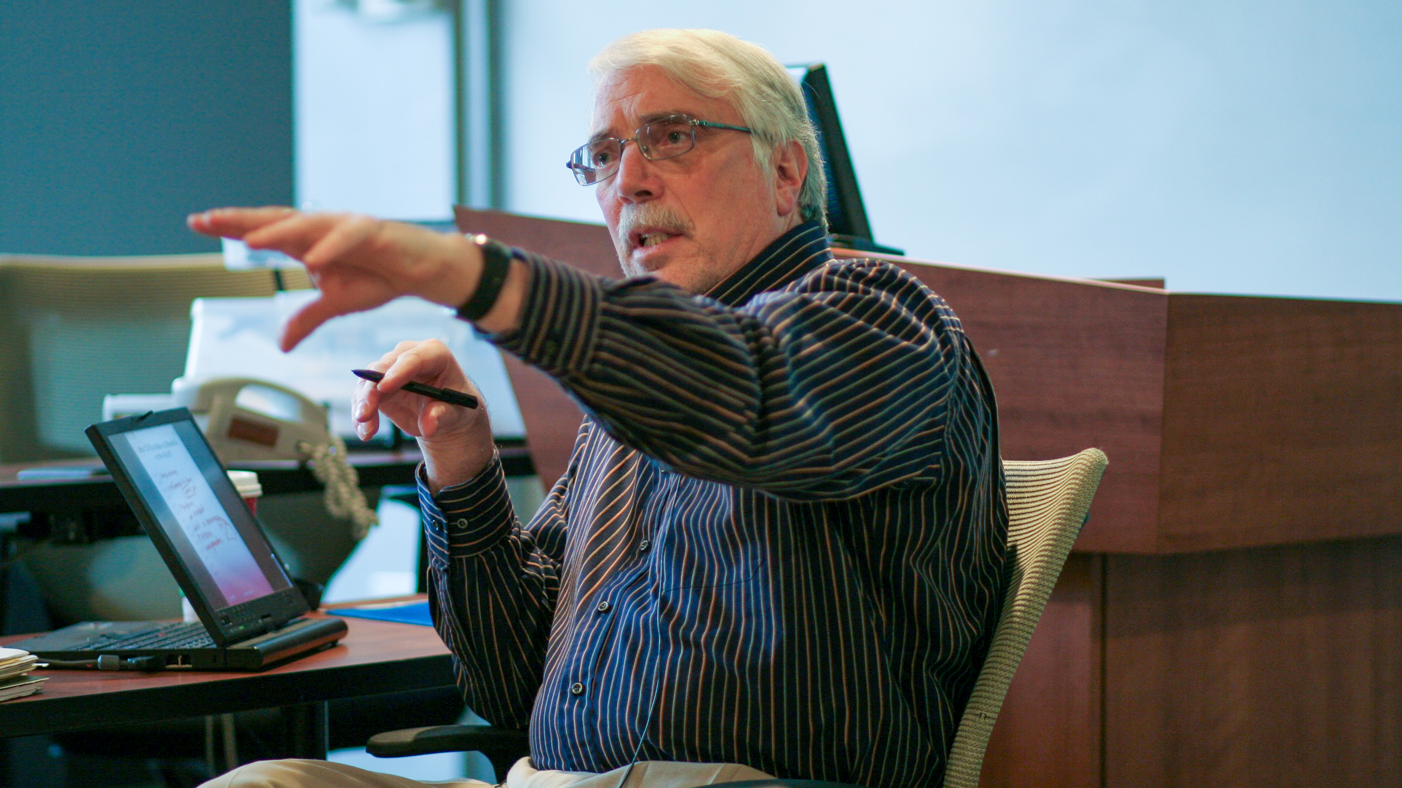
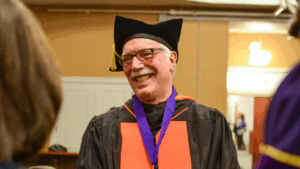
Pat Dobel in the classroom

J. Patrick Dobel

September 15, 1948 — January 29, 2025

The Evans School community mourns the loss of beloved emeritus faculty member, J. Patrick (Pat) Dobel. Pat joined the Evans School faculty in 1985, where he taught courses in the MPA and EMPA programs focused on strategy, leadership, public ethics, and public management. He served on many university and national committees around the areas of public management, organizational design, and integrity issues. He also served as the University of Washington’s Faculty Athletic Representative at the PAC 10 and NCAA, for eight years, overseeing the academic integrity of the athletic program and governance. Pat was the author of several academic award-winning articles as well as many others on public leadership, ethics, and integrity. Pat passed away on January 29, 2025 in Seattle from pancreatic cancer. You can read more about his career on his Evans School faculty page and in the official obituary.

Community Remembrances

It is difficult to contemplate Pat’s passing. He was my close friend and Evans School faculty colleague for 40 years. He and Lea came to UW in 1984, I believe, just a year before I joined the faculty. We were about the same age and so our kids were also of similar ages and we exchanged parenting stories and suggestions, with appropriate good humor. Faculty-wise, I think I had an easier transition for I came from a professional school background in public policy and was used to academic quarters while he was a political scientist (a political theorist no less) and accustomed to semester-long courses, mostly teaching undergraduates. He seemed to adjust to Evans students’ and course needs remarkably quickly and I think this helped him later to mentor other new faculty needing to make similar transitions. Indeed, one of Pat’s great skills was as a mentor to others whether students, other faculty or would-be academic administrators. He also mentored athletic coaches in his long-time role as UW’s Faculty Athletic Representative, which he took very seriously. At the Evans School, Pat’s scholarly interests turned early on to public organizational leadership and particularly the role of ethics in this realm. Pat produced a wealth of influential scholarship on ethical public leadership and related topics and was highly respected and sought after nationally as a result of his unusually deep, thoughtful work. We were fortunate to keep him here for the rest of his academic career. Pat served for several years as Associate Dean of the School (when there was only one such position) and he was a wonderful exemplar in this challenging role. I looked up to him and sought his advice often when I later served in the same position. In addition to his University work, Pat was well respected in the local professional community and served (and even led) various local boards and commissions including the King County Ethics Board. Yet, most of all Pat was a gifted and inspiring teacher. He loved teaching and brought inspiration and innovation to his classes as well as deep knowledge and broad perspective. I often heard from students that his courses were the ones that they felt influenced them the most and would be most useful in their subsequent careers and lives. He was a key figure in the conceptualization and implementation of our core MPA courses in public management and similarly played a major role in the design of the initial Executive MPA curriculum. He directed the Executive MPA program for several years in its early days. In short, Pat did about all there was to do in a faculty career at the Evans School and he did it all in an exemplary way that all could look up to and draw inspiration from. He will be sorely missed by his many friends, colleagues and students at UW and around the country but his intellectual and personal legacy will live on.

-William Zumeta, Professor Emeritus

Pat was a brilliant mentor and a wonderful friend. He provided generous feedback and support for my research, and I borrowed countless teaching ideas, learning materials, classroom exercises, and even turns of phrase from him over the years. Perhaps the most fun we had together was creating “curriculum on demand,” as he called it, to build or revamp courses – and even much of the Evans School’s EMPA program at one point. He embodied ethical strategy – working toward institutional and programmatic goals with integrity and principle, “taking it seriously while holding it lightly” (in his words). I miss him already.

-Stephen Page, Associate Professor

I was deeply saddened to hear of Pat’s passing, indeed the very same day that three of us from the Evans School evening leadership degree class of ’02 had met for lunch on the Ave and Pat’s name and influence surfaced, knowing he was ill.

One of my recollections over lunch was that I kept a running list during class of special turn of phrases Pat used in his lucid and incisive lectures. His verbal dexterity was matched by his commitment to the values that formed these lessons: honesty, transparency, and keeping the courage of your convictions.

Years later when we were working together, Pat and I had an opportunity to travel with a team from the UW to Ethiopia, where seeking out delicious coffee became sport (Seattle may brew good beans, but traveling to the source exposed me to the most delicious coffee imaginable). In Pat I found a colleague who laughed as loud as I did, mouths agape and heads tipped back, as if we could swallow the world whole.

– Anita Verna Crofts, MPA ’02

When I think about Pat I think of his:

  • Extraordinary, inspirational teaching
  • Eloquence
  • Valuable service to the Evans School and the UW that made a difference
  • Enthusiasm about sports and how he melded it with his academic life both as a scholar and as Faculty Athletic Representative
  • Invaluable contributions to the Population Leadership Program
  • True friendship and support when dealing with health and life challenges
  • Exploring Hanoi, Mexico City and Ethiopia together

-Robert Plotnick, Professor Emeritus

My heart goes out to Pat’s family and friends. He was a light and inspiration for so many students and faculty finding their path at Evans and UW. His intellect and generosity of spirit continues to echo throughout our community. I reflect often on our conversations about leadership and ethics over the years, which have profoundly shaped my own path. I am forever grateful. Peace.

-Scott Allard, Daniel J. Evans Endowed Professor of Social Policy

What I remember most about Professor Dobel is his kindness and thoughtfulness towards as a very young student. I started Evans right out of undergraduate and talked to him about navigating graduate school. He was always willing to answer my rather naïve questions with kindness. I am so sorry to hear about his passing and am grateful to have had his support during that time.

-Cheree Peterson, MPA ’94

Pat was one of the first faculty members I got to meet at the Evans School. His smile, engagement and curiosity, and down-to-earth approach was simply so genuine and endearing. In conversation he easily traveled from big philosophical ideas to family stories that were touching and personal. It made him so approachable. On that latter note, Pat told an anecdote about collecting a jar of beach glass with his daughter and how it was a collection of little moments of time that he treasured. Afterwards, I started my own collection from family beach walks. It was such a poignant way to capture memories and remember what’s important in life. You will be missed, Pat, but your gifts are carried forward.

-Sara Curran, Director Center for Studies in Demography & Ecology

While not a faculty member, I was part of the Evans School Evening Degree Program from 1999-2002. Pat Dobel’s teachings about ethics and moral courage resonated with me, but especially served to guide me during a combat deployment to Iraq in 2009-2010. My battalion commander exemplified someone whose moral compass permanently pointed south. His actions and frequent falsehoods caused our unit morale to hit rock bottom, and even led to his executive officer to end his own life. As a middle-aged reservist, when I had the opportunity to speak out privately to this commander about the effect his actions were having on my fellow soldiers, I drew upon Pat Dobel’s lessons to steel my resolve and speak truth to power. While the commander brought me in front of his senior staff to repeat my concerns, he took the opportunity to belittle my observations, and also reprimanded my chain of command for letting me confront him. But after this public “flogging”, a number of battalion staff officers privately thanked me for taking a stand which they agreed with, but didn’t want to say out loud for fear of damaging their careers. This was just one of the many times when my Evans School education helped keep me on the right path, but Pat Dobel’s wisdom will stay with me for the rest of my life.

-Dave Hall, MPA ’02

As a new faculty member, Pat was so friendly and welcoming. We had neighboring offices when I first arrived at the Evans School, and his booming, enthusiastic voice always made me smile. He truly cared about the wellbeing of those around him and was never too busy to make a connection. He will be missed.

-Rachel Fyall, Associate Professor

I was so deeply saddened to hear the news of Pat Dobel’s passing.

We partnered together for his Integrity Leading class in the EXMPA nearly a decade ago and I remember fondly our meetings for coffee to plan and co-conspire. I was so inspired by his infectious curiosity, his love of leadership and learning (and science fiction!), and the deep commitment he made to the flourishing of his students. And I recall him being so tickled when Routledge accepted his book “Value Driven Leading: A Management Approach.” He shared it was a nice gift and nice way to move into retirement. I am sending care to his family and community. And to all the students he met and impacted along the way.

-Michelle Gislason, Distinguished Professor

Pat had such a wide and deep impact on so many people at the Evans School and around UW – our MPA and EMPA students, athletes, coaches, university administrators. I will always remember and cherish the passion with which Pat approached all this projects, rather it be writing, teaching, or just providing support for colleagues. Pat was the Associate Dean when I began my career at the Evans School – he played a huge role in helping me to see that I could do many things that I didn’t feel capable of doing. And he was always my biggest cheerleader. Over the years he provided me, and so many others, with impassioned advice, counsel and support. He cared so much about the people around him and the work they were engaged with. And he cared so much for and was so proud of his family. His love and pride in them was such an important part of his life. As I begin to think about the end of my own career, I find myself thinking consistently of his work on legacy and what it means for all of us. I’ll miss him deeply but feel he is woven into the fabric of our institution in so many ways. He’ll always be with us.

-Mary Kay Gugerty, Nancy Bell Evans Professor of Nonprofit Management & Philanthropy

Pat was a light among us, someone with a gift for seeing and understanding the bigger moral picture of the work of public service with clarity and practicality, who was willing to spend his life writing and teaching about how to make ethical public service a reality. We are forever fortunate that so many of his years were here with us. He inspired a generation of public servants here and around the world. He lives on in their work and in the many indelible marks he left on the culture and commitments of the Evans School.

-Steve Kosack, Associate Professor 

It’s hard to put into words the presence that Pat had at Evans, and the impact he had on me personally. From the moment I arrived, he was an incredible mentor. I knew he was looking out for me, and he helped me to find a sense of belonging in my earliest days searching for footing as a young (and often confused) assistant professor. Over the years, he remained a trusted colleague and friend – including many happy coffee and lunch meetings after his retirement. I can still hear the ring of his incredible laugh. And I very fondly remember his delight and encouragement as I navigated huge life milestones: My White House fellowship in Washington, DC, earning tenure, and the birth of my triplets. Last summer, I was awarded an endowed professorship in acknowledgement of my public service. It is an even more significant honor to be reminded that Pat held the same endowment. His legacy lives on at Evans – I was so fortunate to benefit from his wisdom and kindness and am privileged to do my small part to make sure his values live on at the Evans School and more broadly.

-Crystal Hall, John and Marguerite Walker Corbally Professor in Public Service

I was very fortunate to know Pat Dobel for almost 30 years. I initially met Pat in 1996 when I started a faculty position at the Evans School of Public Policy and Governance. Pat exemplified the highest standards and ideals of an engaged professor: he was a superb teacher; a ground-breaking academic for his work on public integrity and ethics; and a terrific mentor for students and faculty colleagues at the Evans School and elsewhere. He was also an inspirational institutional builder who greatly contributed to the development of the Evans school into one of the top-ranked schools of public affairs. He loved sports and served with distinction as the Faculty Athletic Representative for the University of Washington for many years. He was also a loyal and generous friend and very devoted to his wonderful family. I will long remember his thoughtful and supportive guidance and friendship in the years ahead.

-Professor Steven Rathgeb Smith, Evans School Faculty (1996-2011)
2025 State of School Address

State of the School logo

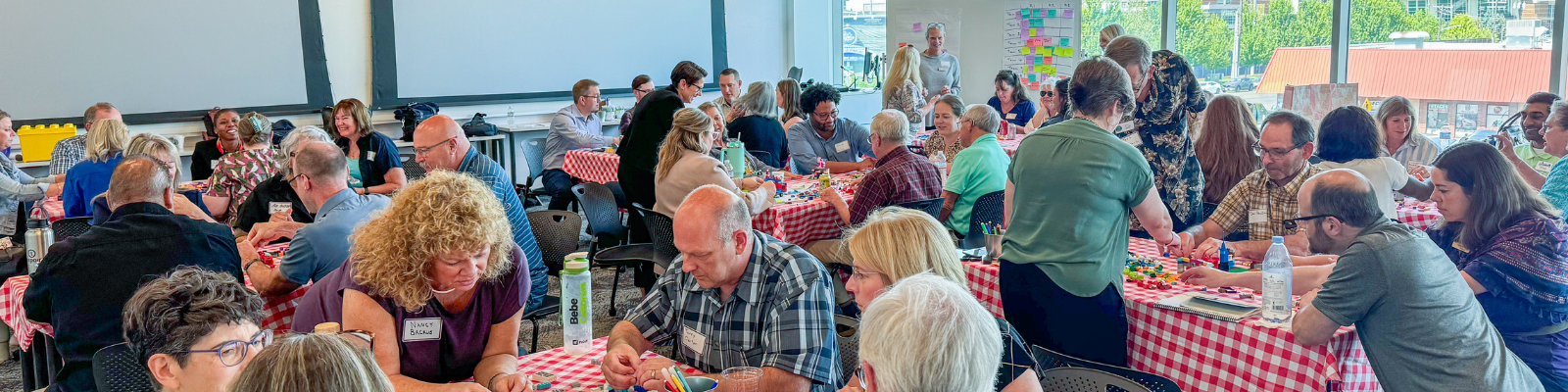
On January 24, 2025, the Evans School hosted the annual State of the School Address. The first part of the afternoon centered on building internal community, gathering together for a meal, and reconnecting to our shared commitment to equity and inclusion. The second half of the afternoon was spent learning from and celebrating the collective of community, the work accomplished in 2024, and the course ahead in 2025. Dean Jodi Sandfort shared her remarks about the current context and the ways that the Evans School will be carrying forward our work around evidence-based policy making, dialogue and debate, and supporting the next generation of leaders.

Check a recording of the State of the School Address and our 2024 Highlights video below.

Watch 2025 State of the School

Watch 2024 Highlights Video

Evans School Mourns Former President Carter

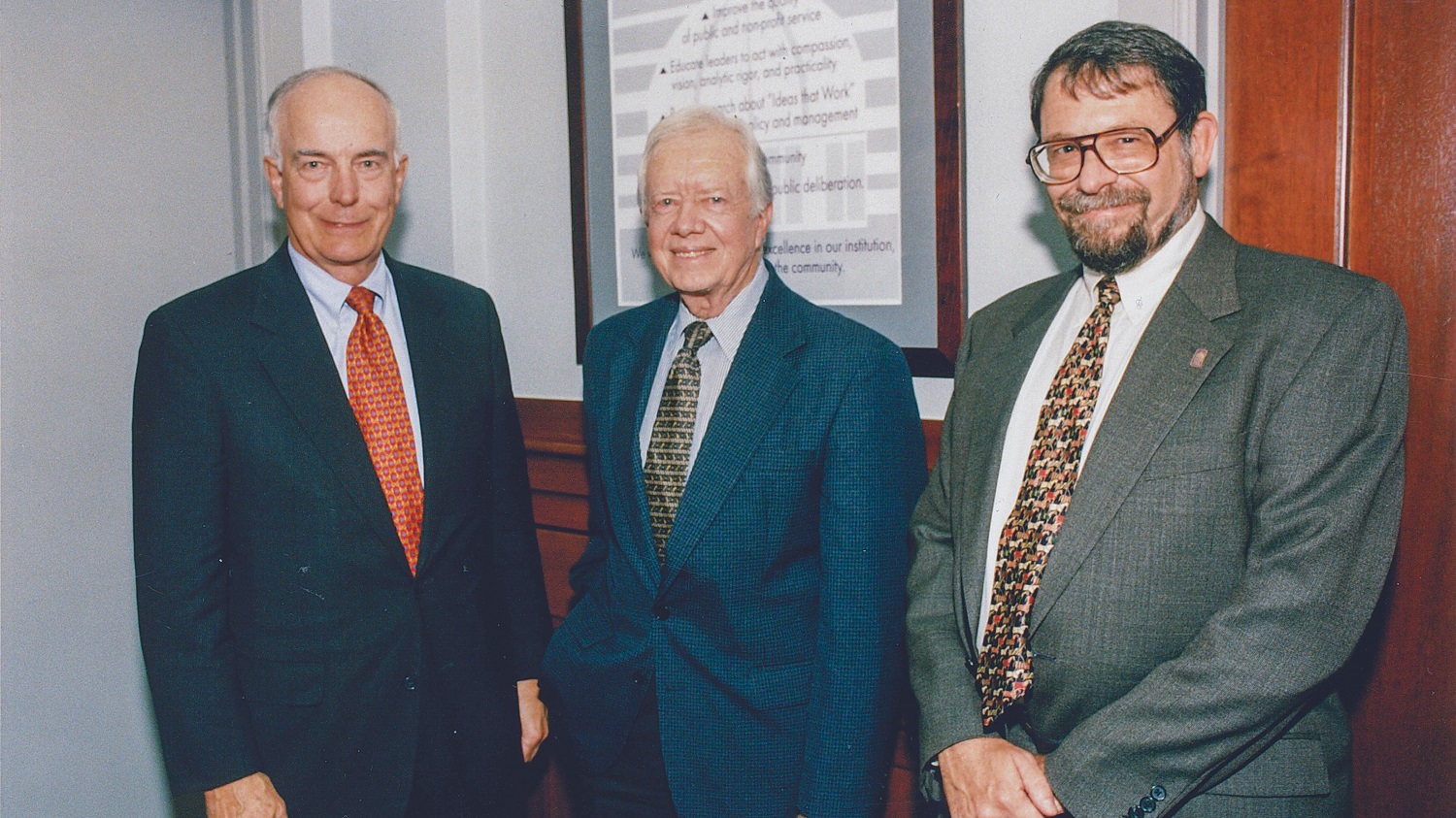
Dan Evans, Jimmy Carter, and Dean Marc Lindenberg
Dan Evans, Jimmy Carter, and Dean Marc Lindenberg pose in Parrington Hall

Today the Evans School joins in the nation in mourning the passing of former President Jimmy Carter. During his more than eight decades of public service, Carter served in the Navy, as a school board member, a state senator, governor, president, and as an advocate for democracy, fair elections, and expanded human rights.

25 years ago this month, Carter visited the University of Washington as part of the Evans School’s Progress Project. The public speaker series focused on themes of leadership and public service in the new millennium and was part of a year long effort to celebrate the legacy of Daniel J. Evans – who passed away shortly before Carter – and the naming of the Evans School in his honor. In his speech, Carter emphasized the need for people to take care of each other and address the growing disparity between rich and poor.

“President Carter brought his ethical compass to the world and was a role model of how intentional choice about how to respond to difficult times matters. In the wake of the Watergate scandal, Carter stewarded the Civil Service Reform Act of 1978 which helped to bring in new professional skills to policy implementation in federal agencies, an approach likely to be challenged by the Trump Administration’s Schedule F Executive Order in the first days of the new administration,” shared Dean Jodi Sandfort.

Theory to Practice: “Antiracist by Design” Book Launch

Theory to Practice logo

Theory to Practice is an ongoing series of discussions hosted by the Evans School that brings together academics and researchers at UW with practitioners in the field to explore key policy, governance, and social sector topics.

On December 11, 2024, the Evans School of Public Policy & Governance hosted our Theory to Practice: Antiracist by Design Book Launch with Associate Professor Crystal C. Hall. This thought-provoking event celebrated the launch of her powerful new book on advancing antiracist practices in policy and design.

The evening featured an engaging interview led by Charmila Ajmera, MPA ’20, who explored the book’s themes and its inspiring call to action for creating equitable systems through intentional design. The discussion illuminated the real-world implications of antiracist work and the challenges and opportunities of embedding these principles into practice.

Attendees were invited to join a dynamic Q&A session, where thoughtful questions deepened the conversation around antiracism and systemic change. This meaningful exchange set the stage for a community-driven dialogue, fostering connections and shared commitments to advancing equity in policy and governance.

Resources

Speakers

Crystal Hall joined the Evans School faculty in 2008. Her courses include Quantitative Analysis, Psychology for Policy Analysis, Intergroup Relations for Public Policy, and Race and Equity for Policy and Governance.

Her research explores decision making in the context of poverty, using the methods of social and cognitive psychology, along with behavioral economics. This work has had a particular focus on financial decision making and economic opportunity for low-income families. In addition to broadening the theoretical understanding of the behavior of this population, her work has also explored new ways of incorporating these insights into policy design and implementation. She has a record of serving government agencies at the local, state, and federal level – including having served as a Fellow on the White House Social and Behavioral Sciences Team and the Federal Office of Evaluation Sciences at the General Services Administration.

Professor Hall holds an appointment as an Adjunct Associate Professor of Psychology in the University of Washington Department of Psychology. She is also an Academic Affiliate of ideas42, an Affiliated Scientist of the Behavioral Change for Good Initiative, and a Faculty Affiliate at both the University of Washington’s West Coast Poverty Center (WCPC) and Center for Studies in Demography and Ecology (CSDE).

In addition to her scholarly work, Professor Hall has provided guidance and training to community organizations, nonprofits, and government agencies seeking to implement tools from psychology and behavioral economics into the design and delivery of their programs and services. She holds a PhD and MA in Psychology from Princeton University. In addition, she holds a BS from Carnegie Mellon University in both Decision Science and Policy and Management.

Charmila Ajmera is Environmental Justice Policy senior manager in the Environmental Public Health division of the Washington State Department of Health. Prior to joining the agency, she worked with the environmental justice coalition, Front & Centered to help draft and pass the 2021 Healthy Environment for All (HEAL) act, and served as an Inclusion Manager at Tableau and Salesforce. She has been a staunch and effective advocate for equity and anti-racist policies and practices both in her professional and academic careers for the last 15 years. Outside of work, she loves enjoying the beauty of the PNW with her 2 year old daughter, partner, and pup.

Inspiring Civic Participation in the Next Generation

The University of Washington (UW) has a vision to model democracy by cultivating collaborative decision-making, respectful dialogue, civic engagement and belonging. The NextGen Civic Leader Corps puts that vision into action for our undergraduate students who are passionate about public service, community engagement, and civic leadership.  

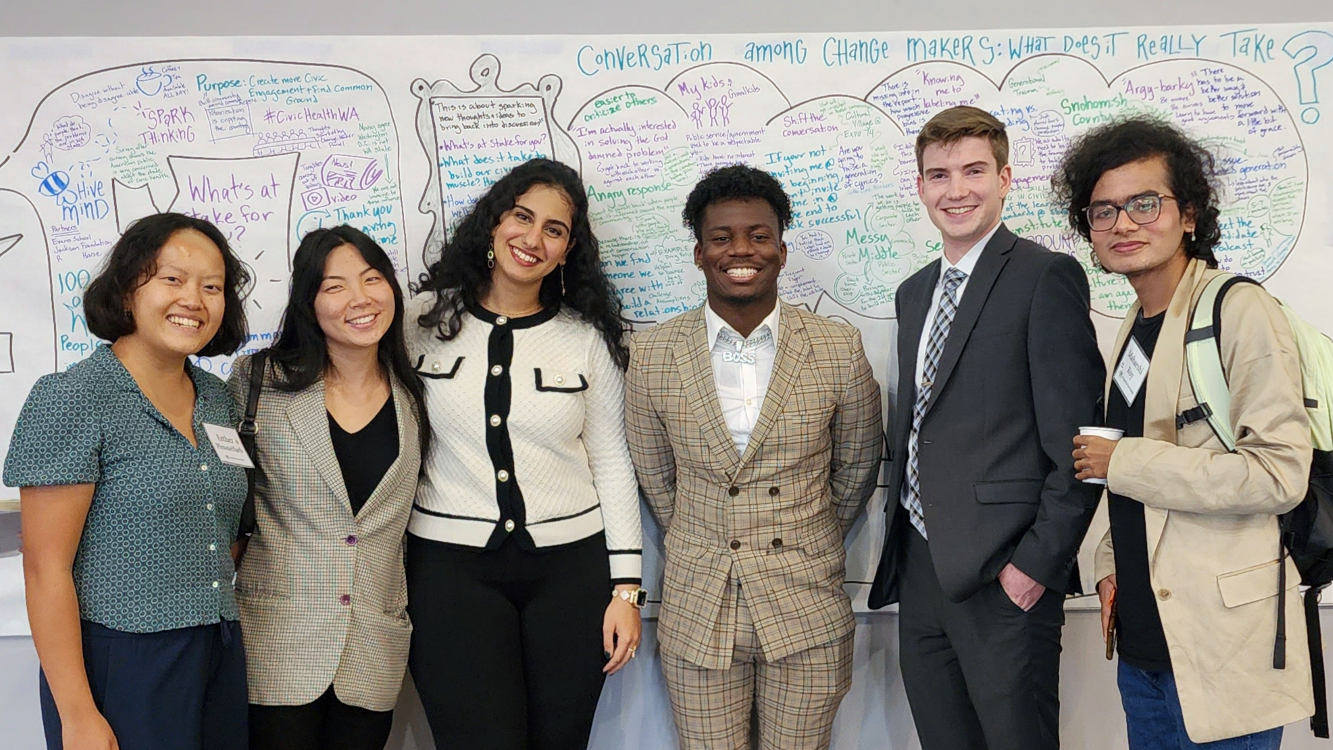
Six NextGen Civic Leader Corps participants pose together in front of a white board filled with conversation notes at the Civic Health Summit

The Evans School of Public Policy & Governance and Community Engagement and Leadership Education (CELE) center launched the initiative in 2022 to inspire and prepare undergraduate students of all majors and disciplines to become leaders in their communities and advance the public good throughout their careers 

The initiative has now expanded to Tacoma and Bothell as part of a Tri-Campus Network and undergraduates passionate about public service and civic engagement from any discipline can join to deepen their public service commitment. The NextGen Civic Leader Corps solidifies a long-term commitment to working for the public good through coursework, experiential learning, signature events, and professional network building. Students receive guided advising, participate in experiential learning and volunteer opportunities, access financial support, and connect to a larger statewide and national community of publicly motivated peers. 

NextGen’s interdisciplinary approach makes it easy for a student in any field to explore and deepen civic leadership. NextGen Civic Leader Corps currently hosts over 2,200 undergraduate students in more than 50 majors across the three UW campuses. We are part of a growing network of programs at 22 universities across the country, hosted by the Volcker Alliance, that inspires and prepares students to serve their communities and nation.

In the short term, members are part of a robust national network of civically minded leaders, receive priority consideration for scholarship opportunities and may be eligible for a credential. The long-term impact of civic participation is linked to a healthier transition into adulthood, higher educational outcomes, and higher income levels down the road.  

Hear directly from a few of our students about the impact of the NextGen Civic Leader Corps.

The tri-campus initiative is poised to expand to serve more students, and we look to our UW and Evans School community to engage with us in the work.  

There are multiple ways to engage, including providing financial support, offering paid internships, providing long-term volunteer opportunities, and speaking at a signature event. Please contact nextgenleader@uw.edu if you’d like to connect to explore ways to support our NextGen students today!  

Evans faculty Crystal Hall co-authors new book on antiracist behavioral design

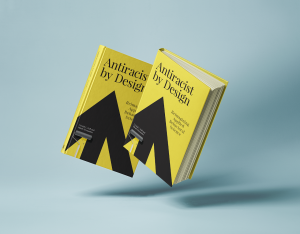
Antiracist by Design is a compact and informative guide for organizations, policymakers, and everyday people who want to use the tools of behavioral science in practical ways to design and implement policies and practices that drive racial equity forward.

Two Antiracist by design books with yellow covers floating in front of a pale blue background

Co-authored by Crystal Hall, an Associate Professor at the Evans School, and Mindy Hernandez, the Living Lab for Equitable Climate Action at the World Resources Institute, Antiracist by Design is a call to action, providing tools and a roadmap for an antiracist approach to applied behavioral science.

The book begins by tracing the history of applied behavioral science and how the field has historically shied away from tackling systemic issues. Hall and Hernandez then offer an antiracist framework for updating the mechanics of behavioral design, blending scholarly research alongside accessible stories, examples, and concrete steps for moving racial justice forward.

Reflecting on the process, Hall shared, “Mindy and I are thrilled for the release of Antiracist by Design. This book represents years of conversations and reflections on the missteps of the field (starting with our own!). My teaching and scholarship at the Evans School have been so influential throughout this process, especially my work with students. I’m so delighted that I’ll have the opportunity to celebrate the book and its implications with our community.”

Antiracist by Design will be released on November 19 by MIT Press. Hall will hold a hybrid book talk on December 11 as part of the Evans School’s Theory to Practice lecture series.

Remembering Governor Dan Evans, ’48, ’49 and his lifetime of service and impact

Today, we join our state and the world in mourning the passing of former Governor Daniel J. Evans, ’48, ’49, a former regent, renowned statesman and tireless champion of higher education, human rights and the environment.

Dan Evans

Dan’s service to and impact on our state is virtually without equal: he served three terms as governor, five years in the U.S. Senate, eight years in the State House of Representatives, six years as the president of Evergreen State College and twelve years on the UW Board of Regents, among many other volunteer roles within the University. In every role and in all that he did, he was unshakably committed to his values and integrity, which always served as his north star. He believed deeply in civility, mutual respect and bipartisanship, and throughout his long career in public service, he refused to sacrifice his principles for the sake of expediency or personal advancement.

The example he set for future leaders is at the heart of the Daniel J. Evans School of Public Policy & Governance, whose mission and work are driven by the public service philosophy that Dan lived by. His incredible energy and stamina were often on display at the Evans School. He continued to be active and engaged there throughout his later years, speaking at seminars and meeting individually with students and fellows. His life and legacy will remain a permanent beacon for what our students can aspire to through a career in public service.

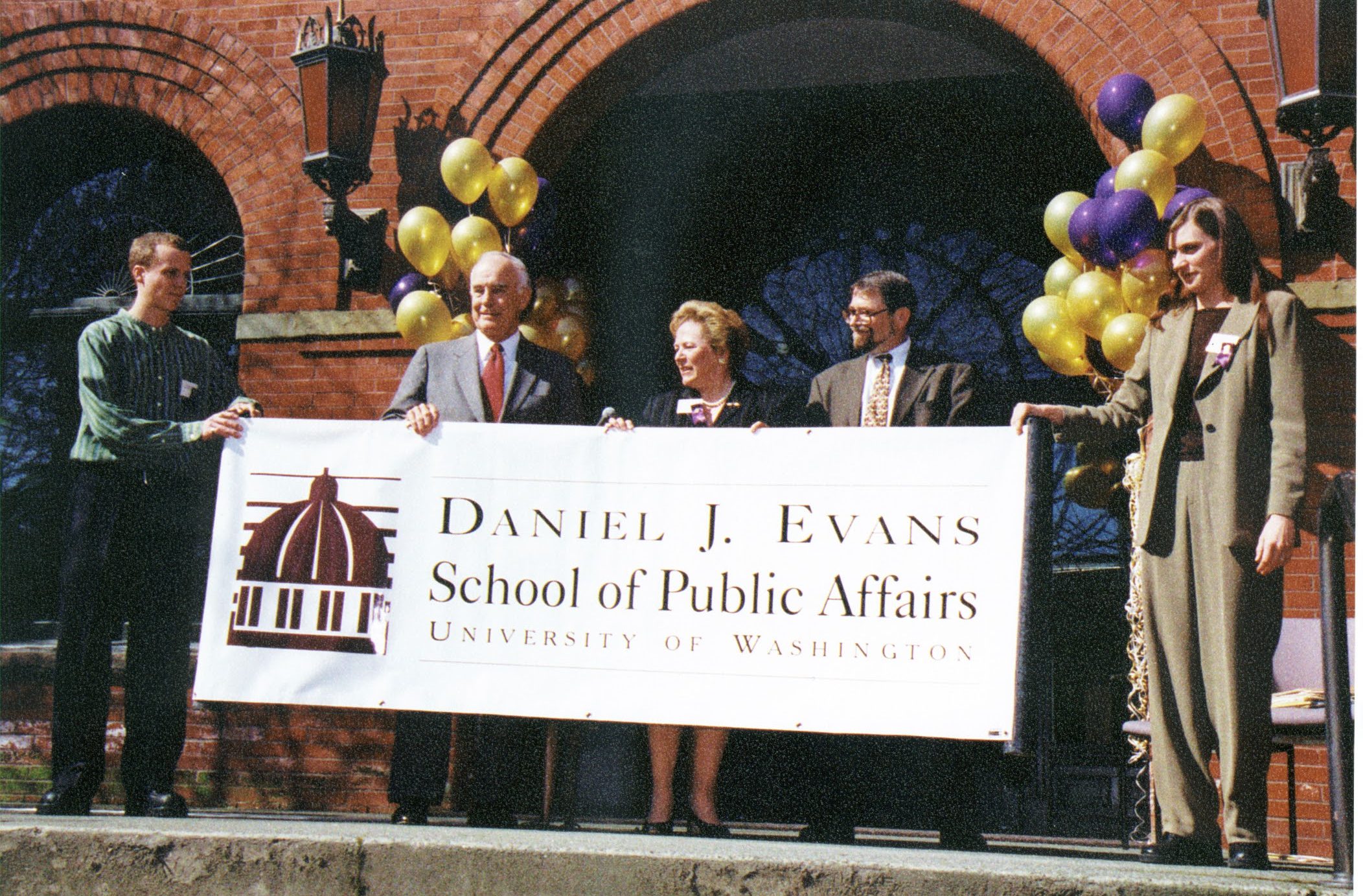
Dan and Nancy Evans at the 1999 renaming ceremony for the School of Public Affairs

Dan’s indefatigable nature was evident in every aspect of his life, and he never tired of the beauty and majesty of the state he was devoted to. His love of unspoiled wild lands and his visionary public policy instincts were instrumental in preserving more than a million acres of forest through the Washington State Wilderness Act. He especially loved to hike the Rattlesnake Ledge trail and always relished the chance to bring others with him to enjoy its phenomenal beauty. 

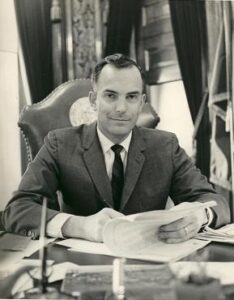
Young Dan Evans at Governors Desk

As governor, he led with skill and compassion, including his bold and principled commitment to welcoming immigrants to Washington. Almost 50 years ago, he declared, “You are welcome in Washington” to thousands of Vietnamese refugees seeking safe harbor. Dan’s humanity stood in contrast to the anti-immigrant stance of many other officials and set the moral standard for addressing such a humanitarian crisis.

Speaking to the 1968 Republican National Convention, Dan said, “There is no place in [the American] dream for a closed society, for a system which denies opportunity because of race, or the accident of birth, or geography or the misfortune of a family.” He will be deeply missed, but his legacy will live on in our unceasing efforts to build on his work and realize his vision of an equitable American Dream. We offer our deepest condolences to the Evans family and all who loved and honored Dan’s extraordinary life of service and principled leadership.

The family has asks that gifts made in honor of Dan Evan and his legacy, be made to the Daniel J. Evans Endowment for Excellence in Public Service.

Celebrating the Life of Chandler Gayton, MPA ’22

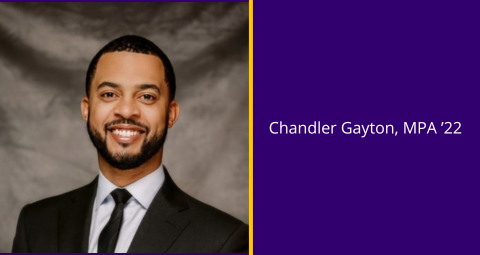
Chandler Gayton, MPA ’22

Beloved by faculty and fellow classmates, the Evans School community grieves the loss of 2022 MPA graduate and dedicated public leader, Chandler Walker Gayton. Chandler passed away on July 20, 2024, at the age of 33 due to injuries sustained while riding his motorcycle. 

Chandler truly exemplified the Evans School’s values of equity, courage and service.  “This kind of loss hits a community very deeply,” shared Dean Jodi Sandfort. “To have a leader with such potential who is taken from us so soon leaves a significant mark. I will hold tight to my memories of our conversations on the steps to Parrington—about our shared work, about how his courses were preparing him to make a difference, and about the changemaking work he was already leading in the region.” 

Before shifting into a career in the public sector, Chandler showcased his leadership skills on the football field and in local real estate. He was captain of the O’Dea High School football team and went on to play in college at Simon Fraser University in B.C where he earned a Bachelor of Arts degree from the Faculty of Communication, Art, and Technology. He returned to Seattle after graduation to earn his real estate brokers’ license and work for Windemere Real Estate Company.  

In 2017, Chandler took on the role of one of three legislative aides under legendary civil rights leader and King County Councilmember Larry Gossett. Chandler handled government and public affairs matters, which he regarded as highly challenging and rewarding. After Councilmember Gossett’s retirement, Chandler began working for Councilmember Girmay Zahilay, focusing on community outreach and communications, particularly in the Skyway area of unincorporated King County. His primary focus was working on affordable housing and land use, where he was extremely successful. He was encouraged and supported to pursue his MPA while working for Gossett and Zahilay, and he was awarded the Dr. Constance W. and Norman B. Rice Endowed Graduate Fellowship. 

Beginning in 2023, Chandler’s primary professional role was as a strategic advisor for public safety in Seattle Mayor Bruce Harrell’s office. His job involved community outreach and communications, which he thoroughly enjoyed. He had also started to explore the possibility of running for office. 

Chandler was a Seattle native with a deep commitment to his community. He served on the Board of Homestead Community Land Trust, which creates stability, equity and opportunity by developing land and housing in trust, giving lower-income households the opportunity to own a home that remains affordable. He also served on the Treehouse for Kids Young Professionals Board and was a mentor for several students in his local community.  

What shone through most in the memories shared by family, friends, and colleagues at his celebration of life on August 15 was Chandler’s kindness, consideration of others, and his adventurous spirit. May his memory serve as an inspiration to future generations of public service leaders.  

The Evans School extends our deepest condolences to the Gayton family, who have been involved with the Evans School and UW for decades. Chandler’s father, Carver Gayton (BA ‘60, MPA ’72, Ph.D. ‘76) is an alum, former staff and faculty member, and served on the Evans School’s Advisory Committee and numerous other volunteer leadership positions across the UW.  

To read more or share a memory, please visit Chandler’s memorial page 

In lieu of flowers, donations may be made to one of the following:

UW, WSU Launch New Program to Bolster Collaboration Among Local Public Leaders

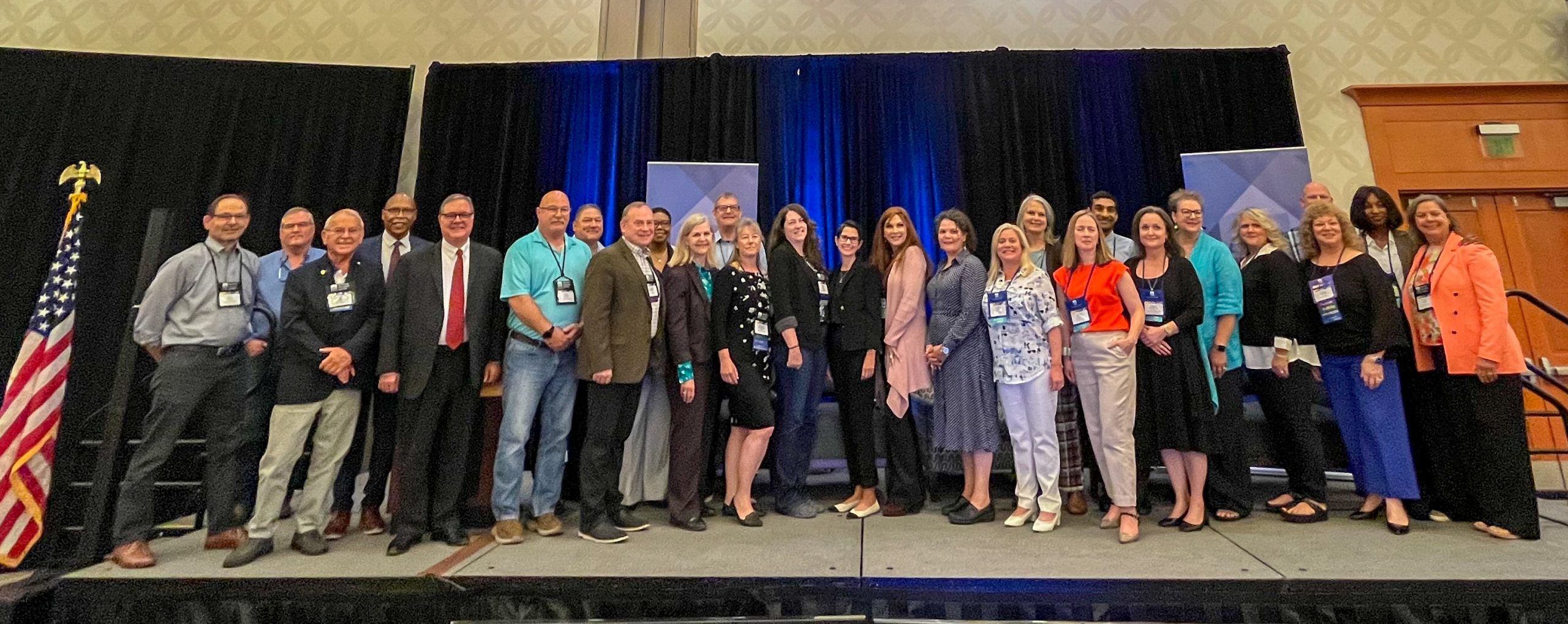
WA CELI leaders pose on a stage

It’s no secret that trust in governance is faltering. A recent Gallup poll found that only 39% of Americans trust the federal government. And though trust is higher in state and local governments (57% and 66%, respectively), we know there is an opportunity to plant seeds at the local level to improve civic health.

To respond to this moment, the Evans School of Public Policy & Governance and the William D. Ruckelshaus Center (WSU)—in collaboration with the Association of Washington Cities—are partnering to launch the Washington Collaborative Elected Leaders Institute (WA-CELI), a new program that aims to bolster the credibility of elected officials with the public they serve.

The Project for Civic Health, initiated by Lt. Governor Denny Heck, highlighted the need for unique support for elected officials to work together across political divides. This inspired the creation of WA-CELI to build the skills and courage needed for collaborative problem-solving.

“We brought together 200 people and said ‘we know what the problem is. What could we do?’” said Jodi Sandfort, dean of the Evans School. “The elected officials said, ‘we need some help building skills to disagree without being disagreeable.’ To me, it’s pretty clear that what’s failing us right now is that people have learned that to get elected, you have to be extreme. They haven’t learned that when you govern, you have to compromise.”

As two of the premier public universities in the state, WSU and UW are uniquely positioned to help elected officials reach across political divides and work together. Drawing on the expertise from both schools, the program includes applied training and peer learning that focuses on building a network of public leaders with collaborative leadership skills. The goal is to reshape Washington’s political culture to create a more collaborative and community-focused environment.

“We’re going to use a lot of case studies. Say it’s a conflict about a local issue around public safety or a conflict about a local issue about environmental protection and just having practice of how to sit and look at the case and figure out what are the issues and simulate what it’s like to try to come up with a solution,” Dean Sandfort noted. “Part of it is building better relationships and having experiences that help them feel more confident in their ability to analyze a problem and think through how we’re going to create a solution that adds value rather than just a solution that might be politically palatable.”

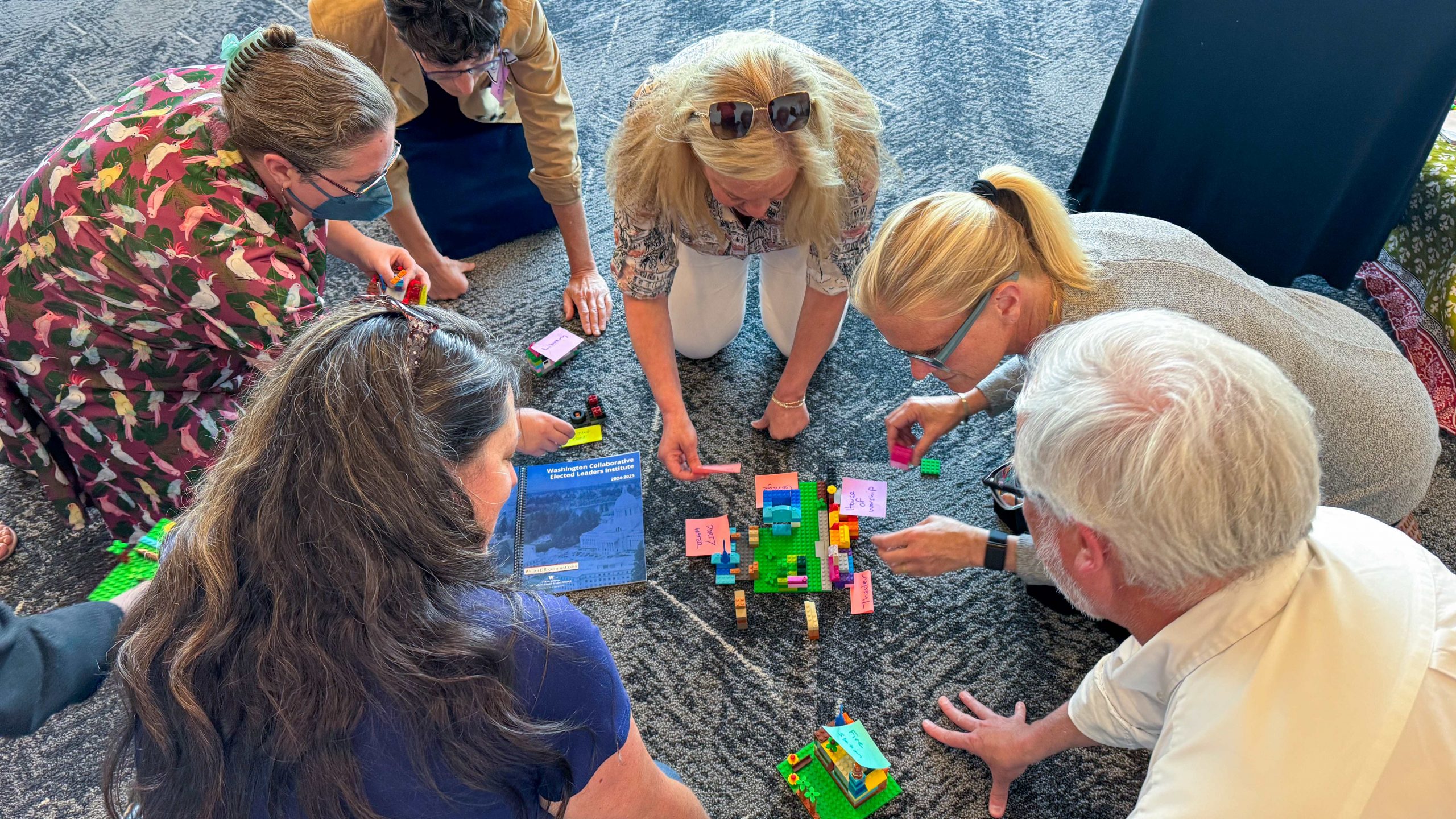
This summer, the first cohort of leaders from a mix of city sizes, types, and government structures is participating in virtual and in-person events across Washington state. Costs of attendance are covered to ensure accessibility for all. To further highlight connection across division, venues for the in-person sessions were intentionally chosen to play with people’s perceptions of where WSU and UW have influence in the state. The first in-person session was held July 27 at the UW Spokane Center, and a future session will be held at WSU’s Everett campus, across the street from Everett Community College.

The goal of this program is for public leaders to come away with new skills to collaborate with people they don’t necessarily agree with. Graduates will join a network of public leaders, staying connected through events and additional training. This network aims to support a shift towards a more collaborative political culture in Washington. Participants will also present their work at the annual AWC conference to engage and inspire future cohorts.

A group of adults crouch on the floor and add pieces to a mock up city

Evans School Launches Public Service ReDesign Toolkit

Public Service Redesign Toolkit

Many of today’s practices, programs, and policies were designed narrowly to respond to a need, crisis, or a subset of the population. They don’t take into consideration the complexity and interconnectedness of various systems and the communities they affect. The fragmented thinking and the operational realities that grow from it significantly limit the effectiveness of publicly funded services. Current operations do not respond to what people need when they turn to governments or nonprofits for assistance.

To make intentional systemic improvements, the Evans School believes it is important to have a clear methodology of change making. A methodology is an articulation of why – why is this work carried out in this way? It provides underlying concepts that clarify purpose and allow intentional application of a particular method or tool.

In winter quarter of 2024, the Evans School launched the Public Service ReDesign Toolkit as a public collection of what we use in practice to facilitate conversations, prototype, and document learning. The toolkit is organized into sections that correspond to the three-phase iterative approach to human-centered design processes we use in working with complex systems that focus on action and inquiry:

  • Situational Analysis: understanding ‘what is’
  • Generate & Refine Ideas: explore what ‘might be’
  • Prototype & Assess: create & test what ‘can be’

So far we have actively used this as a resource in our new Leading Public Innovation certificate program, documented tools and methods from engagement trainings within the public health sector, and recorded how tools and methods were implemented by Evans’ policy lab – EPIC (Evans Policy Innovation Collaborative) in recent engagements. As the Toolkit continues to be used, we continue to iterate to meet emerging needs.

We invite you explore this Toolkit! As you browse through, remember – the resources shared here alone won’t make change. Clarify the underlying methodology of change, as it is the foundation for what other elements will be used and how.