Skip to content

Public Investments in Community College Baccalaureate Degrees

Empty classroom

Investigating Program Approval and Development Data

In recent years, the landscape of higher education has witnessed a significant shift, marked by the proliferation of Community College Baccalaureate (CCB) degrees across 24 states that now award more than 25,000 bachelor’s degrees annually, and growing. Advocates of CCB degrees argue they cultivate talent and bolster state and regional economies, at the same time providing access to baccalaureate programs of study for adult learners and others who are rooted in communities where they work and care for family members and friends.

The University of Washington, in partnership with the firm Bragg & Associates and the Community College Baccalaureate Association is pleased to announce a new $250,000 grant from the Strada Education Foundation to research the data that states and colleges use to make the case for CCB degrees, identifying the strengths and limitations of current CCB policies and program approval processes. Phase one of this multiphase study occurs over the next 18 months and allows the research team to investigate program approval and development processes for new CCB programs in two states. By leveraging mixed methods and data-driven insights, results of the study will inform higher education decision-making and, ultimately, fortify state and local economies by ensuring adults and others served by community colleges gain opportunities for well-paying careers and lifelong learning. While the focus is on CCB degrees, the implications extend beyond community colleges to public investments in higher education.

Dr. Elizabeth Meza, Principal Investigator at the University of Washington Evans School of Public Policy and Governance described this study as “the first to systematically investigate data used for decision-making about CCB program approval and development. If colleges get this right and can provide quality degrees that students want and the labor market demands, all for an affordable cost, it can be a big win. However, the challenge is that’s a lot of moving pieces to consider.”

Dr. Meza, working in partnership with co-Principal Investigator Dr. Debra Bragg of Bragg & Associates, Inc., will examine data used for supply and demand analysis, curriculum and instructional design, partnerships involving colleges and employers and community-based organizations, and equity in student access and program outcomes. According to Dr. Bragg, “an important question the study will ask is how the case for new CCB programs address whether these programs create more equitable baccalaureate pathways for racially minoritized and other under-served populations.”

The Community College Baccalaureate Association (CCBA) is partnering in this project to ensure a robust network of colleges is involved and results are shared nationwide.

Evans School research team studies ballot rejections to improve voter experience

Ballot, envelope, and pen on table

Registered voters in Washington State will be receiving their vote-by-mail ballots in the next few days. Washingtonians have been voting by mail for over a decade and voter turnout in Washington routinely is among the highest in the country. Despite the success of vote-by-mail, a research study by the Evans School of Public Policy & Governance at the University of Washington has been examining why ballots are rejected to improve the voter experience and inform efforts by state and county leaders to continue to reduce the number of ballots rejected in any election.

For a ballot to be valid and counted, it must meet three conditions: Completed ballots must be placed in an official ballot drop box by 8 p.m. on election day or postmarked by election day. Ballot envelopes must be signed by the voter. And, that signature must match the voter’s signature on file with their county elections office. For most voters the signature to match is the one on your driver’s license or state ID, because people commonly register to vote when getting or updating their driver’s license and the Department of Licensing.

County elections offices process ballots and decide whether the signature from the ballot envelope matches what is on file. Ballots without a signature or without a matching signature are thus “challenged” and voters have the opportunity to “cure” or correct their ballot. Counties send out ballot cure letters within 24 hours of a ballot being challenged, which invites voters to submit by mail or in-person a signature verification that cures the ballot. If voters have a phone number on file, they also should receive a phone call from their county election office. Challenged ballots are rejected if they are not cured at the time election results are certified, which occurs about three weeks after election day.

Study director and Evans School Professor Scott Allard reports that roughly 98 to 99 percent of ballots cast in November elections since 2012 have arrived on time with an envelope signature that matches the voter’s signature on file. “Even with this level of success, far too many ballots are rejected each election,” according to Allard. Although each general election is a little different, the study finds that about one-half of rejected ballots in November elections without a presidential or midterm congressional election (a.k.a. off-off-year elections) are simply received late. “Off-off-year elections like those this November get less media attention and less public discussion, which makes it easier to forget to return your ballot on time,” Allard notes.

Project team member Calista Jahn observed several counties processing ballots in November 2022, “it is clear from watching county election offices work that they process ballots carefully and securely and receive training in signature matching that ensures integrity in the voting process. Our election workers are focused on ensuring elections have integrity and that all valid ballots are counted.” The study finds that about 1 in 8 rejected ballots lack a signature, with roughly one-third of rejected ballots challenged for signature mismatches in off-off-year elections.

UW researchers found, however, that about 60 percent of all challenged ballots in November elections are cured before counties certify their final election results. “While this shows that ballot curing processes work, we should still have it be a goal to reduce the number of ballots needing to be cured,” Allard said.

The Evans School study team final report will be delivered to the Secretary of State in early November, but other key findings stand out as voters prepare to fill out their ballots in the next few weeks.

With these results in mind, the study team offers three simple guidelines for voters this election season. “First, sign your envelope,” notes Professor Allard. “Second, when you sign your envelope – sign your name as you do on your driver’s license or state ID. Third, mail or deposit your ballot early – ideally the week before election day, which this year is on Tuesday, November 7, 2023. This will ensure your ballot arrives on time and that you have time to cure your ballot before election day, just in case you forget to sign the envelope or signed too quickly for there to be a good match.”

Voters can go to the Secretary of State elections website and follow their ballot through processing. Allard recommends that voters contact their county election offices with any questions they have about their ballot. He notes that voters also can go to their county election office websites to learn more about vote-by-mail and about ballot curing processes. “Sign your envelope, sign with your license signature, and return your ballot early,” encourages Allard.

David Suarez receives grant from Surdna Foundation

Grant File Folder Tab
Evans faculty member and nonprofit scholar David Suarez received a research grant from the Surdna Foundation for a project entitled, “What is Effective Participatory Grantmaking? A Comparative Assessment of Four Initiatives.” This project extends Suarez’s growing expertise and research program in participatory grantmaking, a power-sharing approach to grantmaking, which a number of private foundations have pursued in recent years. Since few foundations have evaluated their efforts to share power with stakeholders, the purported benefits of adopting such innovations remain unproven, and insufficient knowledge has accumulated in the field to elucidate critical questions such as whether some practices shape outcomes more than others. To begin to fill this gap,  Suarez will complete a field scan of participatory grantmaking practices and initiatives in institutional philanthropy. Then, building on that work, as well as the literature on participation in nonprofit organizations, he will utilize a comparative case study approach to investigate four participatory grantmaking initiatives.

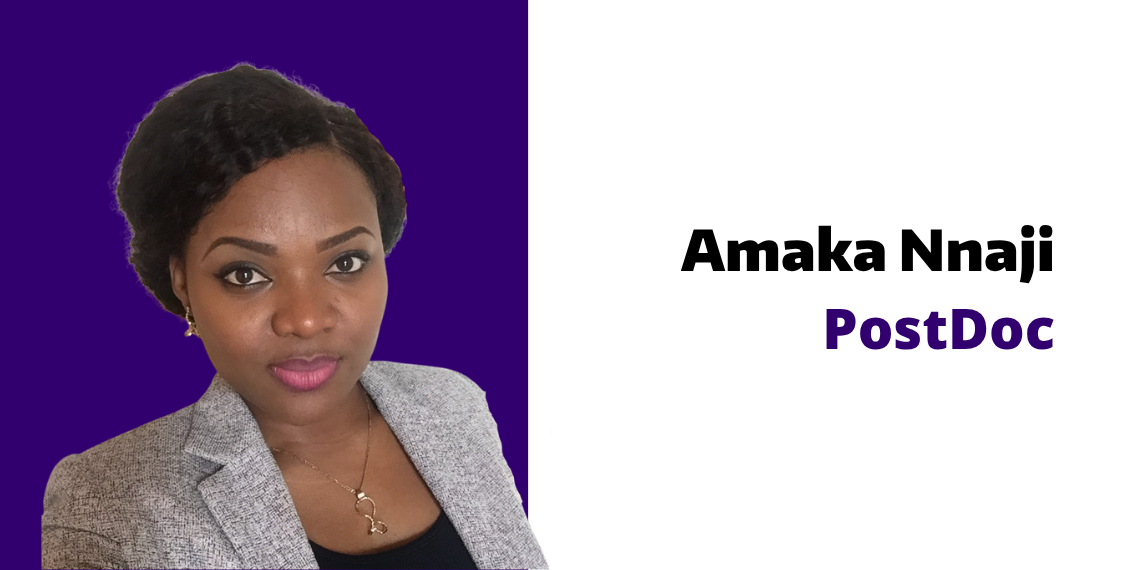
Agricultural Development Economics: Amaka Nnaji, PostDoc

Amaka Nnaji

The Evans School welcomes Amaka Nnaji as a new postdoctoral scholar with the Evans School Policy Analysis and Research Group (EPAR). Dr. Nnaji received her Ph.D. in Development Economics from Lincoln University in New Zealand. She has served as a research fellow for several organizations focused on development economics in Nigeria. Before completing her doctoral work, Amaka received a master’s degree in Agricultural Development Economics from the University of Reading in England.

Arriving at EPAR in April 2023, the Evans School caught up with Amaka to talk about her research in development economics.

Congratulations on your postdoctoral research position at EPAR! Your professional path has focused on a host of economic and environmental topics within Nigeria. What were some formative experiences early on that helped you identify this particular policy research path?

Thank you for the warm welcome. My interest in agricultural development economics, particularly in the gender-conflict nexus, comes from my experience growing up in Nigeria where smallholder farmers make up about 35% of the workforce with women contributing the most to crop agronomy with the least remuneration from farm proceeds. Also, the unprecedented impacts of drought and the resulting desertification of available arable land further worsen the situation. The obvious lack of gender-disaggregated and transformative research invariably resulting in the enactment of poor-functioning and ineffective policies further motivated me to pursue this research path.

Your dissertation and recent publications have focused on farmer-herder conflicts in rural Nigeria. Why is this such a critical issue in sub-Saharan Africa?

Farmer-herder conflict is a critical problem in most sub-Saharan African Countries due to rapid population growth and the escalating effects of climate change. Rising temperatures and subsequent drought and desertification have reduced the availability of pasture for nomadic herders to graze their animals. Also, rising population growth has signaled increased crop production which sometimes results in the conversion of grazing reserves to farmland. As a result, sometimes herders graze their animals on farmer’s cropland resulting in a loss of crop yield and income. Some farmers may maim the animals or pursue herders out of their farmlands, herders retaliate, and the vicious cycle of farmer-herder conflicts ensues. Considering the negative impacts of climate change are not stopping anytime soon, there is a need to provide evidence to engender the enactment of suitable policies that enhance adaptation to the adverse conditions increasing the occurrence of these conflicts.

What are some of the biggest challenges you encounter when conducting research in rural communities and regions?

Some challenges I have experienced conducting research in rural regions is a dearth of reliable secondary data on community population, number of farmers and farm size. Also, when carrying out surveys, the lack of efficient internet connectivity and unreliable transportation options through poorly maintained access roads are major problems. For my thesis, I had to collect data from remote conflict-affected regions, and these were the main issues faced by the field team.

Your published research focuses on many important areas for policy action – climate change, household consumption and food security, land use and farming practice – what are some immediate policy recommendations that stand out from your recent work?

Some of my most recent work show that female farmers are more likely to be food secure when given more access to productive resources like land. This demonstrates the need for more gender-transformative policies to bridge the persistent gender gap in access to productive resources. Also, empirical evidence of both direct and indirect negative impacts of climate change induced farmer-herder conflicts on agricultural productivity shows the need for policies to facilitate the migration to more sustainable farming systems like ranching and paddock grazing in developing countries.

How do you see your research program evolving in the next few years?

I have always been passionate about using academic research to support and influence public policymaking. In the next couple of years, I am looking forward to using spatial modeling techniques to facilitate the development of sustainable livestock production systems in developing countries. Also, working with the amazing team of researchers in the Evans School will enable me to contribute to research with clear social and political development relevance, that produces valuable evidence for the academic community, policymakers and non-governmental stakeholders in the continued fight for global gender equity, women’s empowerment, poverty reduction and inclusive growth.

New Ruckelshaus Center director named

Ruckelshaus Center Logo

The William D. Ruckelshaus Center – a public policy-minded collaboration between Washington State University and the University of Washington – has found its next director.

Julia Carboni, an associate professor with Syracuse University’s Maxwell School of Citizenship and Public Affairs, was selected to lead the Seattle-based center following a nationwide search. Carboni’s first day in the role will be July 1, 2023.

“The work done by both the Ruckelshaus Center is tremendously important for the impact it has in Washington, as well as its ability to serve as a model for other states and regions. “I am thrilled for the opportunity to lead the Ruckelshaus Center jointly supported by WSU and UW and to partner with elected officials, public and private sector, and other key stakeholders to help expand its impact across the Pacific Northwest and beyond,” Carboni said.

The Ruckelshaus Center offers leaders of public, private, tribal, and non-profit organizations the ability to tap into the experience of WSU and UW researchers and experts to meet the needs of their communities and constituencies. Such projects include assessing the state’s K-12 governance structure, redesigning Washington’s intellectual and developmental disabilities policy, and working toward the preservation of the state’s coastline, among other efforts.

The Office of the Provost and Executive Vice President administers the program at Washington State University in collaboration with UW’s Daniel J. Evans School of Public Policy and Governance.

“It is vital that the next leader of the Ruckelshaus Center advances its core mission to help diverse groups find solutions to some of the most important challenges facing our state and region, and Dr. Carboni is the perfect person to be at the helm,” Elizabeth Chilton, WSU provost and executive vice president, said.

Carboni joined the faculty at Syracuse’s Maxwell school in 2016 as an assistant professor in the Department of Public Administration and International Affairs. In 2020, she was named research director of the school’s Program for the Advancement of Research on Conflict and Collaboration, and a year later was named chair of the school’s Citizenship and Civic Engagement Program.

Carboni holds a Masters of Public Administration as well as a Ph.D. in management from the University of Arizona. Carboni has served numerous non-profit and public service groups, including the Foodbank of Central New York, the Association for Research on Nonprofit Organizations and Voluntary Action, and the University Network for Collaborative Governance.

As part of the nationwide search for the center’s next director, WSU laid out what it envisions as key opportunities and challenges ahead.

“Enhancing Ruckelshaus Center’s visibility and impact, leveraging the full combined capacity of WSU and UW, facilitating cooperation across sectors, and diversifying the financial support the center receives are among the priorities Dr. Carboni will be advancing as she assumes this role,” Chilton said. “It’s also important that the center continues to foster meaningful connections across the state and foster our shared principals of diversity, equity, inclusion and access.”

The center is named in honor of William D. Ruckelshaus, an American politician whose legacy centers on his ability to bring disparate groups together to craft policy. Ruckelshaus was the first to serve as the administrator of the Environmental Protection Agency in 1970. His expertise in navigating disagreements between political parties resonates to this day, with these principals serving as the guides for the center that now bears his name.

WSU and UW opened the center in October 2006 with commitments from the leaders of both universities, Ruckelshaus, and then-Washington state Governor Christine Gregoire.

Visit Ruckelshaus Center Website

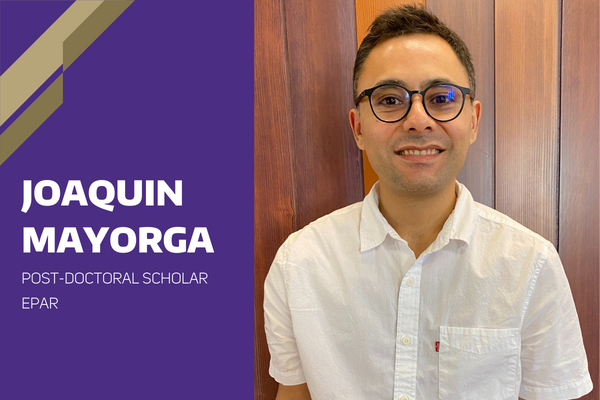
Postdoc Profile: Five Questions with Joaquin Mayorga

Joaquin Mayorga

Joaquin Mayorga recently joined the Evans School of Public Policy & Governance as a postdoctoral scholar with the Evans School Policy Analysis and Research Group (EPAR). He received his Ph.D. in Business Administration with a concentration in Agribusiness from the WP Carey School of Business at Arizona State University and an MA in Economics from the Center for Economic Research and Teaching (Mexico City). Before his graduate studies, he worked as a Junior Researcher at the Center for Environmental-Economic Modeling and Analysis at INESAD in La Paz, Bolivia.

The Evans School spent time with Joaquin to learn more about his research program and interests.

Welcome to the Evans School! You have extensive expertise around the effects of climate hazards on agricultural productivity and small-scale producers’ livelihoods. How did you first become interested in this area of policy research?

Thank you for the welcome! My interest in this area comes from my experience growing up in Bolivia, where about a third of the labor force works in agriculture. I saw firsthand the impact of droughts and receding mountain glaciers on the water supply for cities and small-scale producers in my region. After my undergraduate studies, I worked on data-driven and policy-oriented projects related to forest conservation and agricultural productivity. This experience further motivated me to pursue graduate studies in agricultural economics.

If you reflect on your research portfolio to date, what are a couple findings that stand out to you as particularly important for policymakers to understand?

I think two findings stand out in my research portfolio. One result shows that small-scale producers in Nigeria tend to increase the area planted in adaptation to high-temperature shocks. This adaptation may mitigate income shocks in the short term but may not be sustainable in the long run if it reduces soil quality. The other finding indicates that supply chain contracts between small-scale producers and intermediary firms with a fixed output price and training provision raise farm productivity, particularly for more risk-averse farmers. These findings show the need for policymakers to consider the long-term implications of climate adaptation practices and the advantages of promoting supply chain contracts between small-scale producers and intermediary firms.

Your work leads you to studying agricultural production across the globe. How does working in many different social and cultural settings strengthen your approach to understanding the relationship between climate change and agricultural policy?

In my experience, small-scale producers worldwide face some common climate-related challenges, but the responses and adaptations can vary across countries. Understanding the drivers of these variations is critical in identifying effective policy solutions for climate change challenges. Working across different regions has deepened my appreciation for the importance of context-specific policies to support agricultural producers.

You draw upon many different sources of data in your work. What are the common challenges you encounter around data quality in this area of research? Where are data quality investments most needed?

I sometimes encounter challenges with measurement error, especially when variables like plot size are self-reported by farmers. Also, data availability varies by location, as some low- and middle-income countries have high-quality small-scale producer surveys while others have little to no farm-level data. Given the need to address climate change, I believe it would be helpful to include questions about farmers’ perceptions of climate change in farmer surveys. This addition could provide policymakers with valuable insights.

What excites you most about this post-doctoral research position with EPAR?

What excites me the most about this position is the chance to work on policy-oriented analysis and research in collaboration with stakeholders in the policy-making process. I’m also thrilled to work with a great team of researchers and be part of the broader community at the Evans School and UW. I am looking forward to producing research with real-world impact.

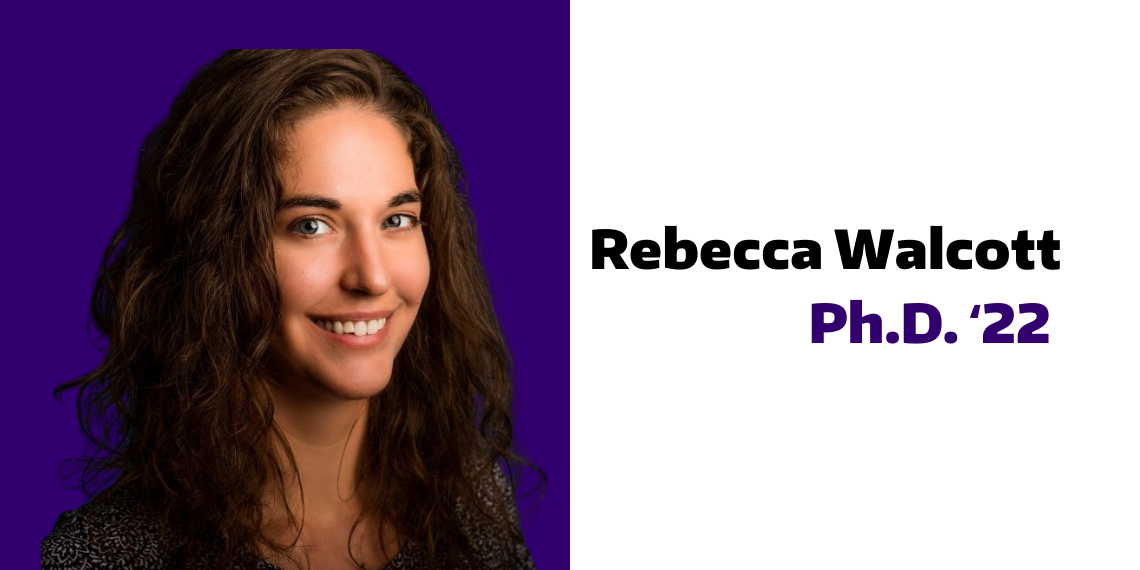
Mobile Interest Policy: Rebecca Walcott, Ph.D. ’22

Rebecca Walcott

Becka Walcott finished her Ph.D. at the Evans School in December 2022, with dissertation work focused on mobile money and financial inclusion tools in sub-Saharan Africa. The Evans School spoke early in the new year with Becka about her dissertation project.

Your project examined innovative mobile money tools. What is mobile money and why are these critical finance tools for households in sub-Saharan Africa?

Mobile money refers to financial transactions that take place over SMS networks on mobile phones. SMS is just regular texting – so users don’t need a smartphone or Wi-Fi connection. Plus, mobile money is usually administered through a telecoms company with agents in village bodegas, which means people don’t need to access formal banks to use it. Thus, mobile money is broadly accessible to populations without internet infrastructure or brick and mortar banks.

You find that earned interest can encourage households to use their mobile wallets to store money. You also find increases in mobile savings do not reduce conventional bank account use. Tell us more about the original insights of this study.

Mobile money regulations vary across countries, and Tanzania was the first country to require mobile money providers to distribute interest to mobile wallet accounts. The banks were worried that the ability to earn mobile wallet interest would cause people to pull their money out of formal savings accounts – or act as a disincentive from opening such accounts. My study was the first to examine the effects of providing mobile interest – and I was able to demonstrate that interest can encourage mobile savings without harming the banking sector. Hopefully this evidence can mitigate the concerns of the banking sector and also encourage other countries to offer more mobile financial tools.

Another study in your dissertation examined preferences for digital repayment among microfinance borrowers in Uganda. Here you use a mixed methods research design to understand why individuals would opt for digital repayment. Why was it valuable to have both quantitative and qualitative evidence in this instance?

The quantitative data could tell us a borrower’s repayment preference at the time the question was asked, plus some important contextual data – but we needed the qualitative data to learn about how each borrower was framing the repayment options. Some were updating their preferences with new information, some were not receiving that new information, and some were influenced by other borrowers. The qualitative data revealed these important nuances that contributed to repayment preference.

You also examine how countries adopt policies governing identity verification across mobile money tools. What did you learn about when countries enact identity verification regulation?

I learned that policy diffusion from regional neighbors likely plays a large role in adoption timing for these policies. I was surprised that I didn’t find more support for hypotheses around domestic factors and policy adoption, and I think there is room for a deeper examination of the way the domestic political economy can influence the diffusion of mobile money regulations.

What’s up next?

I just started my new job as an economist at the American Institutes for Research, primarily working on international development projects. I’m super excited for this new chapter!

Agricultural Adaptations: Didier Alia, Research Faculty

Didier Alia

Didier Alia recently was appointed a Research Assistant Professor at the Evans School. Alia is an agricultural economist with a broad research interest and expertise in international development with a focus on agricultural technology adoption, agricultural transformation, climate risks and adaptation. He received a Ph.D. in Agricultural Economics from the University of Kentucky in 2017. Prior to this appointment as a Research Assistant Professor, Alia worked for several years as a Research Associate at the Evans School Policy Analysis and Research Group (EPAR).

The Evans School grabbed a few minutes with Didier at the start of this new appointment. 

You are a noted expert in agricultural economics, with a focus on crop productivity and agricultural transformation in Africa. How did you become interested in a research career and in this particular area of study? 

 I came from a small West African country, Benin, that is resource-poor and where agriculture is still the primary source of livelihood for most households. My own family is an agricultural family unable to rely solely on farming to a point that my parents have migrated to the city to seek informal non-farm employment. Growing up, I have seen firsthand the constraints facing farmers in my community. Later in my studies, both at the undergraduate and graduate levels, I learned that these constraints are common across most of sub-Saharan Africa and other developing nations. After my Master in Statistics and Applied Economics, I worked at AfricaRice, a leading rice research center and this experience further motivated me in pursuing doctoral studies in agricultural economics and specializing in crop productivity and rural transformation in Africa with the hope to contribute to solving issues facing rural farmers through policy-oriented empirical studies. 

You are active in many other areas of research as well, right? 

Currently, my research also relates to agricultural price analysis, barriers to trade and developing countries’ access to global markets, and food safety and food regulation in the global food value chain. I often approach this work through gender and inclusion lenses. My work also engages issues related to urbanization, education, health, and trade and their implications for rural development in Africa. 

What are some of the most important research findings to have emerged from your work with EPAR? 

When I joined EPAR in 2017, my first project involved processing large-scale multi-topics household surveys for African countries. It has become incredibly clear to me how important data are to evidence-based decision-making, and yet statistics on agricultural households for most African countries are rare. So, my work with colleagues at EPAR has contributed to global public good with various agricultural development indicators made available. Our work has contributed to the research community by making our code freely available on GitHub for researchers based in Africa or interested in African agriculture to use. My other projects at EPAR involve analyzing decisions around indicator definition and constructions that have important implications about how specific and marginalized sub-groups (women and small farmers) are represented in statistics and policy analyses. Another important finding of my work includes assessing the constraints and drivers of agricultural technologies adoption, productivity growth, and rural transformation in Africa. 

Even though much of your research is grounded in Africa, it connects to a host of issues in other global settings. What research insights from your work stand out as particularly relevant to other regions of the world?

Although Sub-Saharan Africa as a region has its own specificities, issues facing small farmers and their communities in Africa are also prevalent in other regions of the world, most notably South Asia. My work at EPAR also involves India and other South Asian countries. In that region, and in other low-income nations, farmers increasingly face the challenges of climate change and its threats to livelihoods and way of life. My work on agricultural statistics measurement, understanding the drivers of agricultural technologies adoption, productivity growth, and rural development in Africa can inform both the research agenda and policy interventions in these other regions of the world. 

Given your training and experience, what are a few key professional skills or competencies you see as essential to achieving success in agricultural development? 

Like all other social sciences, Agricultural economics has become empirical and data-intense. So, a good understanding of statistics and data and a passion for empirical questions are essential skills for success in this field. Additionally, developing the ability to engage other disciplines and proximate partners in Africa are important professional skills. 

How do you envision your work and research program evolving in the coming years? 

My work is already shifting toward an integration of climate risks and how climate shocks affect rural households’ production and livelihoods. In the coming years, I envision my work and research program to continue to expand in this area. I am also increasingly interested in using a diversified set of datasets in my work, including merging data from novel sources such as remotely sensed and social media data with traditional household survey data to timely study rural development issues. Finally, I envision expanding my work into the capacity development of analysts in Africa who are instrumental to the design, implementation, monitoring, and evaluation of policies that affect the lives of the poor. 

We are lucky to have your work and ideas contribute to our Evans community and to the broader global scholarly community. Thanks for chatting! 

Thank you. 

West Coast Fishing Community Climate Vulnerability

Row of Fishing Boats

A study conducted in partnership between The Nature Conservancy and the University of Washington was published today in the journal PLOS Climate. Led by Dr. Laura Nelson, the study asked fishers operating in the California Current along Washington, Oregon and California, about their perceptions of climate vulnerability, inquiring about the degree to which they felt that they are personally, and the industry is able to respond and adapt to climate change.

This article is part of an ongoing research series funded by Lenfest Ocean Programs and spearheaded by Dr. Phillip Levin at The Nature Conservancy and University of Washington, and Dr. Alison Cullen, University of Washington, which takes an interdisciplinary approach to studying the social and ecological vulnerability of fishing communities along the U.S. West Coast to changing ocean conditions.

The study provides a previously missing piece of the insight into climate communications, potential barriers to adaptation, and approaches for equitable and effective climate adaptation in the fisheries industry. Researchers surveyed 162 respondents working in fisheries across California, Oregon, and Washington and found that perceptions of climate vulnerability differed widely based on fundamental beliefs about whether or not climate change is occurring, and that people who fished on larger vessels felt they had a greater ability to adapt to climate change. In addition to climate impacts, survey respondents named operational costs, regulations, and habitat loss as key concerns; factors that if left unaddressed could present barriers to long-term adaptation.

Perceptions of climate vulnerability play an important role in behavior and will be a factor in how and to what extent individuals take action to adapt to climate change. Insight into these perceptions can be applied to climate communications within the fisheries industry as well, as policy actions that improve the ability of fishers to adapt to climate change can increase overall resilience, and the benefits outside of climate adaption need to be clearly articulated. As the industry and fisheries management work to support fishers in the future, understanding the concerns of fishers and how they perceive climate risks is valuable and essential to inform climate adaptation efforts moving forward.

This paper builds on recent research also conducted by the TNC and UW partnership and published in PLOS One, which developed a framework to assess community vulnerability by quantitively analyzing factors such as species exposure and sensitivity to changes in climate, economic reliance, and community social factors that are indicators of a communities’ ability to adapt to climate change.

Together, these studies provide a holistic understanding of climate vulnerability and adaptation potential for the fisheries industry in the California Current which fisheries managers and regional governing bodies can apply to create equitable and effective climate adaptation measures that benefit both people and marine ecosystems.

Community Colleges and Policy: Elizabeth Meza, Research Scientist

Elizabeth Meza

Elizabeth Meza joined the Evans School as a Senior Research Scientist with expertise in workforce development, career and technical education, and community colleges. She earned her Ph.D. in Higher Education from the University of Washington in 2015 and is founder of Apple Meza Education Consulting. Prior to joining Evans, Elizabeth held several research positions focused on higher education both on the UW campus and at several local community colleges.

Currently, Elizabeth is working on several grant funded projects including one that researches student outcomes in Community College Bachelor’s degrees with New America and an NSF funded project with Evans faculty Grant Blume looking at data use by community college faculty. Elizabeth also has a new NSF-funded research Hub entitled, Community College S-STEM Network (CCSN).

The Evans School took a few minutes to chat about her growing research program and connections to our community.

Welcome! Before moving to talk about specific projects – tell us how you developed a passion for higher education policy research.

Thank you for giving me the opportunity to share! I became interested in education as a Peace Corps volunteer in Bolivia. I got very close with my neighbor who was about 10-years-old at the time. He was one of six siblings and to help the family he would come cook dinner with me almost every night and we would send the dish back to his house. He taught me a lot and we started an extended conversation about how he could get out of the extreme poverty he was facing. Together, we came to the conclusion that getting a good education was his best path forward. When I returned to the U.S. this idea stuck with me and I started working at community colleges. I absolutely love community college students and their stories and worked for many years directly with students as an administrator and faculty member teaching Sociology. My research now focuses as much as possible on practical projects that can directly impact students.

What do you see as the most significant opportunities and challenges facing community colleges in the Puget Sound region today?

That’s a great question! With the pandemic the most immediate challenge has been around enrollment although there does seem to be an enrollment pick up now and we’ll have to watch how minoritized and other non-traditional students are returning. One big opportunity I see is with community college bachelor’s degree programs (CCB’s). Our region faces an Opportunity Mirage where we should be seeing lots of opportunities to get bachelor’s degrees in high demand areas like healthcare and IT but in reality, those programs at our university and regional public universities are capacity constrained or students may not be able to access them for a number of other reasons. This leaves community college students and returning students in a bind. They often can’t find the programs they want or they turn to for-profit entities. The opportunity to offer bachelor’s degrees has the potential to be a game changer for institutions and students.

Your work exemplifies how scholars can use a range of research methods to explore pressing policy questions of the day. What has drawn you to mixed methods research?

Many of the questions I am looking at are under researched so there is both a “what is happening?” and a “why is this happening?” component. I like to use quantitative and qualitative methods to answer as much as possible.

Reflecting on our work to date, share with us two or three key insights into higher education that have emerged from your research program?

I am now a nationally recognized expert on community college bachelor’s degree outcomes and when I started researching this topic no one really knew much about who takes up CCB degrees, why they do so, or what their outcomes are. My research (along with my excellent colleague and mentor Dr. Debra Bragg and others) has led to us discovering that CCB students look like other students at the community college in terms of demographics but are older, more likely to have dependents, and more likely to be veterans than community college transfer students. So, this is really a different population of students that are entering CCB programs and thus, these programs are extending educational opportunities. We’ve also found that CCB students have similar employment outcomes to students who attend a regional public university in a similar degree program.

Tell us about your new NSF-funded project.

That is going to be a great project and I’m excited to share it with you. I’m a Co-PI working with PI Michelle Van Noy from Rutgers, and others from the University of Southern Florida, the Foundation for California Community Colleges as well as colleagues from community colleges including Everett Community College. Essentially, the National Science Foundation has a large grant program called S-STEM where they provide funding to STEM students directly for scholarships, and also funding for colleges to enhance STEM completion through efforts like mentoring, tutoring, or specialized advising among many others. We have won a “Research Hub” to bring together what is known about community college student decision making processes in STEM. I’ll be leading an effort to do a systematic review about what is known about S-STEM in community colleges. The Hub as a whole has lots of components including building a nation-wide learning community so it will be a great opportunity for Evans scholars to become more involved with the community college world.

We are excited to have your voice and work contributing to our community – thanks for meeting up to talk!

Thanks so much! I’d love to share more and learn more about how my work might overlap with others at Evans! I joined just as the pandemic was getting started and work mostly remotely from my home on the Eastside so I don’t know as many people at Evans as I would like, please reach out if you’d like to talk.