Skip to content

Working to End Homelessness: Matt Fowle, MPA, ’17, Ph.D., ’22

Matthew Fowle

Matt Fowle finished his Ph.D. at the Evans School in August 2022, where his work focused on homelessness and housing precarity. The Evans School caught up with Matt this fall to talk about his research program.

Your dissertation project centers on the racialization of homelessness in America. Why this is such an important lens through which to view housing precarity today?

About 1 in 5 Black households will be unhoused in their lifetime, yet we treat homelessness as if it were a rare experience for most Americans and seldom study the causes of racial disparities in homelessness. In a recently published article from my dissertation, I document the extensive history of homelessness among Black, Latinx, and Native American communities. I find that mass displacement has been publicly sanctioned in the US for centuries to segregate, exclude, and impoverish people of color. The persistence of racialized homelessness requires greater attention to the racist institutions and policies that reproduce homelessness rather than the individual conditions faced by people experiencing homelessness. For example, our primary approach to homelessness focuses on individual-level treatments that assume the causes of homelessness are a set of pathologies (e.g., drug addiction or mental illness). Instead, we must focus on structural interventions that situate homelessness in a broader system of racialized socioeconomic inequality, account for historic harms, and address longstanding systems that perpetuate racial stratification.

Eviction moratoria were put in place during the COVID-19 pandemic to protect vulnerable households from losing their homes. You explored the impact of Washington’s eviction moratoria – what did you find?

Our study of the experiences of low-income renters in Washington state found that landlords who were unable to use the housing courts to formally evict a tenant due to the moratorium turned to informal, and often illegal, evictions to remove tenants. These informal evictions sometimes involved landlords shutting off utilities, changing locks to front doors, and removing tenant possessions without permission. During our interviews with low-income tenants, one family’s apartment had a leaking roof that led to black mold spreading throughout her children’s bedroom. Their landlord refused to fix the roof because they owed rent. Using survey and administrative data, we estimated that the prevalence of forced mobility among low-income tenants nearly doubled from 6.5% in the year before the pandemic to 11.0% in the first year of the pandemic. Despite lower chances of formal eviction during the pandemic, low-income tenants faced a 179% increase in the odds of experiencing an informal eviction tactic compared to the year prior to the start of the pandemic.

One of the major contributions of your dissertation project is to draw attention to rising homeless deaths. You created a website that reports local homeless mortality figures from places around the country. How did this incredibly important part of your project emerge?

During my first year at UW, I witnessed an unhoused person die on a sidewalk. I felt compelled to help in some way. I found that we have no idea how many people experiencing homelessness die each year across the country. There is no nationwide database that helps us quantify the extent of this problem. In fact, even when these databases exist in major cities, the information is rarely made public. My dissertation and public scholarship shine a light on this hidden problem. I founded Homeless Deaths Count, an organization to collect and publicize data on deaths among unhoused people. As a public policy student, I have learned that it is often through public pressure that things change.

I incorporated the project as part of my dissertation because I wanted to better document trends in homeless mortality over time and understand why homeless deaths were increasing, even when the homeless population was shrinking in some parts of the country. In my research, I find that homeless people overwhelmingly die of preventable causes like heat stroke, hypothermia, alcohol poisoning, overdose, and heart disease at between on average 49 and 53 years of age. I attribute these deaths to what I call “systemic neglect.” These people have been collectively abandoned by systems that provide housing, healthcare, and social support. I shared some of the preliminary results from this work with the Guardian and Jacobin. In future work, I plan to examine excess homeless deaths during the pandemic and identify successful policy responses that reduce homeless mortality.

It is moving to hear how you translated this personal experience into an important tool to improve awareness about homeless deaths. Much of your dissertation work has direct relevance for policy and practice – how do you manage your research program so that it is meaningful to scholars and to policy communities?

I believe in a future where housing is not a privilege but a right that we all deserve. Through my research and collaborations, I am determined to not only end the human devastation resulting from homelessness but to contribute to efforts that seek to end homelessness itself. In addition to publishing in academic journals, I feel a responsibility to engage the public on topics on which I have expertise and to share research findings with policymakers and practitioners who might be able to affect change. I also believe that academics can facilitate change by using their research skills to support communities making a difference. Generally, I think that if the topic you are studying has relevance to people’s health and well-being, it is (or can be made) meaningful to scholars and policy communities.

You are just starting an exciting postdoctoral research position – tell us about it.

I joined the University of Pennsylvania’s School of Design as a Postdoctoral Fellow at the Housing Initiative at Penn. Much of my work focuses on the Housing Choice Voucher program, formerly known as Section 8. There is an incredible amount of administration required to implement these programs across the country, and considerable burdens are placed on low-income renters to successfully use a housing voucher. One area of research involves examining who drops out of the voucher application process from when a household first applies to when they successfully rent a home with their voucher. We’re also trying to identify why low-income households might not want to apply for a housing voucher. Another area of research that I am excited about is an evaluation of a Universal Basic Rent program in Philadelphia. The Philadelphia Housing Development Corporation is distributing rental assistance as cash with no strings attached to households rather than through the traditional housing voucher system. The goal of the program is to understand the impact of cash infusions on household stability and economic well-being.

Evaluting King County Emergency Shelter Program

Apartment Front

The COVID-19 pandemic presented numerous challenges to housing and homeless service providers. Congregate emergency shelters–one of the most common homeless interventions–became high-risk locations for transmission of COVID-19. At the start of the pandemic, King County, Washington shifted more than 700 people from congregate shelters into hotels to reduce the risk of transmission.  

The College of Built Environments and Evans School adjunct faculty Gregg Colburn, Evans faculty Rachel Fyall, and a team of collaborators evaluated the impact of this King County pilot program in real-time. Results from this mixed methods evaluation were published in the highly regarded journal Housing Policy Debate.  Hotels as Noncongregate Emergency Shelters: An Analysis of Investments in Hotels as Emergency Shelter in King County, Washington During the COVID-19 Pandemic, drew on housing service data, state COVID disease reporting, and emergency dispatch calls, as well as interviews with program clients and staff.  

The study found that those who moved to hotels had much lower exposure to positive COVID cases compared to those who remained in congregate settings. Moreover, program clients reported that group hotels offered a more stability and opportunities to engage staff. Consistent with expectations of the housing literature, the presence of designated personal spaces, greater personal security, and predictable delivery of meals were found to enhance the well-being of residents. Group hotels provided safe and stable environments, but did not offer permanent or long-term housing solutions. Lessons from this novel intervention, however, demonstrate the types of changes and improvements that can be made to emergency homelessness responses in order to better serve those experiencing housing precarity. 

Tackling Common Challenge in Administrative Data

Chats and graphs laying on a table

Scholars and policymakers increasingly utilize administrative data from public program systems to understand program trends, implementation, and impact. Often times, however, administrative data resources lack key pieces of information or are not linked in a manner that allows researchers to examine questions about interplay between different types of programs.

For the last several years, a team of scholars at the Evans School and the UW School of Social Work have been building a large linked administrative data set that overcomes some of the common limitations. UW Social Work and Evans adjunct faculty Jennie Romich, along with Evans School faculty Mark Long, Heather Hill, and Scott Allard and doctoral students Callie Freitag and Elizabeth Pelletier, have worked to create the Washington Merged Longitudinal Administrative Data (WMLAD), which can be analyzed help answer a host of questions about employment, safety net program participation, and well-being. WMLAD links data from 2010 to 2017 across a number of Washington State agencies: Employment Security Department (ESD); Department of Social and Health Services (DSHS); Health Care Authority (HCA); Department of Health (DOH); Secretary of State (SOS); Department of Licensing (DOL); Washington State Patrol (WSP).

Another common challenge confronting administrative data involves identifying household spatial location at regular intervals, while protecting the confidentiality and anonymity of households in the data. Not all administrative data contain address information and addresses may not be consistently updated over time.

Recently, WMLAD team members Mark Long, Elizabeth Pelletier, and Jennie Romich developed an analytic strategy to construct regular spatial location information in instances where WMLAD has sporadic information about spatial location. This important technical work was featured in a Population Studies article entitled, “Constructing Monthly Residential Locations of Adults Using Merged State Administrative Data. The authors develop a simple, but powerful, algorithm for predicting monthly residential location when information about location may occur less often in the data. Of particular importance is developing a rigorous way to impute the timing of a residential move for an individual, when long spells exist between two different address entries and it is not clear when the move may have occurred. Not only is this work critical to generating meaningful insights about the interplay of work, social programs, and workplace regulation, but it serves as a model for other scholars to follow in similar administrative data settings.

Alison Cullen Leads Research on Wildfire Risk

Wildfire

Alison Cullen, the Daniel J. Evans Endowed Professor of Environmental Policy at the Evans School, along with researchers from University of Washington, NCAR (National Center for Atmospheric Research), and University of California, Merced, leads an NSF-funded project titled, ”Managing Future Risk of Increasing Simultaneous Megafires,“ that explores the challenges megafires currently pose to decision makers and stakeholders, and supports proactive planning for future scenarios to mitigate risk. This interdisciplinary research team brings expertise in decision science, climate science, statistics, and fire science to collaborations with a host of decision makers including fire managers, fire ecologists, and land managers for tribal and U.S. government agencies.

Emblematic of this work have been two recent co-authored publications the explore wildfire risk and managements strategies. In June 2022, Evans Ph.D. student Sunniva Bloem, along with Cullen and co-authors, published an article, “The Role of International Resource Sharing Arrangements in Managing Fire in the Face of Climate Change,” in the journal, Fire. Longer and more impactful fire seasons are proving to outstrip national fire suppression capacity in many settings, which have led to resource sharing arrangements between countries across the globe. The authors explore the recent emergence of these partnerships and identify paths to strengthening cross-national resource sharing agreements.

More recently, Cullen contributed to the work of a large team that published an article entitled, “Reimagine Fire Science for the Anthropocene,” in Proceedings of the National Academy of Sciences (PNAS) Nexus. Amid rising fire dangers globally, the article develops a cross-disciplinary research agenda essential to improving mitigation of and response to an “increasingly flammable world.”

Effectiveness of Balanced Budget Laws 

Carved bank sign on building

Nearly all states have adopted balanced budget laws that limit spending and borrowing to ensure budgeting processes rely on currently available resources. However, despite their salience in statehouses, there isn’t clear evidence of how balanced budget requirements affect state budgets.

Using a unique mix of budgeting and accounting data, Evans School Associate Professor Sharon Kioko, and University of Georgia Assistant Professor Michelle L. Lofton examine how different types of balanced budget laws affect the health of state budgets. Their study finds evidence that most balanced budget requirements don’t dramatically increase the likelihood a state will report a balanced budget or higher balances in the General Fund. The authors largely attribute these findings to the fact that balanced budget requirements are from the late 1800s and are not well-suited for the complexities in state budgets today. Kioko and Lofton conclude, “without reforms to their structure and operation, [balanced budget requirements] BBRs will likely continue to be ineffective instruments of budget constraints.” Kioko and Lofton published their findings in a recent Public Finance Review article entitled, “Balanced Budget Requirements Revisited.”

Evans Faculty Crystal Hall Receives Prestigious Career Service Award

Crystal Hall

Evans Associate Professor Crystal Hall has received the Society for Judgment and Decision Making’s (SDJM) 2021-22 Castellan Service Award. This award recognizes Professor Hall’s many important leadership and professional contributions to SDJM.

Of particular importance is Professor Hall’s service for the past two years as chair of SDJM’s first-ever Diversity & Inclusion Committee. In that role, she has centered equity and inclusion within SDJM’s work to better support scholars from underrepresented and historically excluded backgrounds.

Upon receiving the Castellan Service Award, Professor Hall noted: “SJDM has been my primary academic community. And, despite its interdisciplinary nature, it has historically fallen short in the creation of a diverse community of scholars. I hope some of the deep structural changes we are pursuing as a professional association will result in an inclusive environment that will be reflected in both the nature of our research and the way that research is applied to a wide range of social challenges.”

Professor Hall’s leadership within SDJM echoes her field-leading research and many contributions to the Evans School. Associate Dean for Research and Engagement Scott W. Allard underscored, “Professor Crystal Hall is a singular scholarly voice challenging behavioral science to confront structural racism. Her work within the Evans School also has been integral to our school’s commitments to promote equity, address racial bias, and train the next generation of public service leaders to dismantle systems of oppression.”

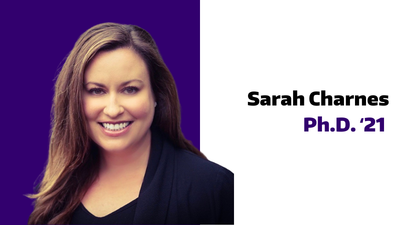
Food Assistance Policy: Sarah E. Charnes, Ph.D. ’21

Sarah Charnes

Sarah Charnes finished her Ph.D. at the Evans School in December 2021, where her dissertation research focused on food assistance and food insecurity. The Evans School caught up with Sarah to talk about key findings from her research.

Your dissertation focuses on food assistance policy and food hardship in the U.S. — what drew you to those policy research areas?

Before starting my Ph.D. at the Evans School, from 2006 to 2013, I worked as a macroeconomist in the Office of Economic Policy at the U.S. Department of the Treasury in DC. While there, I worked on a wide variety of topics, including income inequality. When I decided to return to school for a Ph.D., it was with the intention of taking a deeper dive into issues of income inequality. At Evans my work around inequality initially focused on social policy and means-tested public benefits. Over time, I realized that my long-standing interests in food behaviors and my training in holistic health counseling gave me unique insights into the realities of food assistance and food insecurity – timely social policy topics.

Given your work around food assistance policy, what are some of the biggest misconceptions Americans have around food assistance and food hardship?

First, I would say the common belief that food insecurity “isn’t a problem in the United States” and that it’s only a problem in developing countries, which means it’s not a problem worth addressing through public policy solutions. To the contrary, the most recent estimate by the U.S. Department of Agriculture’s Economic Research Service estimates 10.5 percent of U.S. households are food insecure. That translates into 13.8 million households, which is a large number. The national food insecurity rate reached as high as 14.6 percent during the Great Recession. Those estimates are only the tip of the iceberg, which make food insecurity in the U.S. a problem worth investigating and addressing.

There are many other misconceptions around food assistance and food hardship that come to mind. What I have observed over the past several years is that food assistance and food hardship is a space where people often have a hard time getting past their own personal beliefs – especially if they haven’t experienced food insecurity or witnessed it first-hand. For example, if someone becomes convinced that SNAP (the Supplemental Nutrition Assistance Program, the modern-day food stamp program) recipients are prone to commit fraud, it can be very challenging (if not impossible) to change that person’s mind. In reality, fraud is very uncommon.

Another misconception is that there is a one-size-fits-all, or simple, solution to food insecurity. Food insecurity arises out of a wide array of risk factors operating at different tiers. Short of creating a form of universal income for food consisting of an adequate benefit level, it seems likely that there will need to be a continuation of a rather complicated, multi-pronged approach to tackling the problem of food insecurity through public-, nonprofit-, and private-sector efforts. That said, the idea of universal income for food has gotten some traction recently, so it’s possible that a policy window for this could eventually emerge.

As you reflect on the dissertation project, which research findings stand out to you as really important for current debates around food policy?

My dissertation involved three papers that covered a fairly broad range of topics related to food insecurity and food and nutrition assistance policy. The first paper evaluated a program designed to streamline the SNAP application process for recipients of Supplemental Security Income and found evidence suggesting that different modes of implementation for the program were more effective for some subpopulations than others – a point that does not always seem to be the primary focus when interventions are designed to try to improve access to means-tested benefit programs. The second paper tested the extent to which a relatively holistic measure of food access moderates the high degree of association between household disability and food insecurity status. Here, I find that access does not account for much of this relationship (Note: this paper has been accepted for publication in Physiology & Behavior.) The third paper examined acquisitions of free food – food having no price attached to it, such as meals from family or friends – as a function of the amount of time that has passed since a SNAP household received its last benefit payment. In this paper, I find little variability in the acquisition of free food across the SNAP month. This has potential implications for current debates about the behavioral mechanisms driving what is referred to as the “SNAP cycle,” where benefits are typically redeemed in their entirety within the first few days of receipt, rather than being consumed in a smooth fashion across the month as some might expect. I’m excited to dive deeper into the third paper, in particular, as I progress forward with the portions of the dissertation that I have not yet attempted to publish.

Prior to finishing your Ph.D. at Evans, you worked in the Department of Treasury. Given your experiences in both worlds – how can researchers do a better job of presenting and translating their research for policy audiences?

Presenting and translating research to policymakers really comes down to one skill: learning how to say what you want to say within 30 seconds. By “30 seconds,” I truly mean 30 secondsThat is MUCH easier said than done – and a skill that does not always seem to be very highly valued within academia.

I think a great way to practice is to create two or three “highlights” (i.e., brief bullet/talking points) about one’s research – as is asked for by several peer-reviewed academic journals upon submission. Bonus: this encourages clear thinking all around, which is never a bad thing.

What’s up next for you?

Currently – meaning, from January through June 2022 – I’ll be an instructor in the Evans School’s MPA program. Specifically, I’m teaching both of the quantitative analysis courses in the first-year core course sequence, with which I was heavily involved during my Ph.D. (as both a pre-doctoral lecturer and a teaching assistant). I’m really happy to be working with this year’s first-year cohort. I’m also currently on the job market for longer-term employment. Please cross your fingers for me!

Fingers crossed! It sounds like there are lots of good things in the future.

New Evidence from the Seattle Minimum Wage Study

In 2014, Seattle passed a minimum wage law that raised the city’s minimum wage from the state’s minimum wage of $9.47 to $15, phased-in over several years. Mayor Murray and his Income Inequality Advisory Committee developed the minimum wage law as a strategy to lower income inequality. Evans School faculty Mark C. Long examines earnings inequality in the city over the first three years of the law in an article, “Seattle’s Local Minimum Wage and Earnings Inequality” published in Economic Inquiry. Long analyzes Washington state administrative data to assess whether Seattle’s minimum wage ordinance led to a reduction in earning inequality among the city’s workers from 2014 to 2017, a period when the local minimum phased in to $13 an hour.

Findings show that inequality among workers who earned less than the city’s median hourly wage ($26.42) was reduced modestly as workers in the lowest wage jobs saw large increases in hourly wages. There is no evidence to suggest, however, that Seattle’s minimum wage lowered the overall level of earnings inequality across all workers in the city, which substantially widened during this period. Further, Long notes that “the results in this report pertain to earnings inequality of those employed and thus do not include any additional increase in inequality produced by a reduction in the number of employed low-skilled workers.”

Findings from Long’s study are consistent with another article recently published by Evans School and University of Washington scholars entitled, “Minimum Wage Increases and Low-Wage Employment: Evidence from Seattle,” in the American Economic Journal: Economic Policy. In this paper, the study team examines the labor market effects of the Seattle Minimum Wage Ordinance when the citywide minimum was set to $13 an hour in 2017. Findings indicates that those earning less than $19 an hour saw wages rise by 3.4% once the city’s minimum wage was $13, while experiencing a 7.0% decrease in hours worked.

Low-wage workers employed before the policy took effect saw their wages rise more than their hours fell, yielding a net increase of around $12 per week. This increase in pay was larger for low-wage workers with more prior labor market experience. The team found evidence of a decline in the rate of hiring of low-wage workers who were not previously employed in the state of Washington as the minimum wage in the city reached $13 an hour.

Publications

Mark C. Long, “Seattle’s Local Minimum Wage and Earnings Inequality” in Economic Inquiry

Ekaterina Jardim, Mark C. Long, Robert Plotnick, Emma van Inwegen, Jacob Vigdor, and Hilary Wething, “Minimum Wage Increases and Low-Wage Employment: Evidence from Seattle” in American Economic Journal: Economic Policy

Cycling Policy in Mexican Cities: Rebeca de Buen Kalman, Ph.D. ’21

Rebeca de Buen Kalman

Rebeca de Buen Kalman completed her Ph.D. ’21 at the Evans School, where she focused on the intersections between environmental policy, climate change policy, transportation, and public health. Evans had a chance to sit down with her for a few minutes to talk about her dissertation research.

Your dissertation project is titled, “Pueblos Bicicleteros: Three Essays on Cycling Policy in Mexican Cities,” but you use the evolution of cycling policy in Mexico as a lens into contemporary urban environmental policy. Explain why cycling policy is so central to how major cities address today’s climate challenges.

Transportation is one of the largest and fastest-growing sources of greenhouse gas emissions globally and thus a critical area for climate mitigation policy. Increasing cycling commutes and trips in cities has the potential to reduce emissions and improve and health. Cycling policy can be especially compelling when it is integrated within a larger transportation strategy combined with transit.

Safety and equity concerns, however, must be present as we rethink transit policies. In the cities I studied, most urban cyclists are low-income workers who mostly cycle out of necessity. Framing a bicycle as “one less car” erases the experiences of these cyclists who might perceive the bicycle as a marker of poverty and whose perspective and needs are usually left out of cycling plans.

Why do you think cities in Mexico, as well as in the U.S. and in other places around the globe, struggle to better incorporate cycling within urban transportation strategies?

There are many reasons why incorporating cycling into transportation can be tricky in cities where low cycling rates are the status quo. Most barriers revolve around our current model of mobility, or ‘automobility’, which is centered around the cars and car-centric culture. In most cities, public policies, public spending, and regulations related to street design have historically favored car mobility at the expense of other modes like transit, walking, and cycling, which further entrenches car-centric life-styles. In many places, like the cities I studied in Mexico, some people associate cycling with low economic status and cars with progress and social mobility. Another common cultural barrier relates to society’s tendency to consider bikes as toys or means of recreation, rather than part of the transportation system.

While there are a lot of barriers, there is also a growing appetite from some sectors of the population to move towards multimodal lifestyles that include cycling. Evidence from travel-behavior data reveals an opportunity to reduce car use and substitute cycling for short trips, especially in core urban areas. There also is mounting evidence that younger generations are more environmentally conscious and inclined toward shared and multi-modal transportation when these are available.

We also might not think of cycling policy as a critical element of tackling inequality in modern cities. How does your dissertation show this is anything but the case?

The relationship between cycling and equity is not straightforward. Cycling policy can absolutely be a tool to tackle inequality, but bicycles and cycling policy are not inherently equitable. Bikes are a low-cost and efficient form of getting around in a city. In urban areas like the ones I studied in my dissertation, roughly one-fifth of trips are done by car but the vast majority of public funds for mobility are invested in car infrastructure. Improving cycling conditions through a variety of measures can be a way to improve people’s access to services and opportunities at a very low cost. Improving cycling conditions can also have benefits to pedestrians through improved street design, with important equity implications since riders from vulnerable communities are more likely to be hit by cars as pedestrians.

Measures that are meant to improve cycling conditions, however, are often implemented in visible central city areas and not necessarily accessible to lower-income people who might benefit the most from them. Cycling lanes are frequently implemented on sidewalks or at the expense of sidewalks, limiting pedestrian mobility and accessibility. Sometimes cycling-related policy can even further marginalize cyclists since cycling infrastructure is often determined once motor traffic needs have been prioritized, without addressing the fundamental asymmetry of power that makes cycling unattractive or unsafe.

Readers will be impressed with your research design, which involved the integration of many different data from many different parts of Mexico. How might environmental policy scholars use mixed methods designs to better inform policymaking?

The development of any project related to the built environment is situated in a complex web of actors, institutions, and social processes, where data is often scarce and disperse. I think that mixed methods are crucial for understanding these types of social phenomena. In my dissertation, I studied the trajectories of ten mid-sized and large cities who have implemented cycling infrastructure to different extents. I also took a deep dive into the local social movements that have sparked the adoption of cycling related policies. I used various qualitative and quantitative methods that leverage diverse data sources, including open source and crowdsourced transportation data on infrastructure and travel, administrative data, policy documents, and interview data.

The questions I asked in my dissertation were oriented towards understanding processes and mechanisms rather than questions of cause and effect. To have a full story on each of my cases and parameters that could be compared systematically in my analysis, I had to draw from a variety of sources. I also needed to be through for purposes of validation and triangulation.

Considering the bigger picture, in public policy and management, we ask cause and effect questions because we want to know how interventions impact our desired outcome. But we also need to know how to get things done, the mechanisms at play, and the nuances involved. There is an implementation process between a policy and its effect that requires organizations, institutions, and people. Policy and management are also contextual. We need to draw on various methods to situate ourselves to understand the nuances of public problems and potential policy solutions. Mixed methods are therefore a powerful tool for policy research to become more relevant to policymaking and implementation.

Tell us what you’ll be doing next for your next project at the Evans School.

I am a postdoctoral fellow for Ocean Nexus at the UW EarthLab and the Evans School. Ocean Nexus is an international network of ocean governance scholars based at the UW. Our team at the Evans School works with network members to develop applied policy analysis with an explicit focus on social equity. We are developing a framework to guide the operationalization of equity in ocean governance-related policy analysis through this process. We are also studying how policy problems are discussed in ocean governance research to identify gaps that reduce the applied impact of policy research in this field. Our ultimate goals are to help ocean governance scholars make their research more policy relevant and bring equity to the forefront of policy analysis.