Evans School Professor Crystal Hall, and alumni Puja Kumar, MPA ’20, and Sehej Singh, MPA’20, worked with the U.S. Office of Evaluation Sciences (OES) and Small Business Administration (SBA) to conduct a descriptive study of local grant and loan programs using public information about funding programs and conversations with local officials.
Category: Research
Local Impacts of a Global Crisis

How Washington State Nonprofits Respond to COVID-19
This report confirms what those working for nonprofits already knew: Nonprofits are being asked to do more and more with less and less. Funding is down 30% and volunteerism is down 30-50%. Yet the need for, and dependence on, nonprofits continues to grow. This trend must be reversed in short order if nonprofits are going to be able to serve long-term.
The research team would like to thank the staff of all the nonprofit organizations that took the time to complete this survey. We realize that the leaders and staff of these organizations are under incredible pressure to serve their communities during this tumultuous time with increasingly tightening resources. Finally, we want to thank the nonprofit leaders and staff who piloted our survey and provided insights on how to maximize the relevance of the survey as it relates to nonprofit management, governance, and policy.
Erica Mills Barnhart
Associate Teaching Professor, Daniel J. Evans School of Public Policy & Governance
Emily A. Finchum-Mason
Ph.D. Candidate, Daniel J. Evans School of Public Policy & Governance
Mary Kay Gugerty
Nancy Bell Evans Professor of Nonprofit Management, Daniel J. Evans School of Public Policy & Governance
Kelly Husted
Ph.D. Candidate, Daniel J. Evans School of Public Policy & Governance
Executive Summary
The COVID-19 crisis has caused deep and widespread strain across sectors and individuals since taking hold in early 2020. Despite this adversity, nonprofits—especially those comprising the modern social safety net—have continued to serve their communities during this tumultuous time (Kulish, 2020). This report seeks to understand (a) the major challenges facing nonprofits in Washington state as a result of the COVID-19 pandemic, (b) the strategies that nonprofits are using to mitigate the effects of the crisis, (c) how nonprofits are experiencing changes in funder relationships as a result of the crisis, (d) the degree to which nonprofits in the state have accessed assistance under the CARES Act, and (e) the most pressing needs nonprofits have as they face the ongoing uncertainty and hardship presented by COVID-19.
Not surprisingly, this report finds that nonprofits face considerable financial difficulty, with many already experiencing steep declines in total revenue and projecting declines over the next year. The average decline in total revenue experienced across nonprofits is approximately 30%. These declines are largely driven by a drop in program service revenue and are particularly challenging as many nonprofits are shifting their modes of service provision and incurring costs as they seek to prevent the spread of the disease. Declines in total revenue are projected to continue over the next year by an average of
16%, including a 4.2% decrease for health and human service organizations and a 25.6% decrease for other nonprofits.
Health and human service nonprofits are also seeing significant changes in service demand—an average increase of 28%—without a requisite increase in funding. At the same time, nonprofits are seeing a significant reduction in the number of people willing and able to volunteer in order to provide needed services. Other nonprofits, such as arts organizations, are seeing a drop off in demand that is jeopardizing their ability to survive.
Despite these challenges, we find that nonprofits are being flexible and creative in their response to the COVID-19 crisis. Many organizations have effectively reimagined what service provision looks like during this challenging and uncertain time, with nearly 64% of nonprofits changing how they provide programs and services. Approximately 58% of nonprofits have altered their short-term organizational goals, and nearly half have changed their programmatic priorities.
These changes come at a cost, and the strain on nonprofits is visible: 62% have had to pause one or more programs, and 14% have had to end one or more programs. Subsequently, many nonprofits have spent down cash reserves and made significant cuts to their number of staff, staff hours, and program capacity in order to stay afloat. Partnerships between nonprofits and local governments have become a common means of maximizing limited resources and tending to communities hardest hit by the crisis.
While some funders are moving to ease the burden on nonprofits through actions such as increasing funding and loosening grant restrictions for grantees, nonprofits reported that changes in funder/grantee relationships have been limited. A majority of nonprofits (for whom the questions were applicable) report that none of their funders have changed how existing funding can be used, reduced reporting requirements, or made new funding unrestricted so that it can be flexibly used to meet needs.
Many nonprofits—56% of our sample—have successfully accessed CARES Act Paycheck Protection Program loans to support their employees. While nearly 30% reported some difficulties in applying, 95% that did apply were approved for their loans. Qualitative evidence suggests that there is still confusion though about whether and how these loans will be forgiven, and while assistance with payroll is helpful, nonprofits note that other costs associated with operating during the pandemic are still challenging.
Finally, we asked nonprofits what types of assistance would be most useful during this time in the hopes of stimulating action on the part of policy-makers, government agencies, institutional funders, and donors. Nonprofits overwhelmingly responded that they require assistance in terms of additional funding—from foundations, government, and individuals. Nonprofits also stated that reduced restrictions on current funding streams, information about the emergent state and local regulations pertaining to COVID-19, and information and data sharing would be useful during this time.
Many nonprofits are currently struggling to cope with the hardships associated with COVID-19, the economic downturn, and an uncertain future. Based on our findings along with other recent research on nonprofit responses to the COVID-19 crisis, we recommend that:
1. Philanthropic foundations and corporate funders provide more funding to the nonprofit sector to alleviate short-term solvency concerns.
2. Institutional funders increase flexibility as nonprofits try to navigate their new implementation environment and survive these turbulent times by reducing reporting requirements, loosening restrictions on current funding agreements, and making new grants unrestricted.
3. Legislators, government agencies, and institutional funders support communities most affected by COVID-19 and the subsequent economic downturn, including Black communities, Indigenous communities, and People of Color (BIPOC), by: (1) targeting funding towards BIPOC-led and BIPOC-serving organizations and (2) developing partnerships with BIPOC-led organizations, listening to the concerns and needs of those communities and translating those needs into action.
Caring for Washington’s Older Adults in the COVID-19 Pandemic
This study was funded by the University of Washington Population Health Initiative’s COVID-19 Economic Recovery Research Grant, along with matching funds from the University of Washington School of Public Health, School of Social Work, and School of Medicine, Department of Neurology. The authors thank Nancy Hooyman for reviewing a draft of this report.
Clara Berridge, PhD, MSW
Assistant professor, School of Social Work
Carolyn M. Parsey, PhD
Assistant professor, School of Medicine, Department of Neurology
Maggie Ramirez, PhD, MS, MS
Assistant professor, School of Public Health, Department of Health Services
Callie Freitag, MA
Doctoral student, Evans School of Public Policy & Governance
Ian Johnson, MSW
Doctoral student, School of Social Work
Scott W. Allard, PhD
Daniel J. Evans Endowed Professor of Social Policy, Evans School of Public Policy & Governance
Executive Summary
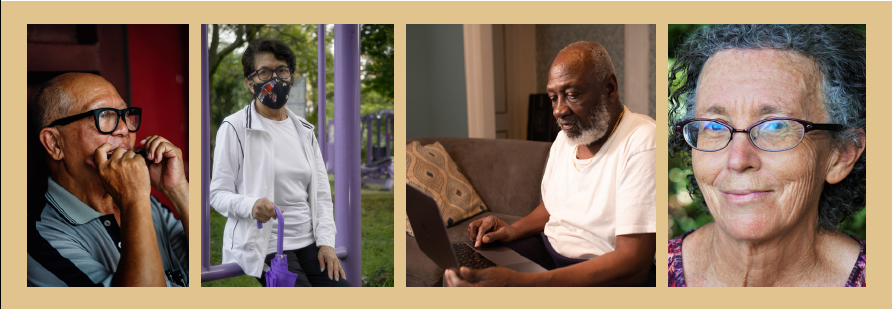
The COVID-19 pandemic presents significant and costly disruptions to social service and health care systems. Eight in ten deaths from the COVID-19 virus in the U.S. have occurred in people age 65 and older (CDC, 2020). In addition to the mortality risk, the pandemic presents grave health and economic risks by disrupting services to older adults that prevent institutionalization, emergency room visits, and other negative health outcomes. This report examines how the pandemic has affected the operation of social service and healthcare organizations that support Washington’s 1.7 million older adults (60+), including 107,000 people with Alzheimer’s disease and other dementias (State Plan on Aging, 2018).
Drawing on surveys and interviews with 45 senior leaders of social services and health care organizations serving older adults throughout Washington State, this report identifies current challenges confronting service delivery and client care, as well as those that will persist to shape future strategy and planning. Several key findings and themes emerge relevant to policy and practice:
Senior leaders describe rapid declines in the physical and mental health and functioning of their older adult patients and clients as a result of the pandemic. Healthcare providers report that chronic medical conditions are often not being well managed, resulting in significant physical deconditioning, increased frailty, and heightened health risks.
Providers believe that a high number of older adults are not seeking care for existing or new conditions, which will have important downstream effects on the health of older adults. Care organizations are particularly concerned about people living with dementia because they are less active and engaged during the pandemic, leading to increased severity and frequency of delusions as well as worsening behavioral symptoms. Moreover, many vulnerable older adult population sub-groups may be falling through the cracks of Washington’s service systems, including those with low-incomes, those who are living alone or unhoused, Latinx immigrant and migrant older adults, people with limited English proficiency, and tribal elders.
Social isolation creates a “double pandemic” and is believed to exacerbate problems of dementia, depression, suicide risk, and disrupted care. Organization leaders described making inroads to address social isolation during the pandemic but also expect the problems created by isolation to persist for some time. Leaders want to see guidelines evolve from isolating in place to recommending ways to provide safe social interaction.
The pandemic is exacerbating service gaps and leading to caregiver strain in Washington. Demand for aging services during the COVID-19 virus remains steady and is expected to increase over time due to demographic trends and caregiver shortages. Family caregivers now have limited respite options and have to assume additional caregiving responsibilities because of service restrictions due to the pandemic.
A digital divide exists in many parts of Washington State, particularly for older adults of color with low incomes and those in rural communities, where unreliable and costly internet and cell phone services may negate well-intended telemedicine and videoconferencing efforts. Senior leaders report barriers to the use of digital tools and training among the oldest adults and those with sensory disabilities or dementia.
Social service and healthcare organizations serving older adults report urgent fiscal shortfalls and budget crises. Layoffs and furloughs have occurred in many organizations, with senior leaders emphasizing the need for additional public funds to prevent further layoffs and staffing shortages. In addition, organizations need assistance obtaining PPE and purchasing supplies or equipment to accommodate new service realities and to provide nutrition services.
Interviews identify several strategies for addressing the challenges of the pandemic and providing high-quality care to older Washingtonians:
- Organizations leveraged targeted funding, partnerships, and transportation networks to enable delivery and drive through meals on a larger scale than previously possible.
- Some in-person services and programming have been moved to virtual platforms, expanding their reach and capacity.
Virtual support groups and activity-based socialization groups have been particularly successful. - Providing technology skills training to older adults through staff, peers, family members, and targeted tutorials has been effective for some.
- Many organizations provide digital devices, particularly prepaid cell phones.
- Organizations creatively adapted where trial and error showed that non-digital service delivery was needed, such as wellness and reassurance phone calls, care packages with pantry staples, outdoor distanced social events, and pod formation for limited social contact.
- Existing and new partnerships have been leveraged to reach older Washingtonians in their homes. Collaborations formed to meet the crisis, however, could be expanded to better serve immigrants and older adults of color.
It is critical for public agencies and private philanthropy to ensure service providers in the aging network are able to continue supporting the needs of older Washingtonians. These service organizations play an essential role in alleviating loneliness and isolation, meeting nutritional needs, improving health outcomes, and enabling access to health care, long-term services and supports, care transitions, and housing. Current and future reductions in revenues from public and private sources jeopardize the sustainability of these critical organizations, particularly those serving older adult populations on fixed incomes.
Alison Cullen receives $2M NSF grant to study ‘megafires’
Alison Cullen, professor and interim dean of the Evans School of Public Policy & Governance at the University of Washington, has received a $2 million grant from the National Science Foundation to study simultaneous “megafires” and the future management of wildfire risk.
Prof. Ann Bostrom to Join NSF AI Institute for Research on Trustworthy AI in Weather, Climate, And Coastal Oceanography
The NSF AI Institute for Research on Trustworthy AI in Weather, Climate, and Coastal Oceanography assembles researchers in machine learning, atmospheric and ocean science and risk communication to develop user-driven, trustworthy AI that addresses pressing concerns in weather, climate and coastal hazards prediction.
“…The risk communication research team will examine how AI information influences trust and use of AI over time by decision makers in ecological and water resource management, weather forecasting and emergency management,” says Prof. Bostrom. “It’s an exciting opportunity to advance fundamental research on mental models and perceptions of AI in environmental science contexts that have critical consequences for all of us.”
Evans Faculty Awarded COVID-19 Economic Recovery Research Grants
The University of Washington Population Health Initiative announced the award of approximately $333,000 in COVID-19 economic recovery research grants to 18 different faculty-led teams, five of whom represent the Evans School of Public Policy & Governance.
Evans Researchers Examine Feasibility of State-Created Public Cooperative Bank
The reports were prepared in response to state budgetary provisos directing a study of the feasibility of a state-created public cooperative bank. This Bank would assist members manage cash and investments more efficiently and establish a sustainable funding source of ready capital for infrastructure and economic development.
Increasing Community Relience and Emergency Preparedness for Distasters

Researchers from the William D. Ruckelshaus Center, in collaboration with the University of Washington and EarthLab (Project Team), are working to better understand communities’ hazards and disaster science needs and improve the development, synthesis, and translation of current hazards science and research to make it more accessible, relevant and actionable. The team’s goal is to increase community resilience and improve emergency preparedness and planning across the Pacific Northwest, by making regional hazards science and research more locally relevant, accessible and actionable.
According to FEMA’s disaster declarations, Washington State has the 4th largest number of disaster declarations among all states. From the Oso landslide to annual wildfires and severe winter storms to flooding, earthquakes, and tsunamis, all hazard events pose significant risks to residents and to Washington’s economy. Recent Washington State reports call for synthesis and translation of current hazards science to make them locally relevant and actionable, and to better address local hazards and preparedness needs and in order to increase resilience in the region.
As disasters strike, communities realize that they must predict and plan for hazardous events so they can reduce disaster risk. Anticipating these events requires identifying policy and decision makers’ needs for hazards sciences in order to manage and mitigate hazards exposures and its, often disastrous, consequences. Greater collaboration between local, state, and federal agencies, and academic partners promises to help prevent the most horrific outcomes of these events by improving preparedness and response. Engaging scientists in planning and policy discussions is critical to creating effective community-research partnerships.
The Project Team is conducting a series of Hazards Research Coordination Workshops in Washington to better understand communities’ hazards and disaster science needs. The Team will also work to improve the development, synthesis, and translation of current hazards science and research so that it becomes more accessible, relevant and actionable for communities. The workshops are designed with the intention of bringing together local emergency managers, emergency response volunteers, public health and other local officials, and planners to better understand three key questions:
- What questions would you like hazards researchers and analysts in our region to address?
- What types of hazard information would be most useful for you?
- How can the interactions and flow of information between researchers and practitioners be improved?
From these workshops, the Project Team will gather input to distinguish the feasibility of a coordination network to sustain coordination between state-wide practitioners and hazards researchers from across the sciences, over the long term.
Upon completion of the workshops, the Project Team aims to develop an initial prioritized list of hazard information and research needs throughout Washington. The Team hopes this research will increase community resilience and improve emergency preparedness and planning across the Pacific Northwest, by making regional hazards science and research more locally relevant, accessible, and actionable.
Project Team
David Schmidt, Earth and Space Sciences, University of Washington
Ann Bostrom, Daniel J. Evans School of Public Policy and Governance, University of Washington
Bob Freitag, Institute for Hazard Mitigation Planning and Research, University of Washington
Phyllis Shulman, William D. Ruckelshaus Center, Washington State University
Amanda Murphy, William D. Ruckelshaus Center, Washington State University
Evans Faculty Testifies on Impacts of Extreme Weather
On the heels of climate strikes, marches, and protests worldwide, this Thursday, Professor Ann Bostrom will testify in front of the U.S. House of Representatives Committee on Science, Space, and Technology in a hearing titled, “Understanding, Forecasting, and Communicating Extreme Weather in a Changing Climate.”
The Goldlocks Challenge Named Best Nonprofit Book of 2018
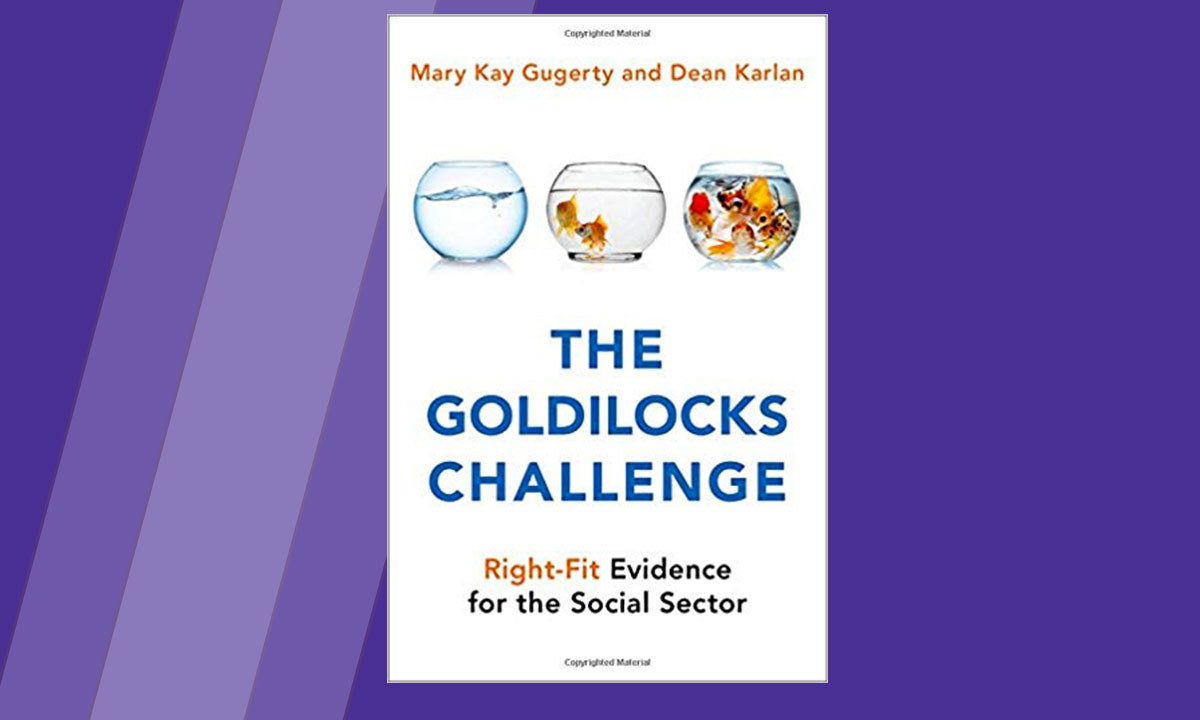
The Alliance for Nonprofit Management presented the 2018 Terry McAdam Book Award to Professor Mary Kay Gugerty and her co-author for their recent book, The Goldilocks Challenge: Right-Fit Evidence for the Social Sector (Oxford University Press, 2018).
Now in its 30th year, the Alliance’s Terry McAdam Book Award Committee reviews books published in the nonprofit sector; highlights the very best thinking in management, governance, and capacity building; and helps expose practitioners to new knowledge and approaches in the field. After reviewing 21 nonprofit capacity-building books published in 2017 or 2018, the committee determined that The Goldilocks Challenge best exemplified the spirit of the award: research-to-practice principles; relevance to the whole nonprofit sector; persuasive reasoning; and readability.
From the Committee: The Goldilocks Challenge is about measuring impact. Measuring impact: we all want to do it, know we have to do it…and are all too often frustrated by one-size-fits-all expectations of how to do it, expectations based on large nonprofits that represent so few of the organizations that most of us work with. The Goldilocks Challenge offers a solution: an impact measurement framework that helps organizations decide what elements they should monitor and measure. This framework is based on four principles, called the CART principles: Credible data; Actionable data; Responsible data; and Transportable data. Dive in to learn more about the CART principles and how you can immediately begin using them with the organizations you work with.