Skip to content

Cycling Policy in Mexican Cities: Rebeca de Buen Kalman, Ph.D. ’21

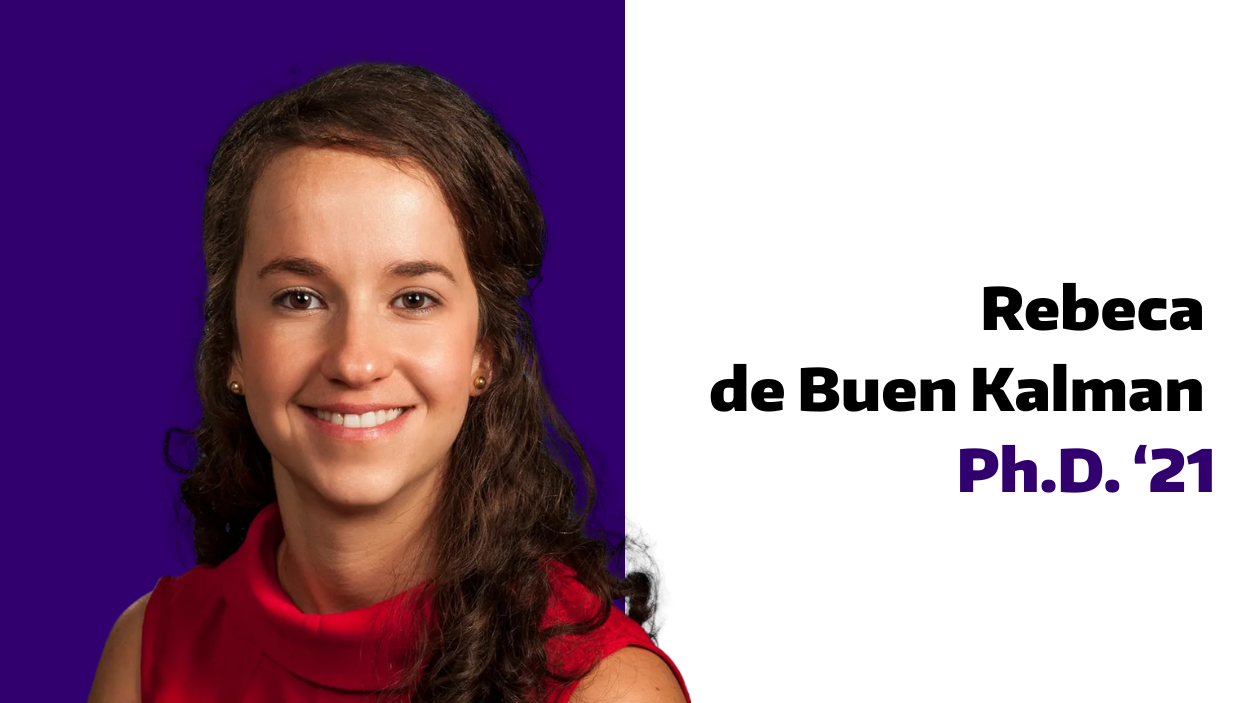
Rebeca de Buen Kalman

Rebeca de Buen Kalman completed her Ph.D. ’21 at the Evans School, where she focused on the intersections between environmental policy, climate change policy, transportation, and public health. Evans had a chance to sit down with her for a few minutes to talk about her dissertation research.

Your dissertation project is titled, “Pueblos Bicicleteros: Three Essays on Cycling Policy in Mexican Cities,” but you use the evolution of cycling policy in Mexico as a lens into contemporary urban environmental policy. Explain why cycling policy is so central to how major cities address today’s climate challenges.

Transportation is one of the largest and fastest-growing sources of greenhouse gas emissions globally and thus a critical area for climate mitigation policy. Increasing cycling commutes and trips in cities has the potential to reduce emissions and improve and health. Cycling policy can be especially compelling when it is integrated within a larger transportation strategy combined with transit.

Safety and equity concerns, however, must be present as we rethink transit policies. In the cities I studied, most urban cyclists are low-income workers who mostly cycle out of necessity. Framing a bicycle as “one less car” erases the experiences of these cyclists who might perceive the bicycle as a marker of poverty and whose perspective and needs are usually left out of cycling plans.

Why do you think cities in Mexico, as well as in the U.S. and in other places around the globe, struggle to better incorporate cycling within urban transportation strategies?

There are many reasons why incorporating cycling into transportation can be tricky in cities where low cycling rates are the status quo. Most barriers revolve around our current model of mobility, or ‘automobility’, which is centered around the cars and car-centric culture. In most cities, public policies, public spending, and regulations related to street design have historically favored car mobility at the expense of other modes like transit, walking, and cycling, which further entrenches car-centric life-styles. In many places, like the cities I studied in Mexico, some people associate cycling with low economic status and cars with progress and social mobility. Another common cultural barrier relates to society’s tendency to consider bikes as toys or means of recreation, rather than part of the transportation system.

While there are a lot of barriers, there is also a growing appetite from some sectors of the population to move towards multimodal lifestyles that include cycling. Evidence from travel-behavior data reveals an opportunity to reduce car use and substitute cycling for short trips, especially in core urban areas. There also is mounting evidence that younger generations are more environmentally conscious and inclined toward shared and multi-modal transportation when these are available.

We also might not think of cycling policy as a critical element of tackling inequality in modern cities. How does your dissertation show this is anything but the case?

The relationship between cycling and equity is not straightforward. Cycling policy can absolutely be a tool to tackle inequality, but bicycles and cycling policy are not inherently equitable. Bikes are a low-cost and efficient form of getting around in a city. In urban areas like the ones I studied in my dissertation, roughly one-fifth of trips are done by car but the vast majority of public funds for mobility are invested in car infrastructure. Improving cycling conditions through a variety of measures can be a way to improve people’s access to services and opportunities at a very low cost. Improving cycling conditions can also have benefits to pedestrians through improved street design, with important equity implications since riders from vulnerable communities are more likely to be hit by cars as pedestrians.

Measures that are meant to improve cycling conditions, however, are often implemented in visible central city areas and not necessarily accessible to lower-income people who might benefit the most from them. Cycling lanes are frequently implemented on sidewalks or at the expense of sidewalks, limiting pedestrian mobility and accessibility. Sometimes cycling-related policy can even further marginalize cyclists since cycling infrastructure is often determined once motor traffic needs have been prioritized, without addressing the fundamental asymmetry of power that makes cycling unattractive or unsafe.

Readers will be impressed with your research design, which involved the integration of many different data from many different parts of Mexico. How might environmental policy scholars use mixed methods designs to better inform policymaking?

The development of any project related to the built environment is situated in a complex web of actors, institutions, and social processes, where data is often scarce and disperse. I think that mixed methods are crucial for understanding these types of social phenomena. In my dissertation, I studied the trajectories of ten mid-sized and large cities who have implemented cycling infrastructure to different extents. I also took a deep dive into the local social movements that have sparked the adoption of cycling related policies. I used various qualitative and quantitative methods that leverage diverse data sources, including open source and crowdsourced transportation data on infrastructure and travel, administrative data, policy documents, and interview data.

The questions I asked in my dissertation were oriented towards understanding processes and mechanisms rather than questions of cause and effect. To have a full story on each of my cases and parameters that could be compared systematically in my analysis, I had to draw from a variety of sources. I also needed to be through for purposes of validation and triangulation.

Considering the bigger picture, in public policy and management, we ask cause and effect questions because we want to know how interventions impact our desired outcome. But we also need to know how to get things done, the mechanisms at play, and the nuances involved. There is an implementation process between a policy and its effect that requires organizations, institutions, and people. Policy and management are also contextual. We need to draw on various methods to situate ourselves to understand the nuances of public problems and potential policy solutions. Mixed methods are therefore a powerful tool for policy research to become more relevant to policymaking and implementation.

Tell us what you’ll be doing next for your next project at the Evans School.

I am a postdoctoral fellow for Ocean Nexus at the UW EarthLab and the Evans School. Ocean Nexus is an international network of ocean governance scholars based at the UW. Our team at the Evans School works with network members to develop applied policy analysis with an explicit focus on social equity. We are developing a framework to guide the operationalization of equity in ocean governance-related policy analysis through this process. We are also studying how policy problems are discussed in ocean governance research to identify gaps that reduce the applied impact of policy research in this field. Our ultimate goals are to help ocean governance scholars make their research more policy relevant and bring equity to the forefront of policy analysis.
Self-employment and the Gig Economy: Ben Glasner, Ph.D. ’21

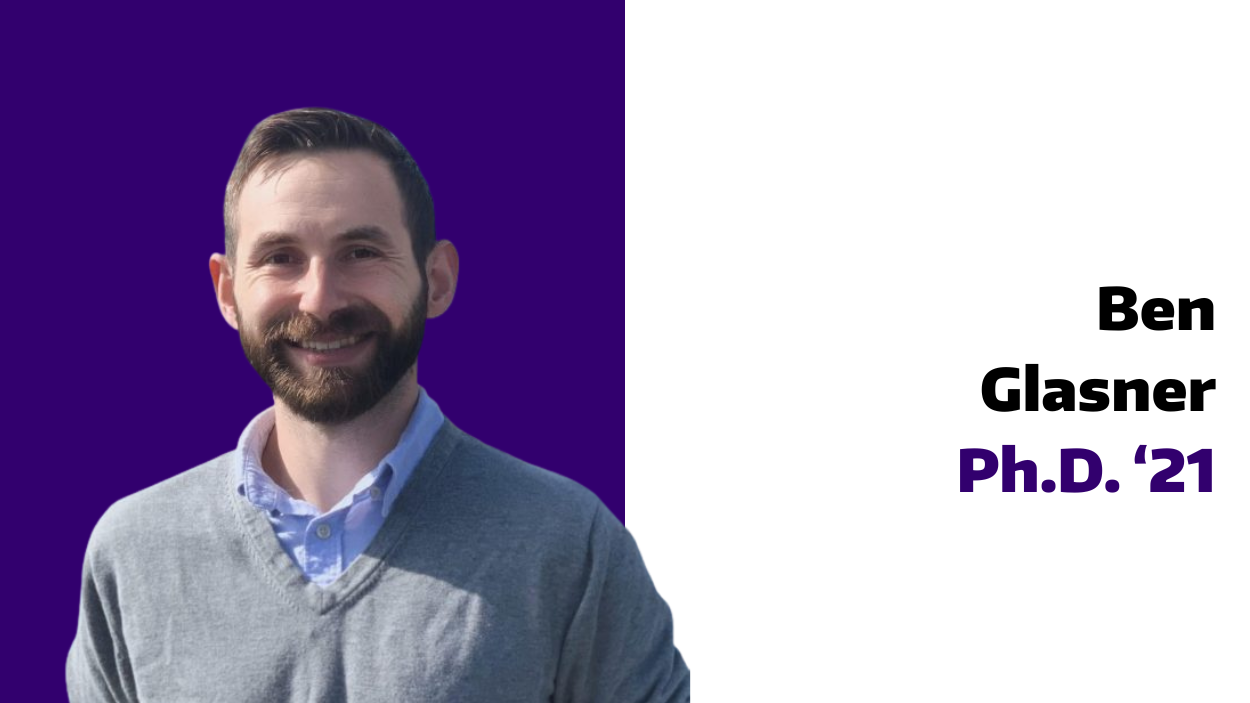
Ben Glasner

Ben Glasner completed his Ph.D. ’21 at the Evans School with expertise in labor market policy and the gig economy. He took some time from his work as a postdoctoral research scientist at Columbia University recently to chat about his dissertation work.

Your dissertation research focused on self-employment and the gig economy – explain why this is such a critical portion of the labor market for scholars and policymakers alike?

Self-employment work arrangements, and specifically work within the gig economy, are becoming increasingly commonplace. Yet, these types of work arrangements often are excluded from labor policy or regulations intended to protect and support workers. As a result, policy tools like the minimum wage are not designed for the self-employed. Workers who are operating simultaneously under multiple firms at a single point in time (e.g., driving for Uber and Lyft simultaneously), or whose hours are prohibitively difficult to track don’t receive the same coverage as a traditional hourly payroll employee who punches a time clock.

Such exclusions are nothing new. When the minimum wage was first introduced through the Fair Labor Standards Act, a number of jobs were not covered and those exclusions meant a significant share of black and female workers were not covered by the first minimum wage laws. Such exclusions remained in place well into the 1960s and were key parts of the civil rights movement.

Today, the remnants of past exclusions persist. We have ended up with a patchwork system of supporting workers. From health care to minimum standards of living, where a person works and how that work is done has important consequences to what protections or benefits they receive. I think the gig economy is really the front line of the debate over social support and the division between efficient labor markets and fair labor markets.

How does your dissertation research extend our understanding of the impact of minimum wage laws?

My dissertation project fills key gaps in the minimum wage literature. One key gap I explored was whether higher minimum wages changed the demand for workers or jobs exempted from minimum wage laws. When minimum wages increase, I find evidence of an increase in participation in the uncovered labor market, but it is driven by urban areas with access to the online gig economy. Another part of my dissertation project examines the question of minimum wage effects on multiple jobholding. The puzzle here is that if minimum wages theoretically could both increase and lower multiple jobholding. My work, however, I found that minimum wages had no significant impact on multiple jobholding in aggregate.

What are the key policy research questions we should be asking to better understand the experiences of workers holding multiple jobs?

Today, I’d say there are two key features about multiple jobholding to explore. One, hours and schedules can be difficult to coordinate between employers, which leads to unstable scheduling. Two, because individuals are more commonly combining earnings from payroll positions with self-employment, some workers may use on-demand “employment” through the gig economy to help fill the gaps of an instable schedule. We don’t know a lot about how workers make decisions about holding multiple jobs or balancing hours across jobs. This is particularly important when we consider the different experience of multiple jobholders with high earnings and those with multiple jobs who still struggle to keep their heads above water.

When you talk to state and local policymakers about raising the minimum wage, what advice or guidance would you give them?

Primarily, I’d encourage policymakers to consider the differences between federal, state, and local minimum wage rates in a given setting. I believe minimum wage increases are a positive tool for improving work outcomes, but they are not the solution to all issues of job quality or underemployment. In fact, minimum wage laws can be rather limited tools because they miss workers who are working in the uncovered or the informal labor market. This often means the most vulnerable workers will not be reached by these policies.

Tell us about what you’ve been up to since finishing your dissertation work.

I have just started a new position as a Postdoctoral Research Scientist with the Center on Poverty and Social Policy at Columbia University. While there I’ll be conducting analyses of the effects of major social policies and reforms on the poverty rate and other indicators of well-being. These analyses will include long-term studies of the intergenerational transmission of poverty, but also studies of contemporary policies and their effects. All the work will be under the great team headed by Irwin Garfinkel, Jane Waldfogel, and Christopher Wimer.

Household Economics and Gender: Veda Patwardhan, Ph.D. ’21

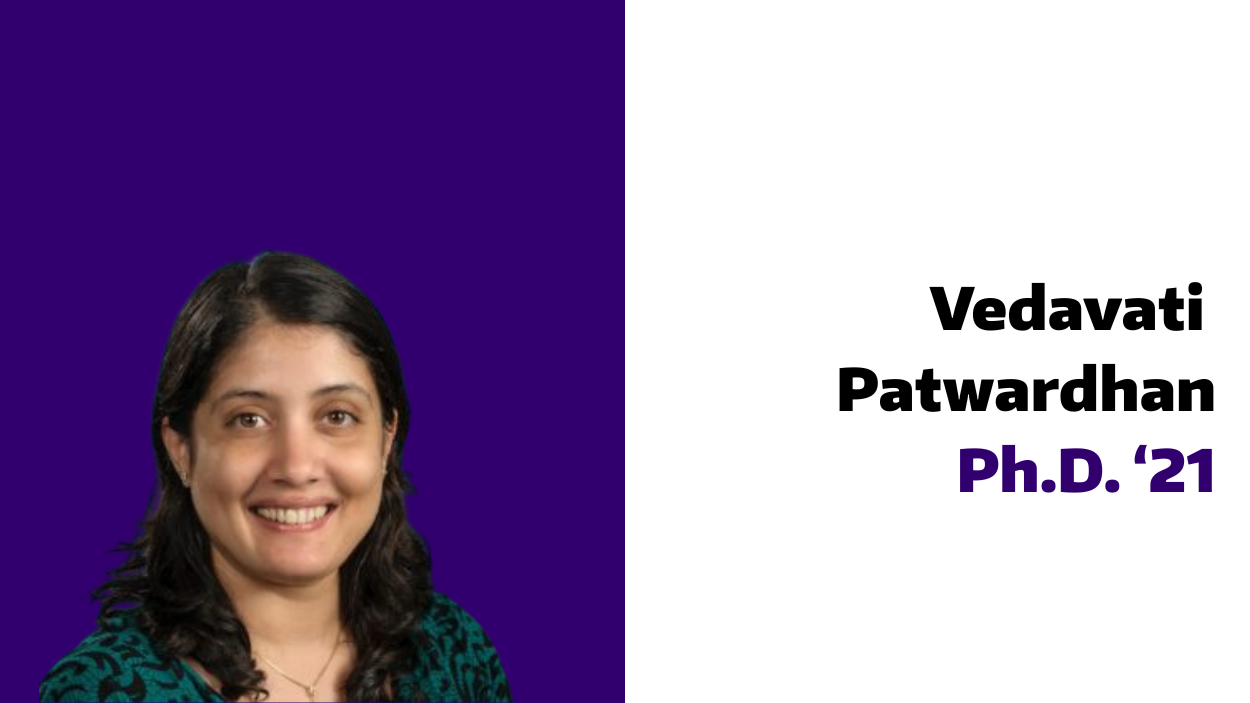
Vedavati Patwardhan

Veda Patwardhan recently finished her Ph.D. (’21) at the Evans School with expertise in household economics and gender. We caught up with her during a break in her day at the Institute for HealthMetrics and Evaluation (IHME) to talk about her dissertation project.

Your dissertation research focuses on how policy interventions and contextual factors shape the roles of women within households in India and Malawi. How did this project emerge over the course of your training at the Evans School?

As a Research Assistant for the Evans Policy Analysis and Research group (EPAR) during my first year as a doctoral student at Evans, I worked on a project conceptualizing the pathways through which empowering female farmers in low and middle-income countries may yield economic benefits. Thinking about the theory behind why gender differences AND inequalities have real consequences for individuals and families piqued a long-term research interest in this area. As that work progressed, I knew I wanted to focus on the intersection of public policy and gender inequality.

I also was motivated by the fact that women’s economic empowerment is an important policy objective internationally. Multi-lateral organizations, foundations, and several governments worldwide are making substantial commitments to gender equality and women’s economic empowerment. Many low and middle-income countries have implemented female-centric social protection and financial inclusion programs. For example, cash transfer schemes, self-help groups, microcredit, bank account provision and public works programs often explicitly target female beneficiaries.

Early in your dissertation, you powerfully note that “control over income is a crucial aspect of women’s economic empowerment.” What were some of the most important insights you discovered about factors shaping how women have control over household income and what having that power means for them and their families?

There are many important findings in my work. One that stands out relates to how the source of household income matters for women’ control over income (WCI). My work in Malawi finds that women have higher sole decision-making for income from public transfer sources like cash and food transfers, as well as remittances, compared with salaries, wages, and farm income. This is very interesting, as research on women’s economic empowerment hasn’t so far considered how the source of household income can really matter for who controls it! My findings in Malawi show women have higher control over transfers than other income sources, even when men are present in the household, suggesting that targeting transfers to women may yield benefits. This also helps unpack why maternal cash transfers like the Mamata Scheme in India (which I examine in another one of my dissertation chapters) have positive effects on children’s health.

This project analyzes data from two quite different settings. How might insights from your dissertation work shape your approach to comparative policy research in the future?

This is a great question. I think that conducting comparative policy research is important for the international development field, as generalizing across regions is difficult and may not always be desirable or accurate. The underlying theme of my work in India and Malawi is similar, but in India, I analyze the effect of a maternal cash transfer program on child outcomes, while my work in Malawi looks at the household and contextual drivers of women’s control over income. Over the course of my dissertation writing, I also realized that analyzing different types of research questions in these two geographies helped solidify my understanding of the existing literature, theoretical perspectives, and research gaps on women’s control over income. I look forward to conducting cross-country analyses in my future research.

What would you say are the biggest takeaways from your work for policymakers and nongovernmental organizations working to empower women in different contexts around the globe?

Policy design is incredibly important. For instance, while examining the impact of a maternal cash transfer scheme in India on child nutrition, I find that children in the poorest households benefit significantly less than those in wealthier households. This suggests that marginalized populations may face obstacles to participation and suggests changes in policy design. For example, policymakers may wish to modify eligibility criteria, or behavioral requirements — such as receiving prenatal care – that could hinder access for marginalized groups.

Paying attention to what drives women’s empowerment is important as well. In Malawi, I find that women’s decision-making over farm income increases following drought. However, this may not reflect an improvement in women’s well-being, if women have a higher workload on the farm and at home. Female farmers tend to have less access to information on climate change and climate-smart-agricultural practices, leading to lower adoption rates compared to men. So, we need policy to recognize the role climatic factors play in women’s farm decision-making. Interventions to improve women’s land tenure security, access to agricultural inputs, and safety nets like cash transfers can play an important role here.

Tell us a little about what’s next for you.

I am excited to start a Postdoctoral Scholar position with the Institute for Health Metrics and Evaluation (IHME), which is a global health research center based at the University of Washington. My work will focus on examining gender inequalities in health.

An Equitable Future, Nubia Lopez, MPA ’07 and Leslie Dozon, MPA ’07

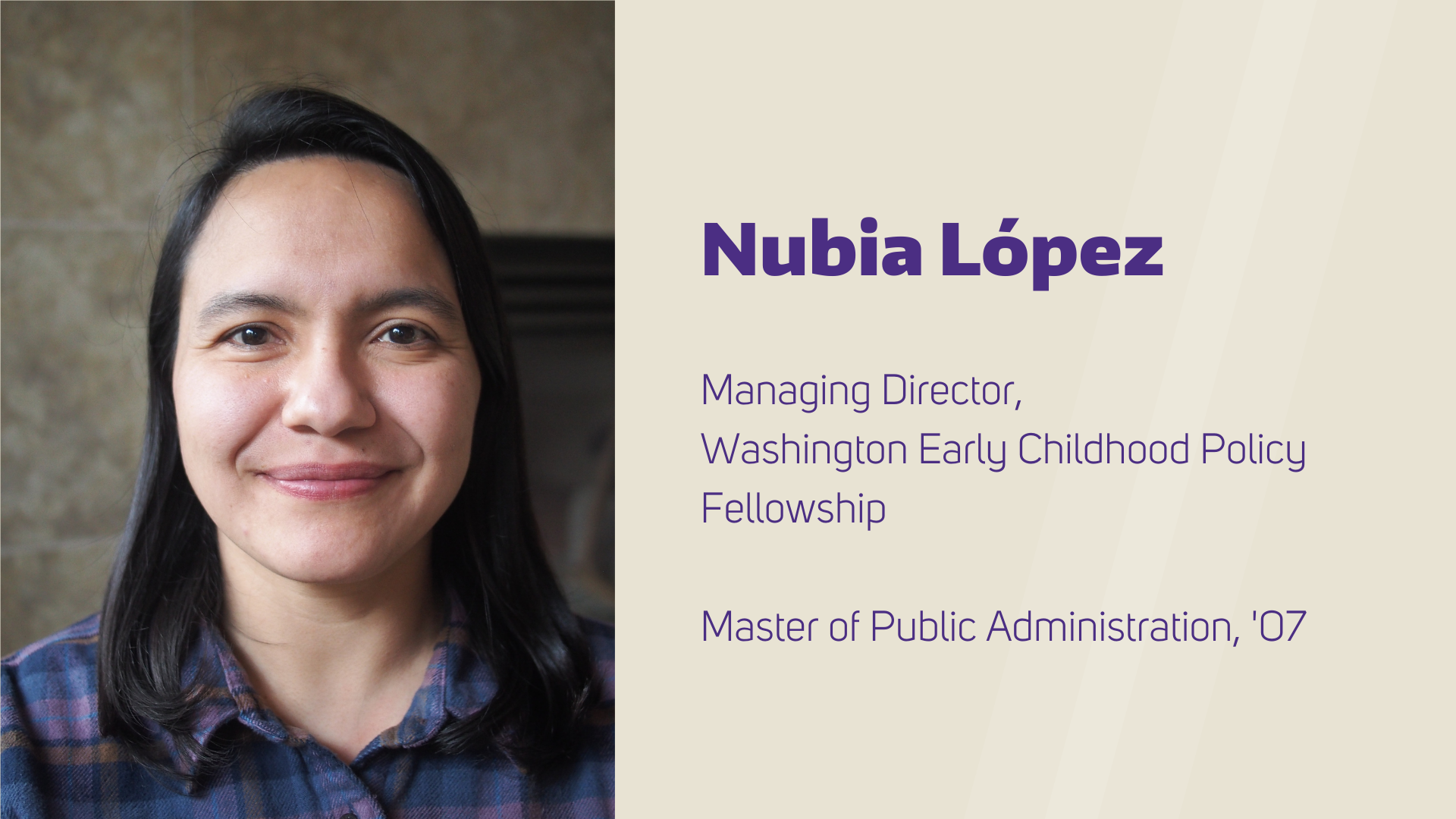
Nubia Lopez
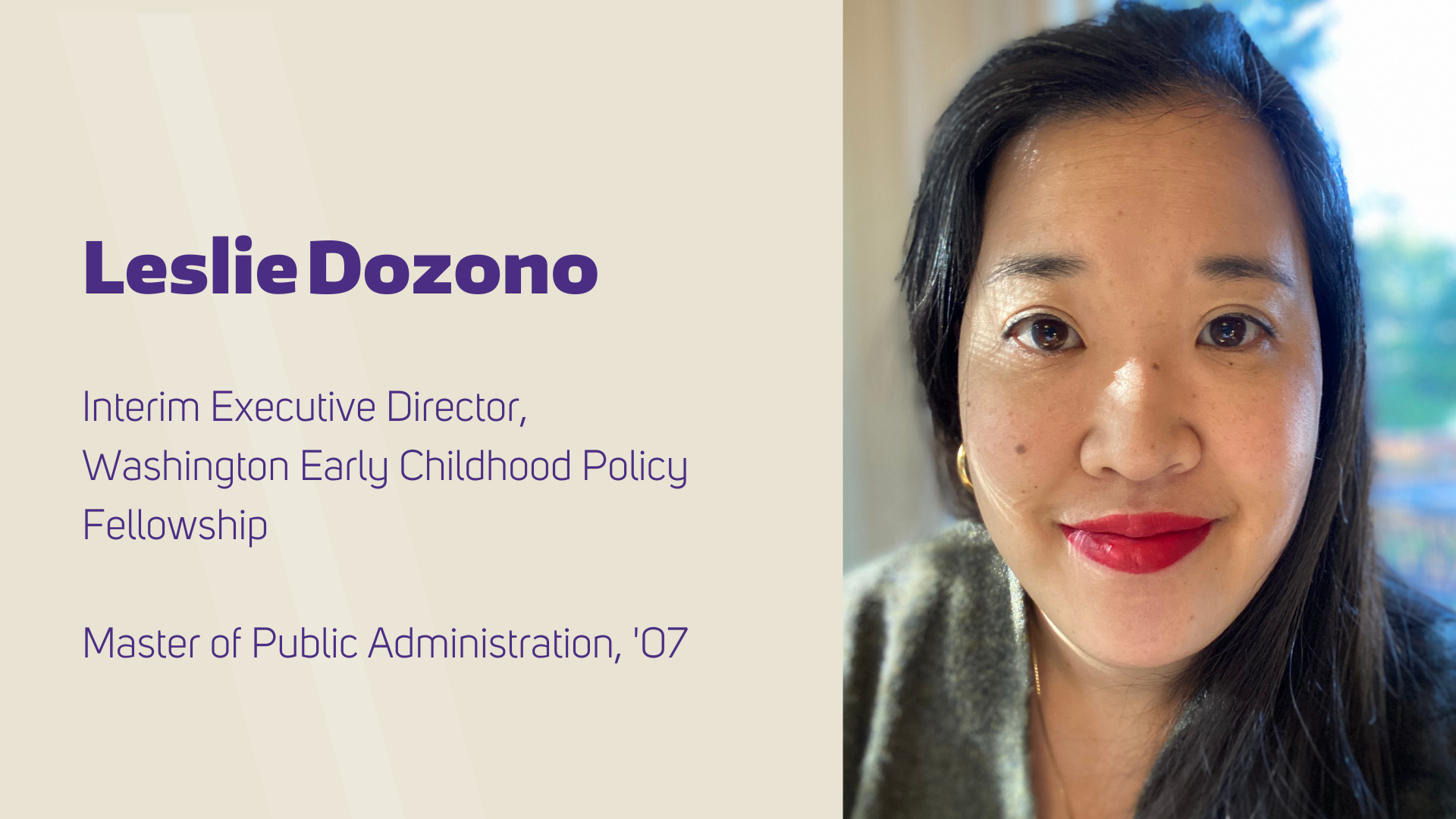
Leslie Dozono

Driven by a passion for growing the number of BIPOC leaders in early childhood education and advancing anti-racism policy and practice, Evans School alumni Leslie Dozono, MPA ’07, and Nubia Lopez, MPA ’07, are working for a more just and equitable future in early childhood education leadership. We asked them about their work with the Washington Childhood Policy Fellowship and how their Evans School experience shaped where they are today.

What contributed to your decision to pursue a career in support of the public good? Was there a defining moment in particular?

Nubia: As an undergraduate I majored in political science, and I worked closely with a professor who taught courses that opened my eyes to the politics and systems that I hadn’t really considered until then. Initially I was extremely interested in international politics, but then started working in a kindergarten classroom as a paraeducator. Through this job and my formal education, I started seeing the world through a different lens, one where I understood that our social systems are designed and intentional, and that happens through policy. When I came to the Evans School I chose to focus on social and education policy. I wanted to be more than just critical of our social systems and structures, I wanted to dedicate my career towards creating more equitable systems and structures—systems that work for everyone, not just those with privilege and access.

Leslie: I’ve always worked with kids and education so nonprofit/public work has been a natural path for my professional life. I was an English major in undergraduate and afterwards I worked at a nonprofit that had a focus on literacy. I think a significant professional turning point for me was the shift from direct service to policy. When I moved to Seattle, I was lucky to work with an amazing team of people at Atlantic Street Center where we offered youth development, counseling and case management, and family services. My experiences at our Summer Academy program, particularly with kindergartners, served as a catalyst for my commitment to early childhood as a field and my realization that I wanted to move from direct service to policy. There were so many things happening for the children and families we served—ongoing challenges for their overall success – that were systemic and much larger than what I could see on the ground. Looking upstream both in terms of age and in terms of policy made a lot of sense to me when I thought about the impact I wanted to have.

Can you share a bit about the work you are currently doing and what a typical day in your work looks like?

We’re working to establish a new nonprofit in Washington state, the Washington Early Childhood Policy Fellowship. The focus is on two things: Increasing the number of Black, Indigenous, and other People of Color (BIPOC) leaders in early childhood policy in Washington state and advancing anti-racism policy and practice in the larger early childhood policy system. We recognize that cultivating and supporting individual BIPOC leadership is important for progress in addressing persistent disparate racialized outcomes for young children, but at the same time, the broader field needs to be aligned and committed to understanding and centering anti-racism in policy to achieve transformational change.

We’re very much in the start-up phase of building an organization, which means we have a lot to think about! Our focus is split between leadership/governance, program design, and fund development. We are currently fiscally sponsored through the Southeast Seattle Education Coalition (SESEC), and we’ve been establishing our Founding Board and the internal structural components required to establish as an independent 501(c)3. That means developing our mission, bylaws, our Board structure, and relationships, all the while thinking about our long-term governing board and readying to launch a search for our inaugural Executive Director. Concurrently, we’re working on building the programmatic components of a placement-based Fellowship that combines employment with significant professional development and mentorship. Relationship-intensive work takes significant resources, so we are also deep in fund development, making sure we have the investments we need to launch and sustain this work.

You have both been champions of Diversity, Equity, and Inclusion throughout your careers. Can you share why this has been so central to you and the work you continue doing?

Nubia: This work is personal for me. It is about my own lived experience and background. My family immigrated to the US from Mexico when I was 3 years old, and my parents didn’t speak English and I didn’t learn English until I started elementary school. We were a low-income family, relying on social services. I saw my parents constantly struggle to make ends meet, even though both of my parents worked multiple jobs. It took me some time to realize that struggles were not personal failings of my family or my community, but predictable outcomes based on our lack of access to resources and opportunities—this is central to equity work. For me, equity is about providing access and resources so that everyone can thrive

Going from my personal experience to our work with the Fellowship, our work is about having diverse voices at the decision-making tables. How can we ensure that BIPOC leaders who have these lived experiences are provided with opportunities to influence decisions that impact young children and families? And, beyond that, how can we support and build their capacity to have an impact on early childhood policies and systems? I truly believe these perspectives are critical to creating early childhood policies to support those who are most impacted and have been traditionally excluded from participating in the decision-making process.

Leslie: My parents are both immigrants and my dad talked a lot with my sisters and I about his experiences with racism and exclusion. Growing up in a largely white community in Oregon, the experience of feeling othered is something I carried through much of my childhood. And I think as a Japanese American, it is impossible to separate out the personal and the societal when you think about the collective trauma of internment and the resulting emphasis on assimilation and what that has meant for language and culture – for our parents’ generation’s focus on achieving a particular kind of mainstream success. I think about the difference between feeling shame and pride as a child about my heritage and what it means to create systems that honor the cultures and strengths of our communities.

On a larger scale, I don’t think you can successfully work for the public good without racial equity and anti-racism as core tenets. When we look at outcomes for children, for families, for individuals, and for our workforce and in our economy, there are glaring racial inequities.

One of the beliefs we carry in our work with the Fellowship is that communities who are most impacted by educational injustices must be represented in positions of power within policy development processes and decision-making to identify and address complex, structural inequities that are detrimental to all. Beyond the moral obligations we have in our society around fairness and justice, which I think were ingrained in me from an early age, it’s also practical. We cannot achieve shared prosperity and a thriving society without racial equity and anti-racism work. The opportunity gap in early childhood has huge implications for children in school and life and it also has implications for our public systems. Greater costs in special education and other supportive services, greater costs to the criminal legal system, and down the road, a less qualified workforce. And it’s more than just education systems. Supporting families in early childhood – a time with woefully inadequate public policy and investment in families – can also mean a reduction in child welfare services, greater prevention in health and mental health services, all of which reduce both human and economic cost. Centering the families most impacted is essential for identifying and implementing solutions and for our shared success.

If there was one thing you would want everyone to know about your work, what would it be?

We think our Core Beliefs and Commitments to Action reflect how we think about and are approaching this work. They underscore something that has become increasingly clear to us over time: at the foundation of progress is relationships and trust. These are necessary to impact complex systems and effect system-change. Creating intentional space for BIPOC leaders – spaces that we did not always have ourselves – is a critical part of this work.

Looking back on your Evans School experience, what stands out as being particularly impactful during that time?

Our work with the Partnership for Cultural Diversity (PCD) was a big part of our Evans School experience. We spent a lot of time doing what we learned to do at Evans in the public sphere but focused internally on the school itself: collective stakeholder work to identify issues, thinking through a theory of change and what we had agency to work on, prioritization and action, and planning around succession and leadership. Even then, we focused a lot of attention on leadership and representation. For example, we spent most of most time and energy when we were co-leads of PCD on faculty diversity and hiring. It’s really no coincidence that there are a lot of common themes in the work we did together in graduate school and what we are doing now.

How does your Evans education impact how you approach your work today?

Nubia: As I mentioned, my undergraduate education gave me broad theoretical knowledge and opened my worldview. It was at Evans where I learned how to make that theory actionable. If I was going to pick one particular concept that is most impactful, it would be the importance of stakeholder engagement. This is something that also goes back to the value of Diversity, Equity, and Inclusion. At Evans, I was introduced to the notion that as public policy professionals, we must engage with the people who have a vested interest in the specific program or policy being worked on. Furthermore, we must ensure that we are intentionally seeking out these critically important diverse perspectives and inviting them into the conversation. Critically, we must then truly value their contributions, ideally making better decisions because we have taken the time to proactively seek out stakeholders. I have used various racial equity tools throughout my career, and a central analytical component is to engage with those most impacted to assess benefit or burden from their perspective, ultimately, ensuring that the policy or program being worked on is pro-equity. The stakeholder engagement was a seed planted at Evans and has evolved over my career with a specific racial equity lens.

Leslie: Three things come to my mind pretty quickly: memos, leadership, and mentorship. Graduate school helped me learn to write in ways that were more thoughtful about the goals of communication and the structures that are useful to communicate complex information in accessible ways. I do think the most valuable experience I had at Evans was the work Nubia and I did leading PCD. We were students within the structure of a graduate program designed to prepare people for external work in the public sector and nonprofit work, which itself had strengths and weaknesses, particularly when it came to race. Pushing from within about how important racial equity work and the responsibility of institutions to further that work was another step in my personal and professional journey and thinking about how I used my positional power and agency to move change. I’ve been thinking about a lot lately about mentorships I’ve had – and at Evans I would specifically point to David Harrison – and people who have made me feel like I had the skills and abilities to engage. I distinctly remember a moment when I expressed doubt in my analysis in a class, and afterwards he told me that I could sit at any table and hold my own. It meant a lot to me because I knew he had been at a lot of tables and I held him in such high regard. I still think about his words when I’m feeling unsure and use them to bolster myself up sometimes – and it was 14 years ago! It made me even more aware of my responsibility to offer encouragement and support to others as I’ve advanced in my own career.

What are one or two resources that inspire you personally or professionally?

Leslie: My sister gave me We Will Not Cancel Us and Other Dreams of Transformative Justice by Adrienne Maree Brown a couple of years ago and it really resonated with me. In terms of early childhood, University of Washington’s own Institute for Learning and Brain Sciences (I-LABS) has been producing strong research on the impact of the earliest years on brain development. I-LABS and the Center on the Developing Child at Harvard University are great sources of information and data on why we should care both as individuals and as a broader society about the unparalleled period of human development in early childhood.

Nubia: I would point to the PBS documentary and recently updated website (new resources from 2020): Race: The Power of Illusion. I have used parts of the documentary in many trainings on race over the years, and it has been very eye-opening for my own understanding on how as a nation we have created racial categories and then created institutions and policies to reinforce those categories. It underscores who is represented when policies are created matters. We must have multiple perspectives represented, especially those who have been historically left out and marginalized, and this is why I believe the work of the WA ECP Fellowship is so important.

Maternal Cash Transfer’s Impact on Child Nutrition: Vedavati Patwardhan, Ph.D. ’21

UW Evans School Ph.D. Candidate Vedavati Patwardhan was recently awarded a grant from the Horowitz Foundation for Social Policy for continued research on the impacts of providing cash assistance to pregnant and nursing mothers on children’s nutritional status in India – an important indicator for their future life success. We discussed how her work will be crucial in understanding how maternal cash transfer programs can have the most impact in low- and middle-income countries, both in how they are designed and implemented, so that those most in need receive the intended benefits.

“Cash transfer schemes are a popular policy tool in many low- and middle-income countries, and programs specifically targeting pregnant and lactating mothers are also gaining popularity…

My findings of the cash transfer program’s impact in Odisha, India speaks to the importance in design of these cash benefit schemes and who benefits in the long-run.”

What inspired you to research the effectiveness of cash assistance for pregnant and nursing mothers in India?

The first 1000 days of life provide a crucial window of opportunity in shaping a child’s future health. So, cash benefits that target mothers during pregnancy and lactation have a high potential to improve child nutrition. In 2017, the Central Government of India launched a national maternal cash benefit scheme, but the Mamata Scheme, which is a state-level program, was a precursor to the national program by 7 years. This inspired me to analyze the effect of maternal cash benefits in India, and the Mamata Scheme in Odisha in particular.

Malnutrition is a large global problem and India accounts for the largest burden of child undernutrition worldwide despite rapid economic growth following economic liberalization. In 2016, the India National Family Health Survey found that 38% of Indian children under the age of 5 had a low height-for-age, (stunting), and 21% suffered from a low weight-for-height (wasting), meaning more than 70 million children had indicators of malnutrition.

Why is it necessary to focus on program assistance to mothers specifically versus the whole family?

Research shows that women’s economic empowerment is linked to a positive effects on a household’s food security, children’s nutrition & health, and education. There are several female-centric policies in low and middle-income countries like India, and the underlying rationale for this is evidence showing that women spend money differently than men, resulting in better children’s outcomes and second, that these policies also empower women. Specific to cash transfers, providing cash assistance to mothers has been linked to higher female autonomy within the household.

Turning to interventions targeting pregnant and nursing mothers: these are important, as poor maternal health has adverse consequences on child mortality and nutrition, and women in low- and middle-income countries often face barriers to access crucial maternity care services. Increased financial resources in the hands of mothers may improve their ability to exercise preferences, reduce poverty related stress, and improve physical and mental conditions.

Given the current context of COVID-19’s tremendous impact in India, why do you think this research is vital, particularly now?

The COVID-19 pandemic has greatly exacerbated India’s nutrition challenges. The government’s health and development centers (Anganwadis) were closed, and closed schools meant no midday meals. Economic insecurity has been a double whammy, with rising food prices and job losses forcing people to cope by reducing the quality and quantity of meals. Analyzing government policies such as cash transfers is important to understand the extent these programs mitigate adverse nutritional effects for children in the aftermath of an economic shock.

Are there any general results or themes you are already seeing that you’re able to share?

I find that being eligible for the Mamata Scheme improves some, but not all measures of child nutrition. Children’s weight-for-height and weight-for-age improved after the Mamata Scheme, but, notably, I do not find significant improvements in children’s height-for-age, which is considered a more reliable wellbeing indicator in early childhood. I also find that children in poorer households benefit significantly less than those in wealthier households, suggesting that marginalized populations may be having difficulties with participating in the program.

What do you hope the results from your research will provide for India, as well as other low- and middle-income countries?

Cash transfer schemes are a popular policy tool in many low- and middle-income countries, and programs specifically targeting pregnant and lactating mothers are also gaining popularity (e.g. Indonesia’s Keluarga Harapan, Nicaragua’s Red de Proteccion and the Child Development Grant in Nigeria). The introduction of the national maternal cash benefit scheme in India 2017 signals the rising popularity of these schemes in the Indian context as well.

My findings on the impact of the Mamata Scheme speak to the importance in design of these cash benefit schemes and who benefits in the long-run. Policymakers may wish to pay special attention to whether the universal nature of the scheme (i.e. not selecting beneficiaries based on income) needs modification. Also, further research is needed to understand whether program conditions (women needing to fulfill a set of ante and prenatal care conditions to receive cash) restrict access for marginalized groups. The results are also a reminder that investments in complementary factors such as maternal education, access to clean water, sanitation, and health care are crucial in addition to maternal cash benefit programs.

Sheila Edwards Lange, MPA ’00, Selected as UW Tacoma Chancellor

University of Washington President Ana Mari Cauce and Provost Mark A. Richards announced the selection of Sheila Edwards Lange, president of Seattle Central College, as chancellor of the University of Washington Tacoma. Her appointment, pending approval by the UW Board of Regents, is set to begin September 16, 2021.
Edwards Lange has many years of experience in higher education and she is well known throughout the UW, having served as the vice president for Minority Affairs and Diversity from 2007 to 2015. As president of Seattle Central College, Edwards Lange leads all college operations, including instruction, student services, fiscal resources, human resources, facilities and community relations. She works closely and collaboratively with leadership across the Seattle College District to ensure students receive high quality and responsive education and services.

“I was attracted to UW Tacoma’s urban-serving mission, commitment to equity, diversity and inclusion, and its stellar academic programs. That unique combination has enabled UW Tacoma to be an active partner in economic development and prosperity in the South Sound,” Edwards Lange said. “I am excited about being part of this work and look forward to leading the institution at this critical time in its history.”

Edwards Lange earned her doctorate in educational leadership and policy studies, as well as her master’s in public administration – from the Evans School of Public Policy & Governance in 2000 – and her bachelor’s degree from the University of California, Irvine. She began her career at Western Washington University, before taking on leadership roles at Seattle Community Colleges. While earning her doctorate at the UW, she developed research and teaching interests in higher education policy, diversity in higher education, assessment and program evaluation, and underrepresented student access STEM fields. She taught a graduate level course on race and public policy for several years in the UW Evans School.

Supporting Values-Based Leadership: Katy Terry, MPA ’05

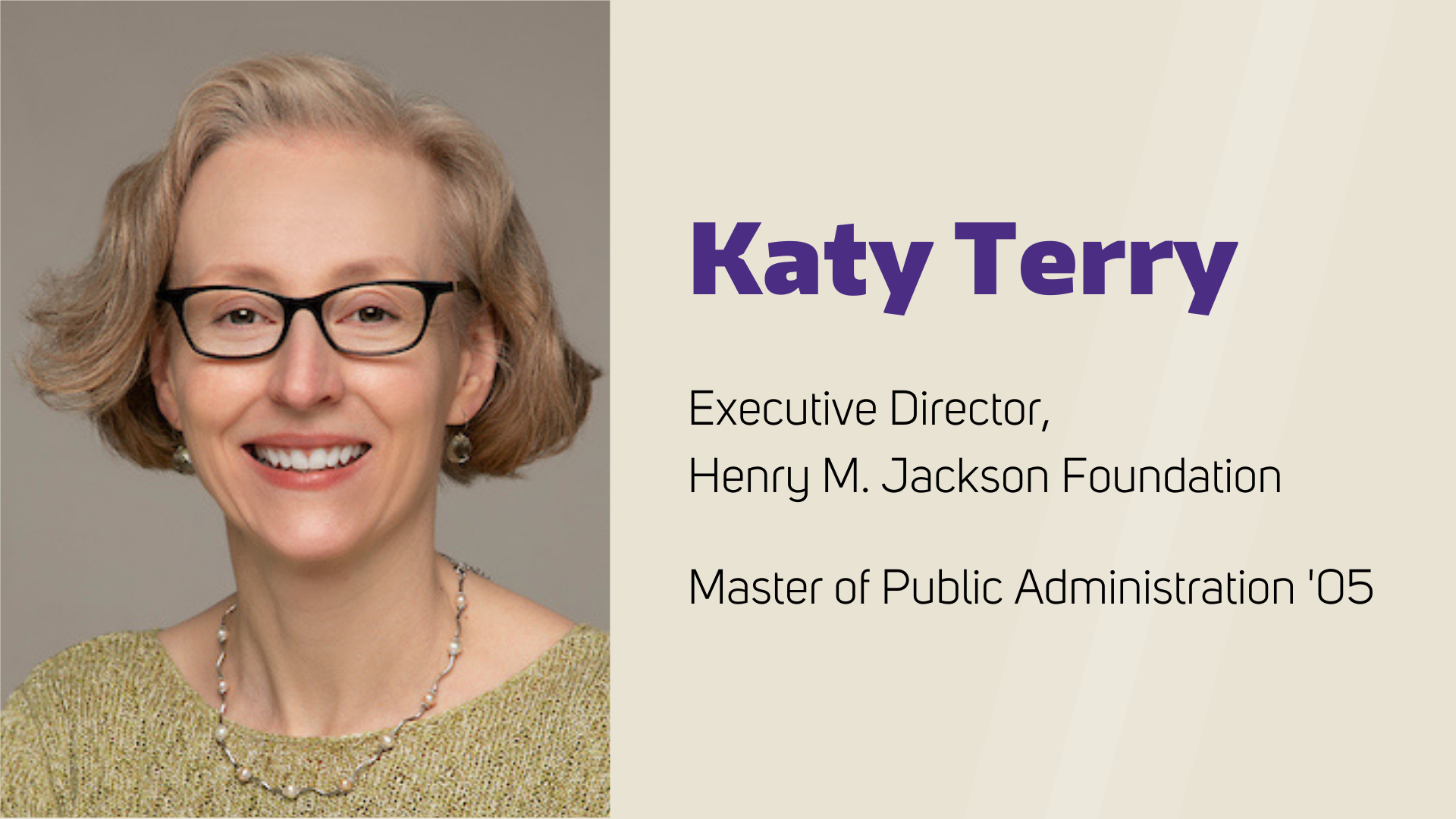
Katy Terry

As the Executive Director of the Henry M. Jackson Foundation, what are one or two things you’d want everyone to know about your work?

Some know the Jackson Foundation through our grantmaking at UW, including the Jackson Environmental Fellowships at the Evans School. Fewer are aware of our other climate, human rights and civic leadership work. For instance, we were an early contributor to efforts linking climate change with national security, as a method to bring bipartisan support to climate action. President Biden’s climate agenda, with a climate seat on the National Security Council, is an exciting embodiment of this idea that we helped incubate. In addition, six years ago the Foundation started the Jackson Leadership Fellows program, to support early- to mid-career civic leaders through a program based on values-based leadership. The Jackson Fellows Network now includes over 50 Jackson Leadership Fellows, who are individually and collectively making a big impact in the community.

What’s a new, fresh approach you have brought to your job?

It’s relatively easy to gauge your effort, and harder to assess the difference you’re making, especially with big issues like climate change. Through strategic planning, we’re starting to articulate the impact we hope to make and assess how we’re doing. This is new for most of us, and it’s exciting to approach our work in a learning mode, rather than focus on perfection.

What do you think the state of your field/organization will be in 2030?  What will be the same, and what will be different? 

So much has changed in the last year, predicting 2030 is tough! I believe many aspects of the nonprofit and public sectors will be forged or influenced by this past year. I am hopeful that root causes and solutions will become the main focus of these sectors, to address the existential threats that we are facing, including systemic racism and climate change.

What contributed to your decision to pursue a career in support of the public good? Was there a defining moment in particular?

My family was oriented towards service (my father was a priest and my mother a teacher), and I expected to follow suit. Tutoring high school students while I was in college crystallized this for me. The students were risking a great deal for their education (under a regular threat of gun violence at a rough time in New York), and I was so inspired by them. It shaped how I think about education, my unearned privileges, and how individuals can make a difference.

What is your favorite podcast these days? What is a great book you have read recently? Or the “GOAT” (greatest of all time) book you’ve read?

I first read James Baldwin’s Another Country when I was just out of college and living in Russia. I was thirsting for English, and this book was so beautiful and crushing; it’s the only book I reread immediately on finishing it the first time. I read it again last year, and continue to find it startlingly modern and insightful about sexuality, race, art and relationships.

How does your Evans education impact how you approach your work today?

I took an elective on technology and nonprofits, which influences how I think about an organization’s resources. Once, the instructor described a client that was touting their use of a broken stapler, to prove fiscal responsibility. However, that stapler wasted staples, paper, and – most importantly – time, and replacing it would have cost ten dollars. Often staff time is not valued like things you go out and buy. Yet it’s central to how we accomplish our mission. I now try to be mindful about how we spend our time, and value small, low-tech changes that can better use our time and treasure.

If you could give Evans School students one piece of advice, what would it be?

My career path hasn’t been linear, and I’ve been wary of long-term career plans (I did the concurrent Jackson School program in Russian Studies and associate them with Soviet Five-Year Plans). Frequently, I had seemingly random responsibilities or jobs that felt like they were going nowhere, only to discover that I had gained experience that eventually opened doors. I highly recommend taking advantage of even short-term opportunities to gain new experiences and skills. They can be interesting challenges, and I wouldn’t have gotten my last several jobs without them.

We’d love to learn more about you and your tremendous contributions to the public good, so we can share your story as we connect, learn, and reflect. Share your story!

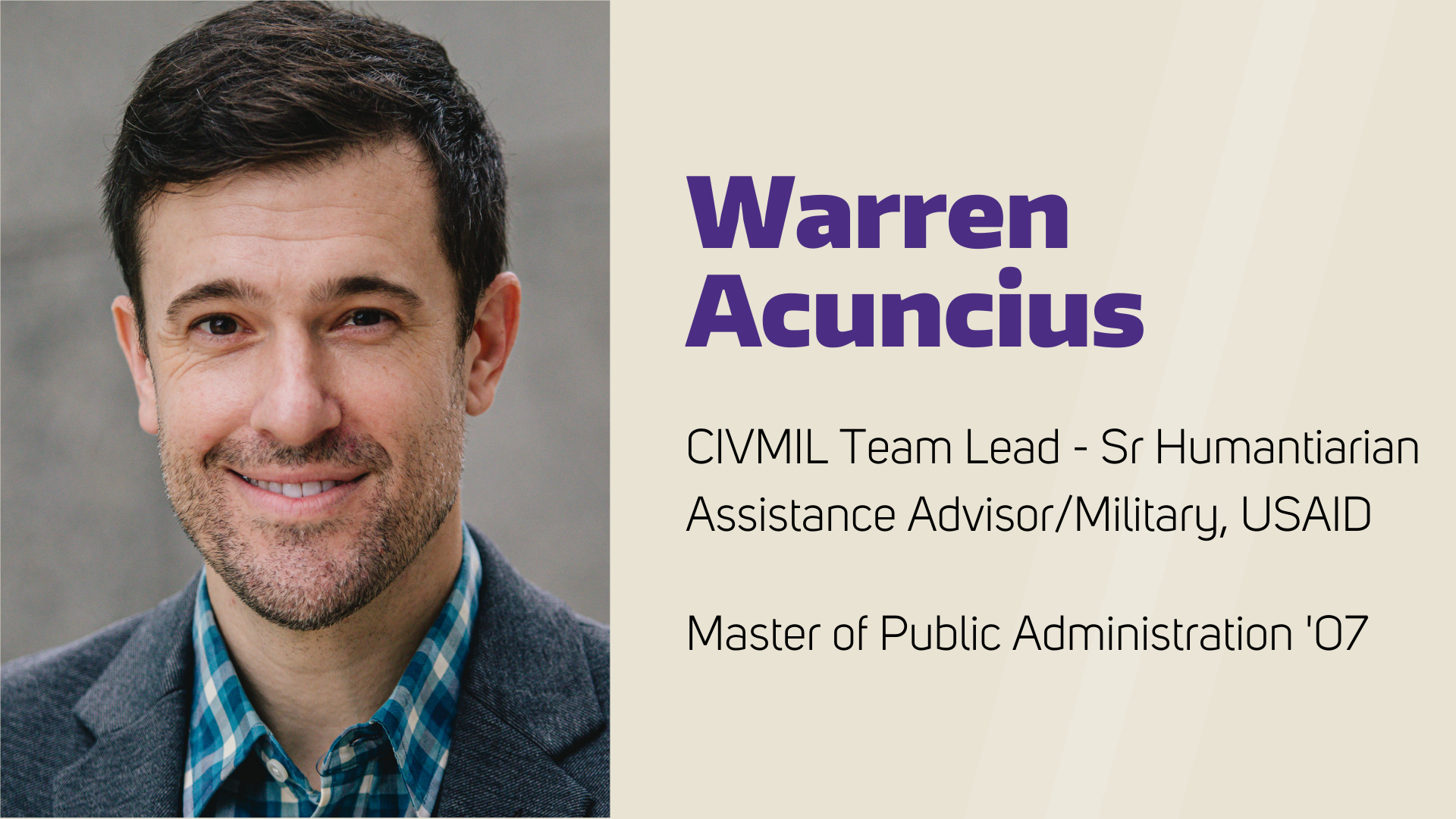
Providing Aid in Moments of Need: Warren Acuncius, MPA ’07

Warren Acuncius

Can you share a bit about the work you are currently doing and what a typical day in your job looks like?

I work for the United States Agency for International Development’s Bureau for Humanitarian Assistance (USAID/BHA). Recently, this was called the Office of US Foreign Disaster Assistance or “OFDA”, and has been the lead humanitarian arm of the US Government (USG) for over 55 years. BHA provides life-saving humanitarian assistance—including food, water, shelter, emergency healthcare, sanitation and hygiene, and critical nutrition services—to the world’s most vulnerable and hardest-to-reach people. My specific position as a Humanitarian Assistance Advisor works at a policy level in Washington, D.C., an operational level at US Military Commands, and tactically as part of disaster assistance response teams (DART) in the field during USG foreign disaster relief efforts. My work is done before, during, and after a humanitarian crisis to appropriately integrate USG interagency (e.g., US Military) as support to USG civilian led response in rapid onset (e.g., earthquake), slow onset (e.g., drought), and complex emergencies (e.g., civil war).

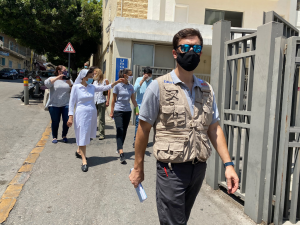
Warren Acuncius wearing a mask and a USAID vest walking down the street

There is no real “typical” day in my job, but it is heavily “field-centric”, whether in the office or in the field. I recently moved back to Washington D.C. from Oahu, HI where I advised the highest levels of the US military and spent about 40% of the time traveling in the South Asia, East Asia, and Pacific regions. My new team lead position in Washington D.C. focuses on international disasters in South Asia, the Pacific, Latin America, the Caribbean, and North America. While much of my day-to-day work is focused on enabling our field offices around the globe to integrate disaster risk reduction efforts, BHA also responds to approximately 60-70 international crises a year, globally. This is done through funding to NGOs and international organizations, by providing commodities to alleviate disaster related suffering, and by deploying to coordinate USG crisis response efforts on the ground. Most recently I was in Lebanon after the 2020 explosions and have also deployed and/or supported efforts in Liberia, Nepal, Micronesia, Yemen, Syria, Iraq, South Sudan, Ethiopia, and more.


Much of my career has been spent focusing on the civilian-military nexus, where US military supports civilian led USG humanitarian efforts. I spend much of my time teaching classes to US and international military personnel, playing in military exercises, and supporting humanitarian crises. When I am on the ground my job requires strong communication skills, an ability to coordinate with various professional cultures, and I work to build advocacy amongst the whole international humanitarian community. While I work for the USG, I advocate for (and try to protect) the core humanitarian principles that guide organizations like the United Nations, Red Cross Movement, and non-governmental organizations working in the humanitarian field.

While on deployment my time may be spent assessing the impacts of a disaster to determine appropriate use of US tax payer funded aid. I might be on the tarmac loading a helicopter with commodities headed to those in need. I could be identifying and moving NGOs who must get to remote locations to work. Everything is based on the assessed need in the moments we are there.

So, today may be catching up on email, but tomorrow I may be deployed to remote locations around the globe to help those most in need. It is exciting and rewarding and I can not imagine a better career.

What contributed to your decision to pursue a career in support of the public good? Was there a defining moment in particular?


There is nothing more professionally (or personally) rewarding than seeing your “blood and sweat equity” going to help people truly in need.  As broad categories, my work and personal travel have encouraged me to pursue a career dedicated to the public good. How that ended up taking shape through international disaster relief is more a series of random experiences than one defining moment.

Along the continuum of events that have played a role, I strongly associate the following life changing events: Independent travel, working in challenged international communities, working in disaster settings, refining my academic rigor (Evans School and Hopkins), supporting various Federal missions that ultimately had little to no impact, and being in the right place at the right time. Each of these is a story in and of itself that I would happily share over a beer or whiskey.


If there was one thing you’d want everyone to know about your work, what would it be?


There are MANY things I wish everyone knew about the field of humanitarian assistance, but if I had to pick one thing initially, I would ask people to realize the dedication and importance of those that choose humanitarian assistance as a career. I’m not speaking about my “cushy” government job, but the real humanitarians who work in the field for months and years at a time and accept physically and emotionally taxing work in unstable and often dangerous environments, often with nothing more than their ability to communicate and advocate for humanitarian principles. This work can be rewarding, but it can also be endlessly disappointing, as we see protracted crises increasing, not decreasing, globally.

I want people to know about the dedication of the people who operate humanitarian organizations (like Doctors Without Borders and the THOUSANDS like it) that are made up of international and local staff dedicating their lives to helping others survive crises. If this kind of mission clicks with you, there are many opportunities out there that require dedicated and smart individuals to help them further their principled cause. I am happy to speak with anyone about places to start looking if this work sounds right for you—connect with me on LinkedIn.

Who has been your strongest influence in life? Why?

It is tough to pick one influencer in my life, but this simple fact has been a benefit to my learning and professional development. My mentors have arrived at various points in my career and life, so long as I kept my eyes open for them along the way. Some I met during my time at Evans, and others I met in the opportunities I took after graduation. Some influenced me by challenging my perspective and some pushed me by showing me things from a completely different angle. I am inclined to say that those who did not share my core beliefs pushed me further into my current field than those that did. Along the way I have selected and been chosen by amazing mentors. Never hesitate to pick up a few with each experience you have or place you work. Just remember to pay it forward. When someone helps you along the way, you must turn around and help those who were once in your shoes. I will also say that finding mentors is a life-long journey that should never stop.

Looking back on your Evans School experience, what stands out as the most impactful aspect and why?

While the Evans school’s dedicated faculty are wonderful for imparting knowledge, it is the environment they create that has most informed my perspective. Classes where student discussion was core to understanding various perspectives built on experience and academics. Patient and wonderfully insightful people like Leigh Anderson and Margo Gordon invested seemingly endless amounts of time and were willing to field never ending questions and provide encouragement along the way. To this day, I still pester Leigh whenever I get the chance, and she graciously accepts me in when I knock on her door. She was a huge help in getting my (once Evans School and now) Jackson School Humanitarian Aid & Disaster Relief course off the ground!

What is your favorite podcast these days? What is a great book you have read recently? Or the “GOAT” (greatest of all time) book you’ve read?

I haven’t found the time to add podcasts to my “to do” list and instead opt for books on “tape” and on kindle (a must for anyone who travels extensively). Aside from the more academic books on humanitarian assistance (e.g., Empire of Humanity, Humanitarian Ethics, Emergency Sex and Other Desperate Measures), I recently finished Dark Matter, Spillover, Educated, and How Everything Became War and the Military Became Everything. Right now, I am reading a kind of humanitarian “choose-your-own-adventure” titled, “Decision Making in Disaster Response.”

My favorite books of all time are the Count of Monte Cristo, Hot Zone, and The Agony and the Ecstasy. Ok, I love Jurassic Park, too.

How does your Evans education impact how you approach your work today?

My Evans education reminds me of how far I have come since the days before picking my career. It was in the Evans School lounge that a classmate said to me, “Ya know what would be cool? A career in disaster response.” My brain almost exploded. This new idea would eventually focus my efforts at Evans to get into the field I am in now. The school provided me a platform to ask questions, challenge perspectives, and learn from everyone in my immediate vicinity. Sometimes I was provided answers, and others times I was simply encouraged to dig more into the field with the guidance of my advisor. Education at Evans is not simply about the academic rigor, but may be MORE about the opportunity to network, ask questions, challenge beliefs, and develop your own perspective. I thought my graduate degree would be about what professors told me. Instead it was about the space they created for me to learn from them, my peers, and myself.

It is my gratitude for what I have gained through Evans and the UW that brings me back to teach (hopefully) the next generation of humanitarians. My experience has made me a Husky for life. Go Huskies!


We’d love to learn more about you and your tremendous contributions to the public good, so we can share your story as we connect, learn, and reflect. Share your story!

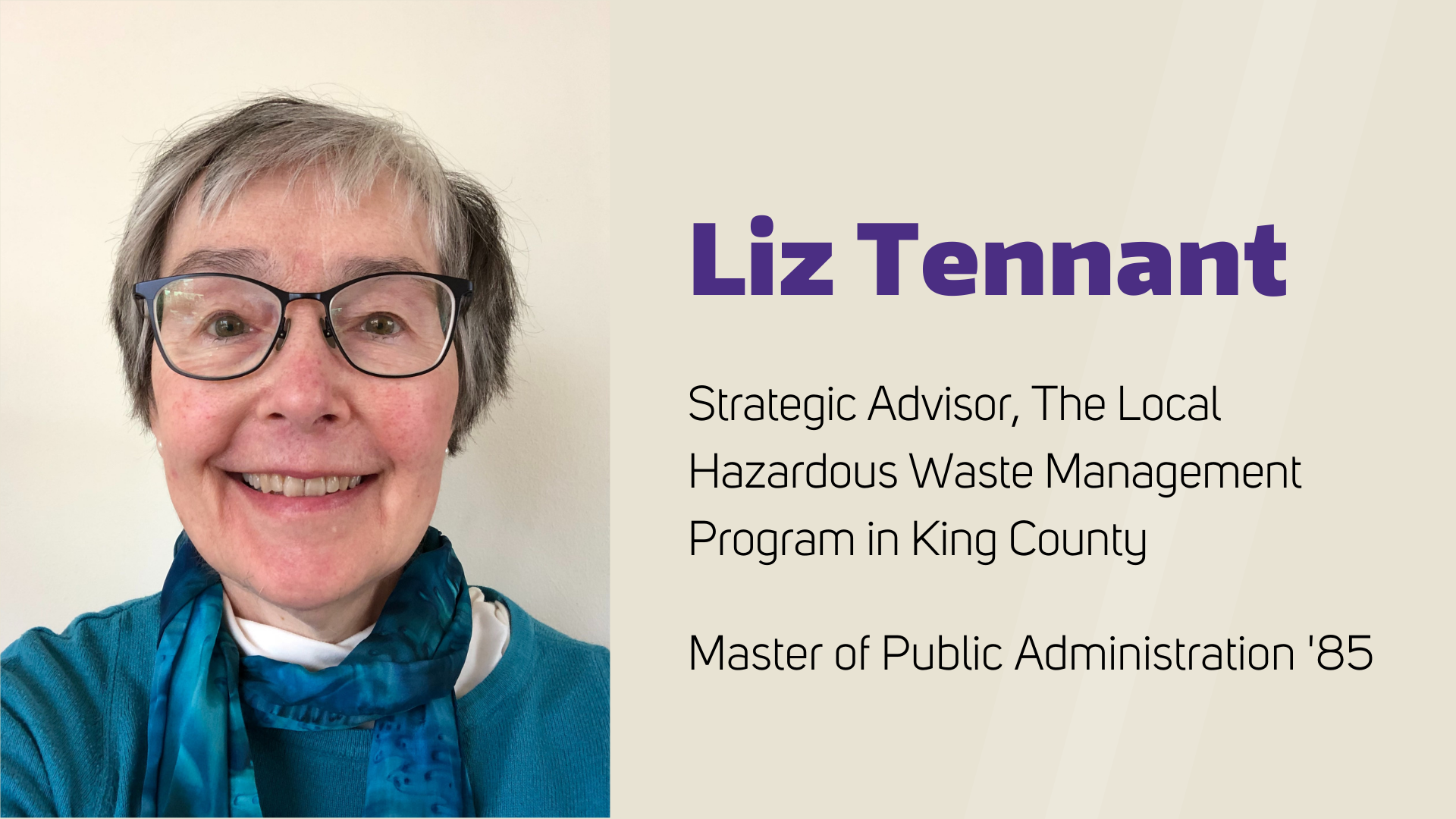
Advancing Equity through Targeted Universalism: Liz Tennant, MPA ’85

Liz Tennant Headshot

What contributed to your decision to dedicate your career to serving the greater good?

For as long as I can remember I have had a strong drive to serve the greater good. I explored a couple of different paths before deciding to work on protecting public health and the environment.

Before retiring from an extensive career with the Local Hazardous Waste Management Program in King County, you were involved in creating the program’s racial equity strategic plan and program. How did you address this critical work?

The Hazardous Waste Management Program (Haz Waste) is a regional program in King County that works to prevent human and environmental exposure to hazardous materials and products. Program partners include Public Health, Seattle & King County, King County Water and Land Resources Division, King County Solid Waste Division, Seattle Public Utilities, 37 cities and towns and two tribes. Haz Waste has been working since 1990 to provide relevant and effective services to King County’s 2.1 million residents and 60,000 businesses. I served as Strategic Advisor to the Program Director.

The planning process:

For over 20 years, Haz Waste partnered with the City of Seattle Public Utilities (SPU) to integrate environmental justice and service equity in Haz Waste programs and services. It became increasingly clear that we needed to approach this work more holistically, thoughtfully, and strategically. In 2017, Haz Waste and SPU’s Environmental Justice and Service Equity Team launched a joint planning effort to improve Haz Waste’s operations, policies, practices, and services. The Director and I were on the planning team.

  • During Phase 1 we worked with our multi-jurisdictional Management Coordination Committee (MCC) to develop a racial equity vision for the Haz Waste Program and for each function and service. We gathered feedback from Haz Waste staff and other stakeholders and refined the vision. During this same period, we gathered information, reports and data on racial equity initiatives and performance and gathered the perspectives of staff on multi-agency program teams, project managers, agency managers and Haz Waste managers. We also gathered information about best management practices in each area.
  • During Phase 2 we conducted a gaps analysis, and identified gaps, needs, challenges and opportunities in each project area. We developed initial recommendations. We expanded the Racial Equity Planning Team in 2018 to help refine the recommendations and develop SMART goals for their topic areas. High level observations were shared with staff, the Leadership Team and MCC.
  • During Phase 3 recommendations were refined and finalized in two separate but related documents: 1) a Racial Equity Strategic Plan, which sets the strategic direction and provides a high-level summary of key steps that Haz Waste will take to advance racial equity and 2) A Racial Equity Implementation plan which describes key actions that Haz Waste will take over the next three years to promote racial equity in our services and operations. It is an internal guidance document. These documents were shared with staff and iterated with them. The final documents were adopted by the MCC on October 16, 2018.

Key strategies:

The Plan commits Haz Waste to lead with racial equity by implementing a racial justice framework to address root causes and eliminate inequities in how the program operates and in the services it delivers. Key strategies for doing this included:

  • Adopting a Targeted Universalism approach that recognizes that different populations in King County face different barriers in accessing and benefiting from Haz Waste services, and by working with communities to identify and implement targeted programmatic efforts.
  • Defining racial equity commitments, performance goals and performance measures in each program area and function; building those into annual work plans for each area; and reporting on quarterly progress.
  • Involving community-based organizations and community members at every step of the process to update the Program’s State-Adopted Management Plan. This community centered planning process that centers voices of underserved and overburdened communities including Black, Indigenous and other people of color, refugees, immigrants and other marginalized residents and workers.
  • Committing to the development of a performance measurement system that uses Results Based Accountability using a racial equity lens.
  • Hiring a full-time Racial Equity Manager to ensure accountability.

Key learnings:

  • Be flexible. Plans give you a place to start and a framework for being accountable. It is important to establish your goal and work plan as clearly as you can. That said, you probably will need to accept that things move more slowly than you want, and that you will need to adapt and modify as you go along. For example, almost immediately after adopting the plan, we realized that we needed to establish cross-program work teams to advance work in four important areas. Getting these off the ground took longer than we anticipated.
  • Look for where your program can help to address root causes of disparities. Look for opportunities to partner with others to leverage resources to have greater impact.
  • Approach racial equity work with an open mind, curiosity, humility, and kindness. We are all in this together and need to work together to undo unjust procedures, laws, and systems. Try things out, learn from them and allow for imperfection
  • Look for opportunities to keep growing and learning in your individual understanding of racial equities and through the Evans School, your work and in the community.

What is the biggest challenge you have had in your career and how did you address it?

Probably the biggest challenge was being appropriately classified and compensated for the work I was doing. I loved the work I was doing and it took me a number of years—and a supportive boss—to finally be paid at the level I should have been. I am glad that women are more vocal about getting fair pay these days.

What are your favorite podcasts? What is a great book you have read recently?

I have several favorite podcasts that I listen to. Among my favorites are:

  • On Being with Krista Tippett, who interviews widely ranging thinkers, theologians, community activists, scientists, civil rights leaders, poets and others to think through how we best navigate these times we live in.
  • The Daily with Michael Barbaro of the New York Times, who interviews knowledgeable New York Times reporters on key issues in the news.
  • Throughline, which I have come to recently. It traces how issues we are facing today have roots in the past, with significant focus on racial disparities.

I enjoy reading a variety of books. One great book I read recently is Native Seattle: Histories of the Crossing-Over Place by Coll Thrush. It is about Seattle area tribes, settlement and the ongoing interaction of settler and tribal lives economies and stories.

What inspires you to support your alma mater and our incredible students?

I think the Evans School does a wonderful job of training people in public administration and public policy. We need smart, thoughtful people with good analytical skills to help address the problems in the world. I am particularly excited to be able to support students of color. I think it is hugely important to continue to diversify the workforce.

If you could give Evans School students one piece of advice, what would it be?

Focus your assignments in required courses on questions/issues that will help you to grow in your particular area(s) of interest. Also, look for courses throughout the UW that will enrich your understanding of your area of interest. Have a wonderful education!

We’d love to learn more about you and your tremendous contributions to the public good, so we can share your story as we connect, learn, and reflect. Share your story!

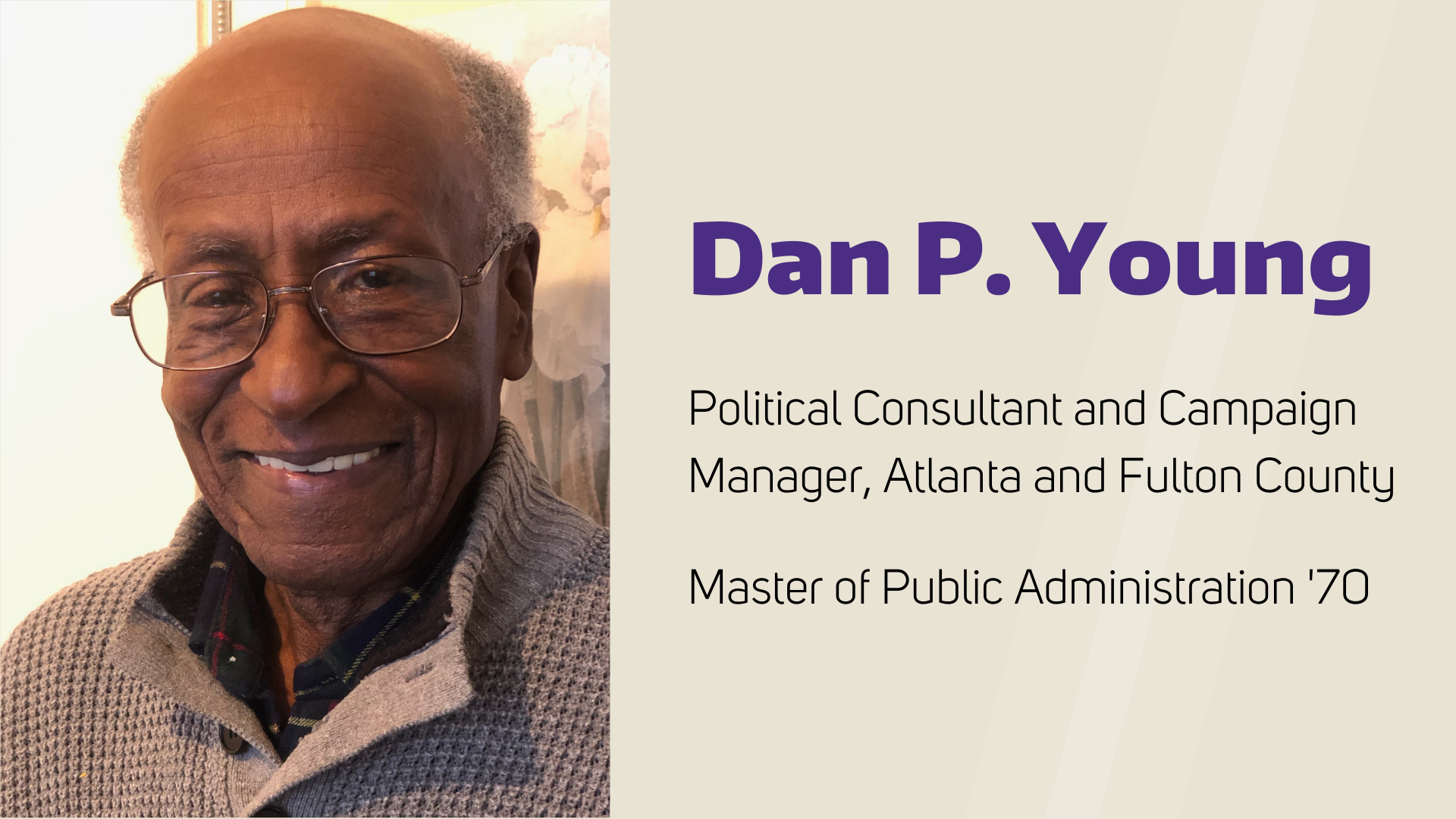
Politics and Public Administration: Dan P. Young, MPA ’70

Dan P. Young

What would you consider one of your greatest professional successes?

My greatest professional success was that of having a significant role in the funding, design and implementation of a new Master of Public Administration program at Atlanta University, Atlanta Georgia. Prior to joining the faculty at Atlanta University, I held the positions of Assistant Professor in political science at Benedict College (Columbia, SC) and Xavier University in New Orleans, LA. Each of these institutions are identified as “Historically Black Colleges & Universities” (HBCUs). This description applies to private and public black colleges and universities.

I attended a professional conference of Black political scientists while on the faculty at Xavier University. One of the attendees was chair of the Department of Political Science at Atlanta University. As we held various group meetings discussing a range of issues, the chair from Atlanta University asked me about by academic background and the name of institutions attended. When I told him that I earned the Master of Public Administration from the University of Washington, the chair stated that the Board of Trustees of Atlanta University had approved a Department of Public Administration and had received a letter from the Federal Department of Health, Education and Welfare which stated that funds were available to fund the program, if a detailed program proposal was submitted. We continued our discussion and the next day, the chair asked if I would be interested in joining the faculty as an Assistant Professor to develop the proposed program. I told him I would discuss with my wife the offer and if she would support our move to Atlanta, GA. I told the chair the next day that I would accept the position.

I later traveled to Atlanta to make a presentation to the political science faculty and students in the existing political science program. I joined Atlanta University in 1973 for the Fall semester. I wrote the grant application and if I remember correctly, it was approved in the amount of $275,000.00.

Additional faculty were hired to teach courses described in the grant for funding. Therefore, students who entered Atlanta University to study for the MPA were taught by me and other faculty and received their MPA degrees from Atlanta University under the auspices of the Department of Political Science.

I developed contacts with a number of elected officials in city and county governments in relation to paid internships for our students at the end of their first year of study. Local government officials were excited about the opportunity to make a contribution to the program. While students did not receive academic credit for their summer internships, the experiences of working in a local government agency provided unique opportunities to participate in basic operations of these governmental units. When these students returned to Atlanta University to complete their final academic year in the program, I developed several seminars which provided an opportunity for each student to discuss their experiences.

In 1975, a chair was hired to head the new Department of Public Administration. I remained as an Associate Professor for the following two academic years. The Department of Public Administration was approved for NASSPAA Accreditation and has retained this very important accreditation to today for a period of 45 years.

What is the biggest challenge you’ve had in your career and how did you address it?

My professional career in public administration totaled 50 years in a number of settings which included teaching at the undergraduate and graduate level in colleges/universities, certified teacher in the Atlanta Public Schools, and Project Director for a research study conducted by Clark Atlanta University School of Social Work. The Clark Atlanta University School of Social Work was selected to conduct a research study which focused on Grandparents as Primary Caregivers of Grandchildren. The contract for this research study was approved by the Department of Human Resources State of Georgia.

One of the primary objectives for my professional involvement in a number of public agencies and programs, was to examine a number of strategies/pathways which would lead to integration of selected theories of public administration into administrative settings of programs. The ultimate objective was to increase their efficiency and accountability.

I decided that it would be important to become directly involved as a paid professional or possibly volunteer in selected agencies. I was also aware that some agency staff could resist and resent involvement of someone from an academic setting. The Dean of the Clark Atlanta University School of Social Work hired me as director of the research project described above. We were involved with a number of agencies in the community as part of the research project. Agency personnel were very receptive to work with staff from an academic institution. We discussed various concepts related to public administration and public policies which could benefit and improve operation of their respective programs. The research study was completed on schedule and filed with the Department of Human Resources, Division of Family and Children Services, Atlanta Georgia.

What are the most critical problems faced by people who work in your field? How do you  think these problems should be handled? OR-what is an issue in public administration and how do you think this problem should be handled?

Based on my professional experience in the profession over a relatively extensive period of time, I believe that some professionals feel “isolated.” This isolation may be the result of a lack of connecting public administration and public policy decisions with some of the critical issues which administrators face. For example, public administration practice does not happen in a “vacuum.” There are complex political environments in organizations which have direct and indirect influence on the decision-making process. Persons who are in elected positions such as council members, state legislators, and county commissioners have bases of constituents who expect administrative staff to implement some of the basic policies which the now elected official campaigned on.

I reside in Atlanta, Georgia which is in Fulton County. This is a very political region in terms of why voters select certain candidates over others to represent them. Many articles and essays have been written related to the non-political aspect of managing public sector affairs. The vast majority of professionally trained persons who come from academic backgrounds in public administration and public policy, have not developed successful strategies to function in most of these settings.

I believe the origin of the problem is not in the behavior of professionally trained administrators, the problem is generally related to academic courses and professors who may dismiss any discussion of the interaction and relation between politics and the day-to-day management of a public agency as a topic which does not meet academic “standards.” I believe it is very important for graduate schools of public administration and public policy to take time and review this issue. I believe graduate students would welcome such a discussion which could be developed as part of their selected courses as they move on to become professional public administrators.

What is your favorite podcast these days? What is a great book you have read recently? Or the “GOAT” (greatest of all time) book you’ve read?

I have read dozens of books during my professional career. However, I decided a number of years ago to include in my readings books which provided clear and factual explanations related to changes in American society after the Civil War. I was particularly interested in the types political, social, and economic responses which were designed to address a wide range of policies and programs related to African Americans that were recently freed as a direct outcome of the Civil War.

A number of public systems were developed to address these needs such as the Freedmen’s Bureau, school systems and training, etc. I have selected three books related to this topic:

  • W.E.B. Dubois (1934). Black Reconstruction in America- 1860–1880.
  • George R. Bentley (1955). A History of the Freedmen’s Bureau
  • A final publication Jacqueline Jones (1992). The Dispossessed /America’s Underclass From the Civil War to the Present.

UW and the Evans School are committed to Diversity, Equity, and Inclusion. How are you addressing Diversity, Equity, and Inclusion in your work and personal life? Or-why is DEI work so important for our society?

The American society is obviously a very complex social system. The key to DEI in such a system is to permanently remove barriers which prevents each American from full and fair participation in this society. During the past 50 years significant changes have been made to make sure that DEI works. I was very active in local civil rights activities in Seattle during the 1960s.

I was an active participant in the Congress of Racial Equality which focused on issues such as fair housing, employment opportunities, a fair judicial system, etc. There were a number of faculty and staff from the University of Washington who were very active in the organization. The collective actions of dozens of persons from a variety of racial and ethnic groups successfully worked and lobbied for a large number of changes such as employment, home rental and purchases, etc.

The University of Washington press published a book titled “Seattle in Black and White.” I am mentioned on page 95 of the book as the coordinator of the Negro Labor Council. One of the key objectives of the Negro Labor Council focused on improving opportunities for Blacks and other racial groups to obtain construction contracts. The book was published in 2011.

If you could give Evans School students one piece of advice, what would it be?

My advice to students enrolled in the Evans School is a recommendation to review their professional interests at this point in their program of studies and to identify several professional areas which they are interested in. Based on their selections, I am recommending that each student use the web and review the legislative structure of Washington State Government in relation to State Senators and Representatives. The website will provide details related to each committee and the function of that committee, etc. Once a student identifies a committee or committees which has legislative jurisdiction over one or more policy areas which they are currently studying, review the agendas and send an e-mail to the chair asking to be included in their e-mail system. This will provide opportunities for a student to follow the development of legislation and he or she will also see the role which politics has in the formulation of public policies at the state level.

I would encourage students to repeat this process with the King County Board of Commissioners. These experiences will enhance the academic courses and also show in real time how a wide range of public policies are formulated and eventually become law.