From his seat on the University of Washington rowing team to his role at the King County Office of the Ombudsman, Paul has long believed in ethics, transparency, trust and the using the Socratic method of asking questions to seek information. Get to know 1961 Evans School alum Paul Meyer.
Category: Stories of Impact
Learn to be a Master of Yourself: Abel Pacheco, MPA ‘12
Most known for his most recent role as a Seattle City Council member, Abel Pacheco tells his story of being a young millennial of color, an advocate for education and police reform, and a dedicated public servant eager to contribute to the public good.
Seattle’s Creative Ecology: Randy Engstrom, EMPA ’09
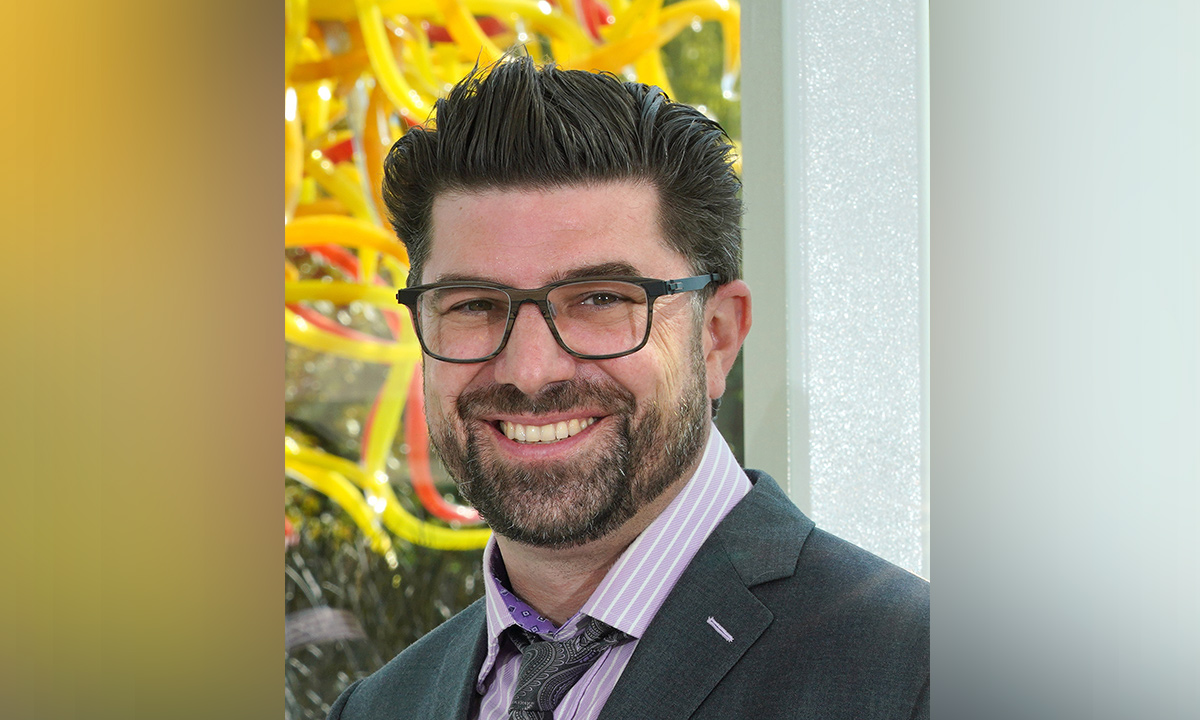
Randy Engstrom (EMPA ’09) has served as the Director of the Seattle Office of Arts & Culture since 2012 and in that time he has felt the impact of a shift in Federal Government priorities that has put more pressure and emphasis on interventions from local government. He is still determined and inspired and to explore solutions in promoting racial equality, educational access, climate and income equality.
This conversation has been lightly edited for clarity.
As the Director of the Office of Arts & Culture (ARTS) in the City of Seattle, I have been tasked with promoting the creative ecology of the city. In a climate where racial equality, educational access, climate, and income equality are at the forefront of issues in the public sector, I have led the ARTS through developments in public art programming, new programs and policies in arts education and racial equity through the arts.
The race and equity work promoted by ARTS led to great collaboration and innovation here across the city. ARTS shares and embeds staff positions within many departments to advance the department’s goals using arts as a vehicle. For example, the Office for Civil Rights has integrated arts and culture to advance racial justice and have used it to define and deploy changes, in addition to how they create artist’s stories. ARTS has also recently co-produced the Shape of Trust Program to advance racial justice. The goal of the project is to build a practice of racial equity within the workplace using experiential, arts-integrated learning for employees who supervise, manage and advise on human resources issues. To realize the project we commissioned a local theater artist to write a show based on feedback from the Citywide Race and Social Justice Initiative survey, using real stories about experiences with racial and sexual harassment. We then casted a team of actors and staged three readings, reaching over 1,200 City Staff. It was very powerful and very well received and a good example of arts-based strategies.
I am excited by ARTS’ increased focus on our creative economy and growing the creative industry in Seattle. The creative economy is the intersection between cultural development and economic development; investing in creative skills and understanding their role in the wider economy is more important now than ever. With technological advances like automation and artificial intelligence gaining momentum and investment, it is equally important to invest in jobs that humans are uniquely qualified to do. Jobs that are not easily replaced by machines are those grounded in creativity, empathy, and storytelling. Our focus is on fields that center creativity, the human experience, and the creation and preservation of culture.
At the Evans School, I learned to emphasize strategy, frame my arguments, and communicate concisely. The Evans School taught me to think about organizational management by getting on the balcony, imagining the future, and mapping out a system with a plan. To minimize room for interpretation, I learned to set up a framing narrative to add power to my proposals and improve their effectiveness in legislation or execution. I learned to communicate effectively, quickly, and briefly on incredibly detailed and intense issues.
I feel an urgency to provide pathways for people to serve the public and the community. We need nurture and include everyone who wants to contribute. I personally hope to continue contributing to the city, and I hope people can hear – and answer- the call of public service.
Transportation and Cross-Sector Partnerships: Gabriel Scheer, MPA ’04
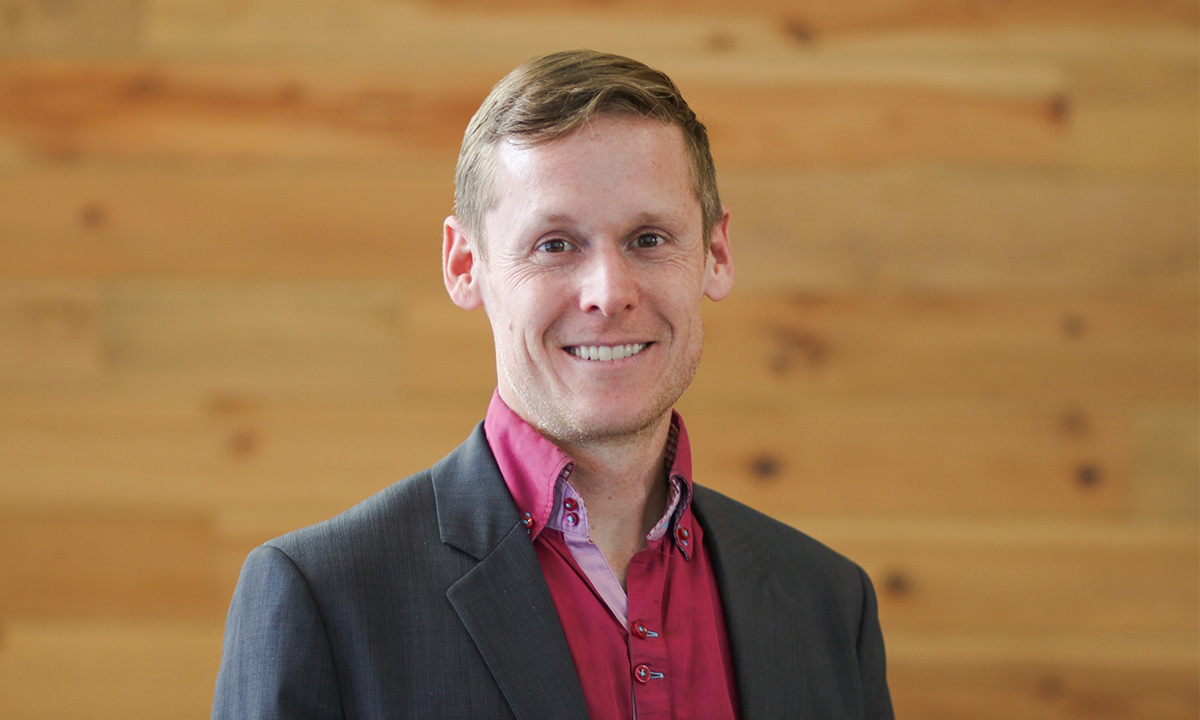
Meet Gabriel Scheer, MPA ’04 – an Evans School alum who exemplifies how a public sector education can help a private sector company promote the public good!
Since graduating from the Evans School, I have consistently utilized my public policy background to follow my passion for environmental sustainability. Most recently, this has been in my work at Lime, where I serve as the Senior Director of Data Policy & Strategic Partnerships. Equipped with a heart of public service (but perhaps with the patience of the private sector), I am driven to make a difference in the way people navigate cities.
It is my goal to help people see – and to help realize – the better world that is possible by dramatically reducing dependence on single occupancy cars. To do this effectively, I have experienced the critical need for the collaboration between the public sector and the private sector. By leading efforts to bring smart mobility (including: dock-less bike & scooter sharing and free-floating car sharing) to cities across North America and beyond, I work with officials at different levels of government to promote this cause.
The public sector has the unique and wonderful role of creating the most broadly beneficial frameworks for society to operate, while the private sector holds the ability to quickly leverage and mobilize massive amounts of funding to try new things. When paired together – transformative changes can be accomplished.
But that’s not to say that this type of partnership isn’t challenging. From redefining what a scooter is called in Salt Lake City to fit policy standards, to finding places to park our shared bikes in Seattle, I have worked with government officials to find optimal solutions to issues that arise. From our birth, Lime has been committed to working with government to minimize our negative impacts while taking best advantage of the positive impacts we can bring. I worked with councilmembers and mayors to showcase the promise and the potential of Lime’s vision, at a time when we did not have any concrete evidence on why this approach would be effective. Through close collaboration with government officials, we had the opportunity to prove our value – something that has seen us grow from no operations anywhere to providing service in more than 100 cities globally.
My work focuses on the big picture and how the private sector can collaborate with government to mitigate problems. And, my public-sector based education at the Evans School enabled me to represent a business with a more empathetic approach. I learned how to work with government first to improve lives of residents. Working at Lime, this opens all kinds of interesting questions: how should cities prioritize public space, such as sidewalks, to serve different needs? How do we integrate a previously-uncontemplated transportation option, at scale, into existing right of way? How can we best collaborate to educate the community as to appropriate, responsible usage of these new vehicles so as to minimize negative impacts – and how do we do so within a built environment that doesn’t typically change quickly? These are the type of questions I face in my position, and invariably the best approaches to answering them have been to collaborate, to respectfully push each other to imagine better ways of doing things. We are just the beginning.
We live in a time where dramatic change requires everyone work together. My public policy background has been great in helping me understand where people are coming from and the values and perspectives they hold. While at the Evans School, I relished the opportunity to collaborate with so many other students from across the UW – including the Law School, the Department of Engineering, and the Business School. That experience exemplified the collaboration necessary to do my job, and I apply the lessons I learned through that experience every single day in my work.
2019 Evans School Alumni Award Winners
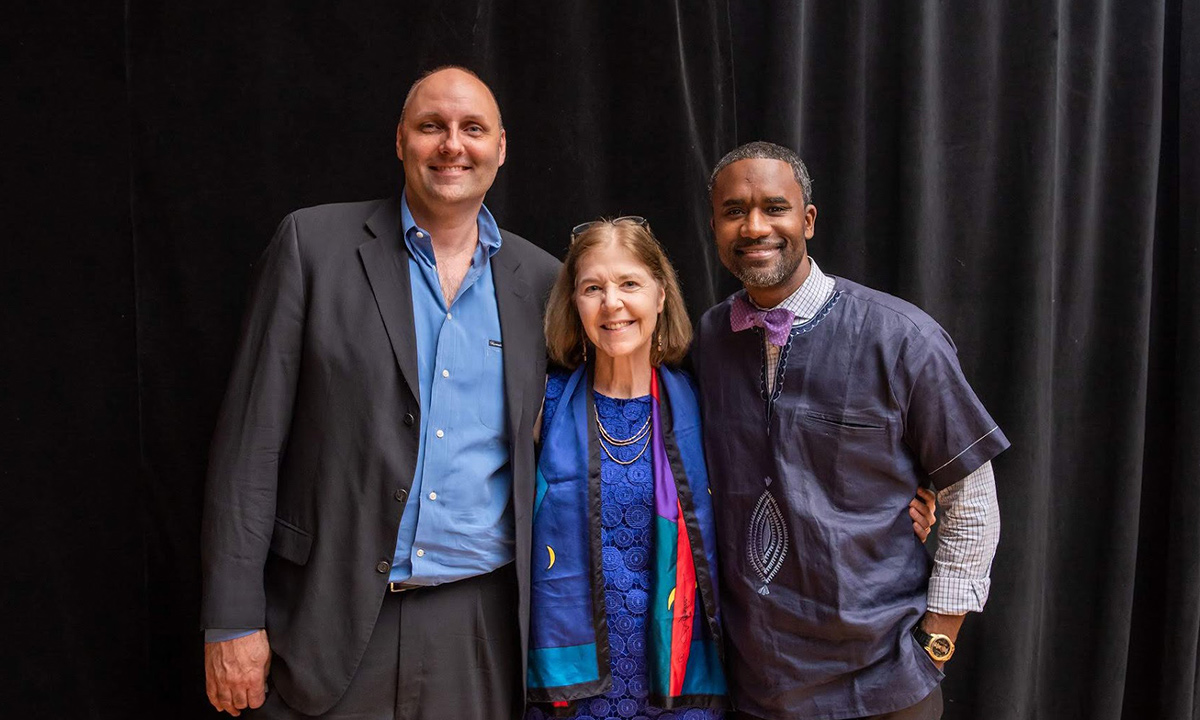
Evans School Alumni make the world better in invaluable ways. By bringing passion, rigor, and kindness to their work in the public sector, these optimists make a lasting impact on communities across the globe.
We celebrate the remarkable accomplishments of Evans School Alumni this year with the Evans School Distinguished and Young Alumni Awards to recognize outstanding leaders in our communities.
We are so pleased to announce this year’s award recipients for their commitment to driving the public good!
Tom Uniack, MPA ’02, Distinguished Alumni Award
Tom graduated from the Evans School in 2002 and serves as the is the Executive Director of Washington Wild, a statewide nonprofit organization that works to permanently preserve and protect wild lands and rivers across Washington State. Equipped with the skillset he gained at Evans, Tom has led numerous campaigns that have resulted in permanent protection for wilderness areas and wild and scenic rivers in Washington State. He led the efforts that successfully resulted in the passage of the Wild Sky Wilderness Act of 2003 as well as the Alpine Lakes Wilderness Additions of 2014. A passionate conservationist and advocate, Tom works tirelessly to protect and preserve our environment for future generations.
Erin Hatheway, MPA ’13, Young Alumni Award
Erin graduated from the Evans School in 2013 and is currently the Deputy Director of A Way Home Washington, an innovative public-private partnership to end youth and young adult homelessness in Washington State. Using data-informed, performance-based, and equity-driven practices – with a special focus on eliminating the disproportionate experience of homelessness among youth of color and those who identify as LGBTQ – A Way Home Washington has an ambitious plan for Washington to be the first state in the country to not just manage youth homelessness, but to prevent and to end it, once and for all. Centered on serving vulnerable youth and young adults, Erin encourages collaboration amongst all key stakeholders to find solution to eliminate youth and young adult homelessness.
Anthony Shoecraft, MPA ’09, Young Alumni Award
Anthony graduated from the Evans School in 2009 and is currently serving the City of Seattle as Special Advisor to the Mayor on Black Male Achievement to make a positive difference in the lives of young black males. As a catalyst and an organizer, he has led critical efforts to establish and implement systems to offer better and more inclusive support to young black men to improve life outcomes and help them reach their full potential. Anthony continues to give back to both the Evans School community and the community at large.
These incredible recipients were honored at the 2019 Evans School Fellowship Dinner, and we are so proud of their work! Congratulations, Tom, Anthony and Erin!
The Balcony vs. the Dance Floor: Madrienne Salgado, EMPA ’19
A Reflection on the EMPA Experience
On the morning of commencement, I woke up excited and with a sense of satisfaction. I was thrilled to walk across the graduation platform with my 10 month old son in my arms. My husband and I were both so happy that this day had finally come.
I thought back to the day I made the decision to apply to the EMPA program. I was curious to see if it would fit with my professional development goals and objectives. I called the Evans school to speak to the EMPA staff about my work and to see if I was a good match for the program. After speaking with them, there was not a doubt in my mind that this was the right program for me. They eased my nervousness and encouraged me to apply. So I did! And it was one of the best decisions I’ve made in my life.
Knowing that it was the right decision for me didn’t make my first day of class any less nerve-wracking though. I was a bit overwhelmed. I thought, “What did I get myself into this time?!”
If I could go back, I would have reached out to my professor in advance to get a better understanding of his expectations for class. But as I went along during that first week, I got a better concept of what was expected and how I needed to structure my school work.
Finding that structure was tricky. I had a lot to balance as a working professional and student. I’m a manager for the Muckleshoot Indian Tribe’s Public and Government Relations Department, and I’m a very family and culturally-oriented person. Finding enough time to balance my responsibilities and the things that were important to me was tough- it is for every working student.
But I had somewhat of a unique experience. I became pregnant with my first child a couple of months into the program. I also became engaged! So on top of my regular work schedule, I had to balance pregnancy (and eventually motherhood and nursing), wedding planning, and school work throughout the entire length of the program. But I loved it! I’ve always said that I’d rather be busy than bored.
And I’ll say: if I can do all of that and thrive throughout school, then anyone should be able to succeed in the Evans School EMPA program.
Between my then fiancé (now husband), my wonderful cohort buddies, and the EMPA staff, I had an amazing support system. My husband was there to nurture our son while I was reading or writing for hours at a time. I attended several study groups which helped tremendously with analyzing and discussing course content. And when I needed a place to pump, the EMPA staff graciously established a lactation room. These things and many more contributed to my success in the program.
I’ll always remember the support our cohort gave one another and the feeling that we were all in it together. We cheered one another on, offered advice, expertise, and opinions to each other during the program. That sense of community definitely enriched our learning.
So by the time graduation rolled around and I prepared to walk across the platform, I understood the full impact of my time at the Evans School. I had gained a better understanding of our public administration landscape, and tools for approaching my work more holistically.
UW Undergraduate Puts Ideas into Action
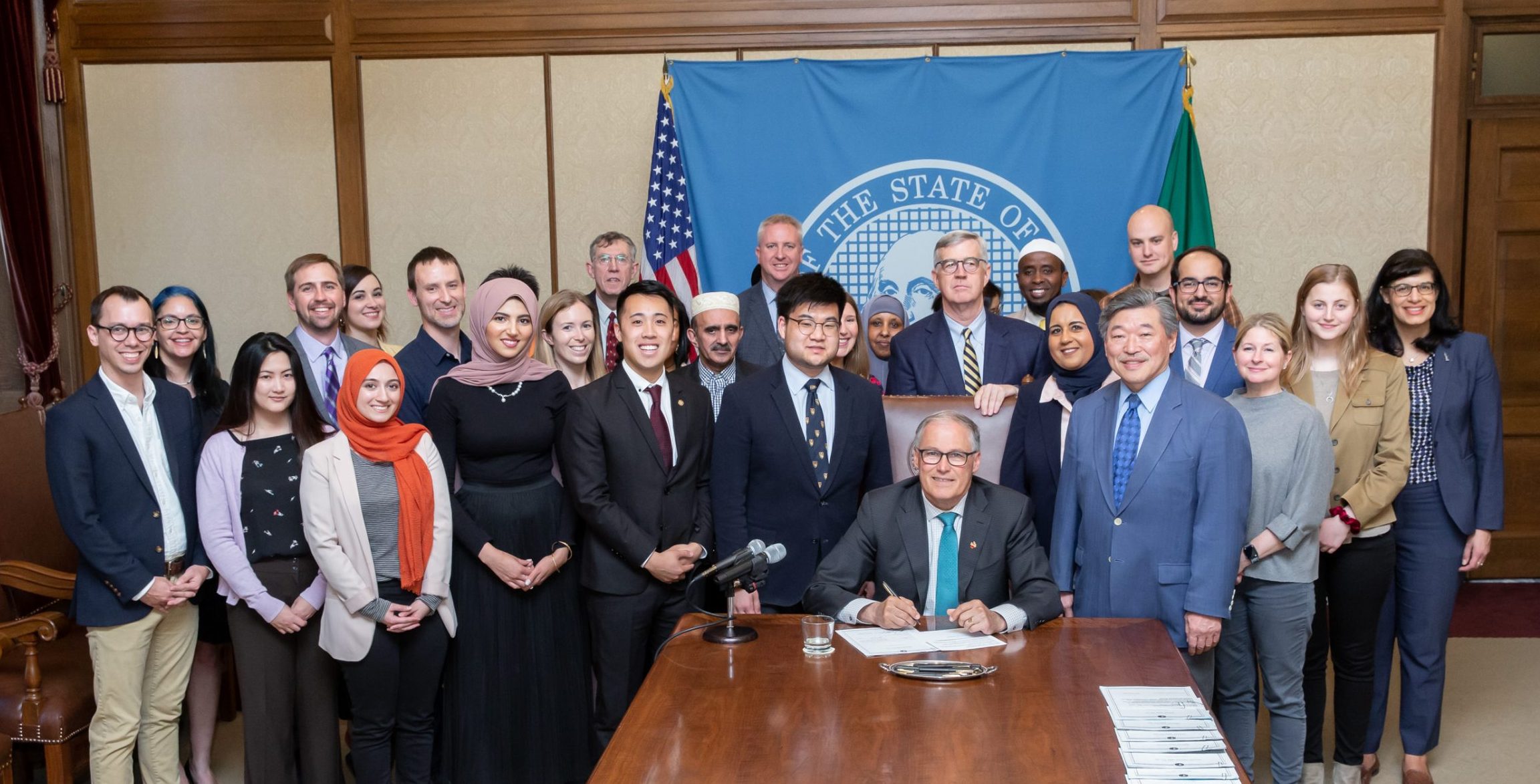
In May 2017, then-University of Washington freshman Byron Dondoyano Jr. identified a need for more inclusive, affirming policies after he observed Ramadan as a non-religious student. By fasting from 2:30 a.m. to 8:30 p.m. with no food, drink, or water right before finals, he experienced first-hand a glimpse of the lived experiences of his Muslim peers. He discovered that this was more than just an issue for Muslim students, but also for Jewish students with finals on Saturdays, and Orthodox Christians observing Christmas in January.
Byron began to research how state law around religious expression was being implemented at the UW. He found that UW policies, and how they are communicated to students, could be strengthened. And, he promptly took action. That same spring quarter, Byron took an undergraduate elective course at the Evans School called “Making Change Happen” (PUB POL 313), which not only helped him understand the process of policy making, policy implementation, and evaluation, it also equipped him with the skills he would need to push his own piece of legislation through from the UW Student Senate to the Washington State Legislature.
“Part of what I learned was the importance of coalition building. As a non-religious student, my lived experiences were going to be very different from those who observe whatever faith they observe,” Byron explained. “I partnered with Mennah from the Middle Eastern Student Commission to tackle this project. During the entire journey, our coalition grew to include the Jewish Federation, Council for American-Islamic Relations, the Anti-Defamation League, Faith Action Network, Cedar Law PLLC, and State Senator Bob Hasegawa.”
Now signed into law, Senate Bill 5166 creates more transparency and brings more awareness to religious accommodations, in the same spirit that the ADA created more awareness and support for people with disabilities. It also provides protection for all universities in Washington state from potential lawsuits over discrimination.
“The elective courses I took at the Evans School changed the way I viewed government and decision making,” Byron noted. “This journey has inspired me to continue to do work in policy, and I plan on pursuing a Master’s in Public Policy or Education Policy in the future.”
Byron is now a junior studying Law, Societies and Justice with a minor in education. He is also a volunteer and part-time teacher at a preschool in his community, and he is working to create more gender and racial representation in early childhood education.
Humility in Public Service: Eric Holzapfel, MPA ‘17
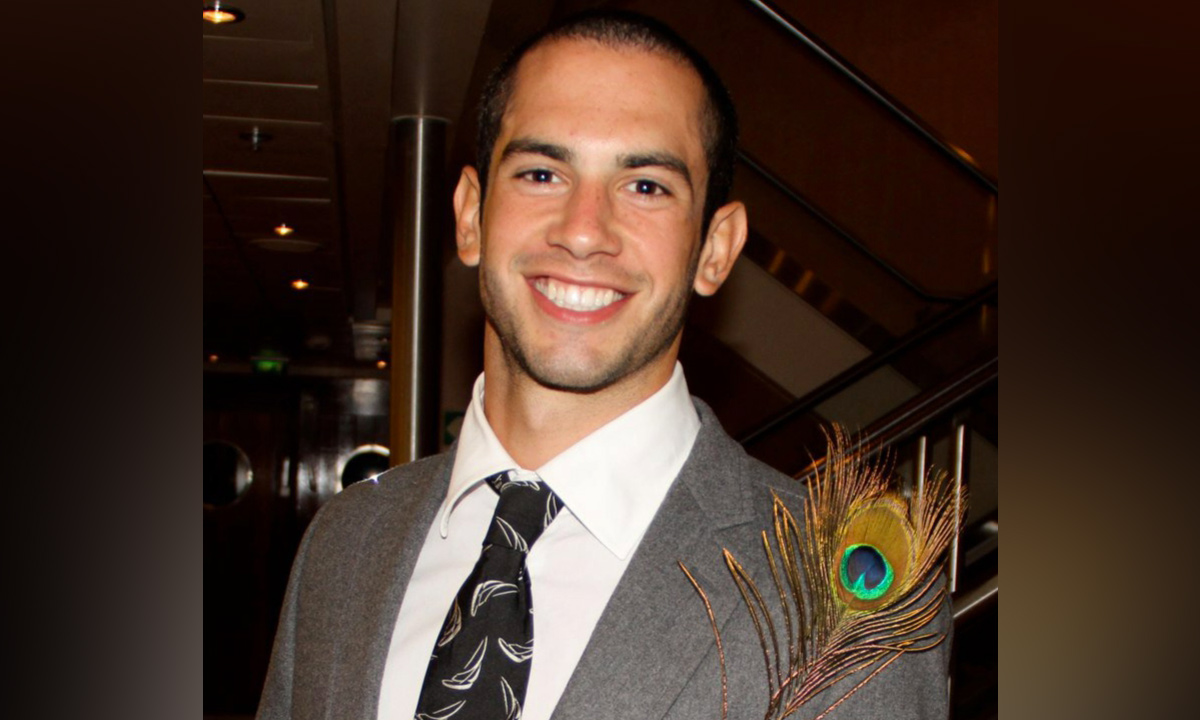
At the Evans School, we educate leaders who meet societal challenges with compassion, vision, humility, and authenticity. Eric Holzapfel, MPA ’17, embodies these traits in his work as the Immigration Manager of Entre Hermanos, a Latino LGBTQ nonprofit in Seattle. Read about what has sustained Eric throughout his career as a public servant, and hear his perspective on the necessity of integrating your own life experiences into the work we do for others.
Tell us a little about yourself, and the work you do at Entre Hermanos.
I am a graduate of the MPA program at the Evans School, and I have a Bachelor’s in Political Science and International Relations from the University of Kentucky. I am a native of Ecuador, and I have more than a decade of experience working with Latino and minority communities in criminal justice reform, immigration, youth mentorship, medical access, language rights, civic engagement, and wage theft in the United States and Ecuador.
I have worked as a legislative aid in the Ecuadorean Congress, a medical interpreter-patient advocate, policy writer for a Congressional campaign, and now serve as the Immigration Manager of Entre Hermanos, a Latino LGBTQ nonprofit in Seattle.
In the past year, I’ve led a series of state campaigns including: opposition to “public charge” changes in immigration law, immigration detention/bond reform, and Census funding for community-based outreach. I also oversee the expansion of our immigration representation of LGBTQ Latinos, particularly among asylum seekers from Central America.
What motivates you to do your work each day?
As a child my parents instilled in me an appreciation for life and the privileges I’ve had. I grew up in Ecuador at a time when child labor, especially on the streets, was common. This reality inspired me to dedicate my life to public service. I get up every morning excited to serve Entre Hermanos’ clients and the immigrant and refugee community of King County.
What’s a piece of advice you’d pass on to someone interested in pursuing a career in public service?
The first piece of advice I’d give is, “Check your ego at the door.” Confidence is important in any career, but I’ve learned that egos (especially in public service) only get in the way.
Second: your life experiences matter. Getting an MPA is a big accomplishment and it certainly provides you with a great skills to enter public service but your life experiences-both personal and professional- are what drive you and give you purpose in your work.
What’s a valuable lesson that you’ve learned from your time in the public service?
I think having a steady-hand is critical to public service. Working in advocacy and in the nonprofit world, you will have so many highs and lows from legislative, funding, and policy victories and losses. It’s important to keep a positive outlook and keep grinding.
Your efforts don’t always bear fruit right away, but when they do it’s so rewarding.
What’s something you’ll always remember about your time at the Evans School?
I’ll always remember my peers at Evans, especially the cohort that formed the Evans People of Color (E-POC) student organization. Our shared experiences in grad school and seeing the work that we’re all doing now is inspiring.
What’s on the horizon for you?
I’m currently helping my organization through a leadership transition and a time of immense growth. I want to continue working to expand legal and holistic services for the Latino LGBTQ community of Washington State. I am so thankful to my co-workers at Entre Hermanos for their endless dedication to promoting the health and well-being of the Latino LGBTQ community who are with me in that effort.
Meet the 2019 Evans School Husky 100s

Meet the newest Evans School members of the Husky 100: Louie Tan Vital (MPA ’19) and Carter Osborne (MPA ’19)!
These two outstanding Evans School students know that education happens both inside and outside the classroom. Louie and Carter were selected based on their ability to embrace innovation and novel ways of thinking, to seek understanding of and engagement with diverse communities, to lead proactively, and to take on their bright futures with enthusiasm, savvy and fortitude.
Louie came to the Evans School determined to become a policy analyst and, eventually, a policymaker. Now, with new analytical skills and a thorough understanding of the policy process, she plans to carve a space for herself in between policy analysis and policy advocacy.
“Public administration as a field is guilty for codifying institutional racism in the United States, and it is my life’s mission to undo its harm,” Louie explained. “Using a race and equity lens at every step of the way, I want to change the narrative of what it means to be a public administrator and elected official.”
During his time at the Evans School, Carter committed himself to immediately applying the knowledge and skills gained in the classroom to his efforts advancing University of Washington mental health initiatives. Carter helped to bring together nearly 15 independent student groups to form the Student Mental Health Taskforce, which builds awareness and improves policies that address suicide prevention at the UW.”
“I’m optimistic when it comes to public service. I honestly believe that everyone has a public issue that they would commit themselves to, which is what suicide prevention is for me. I think my job is simply to help people find their issue and take action.”
The Husky 100 recognizes UW juniors, seniors and graduate students who are making the most of their Husky Experience, as demonstrated by the ways in which they fulfill the five program criteria. This year’s selection process was highly competitive, with more than 1,800 nominations and more than 600 applications from all three UW campuses.
Congratulations Louie and Carter!
Reynaldo Pascua, MPA ’78, Honored for Champion AAPI Communities
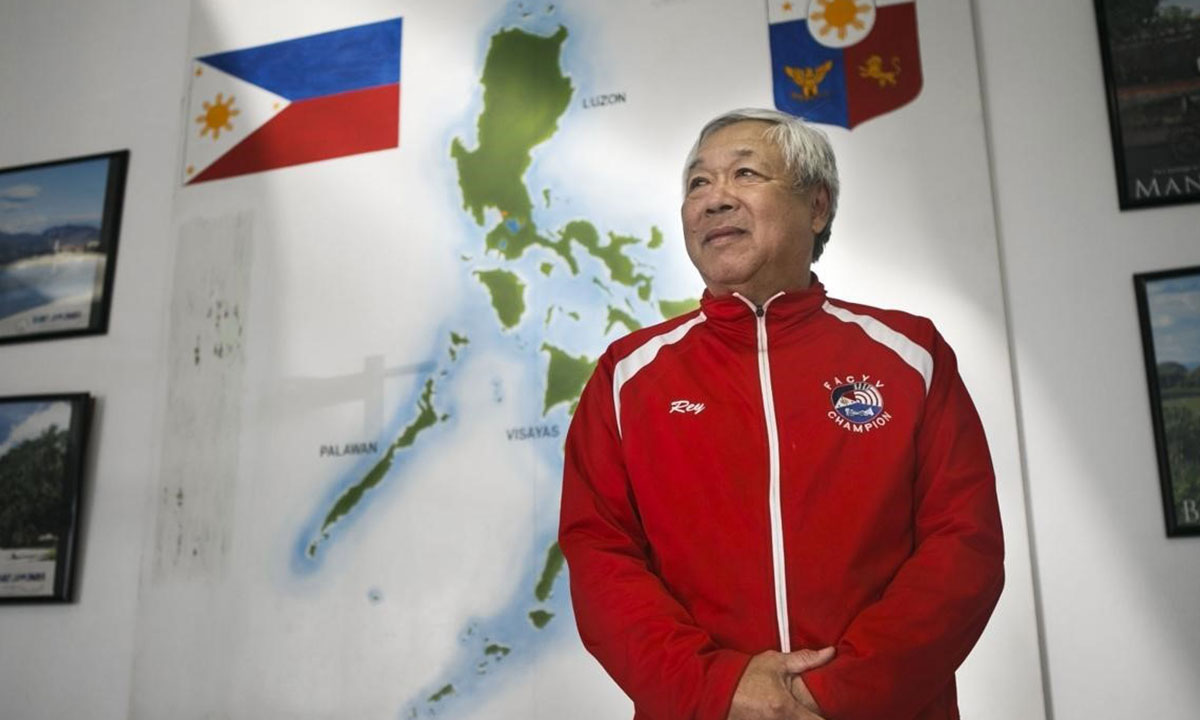
Former Commissioner and Evans School alum, Reynaldo Pascua, MPA ’78, will be honored as the 2019 recipient of the Washington State Commission on Asian Pacific American Affairs’ (CAPAA) Vanguard Award. Reynaldo is the current president of the Filipino Community of Yakima Valley. He has been engaged with CAPAA since it was first established in 1974 and has remained a tireless champion for Asian Americans and Pacific Islanders (AAPI) in Washington state. As a proud Filipino American, Reynaldo has committed his life to raising awareness of the issues impacting Asian Americans, Pacific Islanders and immigrants through community organizing and legislative advocacy. He is known to many as a historian, often telling the stories about the development of AAPI history and their contributions to the development of agriculture, economy and civil rights, and to the United States Armed Forces. Today, many in the community regard him as “Uncle,” as he continues to raise awareness of the intricate, diverse beauty of AAPI cultures, and issues impacting those communities on a local, state, and national level.