Skip to content

Love in Parrington: Erin Murphy MPA ’11 and Jon Hickey MPA ’08

Erin Murphy and Jon Husband
Jon and Erin at their first Evans dance together in 2009

The Evans School has helped graduates develop life-long skills, launch careers, and build networks. It’s also helped spark several romances. Erin Murphy MPA ’11 and Jon Hickey MPA ’08 share their memories of meeting at the Evans School and the different career paths they’ve taken.

Was there a Parrington Hall “meet cute” start to your relationship?

Erin: We met at a school dance! The Evans Spring Prom in 2009. Jon was a recent graduate but his prom photo booth was so popular that the student government had brought him back for more photography. I showed up way too early and spotted a guy eating at a table all by himself. I sat across from him and said, “Can I talk to you so I don’t feel awkward?” and the rest is history. There’s no photo of us at that first prom but it took place at the Burke Museum. We made sure to visit with our babies right before the Burke was renovated for old memory sake!
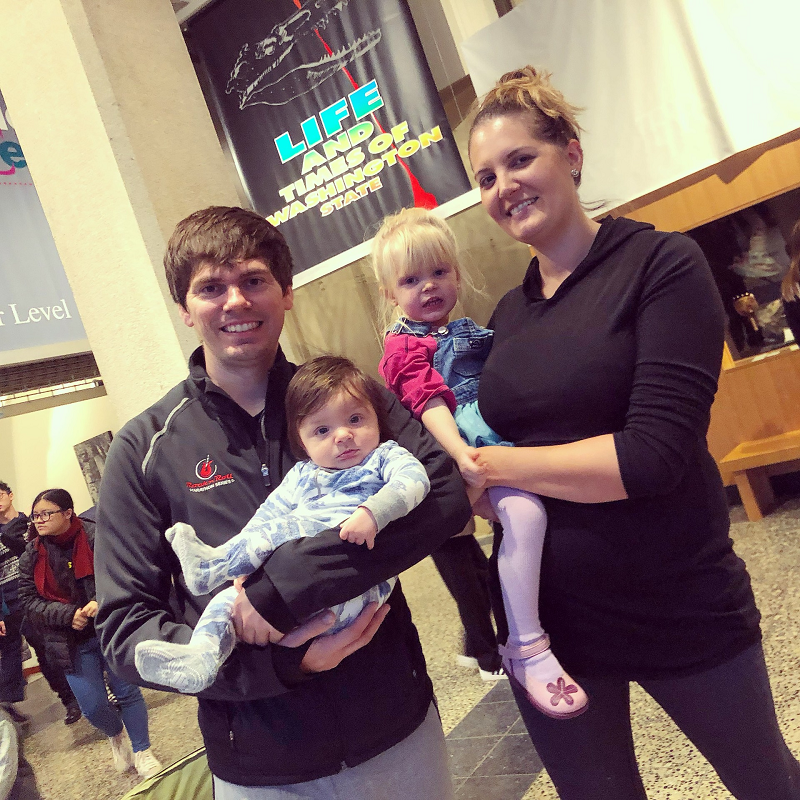
Erin and Jon with their kids at the old Burke Museum

What are some of your fondest moments about your time together while you were at the Evans School?

Erin: I was a concurrent student with the Jackson School and my studies took me to Kenya most summers. Jon came and visited me which was quite the commitment as broke grad students! The vast majority of our dates the first year of our relationship were simply doing homework together.

Jon: When Erin realized I was “The Love Memo” guy, she asked me for help with some videos she was producing from her time in Kenya. We got to know each other while editing together those videos, and I finally got the courage to ask her out to a movie after bringing her some chai at her student office.

Though you both have MPAs, you’ve also had very different career paths. Where did your interests take you after school? What has stuck with you from Evans?

Erin: Since Evans School, I have been in both nonprofit and public sectors. I started in advocacy work and quickly realized good communication was the key to anything being successful. So I pivoted to focus on communications. I use my memo writing skills all the time! I was part of the Seattle – King County Public Health communications team during COVID and have stories to last me multiple lifetimes. Maybe you saw the masking posters around town? I helped develop those – those were Evans skills at work! Some of my most practical skills stem from the frameworks that I learned at Evans. I appreciate how frameworks are a tool for critical thinking and analysis. In my current role at Seattle Children’s as a communications manager, I introduced communication specific frameworks that were integrated into our editorial style guide for more robust guidance around equitable language and content development.

Jon: I graduated in 2008, which was a very difficult time for public sector grads (the great recession was rough on government jobs!). I spent a couple years working for the Department of Global Health, building websites and helping out with content development. By a somewhat random twist of fate, I found a marketing job at Wizards of the Coast, which makes my favorite game ever – Magic: The Gathering. Since then, I’ve worked in various tech and gaming roles. While I ended up in the private sector, my time at Evans was invaluable. My ability to lead teams and clearly communicate my ideas stemmed from Evans (Active voice!). I also use statistics on a daily basis, which I credit to my Evans classes (regression analysis and statistical significance ftw!). No matter where you end up, your Evans education will be a major help!

What’s life like these days? Still writing memos with all your free time?!

Erin: We stayed in Seattle post-graduation but love to travel! We took our six- and eight-year-olds to the Paris Olympics last summer and made amazing memories. Jon still ran track when he was at the Evans School and it was a dream come true for him to be there in person!

Jon: Erin showed me the joys of travel, and now I’m hooked! In addition to what Erin mentioned, I’ve also had an amazing time taking the kids to UW sporting events. We also spend a ton of time outside in our yard landscaping and gardening.

Erin, John, and their kids holding an American flag at an Olympic soccor game

What advice would you give to Evans students today (romantically or otherwise!), particularly amidst a great deal of change, challenge, and uncertainty in our civic and public spaces?

Erin: Different roles are needed and important for influencing change, both inside and outside of systems. Reflect on where your strengths lay and embrace them. I’m grateful that I realized early on that my strengths are contributing to change from within systems. Evans students are needed more than ever today as we will need to rebuild and reinforce our institutions on the other side of whatever is happening now. I’m also a big advocate of setting boundaries, personally and professionally. Practicing boundaries is a muscle that needs to be built to sustain us through hard times.

Jon: There are a million things going on around, and you can’t predict how things will change in the next year (or even the next month!). Focus on what you can control. If you get caught up with the things out of your control, you’ll end up frustrated, bitter, and burned out. By narrowing in on what you control (your own actions, decisions, and how you treat others around you), you’ll have a much more positive impact on what matters most. And if you do that every day, that positive impact you have on those around you will spread and lead to bigger change than can you imagine.
Theory to Practice: Leading People in a Post-Pandemic World

Theory to Practice logo

Theory to Practice is an ongoing series of discussions hosted by the Evans School that brings together academics and researchers at UW with practitioners in the field to explore key policy, governance, and social sector topics.

On May 9, 2024, the Evans School of Public Policy & Governance hosted a compelling conversation on the challenges and opportunities of managing and leading a public workforce in our post-pandemic world.

Our panelists shared insights and experiences from their work at both local and federal levels, offering valuable perspectives on adapting to remote work, fostering employee resilience, and reimagining service delivery. From research-backed strategies to real-world practices, we delved into the complex issues facing public sector leaders today. Attendees engaged in an honest exploration of the hurdles ahead and the innovative strategies needed to navigate them effectively in today’s workforce.

Resources

Speakers

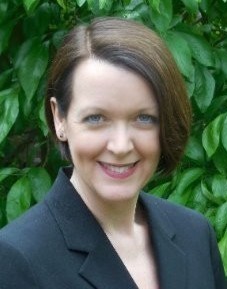
Lisa Pearson

Lisa Pearson serves as the PBS Regional Commissioner for the Northwest/Arctic Region of the U.S. General Services Administration, providing leadership to the region in delivering programs and services for a portfolio of 504 owned and leased buildings across Alaska, Idaho, Oregon, and Washington.

Pearson began her career with GSA in 2001 as an Employee & Labor Relations Specialist in the Great Lakes Region. She has since held several senior level positions including two stints as Acting PBS Regional Commissioner.

She completed a Bachelor’s in Sociology & Urban Studies at Northwestern University and holds a Master’s Degree in Public Policy from Harvard University’s John F. Kennedy School of Government.

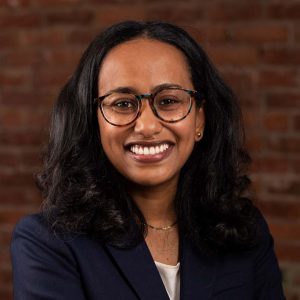
Sebawit (Sebu) Bishu

Sebawit (Seba) Bishu is an Assistant Professor of Public Management at the Evans School of Public Policy and Governance at the University of Washington, Seattle.

Her scholarly work explores race and gender relations in public organizations with a focus on leadership, street-level bureaucracy, identity, and organizational behavior. Bishu’s research asks the question “how do societal, organizational and managerial level factors shape public organizations’ and bureaucrats’ behaviors and decisions, and what are the implications for access to, and quality of, public services?”

Bishu’s work is published in academic journals such as Journal of Public Administration Research and Theory, Public Administration Review, the American Review of Public Administration, and the Review of Public Personnel Administration.  She is currently conducting qualitative research using data from 143 interviews with municipal managers across the United States.

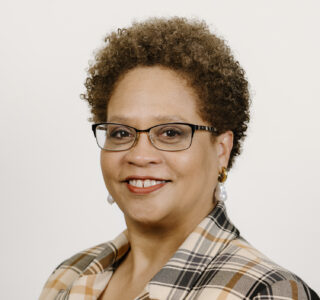
Stephanie Lucash

Stephanie Lucash is Deputy City Manager at the City of Kenmore. She has 30 years of municipal government experience including management and leadership positions at the Cities of Kenmore, Seattle, and Covington. In Kenmore, she oversees an array of critical areas such as economic development, public safety, housing and human services, and more. Her exemplary work in Kenmore has earned her two statewide award.

Lucash is President of the Board of Directors for the Washington City/County Management Association. She also serves on the Association of Washington Cities Board of Directors and as Vice Chair of the Washington Secretary of State’s Archives, Library and Legacy Foundation Board of Trustees.

Before joining Kenmore, Lucash was Director of Citywide HR Planning and Innovation at the City of Seattle where she played a key role in the City’s pandemic response and launched nine citywide human resources projects.

Lucash has a Master’s of Public Administration from the Evans School of Public Policy & Governance at the University of Washington and is a Lean Six Sigma Green Belt, certified Crucial Conversations trainer and Peacekeeper.

Alumni Spotlight: Yulan Kim, Ph.D. ’23

Yulan Kim finished her Ph.D. at the Evans School in December 2023, with dissertation work focused on advancing scholarly understanding of collaborative governance. The Evans School caught up with Yulan after winter break to learn more about her dissertation research.

Yulan Kim

Evans School: Congratulations on your dissertation defense. Your project pushes our conceptual and empirical understandings of collaborative governance. Explain why collaborative governance is such a critical topic in the study of public management today.

Yulan: Collaborative governance is an increasingly popular policy making and implementation strategy that can address problems that do not fit neatly within organizational or jurisdictional boundaries. If managed properly, it provides added benefits of fostering citizen trust and participation, promoting equitable service provision (which I explore in my dissertation) as well as greater legitimacy, procedural transparency, and responsiveness (which is established in the literature).

The study of collaborative governance is important because of its broad applicability as a versatile governance arrangement that can be used in conjunction with other policy tools. In this sense, it is highly relevant to how we address many of the public management problems we face today. However, there are still challenges to ensuring that collaborative governance is properly designed and implemented, which is why it requires the continued attention of public management scholars.

Evans School: Your dissertation is an innovative mixed methods study of South Korean Social Security Consultive Boards. How do these boards operate and why was a mixed methods approach advantageous in this instance? 

Yulan: My dissertation focuses on mandated collaborative governance, and South Korean Social Security Consultive Bodies (SSCBs) are a perfect example of this type of arrangement. SSCBs are established at all local jurisdictions in South Korea through a legislative mandate. They act as platforms that bring together public, nonprofit, and private actors to create and implement regional social security policies. Their functions range from high-level decision making, such as establishing short and long-term regional social security plans, to the direct delivery of services to citizens.

My research questions around SSCBs require both the identification of causal mechanisms as well as understanding what drives such patterns. So, using a large-N survey supplemented by interviews to collect both quantitative and qualitative data helped me paint both the big picture as well as gain a detailed understanding of what drives these changes. 

Evans School: Central to your dissertation is discussion of authentic collaborative governance and trust. Why is the concept of “trust” key to understanding the presence of authentic or meaningful collaborative governance? 

Yulan: My decision to use trust as an indicator of authentic collaboration is guided by theory. Fostering trust is crucial to the development of collaborative dynamics that are defining features of collaborative governance. Trust as both an input and output of collaborative governance has also been confirmed by numerous empirical research as well. 

I wanted to evaluate whether authentic collaboration could be generated even in mandated settings where collaboration is imposed upon actors. Top-down arrangements risk becoming ceremonial institutions as the participants may not share motivations to engage with each other. In the context of SSCBs, I track whether trust, an output of collaborative governance, changes over time to understand whether actors have engaged in authentic collaboration. I find that even in mandated SSCBs, participants show enhanced trust over time, suggesting that collaboration is taking place. 

Evans School: Your dissertation project also examines how collaborative governance can enhance equity in policy making settings. What are some takeaways from your dissertation that are relevant to those engaging in collaborative governance across a host of different settings? 

Yulan: Collaborative governance is often used for the co-creation of public services within communities. However, collaborative governance requires the investment of time and resources from participants. This means that the ability of local participants to commit resources can lead to variation in the quality and quantity of services co-created across communities. Research suggests affluent communities are better able to pool such resources. I investigate whether collaborative governance perpetuates or mitigates inequity in access to public services across communities. My findings highlight the relative importance of internal management over resources, suggesting that despite resource disparities across communities, collaborative governance can serve as a strategy to co-create public services in a way that mitigates inequities in access to public services.

Evans School: What’s up next? 

Yulan: I have joined Ocean Nexus as a postdoctoral fellow in January 2024. Ocean Nexus is a network of scholars working to promote equitable ocean governance. In this position, I am working alongside a team of Evans researchers who are on a mission to introduce public policy and management concepts and frameworks to ocean scholars who seek to produce more equitable, policy relevant research. In the short term, I want to focus on applying policy process and public management concepts in ocean research through collaborations. In the long term and more ambitiously, I want to explore how collaborative governance, which is mainly researched in domestic contexts, can inform transnational ocean governance. I studied IR and comparative politics before coming to Evans school, so I look forward to synthesizing such training with my expertise in public management to do so. 

Evans School: Congrats on this postdoctoral fellowship! It will be fun to see how your work evolves in the coming year! 

Yulan: Thanks!

Theory to Practice: Addressing Inequalities in the Philanthropic Sector

Theory to Practice logo

Theory to Practice is an ongoing series of discussions hosted by the Evans School that brings together academics and researchers at UW with practitioners in the field to explore key policy, governance, and social sector topics.

As a sector, philanthropy is beginning to acknowledge and grapple with an inherent dissonance: though philanthropy’s intended purpose is to create positive change, it can also be a driver of continued inequity and harm. The policies and structures that support charitable giving have perpetuated wealth inequalities, and the practices that many philanthropic institutions have historically employed may cause harm to the communities they are trying to support.

On December 7, 2023, Maria Kolby-Wolfe, President and CEO of Washington Women’s Foundation, and David Suárez, Ph.D., an associate professor at the Evans School spoke about systemic challenges in philanthropy as well as new models that strive to reduce harm and shift power to communities closest to the work.

Resources

Speakers

Maria Kolby-Wolfe

Maria Kolby-Wolfe is President and CEO of Washington Women’s Foundation (WaWF) and a part-time instructor at the University of Washington in Nonprofit Management. Prior to WaWF, Maria served in a variety of development and communication roles at Northwest Immigrant Rights Project, Seattle Symphony, Path with Art, ACT Theatre, the Museum of Pop Culture, and Swedish Medical Center Foundation. She is also an experienced board member, having served on the boards of TeamChild, Rainier Valley Food Bank, Allied Arts Foundation and the Global Leadership Forum. Maria was raised in Bellingham, Washington, graduated from the University of Puget Sound, and achieved doctoral candidacy in American History at Northwestern University. Her passions and beliefs align directly with her work: Food, Art, and Justice for All.

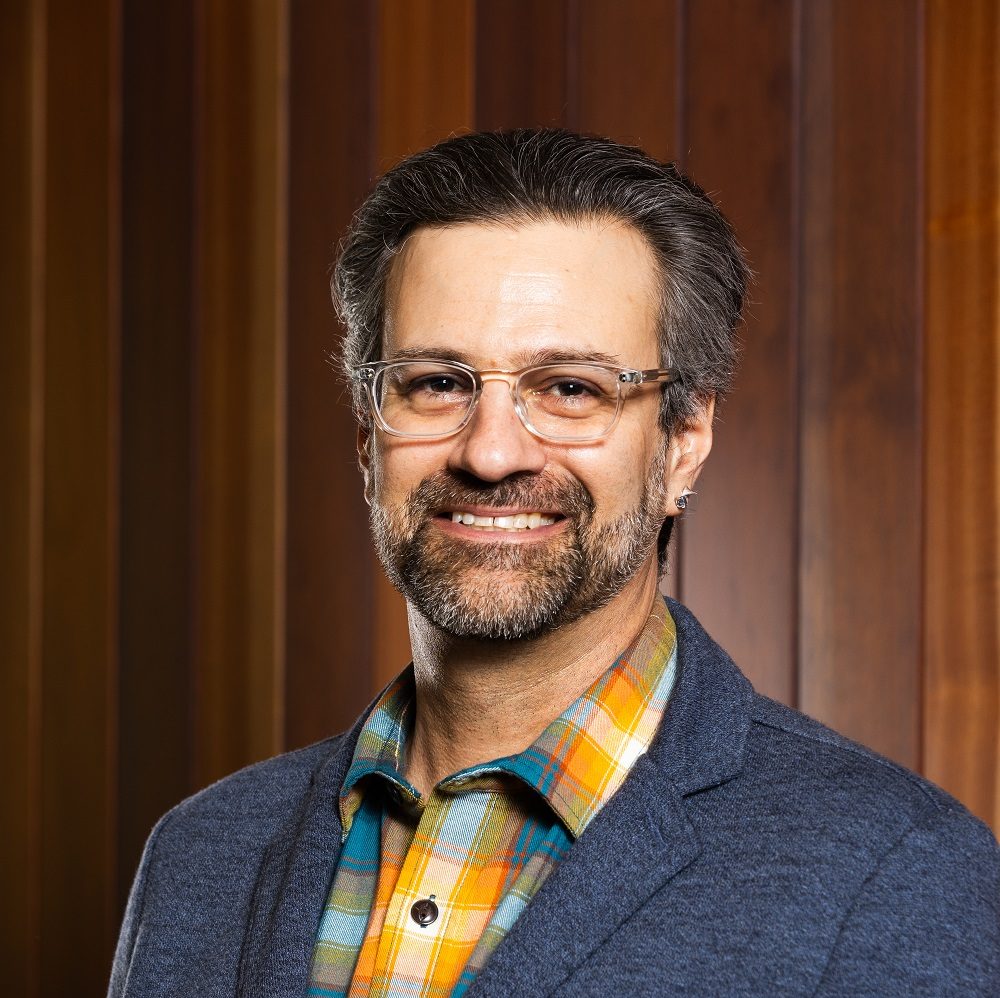
David Suarez

David Suárez, Ph.D., is an associate professor and the Colleen Willoughby Endowed Faculty Fellow in Philanthropy & Civil Society at the Evans School of Public Policy & Governance, University of Washington. His current research focuses on social sector organizations (nonprofits and foundations) and explore show management strategy shapes organizational performance, the relationship between service-provision and social change activity, and the consequences of professionalization. Ongoing projects include research on the emergence and development of participatory grantmaking in foundations, the Civic Life of Cities – a multi-team project exploring how nonprofits contribute to the communities they serve, public-nonprofit partnerships in national parks and schools, monitoring and evaluation (M&E) practices in development NGOs, and the role of foundations in generating social change.

David Suarez receives grant from Surdna Foundation

Grant File Folder Tab
Evans faculty member and nonprofit scholar David Suarez received a research grant from the Surdna Foundation for a project entitled, “What is Effective Participatory Grantmaking? A Comparative Assessment of Four Initiatives.” This project extends Suarez’s growing expertise and research program in participatory grantmaking, a power-sharing approach to grantmaking, which a number of private foundations have pursued in recent years. Since few foundations have evaluated their efforts to share power with stakeholders, the purported benefits of adopting such innovations remain unproven, and insufficient knowledge has accumulated in the field to elucidate critical questions such as whether some practices shape outcomes more than others. To begin to fill this gap,  Suarez will complete a field scan of participatory grantmaking practices and initiatives in institutional philanthropy. Then, building on that work, as well as the literature on participation in nonprofit organizations, he will utilize a comparative case study approach to investigate four participatory grantmaking initiatives.

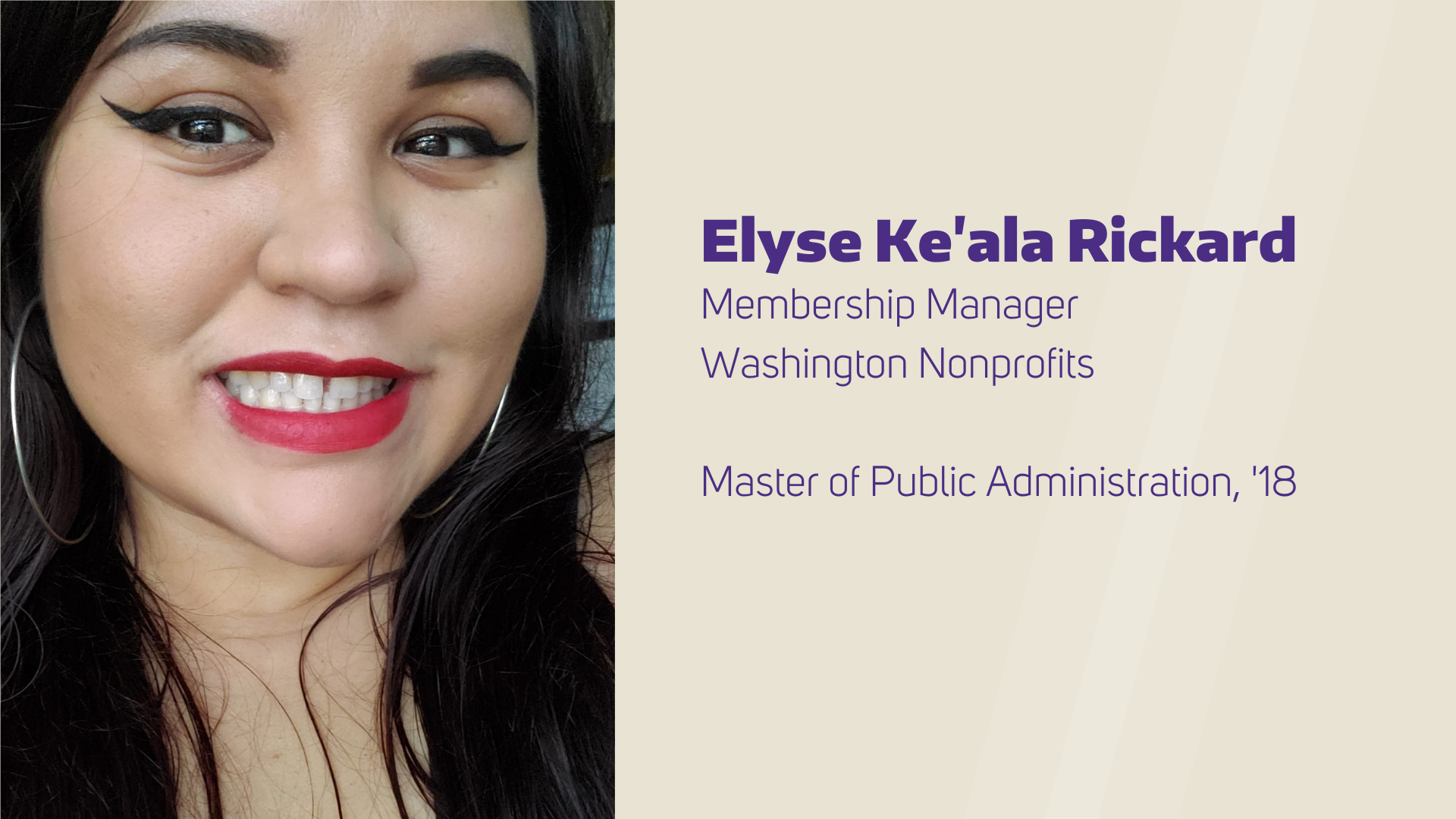
Ensuring Washington Nonprofits Thrive: Elyse Ke’ala Rickard, MPA ’18

Elyse Ke'ala Richard

Elyse Ke‘ala Rickard, MPA ’18, is driven by a passion for equity, justice, and service. As the Membership Manager at Washington Nonprofits, she works to ensure that nonprofit organizations in Washington have access to the resources they need to prosper.

What contributed to your decision to pursue a career in support of the public good? Was there a defining moment in particular?

I grew up in the Los Angeles Harbor area in a blue-collar union family, where I learned to identify how different institutions perpetuate racist, sexist, and classist policies and was encouraged to speak out against these injustices. As I moved through my higher education journey, I majored in sociology and knew that I wanted to enter a field that worked on addressing and dismantling inequities through structural change. During my senior year of undergrad, I had a mentor who was also a Pacific Islander woman and a first-generation student who encouraged and supported me in applying to graduate school. Because of the support of my family and other BIPOC mentors, I wanted to pursue a career that builds upon the work of those who came before me and continue to carry on their work of creating a more equitable society.

Can you share a bit about the work you are currently doing and what a typical day in your work looks like?

I was promoted to Membership Manager at Washington Nonprofits earlier this month and have been with the organization since August 2021. Right now, my work focuses on fostering relationships with our current members and connecting with other nonprofits across the state who may benefit from being a member of our organization. My daily work is composed of providing assistance to our members (that could range from membership renewals, answering questions about member benefits, etc.), promoting our programs and events, and working with colleagues on how to increase access to memberships for nonprofits across the state.

What’s one thing you want everyone to know about your work?

I believe that listening to my intuition has helped me to carve the professional path that I am currently on. If you are doing work that you do not feel connected to or does not align with your values or goals, do not be afraid to speak out or seek out new opportunities that will allow you to grow.

Looking back on your time as an Evans student, do you have any memorable experiences that really stand out to you?

To be honest, I’ve had a variety of experiences at Evans. I met people who are now lifelong friends, learned skills that I sought out, and conducted an impactful capstone with colleagues, which is currently being used in a lawsuit to address racial and gender inequities in the Seattle Parks and Recreation department.

I also faced barriers that graduate students from historically marginalized communities must navigate, including speaking out against curriculum and practices that perpetuate white supremacy. I remember a meeting that I and four other students held with a professor to discuss how they framed the Department of Justice’s report for the City of Baltimore’s police department—their framing felt insensitive to BIPOC students because they did not want to address the historical impact of race and policing. I remember having another meeting with a white professor who had a kapa moe (Native Hawaiian quilt) in their office who was teaching about Indigenous environmental policy who told me they would not, and did not, want to discuss Native Hawaiian environmental issues. However, despite these difficulties, I was able to connect and build relationships with other students, faculty, and staff who did advocate and support for marginalized people in our program and that is something that I will always remember from my time as a student at Evans.

How does your Evans education inform how you approach your work today? Are there two or three things that directly impact your work?

My time at Evans has heavily influenced my career path. I work in an organization that focuses on providing nonprofit education courses across the state, which I feel is a continuation of my own education as well. I have worked on projects where I utilized my analysis and evaluation skills, ranging from implementing new systems, improving administrative procedures, and conducting policy research. Finally, the most important skill that I have learned from Evans is project management because I am collaborating with other people and entities frequently, which includes keeping track of several tasks and deadlines, as I did in most classes during my time as a student.

In what ways are Diversity, Equity, and Inclusion part of the work you have done and continue doing?

As a mixed Native Hawaiian/Latina woman, holding these identities radicalized me from a young age to speak about racism and other societal inequities. During my undergraduate years, I took part in student organizing around a variety of issues and worked in positions that focused on providing support to other BIPOC students.

While at Evans, I became involved in Evans People of Color and worked with other Student Interest Groups (SIGS)–later known as the Coalition–to organize around addressing issues within the Evans school and public policy issues beyond the campus. I am proud of my colleagues, the alumni who laid down the work before us, and the current students who are continuing the work to create a more equitable environment for Evans ’students and beyond.

In the work that I currently do, there are a lot of nonprofits in Washington State that are doing amazing things in their communities, especially those whose work is guided and led by marginalized communities. However, there are several barriers that these organizations face, which can hinder their growth and ability to provide programs or services they are offering to their constituents. Some of these barriers can range from lack of financial resources to unclear guidance from local, state, and federal partners. I hope that in my role I can serve as a point of contact for people to access the resources they may need so that these organizations can continue to focus on serving and thriving in their communities.

What are one or two resources that inspire you personally or professionally?

I recently finished From a Native Daughter by the late Dr. Haunani Kay-Trask. As someone who is a mixed Native Hawaiian woman, I have felt, seen, and heard many of the things discussed in her book, especially in the latter half, where Dr. Haunani Kay-Trask discusses her experiences with the University of Hawai’i. I feel inspired that her work remains relevant in 2022 and will continue to do so beyond my lifetime. I am also very into listening to podcasts and a favorite of mine that I recommend to folks is Code Switch by NPR. Every week they focus on a different story, connect the story to larger themes of race, and connect listeners to resources they can follow up on if they want to learn more about that week’s topic.

Sharing Power?

Sharing Power?

The Landscape of Participatory Practices & Grantmaking Among Large U.S. Foundations

The COVID-19 pandemic and fights for racial justice highlighted questions about whether mission-driven organizations can effectively deliver on their social impact goals without engaging with the communities that they seek to impact. Philanthropic foundations, in particular, have come under scrutiny amidst recent and growing concerns about their undemocratic nature and shrouded grant-making processes.

Philanthropic foundations in the United States hold significant power in the policy landscape, as they can both define societal challenges and determine the manner in which those challenges are addressed. The work of foundations is tax subsidized, but they are held to few standards of accountability, leading to increasing calls for foundations to shift their power to affected communities, to democratize decision-making through greater stakeholder participation, and to be more accountable to those whose lives they affect.

As part of the University of Washington Philanthropy Project, Evans School researchers Kelly Husted, Emily Finchum-Mason, and David Suárez sought to understand how large philanthropic foundations – with substantial assets and power – engage the people they serve in their governance and grant-making policies and practices. They launched a survey of the 500 largest private and community foundations in the United States between May and December 2020 to answer this question. These are their key findings:

  1. Many foundations solicited and incorporated feedback from grantees, community-based organizations, beneficiaries, and the public directly into decisions regarding governance and grant-making, but true decision-making power was rarely given to these stakeholders.
  2. The vast majority of foundations are using stakeholder participation as a way to increase their innovativeness and effectiveness rather than to share power, despite the fact that rhetoric surrounding these practices is focused on breaking down power silos.
  3. For the largest foundations in this country, the primary impediment to stakeholder participation was a perceived lack of time and capacity to implement, despite the sheer volume of assets that these foundations wield.

By learning more about grantmaking practices that are currently in place, the motivations for using these approaches, and the key challenges to incorporating stakeholder participation, researchers hope to lower the barriers that some foundations may face in making stakeholder participation an integral part of their governance and grant-making.

Greater accountability from philanthropic foundations represents an important step to a more equitable future. When large, powerful foundations listen to those they aim to benefit, they can more effectively direct their giving in ways that align with community needs.

About the UW Philanthropy Project

The UW Philanthropy Project is a multiyear research program seeking to understand the many important roles that philanthropic foundations play in American society.

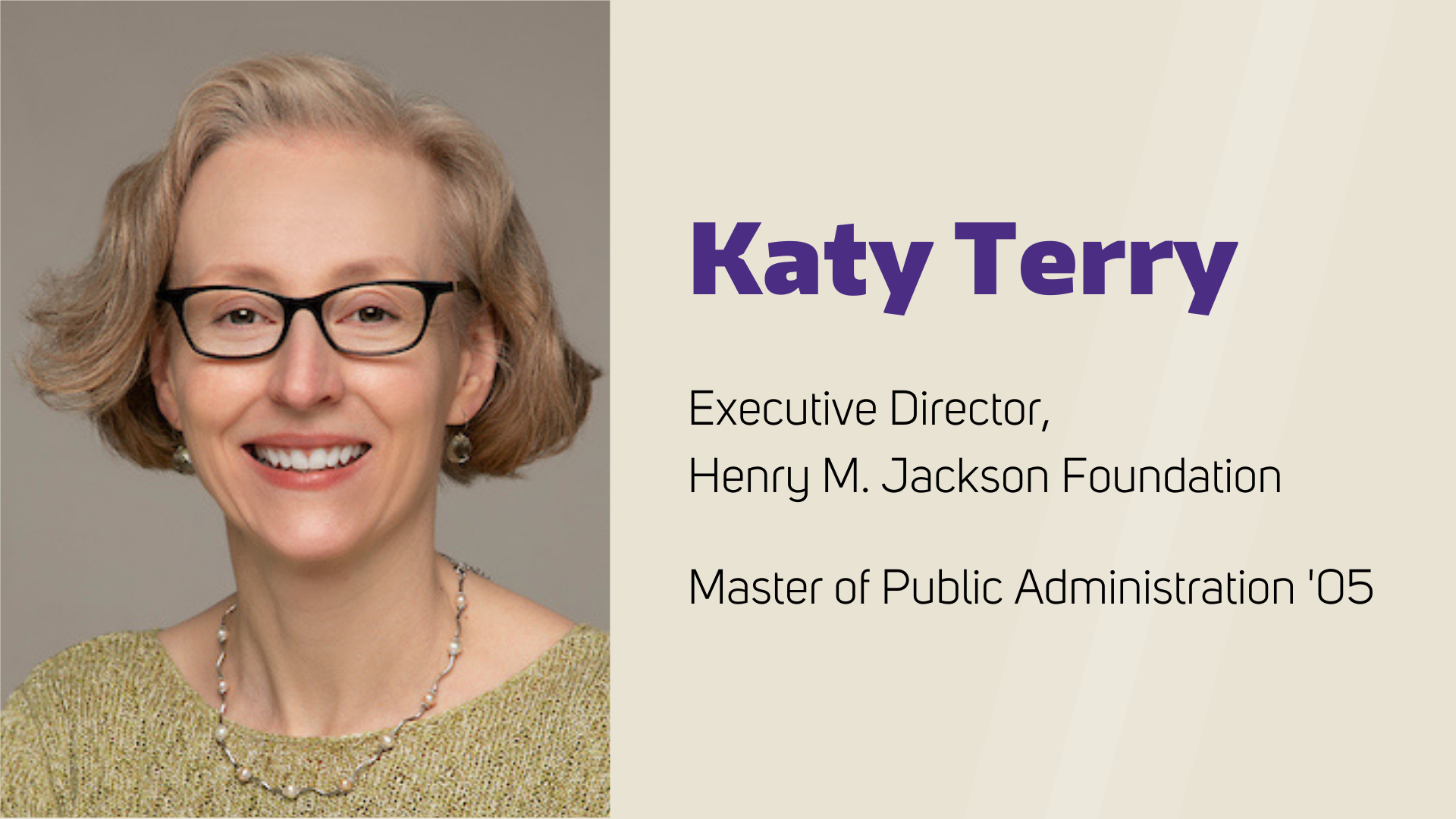
Supporting Values-Based Leadership: Katy Terry, MPA ’05

Katy Terry

As the Executive Director of the Henry M. Jackson Foundation, what are one or two things you’d want everyone to know about your work?

Some know the Jackson Foundation through our grantmaking at UW, including the Jackson Environmental Fellowships at the Evans School. Fewer are aware of our other climate, human rights and civic leadership work. For instance, we were an early contributor to efforts linking climate change with national security, as a method to bring bipartisan support to climate action. President Biden’s climate agenda, with a climate seat on the National Security Council, is an exciting embodiment of this idea that we helped incubate. In addition, six years ago the Foundation started the Jackson Leadership Fellows program, to support early- to mid-career civic leaders through a program based on values-based leadership. The Jackson Fellows Network now includes over 50 Jackson Leadership Fellows, who are individually and collectively making a big impact in the community.

What’s a new, fresh approach you have brought to your job?

It’s relatively easy to gauge your effort, and harder to assess the difference you’re making, especially with big issues like climate change. Through strategic planning, we’re starting to articulate the impact we hope to make and assess how we’re doing. This is new for most of us, and it’s exciting to approach our work in a learning mode, rather than focus on perfection.

What do you think the state of your field/organization will be in 2030?  What will be the same, and what will be different? 

So much has changed in the last year, predicting 2030 is tough! I believe many aspects of the nonprofit and public sectors will be forged or influenced by this past year. I am hopeful that root causes and solutions will become the main focus of these sectors, to address the existential threats that we are facing, including systemic racism and climate change.

What contributed to your decision to pursue a career in support of the public good? Was there a defining moment in particular?

My family was oriented towards service (my father was a priest and my mother a teacher), and I expected to follow suit. Tutoring high school students while I was in college crystallized this for me. The students were risking a great deal for their education (under a regular threat of gun violence at a rough time in New York), and I was so inspired by them. It shaped how I think about education, my unearned privileges, and how individuals can make a difference.

What is your favorite podcast these days? What is a great book you have read recently? Or the “GOAT” (greatest of all time) book you’ve read?

I first read James Baldwin’s Another Country when I was just out of college and living in Russia. I was thirsting for English, and this book was so beautiful and crushing; it’s the only book I reread immediately on finishing it the first time. I read it again last year, and continue to find it startlingly modern and insightful about sexuality, race, art and relationships.

How does your Evans education impact how you approach your work today?

I took an elective on technology and nonprofits, which influences how I think about an organization’s resources. Once, the instructor described a client that was touting their use of a broken stapler, to prove fiscal responsibility. However, that stapler wasted staples, paper, and – most importantly – time, and replacing it would have cost ten dollars. Often staff time is not valued like things you go out and buy. Yet it’s central to how we accomplish our mission. I now try to be mindful about how we spend our time, and value small, low-tech changes that can better use our time and treasure.

If you could give Evans School students one piece of advice, what would it be?

My career path hasn’t been linear, and I’ve been wary of long-term career plans (I did the concurrent Jackson School program in Russian Studies and associate them with Soviet Five-Year Plans). Frequently, I had seemingly random responsibilities or jobs that felt like they were going nowhere, only to discover that I had gained experience that eventually opened doors. I highly recommend taking advantage of even short-term opportunities to gain new experiences and skills. They can be interesting challenges, and I wouldn’t have gotten my last several jobs without them.

We’d love to learn more about you and your tremendous contributions to the public good, so we can share your story as we connect, learn, and reflect. Share your story!

Local Impacts of a Global Crisis

Mount Rainier on a sunny day

How Washington State Nonprofits Respond to COVID-19

This report confirms what those working for nonprofits already knew: Nonprofits are being asked to do more and more with less and less. Funding is down 30% and volunteerism is down 30-50%. Yet the need for, and dependence on, nonprofits continues to grow. This trend must be reversed in short order if nonprofits are going to be able to serve long-term.

The research team would like to thank the staff of all the nonprofit organizations that took the time to complete this survey. We realize that the leaders and staff of these organizations are under incredible pressure to serve their communities during this tumultuous time with increasingly tightening resources. Finally, we want to thank the nonprofit leaders and staff who piloted our survey and provided insights on how to maximize the relevance of the survey as it relates to nonprofit management, governance, and policy.

Erica Mills Barnhart
Associate Teaching Professor, Daniel J. Evans School of Public Policy & Governance

Emily A. Finchum-Mason
Ph.D. Candidate, Daniel J. Evans School of Public Policy & Governance

Mary Kay Gugerty
Nancy Bell Evans Professor of Nonprofit Management, Daniel J. Evans School of Public Policy & Governance

Kelly Husted
Ph.D. Candidate, Daniel J. Evans School of Public Policy & Governance

Executive Summary

The COVID-19 crisis has caused deep and widespread strain across sectors and individuals since taking hold in early 2020. Despite this adversity, nonprofits—especially those comprising the modern social safety net—have continued to serve their communities during this tumultuous time (Kulish, 2020). This report seeks to understand (a) the major challenges facing nonprofits in Washington state as a result of the COVID-19 pandemic, (b) the strategies that nonprofits are using to mitigate the effects of the crisis, (c) how nonprofits are experiencing changes in funder relationships as a result of the crisis, (d) the degree to which nonprofits in the state have accessed assistance under the CARES Act, and (e) the most pressing needs nonprofits have as they face the ongoing uncertainty and hardship presented by COVID-19.

Not surprisingly, this report finds that nonprofits face considerable financial difficulty, with many already experiencing steep declines in total revenue and projecting declines over the next year. The average decline in total revenue experienced across nonprofits is approximately 30%. These declines are largely driven by a drop in program service revenue and are particularly challenging as many nonprofits are shifting their modes of service provision and incurring costs as they seek to prevent the spread of the disease. Declines in total revenue are projected to continue over the next year by an average of
16%, including a 4.2% decrease for health and human service organizations and a 25.6% decrease for other nonprofits.

Health and human service nonprofits are also seeing significant changes in service demand—an average increase of 28%—without a requisite increase in funding. At the same time, nonprofits are seeing a significant reduction in the number of people willing and able to volunteer in order to provide needed services. Other nonprofits, such as arts organizations, are seeing a drop off in demand that is jeopardizing their ability to survive.

Despite these challenges, we find that nonprofits are being flexible and creative in their response to the COVID-19 crisis. Many organizations have effectively reimagined what service provision looks like during this challenging and uncertain time, with nearly 64% of nonprofits changing how they provide programs and services. Approximately 58% of nonprofits have altered their short-term organizational goals, and nearly half have changed their programmatic priorities.

These changes come at a cost, and the strain on nonprofits is visible: 62% have had to pause one or more programs, and 14% have had to end one or more programs. Subsequently, many nonprofits have spent down cash reserves and made significant cuts to their number of staff, staff hours, and program capacity in order to stay afloat. Partnerships between nonprofits and local governments have become a common means of maximizing limited resources and tending to communities hardest hit by the crisis.

While some funders are moving to ease the burden on nonprofits through actions such as increasing funding and loosening grant restrictions for grantees, nonprofits reported that changes in funder/grantee relationships have been limited. A majority of nonprofits (for whom the questions were applicable) report that none of their funders have changed how existing funding can be used, reduced reporting requirements, or made new funding unrestricted so that it can be flexibly used to meet needs.
Many nonprofits—56% of our sample—have successfully accessed CARES Act Paycheck Protection Program loans to support their employees. While nearly 30% reported some difficulties in applying, 95% that did apply were approved for their loans. Qualitative evidence suggests that there is still confusion though about whether and how these loans will be forgiven, and while assistance with payroll is helpful, nonprofits note that other costs associated with operating during the pandemic are still challenging.

Finally, we asked nonprofits what types of assistance would be most useful during this time in the hopes of stimulating action on the part of policy-makers, government agencies, institutional funders, and donors. Nonprofits overwhelmingly responded that they require assistance in terms of additional funding—from foundations, government, and individuals. Nonprofits also stated that reduced restrictions on current funding streams, information about the emergent state and local regulations pertaining to COVID-19, and information and data sharing would be useful during this time.

Many nonprofits are currently struggling to cope with the hardships associated with COVID-19, the economic downturn, and an uncertain future. Based on our findings along with other recent research on nonprofit responses to the COVID-19 crisis, we recommend that:

1. Philanthropic foundations and corporate funders provide more funding to the nonprofit sector to alleviate short-term solvency concerns.

2. Institutional funders increase flexibility as nonprofits try to navigate their new implementation environment and survive these turbulent times by reducing reporting requirements, loosening restrictions on current funding agreements, and making new grants unrestricted.

3. Legislators, government agencies, and institutional funders support communities most affected by COVID-19 and the subsequent economic downturn, including Black communities, Indigenous communities, and People of Color (BIPOC), by: (1) targeting funding towards BIPOC-led and BIPOC-serving organizations and (2) developing partnerships with BIPOC-led organizations, listening to the concerns and needs of those communities and translating those needs into action.