Skip to content

Building Bridges, Inspiring Hope: The Washington Collaborative Elected Leaders Institute (WA-CELI)

By Julia Carboni

At a time when polarization feels insurmountable, the inaugural cohort of the Washington Collaborative Elected Leaders Institute (WA-CELI) offers a powerful reminder of what’s possible when we come together. This innovative program, delivered by the William D. Ruckelshaus Center and the University of Washington’s Evans School of Public Policy & Governance on behalf of the Association of Washington Cities (AWC), equips city elected officials with collaborative leadership skills to address the complex challenges facing Washington State’s communities.

In the summer and fall of 2024, we ran an inaugural cohort that included 45 elected officials representing diverse cities across the state, ensuring a balance of demographic, geographic, and political perspectives. The program’s curriculum spanned five sessions, combining in-person and virtual learning to provide participants with the tools of collaborative governance. The sessions covered topics including managing conflict, sustaining relationships, engaging the public, and framing discussions around shared interests.

The results speak for themselves:

  • Enhanced Leadership Skills: Participants reported transformative growth in collaborative skills like active listening, managing conflict, and building consensus.
  • Stronger Connections: A renewed sense of belonging emerged as leaders built meaningful relationships with peers across divides.
  • Real Impact: 96% of participants said WA-CELI made them better leaders, and 94% would recommend the program to others.

WA-CELI is a bright spot in a polarized world. It reminds us that hope and progress are possible when leaders prioritize connection over division and public service over politics.

I invite you to explore the Evaluation Report for more details on this inspiring program. Together, let’s continue to invest in building stronger democracy and the civic health of our communities.

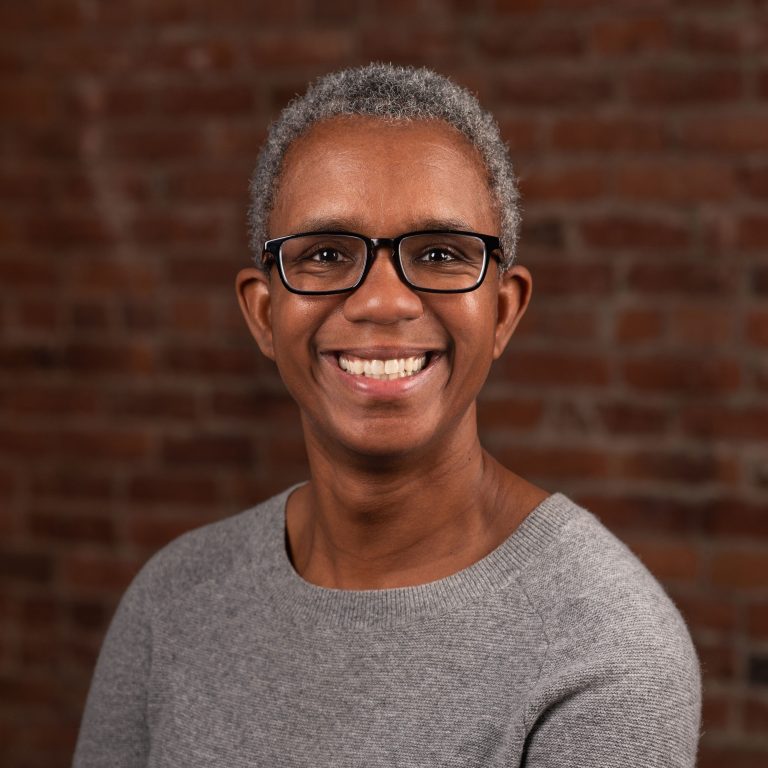
Julia Carboni headshot

Julia Carboni is the Director of the William D. Ruckelshaus Center and served as a facilitator for the WA-CELI program. She is also a professor in the Washington State University School of Politics, Philosophy, and Public Affairs and a distinguished scholar in the University of Washington Evans School of Public Policy and Governance. Julia is an award-winning leader with expertise in using collaboration to improve community wellbeing. She has extensive volunteer experience, regularly mentors BIPOC and female scholars, and serves on the boards of international, national, and local organizations.

Love in Parrington: A conversation with Erin Murphy MPA ’11 and Jon Hickey MPA ’08

Erin Murphy and Jon Husband
Jon and Erin at their first Evans dance together in 2009

The Evans School has helped graduates develop life-long skills, launch careers, and build networks. It’s also helped spark several romances. Erin Murphy MPA ’11 and Jon Hickey MPA ’08 share their memories of meeting at the Evans School and the different career paths they’ve taken.

Was there a Parrington Hall “meet cute” start to your relationship?

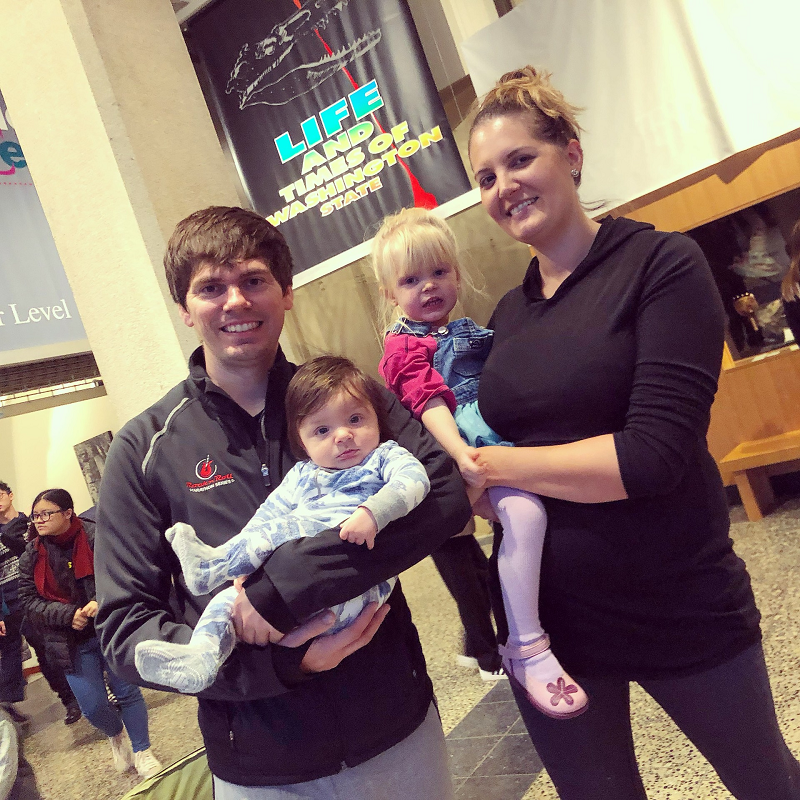
Erin: We met at a school dance! The Evans Spring Prom in 2009. Jon was a recent graduate but his prom photo booth was so popular that the student government had brought him back for more photography. I showed up way too early and spotted a guy eating at a table all by himself. I sat across from him and said, “Can I talk to you so I don’t feel awkward?” and the rest is history. There’s no photo of us at that first prom but it took place at the Burke Museum. We made sure to visit with our babies right before the Burke was renovated for old memory sake!

Erin and Jon with their kids at the old Burke Museum

What are some of your fondest moments about your time together while you were at the Evans School?

Erin: I was a concurrent student with the Jackson School and my studies took me to Kenya most summers. Jon came and visited me which was quite the commitment as broke grad students! The vast majority of our dates the first year of our relationship were simply doing homework together.

Jon: When Erin realized I was “The Love Memo” guy, she asked me for help with some videos she was producing from her time in Kenya. We got to know each other while editing together those videos, and I finally got the courage to ask her out to a movie after bringing her some chai at her student office.

Though you both have MPAs, you’ve also had very different career paths. Where did your interests take you after school? What has stuck with you from Evans?

Erin: Since Evans School, I have been in both nonprofit and public sectors. I started in advocacy work and quickly realized good communication was the key to anything being successful. So I pivoted to focus on communications. I use my memo writing skills all the time! I was part of the Seattle – King County Public Health communications team during COVID and have stories to last me multiple lifetimes. Maybe you saw the masking posters around town? I helped develop those – those were Evans skills at work! Some of my most practical skills stem from the frameworks that I learned at Evans. I appreciate how frameworks are a tool for critical thinking and analysis. In my current role at Seattle Children’s as a communications manager, I introduced communication specific frameworks that were integrated into our editorial style guide for more robust guidance around equitable language and content development.

Jon: I graduated in 2008, which was a very difficult time for public sector grads (the great recession was rough on government jobs!). I spent a couple years working for the Department of Global Health, building websites and helping out with content development. By a somewhat random twist of fate, I found a marketing job at Wizards of the Coast, which makes my favorite game ever – Magic: The Gathering. Since then, I’ve worked in various tech and gaming roles. While I ended up in the private sector, my time at Evans was invaluable. My ability to lead teams and clearly communicate my ideas stemmed from Evans (Active voice!). I also use statistics on a daily basis, which I credit to my Evans classes (regression analysis and statistical significance ftw!). No matter where you end up, your Evans education will be a major help!

What’s life like these days? Still writing memos with all your free time?!

Erin: We stayed in Seattle post-graduation but love to travel! We took our six- and eight-year-olds to the Paris Olympics last summer and made amazing memories. Jon still ran track when he was at the Evans School and it was a dream come true for him to be there in person!

Jon: Erin showed me the joys of travel, and now I’m hooked! In addition to what Erin mentioned, I’ve also had an amazing time taking the kids to UW sporting events. We also spend a ton of time outside in our yard landscaping and gardening.

What advice would you give to Evans students today (romantically or otherwise!), particularly amidst a great deal of change, challenge, and uncertainty in our civic and public spaces?

Erin: Different roles are needed and important for influencing change, both inside and outside of systems. Reflect on where your strengths lay and embrace them. I’m grateful that I realized early on that my strengths are contributing to change from within systems. Evans students are needed more than ever today as we will need to rebuild and reinforce our institutions on the other side of whatever is happening now. I’m also a big advocate of setting boundaries, personally and professionally. Practicing boundaries is a muscle that needs to be built to sustain us through hard times.

Jon: There are a million things going on around, and you can’t predict how things will change in the next year (or even the next month!). Focus on what you can control. If you get caught up with the things out of your control, you’ll end up frustrated, bitter, and burned out. By narrowing in on what you control (your own actions, decisions, and how you treat others around you), you’ll have a much more positive impact on what matters most. And if you do that every day, that positive impact you have on those around you will spread and lead to bigger change than can you imagine.

Remembering Professor Pat Dobel

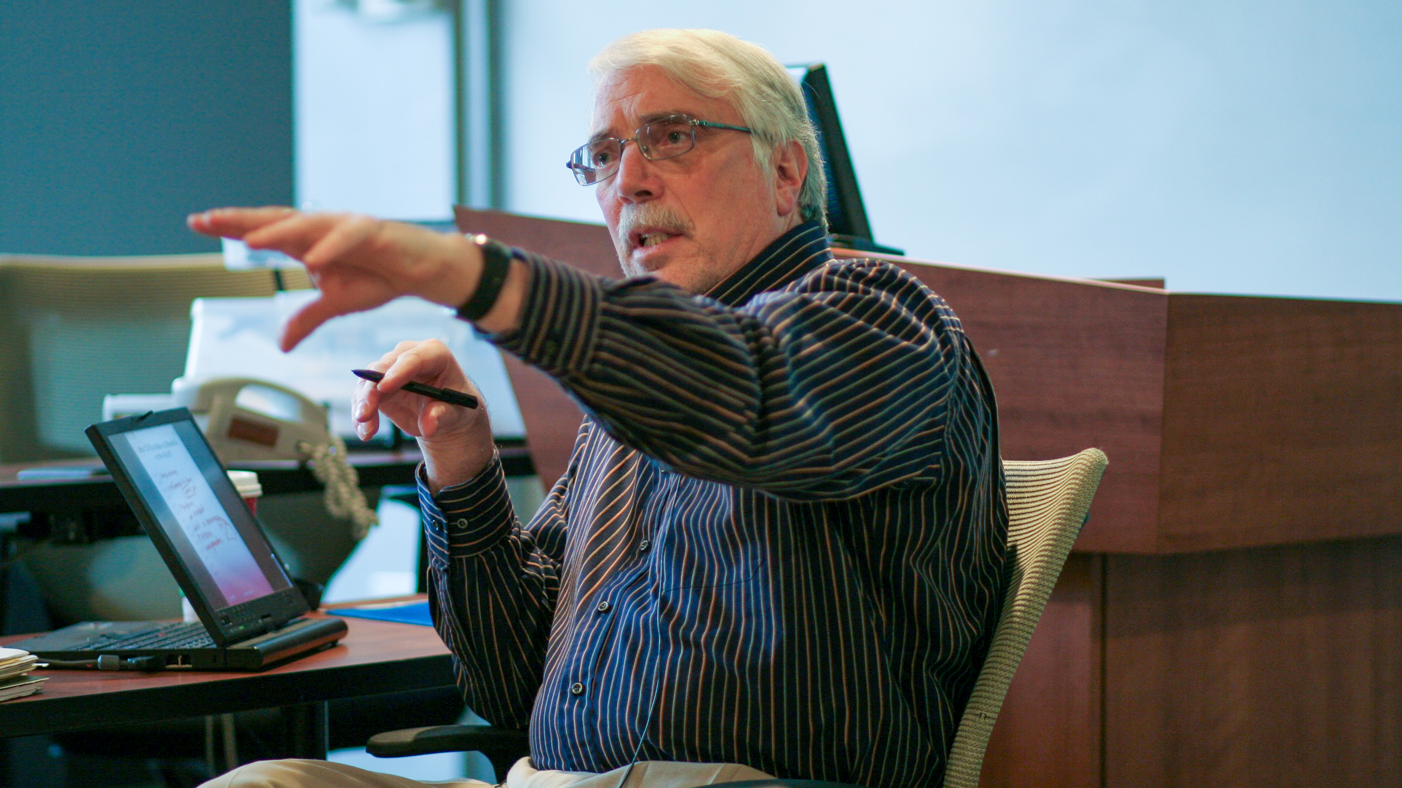
J. Patrick Dobel

September 15, 1948 — January 29, 2025

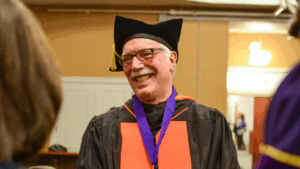
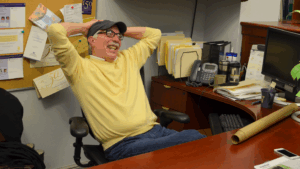
The Evans School community mourns the loss of beloved emeritus faculty member, J. Patrick (Pat) Dobel. Pat joined the Evans School faculty in 1985, where he taught courses in the MPA and EMPA programs focused on strategy, leadership, public ethics, and public management. He served on many university and national committees around the areas of public management, organizational design, and integrity issues. He also served as the University of Washington’s Faculty Athletic Representative at the PAC 10 and NCAA, for eight years, overseeing the academic integrity of the athletic program and governance. Pat was the author of several academic award-winning articles as well as many others on public leadership, ethics, and integrity. Pat passed away on January 29, 2025 in Seattle from pancreatic cancer. You can read more about his career on his Evans School faculty page and in the official obituary.

Community Remembrances

It is difficult to contemplate Pat’s passing. He was my close friend and Evans School faculty colleague for 40 years. He and Lea came to UW in 1984, I believe, just a year before I joined the faculty. We were about the same age and so our kids were also of similar ages and we exchanged parenting stories and suggestions, with appropriate good humor. Faculty-wise, I think I had an easier transition for I came from a professional school background in public policy and was used to academic quarters while he was a political scientist (a political theorist no less) and accustomed to semester-long courses, mostly teaching undergraduates. He seemed to adjust to Evans students’ and course needs remarkably quickly and I think this helped him later to mentor other new faculty needing to make similar transitions. Indeed, one of Pat’s great skills was as a mentor to others whether students, other faculty or would-be academic administrators. He also mentored athletic coaches in his long-time role as UW’s Faculty Athletic Representative, which he took very seriously. At the Evans School, Pat’s scholarly interests turned early on to public organizational leadership and particularly the role of ethics in this realm. Pat produced a wealth of influential scholarship on ethical public leadership and related topics and was highly respected and sought after nationally as a result of his unusually deep, thoughtful work. We were fortunate to keep him here for the rest of his academic career. Pat served for several years as Associate Dean of the School (when there was only one such position) and he was a wonderful exemplar in this challenging role. I looked up to him and sought his advice often when I later served in the same position. In addition to his University work, Pat was well respected in the local professional community and served (and even led) various local boards and commissions including the King County Ethics Board. Yet, most of all Pat was a gifted and inspiring teacher. He loved teaching and brought inspiration and innovation to his classes as well as deep knowledge and broad perspective. I often heard from students that his courses were the ones that they felt influenced them the most and would be most useful in their subsequent careers and lives. He was a key figure in the conceptualization and implementation of our core MPA courses in public management and similarly played a major role in the design of the initial Executive MPA curriculum. He directed the Executive MPA program for several years in its early days. In short, Pat did about all there was to do in a faculty career at the Evans School and he did it all in an exemplary way that all could look up to and draw inspiration from. He will be sorely missed by his many friends, colleagues and students at UW and around the country but his intellectual and personal legacy will live on.

-William Zumeta, Professor Emeritus

Pat was a brilliant mentor and a wonderful friend. He provided generous feedback and support for my research, and I borrowed countless teaching ideas, learning materials, classroom exercises, and even turns of phrase from him over the years. Perhaps the most fun we had together was creating “curriculum on demand,” as he called it, to build or revamp courses – and even much of the Evans School’s EMPA program at one point. He embodied ethical strategy – working toward institutional and programmatic goals with integrity and principle, “taking it seriously while holding it lightly” (in his words). I miss him already.

-Stephen Page, Associate Professor

I was deeply saddened to hear of Pat’s passing, indeed the very same day that three of us from the Evans School evening leadership degree class of ’02 had met for lunch on the Ave and Pat’s name and influence surfaced, knowing he was ill.

One of my recollections over lunch was that I kept a running list during class of special turn of phrases Pat used in his lucid and incisive lectures. His verbal dexterity was matched by his commitment to the values that formed these lessons: honesty, transparency, and keeping the courage of your convictions.

Years later when we were working together, Pat and I had an opportunity to travel with a team from the UW to Ethiopia, where seeking out delicious coffee became sport (Seattle may brew good beans, but traveling to the source exposed me to the most delicious coffee imaginable). In Pat I found a colleague who laughed as loud as I did, mouths agape and heads tipped back, as if we could swallow the world whole.

– Anita Verna Crofts, MPA ’02

When I think about Pat I think of his:

  • Extraordinary, inspirational teaching
  • Eloquence
  • Valuable service to the Evans School and the UW that made a difference
  • Enthusiasm about sports and how he melded it with his academic life both as a scholar and as Faculty Athletic Representative
  • Invaluable contributions to the Population Leadership Program
  • True friendship and support when dealing with health and life challenges
  • Exploring Hanoi, Mexico City and Ethiopia together

-Robert Plotnick, Professor Emeritus

My heart goes out to Pat’s family and friends. He was a light and inspiration for so many students and faculty finding their path at Evans and UW. His intellect and generosity of spirit continues to echo throughout our community. I reflect often on our conversations about leadership and ethics over the years, which have profoundly shaped my own path. I am forever grateful. Peace.

-Scott Allard, Daniel J. Evans Endowed Professor of Social Policy

What I remember most about Professor Dobel is his kindness and thoughtfulness towards as a very young student. I started Evans right out of undergraduate and talked to him about navigating graduate school. He was always willing to answer my rather naïve questions with kindness. I am so sorry to hear about his passing and am grateful to have had his support during that time.

-Cheree Peterson, MPA ’94

Pat was one of the first faculty members I got to meet at the Evans School. His smile, engagement and curiosity, and down-to-earth approach was simply so genuine and endearing. In conversation he easily traveled from big philosophical ideas to family stories that were touching and personal. It made him so approachable. On that latter note, Pat told an anecdote about collecting a jar of beach glass with his daughter and how it was a collection of little moments of time that he treasured. Afterwards, I started my own collection from family beach walks. It was such a poignant way to capture memories and remember what’s important in life. You will be missed, Pat, but your gifts are carried forward.

-Sara Curran, Director Center for Studies in Demography & Ecology

While not a faculty member, I was part of the Evans School Evening Degree Program from 1999-2002. Pat Dobel’s teachings about ethics and moral courage resonated with me, but especially served to guide me during a combat deployment to Iraq in 2009-2010. My battalion commander exemplified someone whose moral compass permanently pointed south. His actions and frequent falsehoods caused our unit morale to hit rock bottom, and even led to his executive officer to end his own life. As a middle-aged reservist, when I had the opportunity to speak out privately to this commander about the effect his actions were having on my fellow soldiers, I drew upon Pat Dobel’s lessons to steel my resolve and speak truth to power. While the commander brought me in front of his senior staff to repeat my concerns, he took the opportunity to belittle my observations, and also reprimanded my chain of command for letting me confront him. But after this public “flogging”, a number of battalion staff officers privately thanked me for taking a stand which they agreed with, but didn’t want to say out loud for fear of damaging their careers. This was just one of the many times when my Evans School education helped keep me on the right path, but Pat Dobel’s wisdom will stay with me for the rest of my life.

-Dave Hall, MPA ’02

As a new faculty member, Pat was so friendly and welcoming. We had neighboring offices when I first arrived at the Evans School, and his booming, enthusiastic voice always made me smile. He truly cared about the wellbeing of those around him and was never too busy to make a connection. He will be missed.

-Rachel Fyall, Associate Professor

I was so deeply saddened to hear the news of Pat Dobel’s passing.

We partnered together for his Integrity Leading class in the EXMPA nearly a decade ago and I remember fondly our meetings for coffee to plan and co-conspire. I was so inspired by his infectious curiosity, his love of leadership and learning (and science fiction!), and the deep commitment he made to the flourishing of his students. And I recall him being so tickled when Routledge accepted his book “Value Driven Leading: A Management Approach.” He shared it was a nice gift and nice way to move into retirement. I am sending care to his family and community. And to all the students he met and impacted along the way.

-Michelle Gislason, Distinguished Professor

Pat had such a wide and deep impact on so many people at the Evans School and around UW – our MPA and EMPA students, athletes, coaches, university administrators. I will always remember and cherish the passion with which Pat approached all this projects, rather it be writing, teaching, or just providing support for colleagues. Pat was the Associate Dean when I began my career at the Evans School – he played a huge role in helping me to see that I could do many things that I didn’t feel capable of doing. And he was always my biggest cheerleader. Over the years he provided me, and so many others, with impassioned advice, counsel and support. He cared so much about the people around him and the work they were engaged with. And he cared so much for and was so proud of his family. His love and pride in them was such an important part of his life. As I begin to think about the end of my own career, I find myself thinking consistently of his work on legacy and what it means for all of us. I’ll miss him deeply but feel he is woven into the fabric of our institution in so many ways. He’ll always be with us.

-Mary Kay Gugerty, Nancy Bell Evans Professor of Nonprofit Management & Philanthropy

Pat was a light among us, someone with a gift for seeing and understanding the bigger moral picture of the work of public service with clarity and practicality, who was willing to spend his life writing and teaching about how to make ethical public service a reality. We are forever fortunate that so many of his years were here with us. He inspired a generation of public servants here and around the world. He lives on in their work and in the many indelible marks he left on the culture and commitments of the Evans School.

-Steve Kosack, Associate Professor 

It’s hard to put into words the presence that Pat had at Evans, and the impact he had on me personally. From the moment I arrived, he was an incredible mentor. I knew he was looking out for me, and he helped me to find a sense of belonging in my earliest days searching for footing as a young (and often confused) assistant professor. Over the years, he remained a trusted colleague and friend – including many happy coffee and lunch meetings after his retirement. I can still hear the ring of his incredible laugh. And I very fondly remember his delight and encouragement as I navigated huge life milestones: My White House fellowship in Washington, DC, earning tenure, and the birth of my triplets. Last summer, I was awarded an endowed professorship in acknowledgement of my public service. It is an even more significant honor to be reminded that Pat held the same endowment. His legacy lives on at Evans – I was so fortunate to benefit from his wisdom and kindness and am privileged to do my small part to make sure his values live on at the Evans School and more broadly.

-Crystal Hall, John and Marguerite Walker Corbally Professor in Public Service

I was very fortunate to know Pat Dobel for almost 30 years. I initially met Pat in 1996 when I started a faculty position at the Evans School of Public Policy and Governance. Pat exemplified the highest standards and ideals of an engaged professor: he was a superb teacher; a ground-breaking academic for his work on public integrity and ethics; and a terrific mentor for students and faculty colleagues at the Evans School and elsewhere. He was also an inspirational institutional builder who greatly contributed to the development of the Evans school into one of the top-ranked schools of public affairs. He loved sports and served with distinction as the Faculty Athletic Representative for the University of Washington for many years. He was also a loyal and generous friend and very devoted to his wonderful family. I will long remember his thoughtful and supportive guidance and friendship in the years ahead.

-Professor Steven Rathgeb Smith, Evans School Faculty (1996-2011)
Event Recap | 2025 State of School Address

On January 24, 2025, the Evans School hosted the annual State of the School Address. The first part of the afternoon centered on building internal community, gathering together for a meal, and reconnecting to our shared commitment to equity and inclusion. The second half of the afternoon was spent learning from and celebrating the collective of community, the work accomplished in 2024, and the course ahead in 2025. Dean Jodi Sandfort shared her remarks about the current context and the ways that the Evans School will be carrying forward our work around evidence-based policy making, dialogue and debate, and supporting the next generation of leaders.

Check a recording of the State of the School Address and our 2024 Highlights video below.

Watch 2025 State of the School

Watch 2024 Highlights Video

Student Consulting Lab Project on Behavioral Health Quoted in Seattle Times

The Evans School Student Consulting Lab (SCL) pairs MPA students and faculty advisors with public, private, and nonprofit partners to co-create solutions to policy and organization problems. A recent “Seattle Times” article cited research done by Brad Blackburn, Hope Kalegi, and Mahdya Aldahnim – all MPA ’23 – as part of their project “Landscape of Behavioral Health Crisis Interventions for U.S. Campus Populations.”

“Programs that send mental health professionals to respond to crises as a supplement to or replacement for police officers have grown in recent years. Seattle is planning to expand its pilot program that sends crisis responders to some 911 calls. King County recently expanded its program that sends mobile crisis teams, dispatched by 988 calls, to mental health emergencies around the county.

Applying the idea to college campuses is newer. A 2023 report from students at UW’s Evans School of Public Policy and Governance identified similar crisis response programs at eight universities around the country; the oldest program, at Johns Hopkins University, launched in August 2021.”

Read the full article

Evans School Mourns Former President Carter

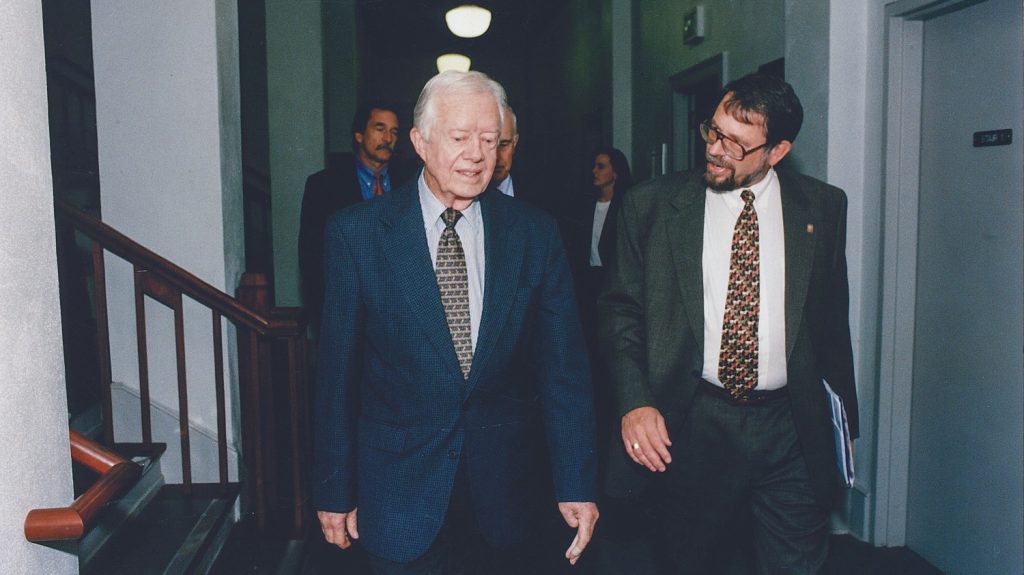
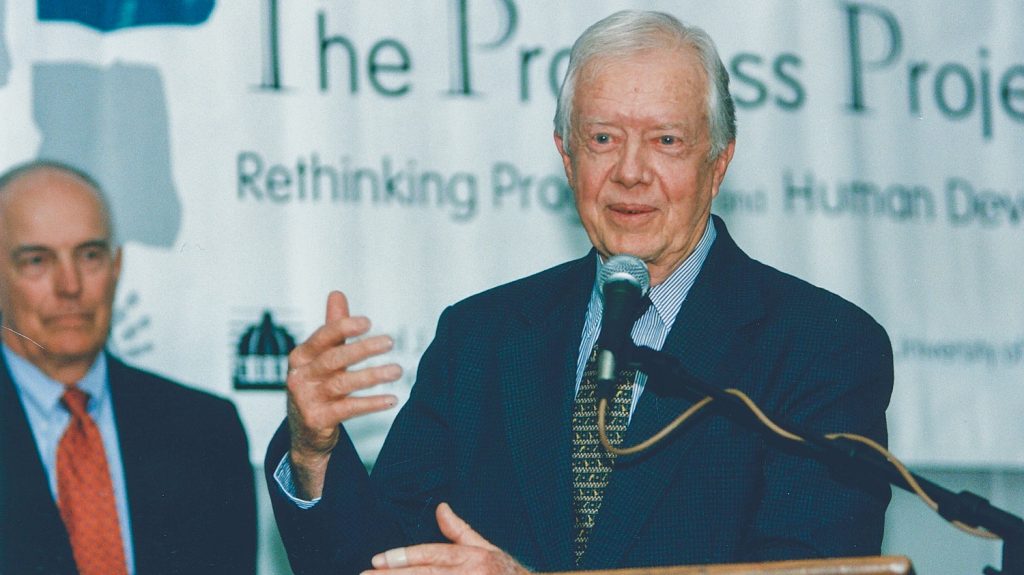
Today the Evans School joins in the nation in mourning the passing of former President Jimmy Carter. During his more than eight decades of public service, Carter served in the Navy, as a school board member, a state senator, governor, president, and as an advocate for democracy, fair elections, and expanded human rights.

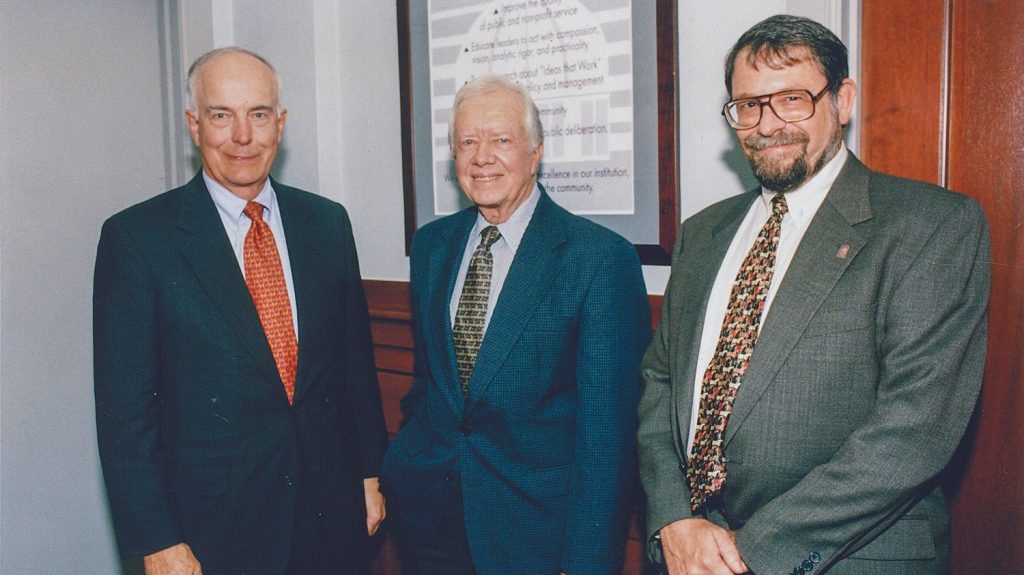
25 years ago this month, Carter visited the University of Washington as part of the Evans School’s Progress Project. The public speaker series focused on themes of leadership and public service in the new millennium and was part of a year long effort to celebrate the legacy of Daniel J. Evans – who passed away shortly before Carter – and the naming of the Evans School in his honor. In his speech, Carter emphasized the need for people to take care of each other and address the growing disparity between rich and poor.

“President Carter brought his ethical compass to the world and was a role model of how intentional choice about how to respond to difficult times matters. In the wake of the Watergate scandal, Carter stewarded the Civil Service Reform Act of 1978 which helped to bring in new professional skills to policy implementation in federal agencies, an approach likely to be challenged by the Trump Administration’s Schedule F Executive Order in the first days of the new administration,” shared Dean Jodi Sandfort.

Event Recap | Theory to Practice: “Antiracist by Design” Book Launch with Associate Professor Crystal C. Hall

Theory to Practice is an ongoing series of discussions hosted by the Evans School that brings together academics and researchers at UW with practitioners in the field to explore key policy, governance, and social sector topics.

On December 11, 2024, the Evans School of Public Policy & Governance hosted our Theory to Practice: Antiracist by Design Book Launch with Associate Professor Crystal C. Hall. This thought-provoking event celebrated the launch of her powerful new book on advancing antiracist practices in policy and design.

The evening featured an engaging interview led by Charmila Ajmera, MPA ’20, who explored the book’s themes and its inspiring call to action for creating equitable systems through intentional design. The discussion illuminated the real-world implications of antiracist work and the challenges and opportunities of embedding these principles into practice.

Attendees were invited to join a dynamic Q&A session, where thoughtful questions deepened the conversation around antiracism and systemic change. This meaningful exchange set the stage for a community-driven dialogue, fostering connections and shared commitments to advancing equity in policy and governance.

Resources

Speakers

Crystal Hall joined the Evans School faculty in 2008. Her courses include Quantitative Analysis, Psychology for Policy Analysis, Intergroup Relations for Public Policy, and Race and Equity for Policy and Governance.

Her research explores decision making in the context of poverty, using the methods of social and cognitive psychology, along with behavioral economics. This work has had a particular focus on financial decision making and economic opportunity for low-income families. In addition to broadening the theoretical understanding of the behavior of this population, her work has also explored new ways of incorporating these insights into policy design and implementation. She has a record of serving government agencies at the local, state, and federal level – including having served as a Fellow on the White House Social and Behavioral Sciences Team and the Federal Office of Evaluation Sciences at the General Services Administration.

Professor Hall holds an appointment as an Adjunct Associate Professor of Psychology in the University of Washington Department of Psychology. She is also an Academic Affiliate of ideas42, an Affiliated Scientist of the Behavioral Change for Good Initiative, and a Faculty Affiliate at both the University of Washington’s West Coast Poverty Center (WCPC) and Center for Studies in Demography and Ecology (CSDE).

In addition to her scholarly work, Professor Hall has provided guidance and training to community organizations, nonprofits, and government agencies seeking to implement tools from psychology and behavioral economics into the design and delivery of their programs and services. She holds a PhD and MA in Psychology from Princeton University. In addition, she holds a BS from Carnegie Mellon University in both Decision Science and Policy and Management.

Charmila Ajmera is Environmental Justice Policy senior manager in the Environmental Public Health division of the Washington State Department of Health. Prior to joining the agency, she worked with the environmental justice coalition, Front & Centered to help draft and pass the 2021 Healthy Environment for All (HEAL) act, and served as an Inclusion Manager at Tableau and Salesforce. She has been a staunch and effective advocate for equity and anti-racist policies and practices both in her professional and academic careers for the last 15 years. Outside of work, she loves enjoying the beauty of the PNW with her 2 year old daughter, partner, and pup.

Inspiring Civic Participation in the Next Generation

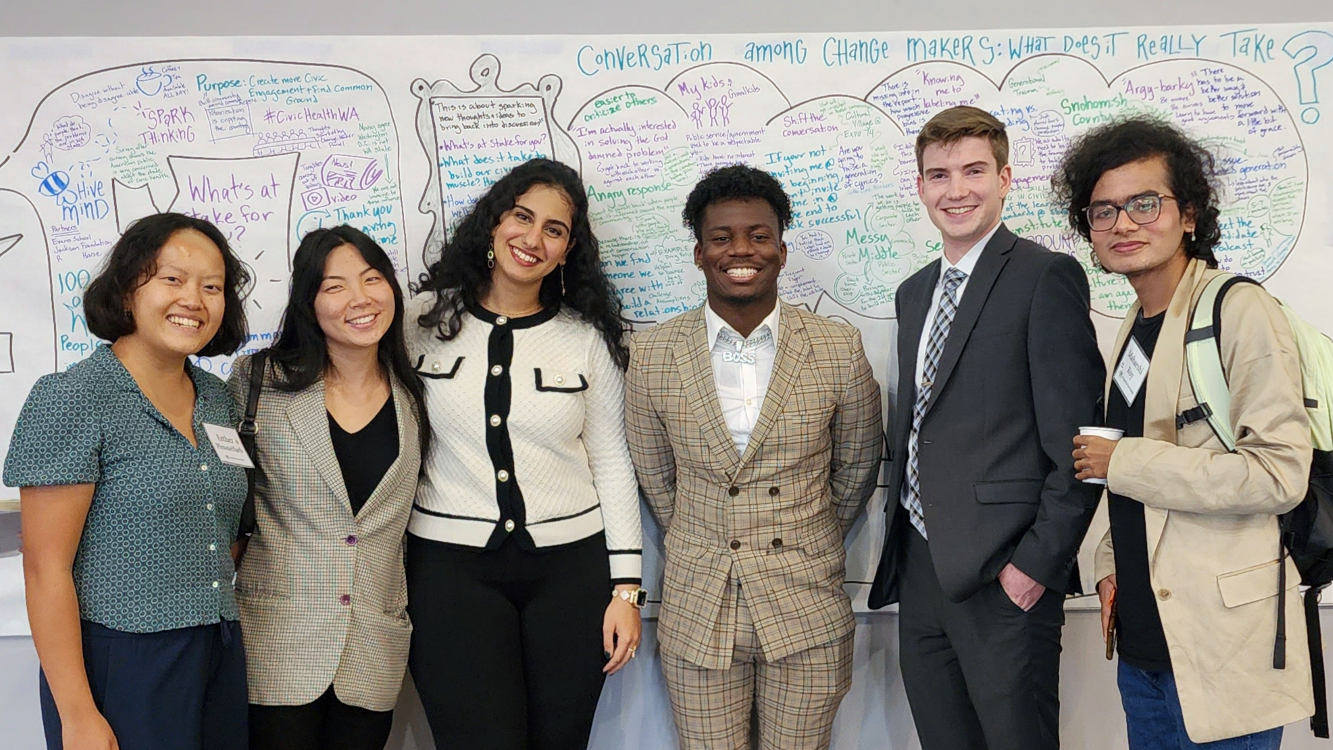
The University of Washington (UW) has a vision to model democracy by cultivating collaborative decision-making, respectful dialogue, civic engagement and belonging. The NextGen Civic Leader Corps puts that vision into action for our undergraduate students who are passionate about public service, community engagement, and civic leadership.  

The Evans School of Public Policy & Governance and Community Engagement and Leadership Education (CELE) center launched the initiative in 2022 to inspire and prepare undergraduate students of all majors and disciplines to become leaders in their communities and advance the public good throughout their careers 

The initiative has now expanded to Tacoma and Bothell as part of a Tri-Campus Network and undergraduates passionate about public service and civic engagement from any discipline can join to deepen their public service commitment. The NextGen Civic Leader Corps solidifies a long-term commitment to working for the public good through coursework, experiential learning, signature events, and professional network building. Students receive guided advising, participate in experiential learning and volunteer opportunities, access financial support, and connect to a larger statewide and national community of publicly motivated peers. 

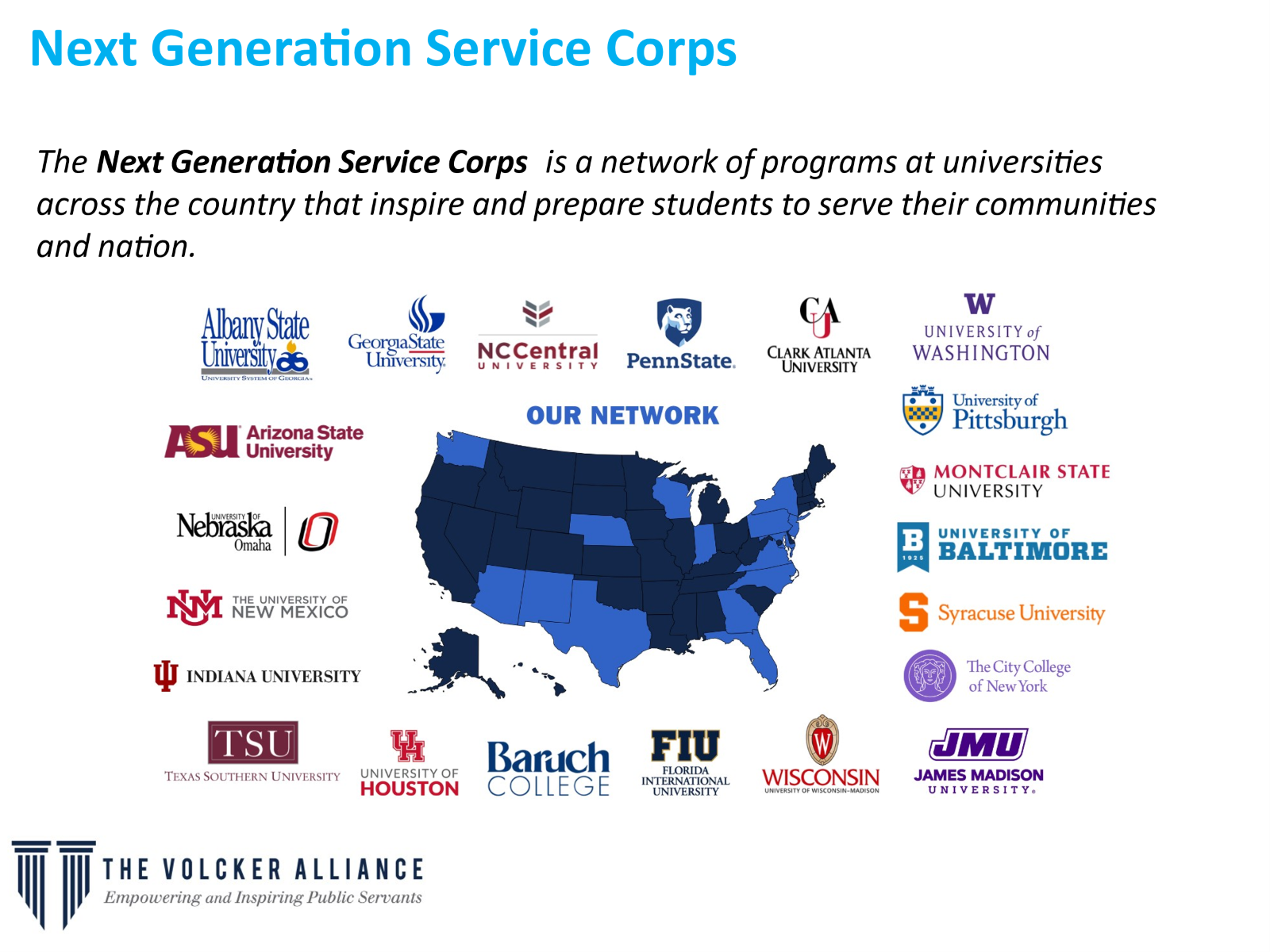
NextGen’s interdisciplinary approach makes it easy for a student in any field to explore and deepen civic leadership. NextGen Civic Leader Corps currently hosts over 2,200 undergraduate students in more than 50 majors across the three UW campuses. We are part of a growing network of programs at 22 universities across the country, hosted by the Volcker Alliance, that inspires and prepares students to serve their communities and nation.

In the short term, members are part of a robust national network of civically minded leaders, receive priority consideration for scholarship opportunities and may be eligible for a credential. The long-term impact of civic participation is linked to a healthier transition into adulthood, higher educational outcomes, and higher income levels down the road.  

Hear directly from a few of our students about the impact of the NextGen Civic Leader Corps.

The tri-campus initiative is poised to expand to serve more students, and we look to our UW and Evans School community to engage with us in the work.  

There are multiple ways to engage, including providing financial support, offering paid internships, providing long-term volunteer opportunities, and speaking at a signature event. Please contact nextgenleader@uw.edu if you’d like to connect to explore ways to support our NextGen students today!  

Evans Spotlight: Sisters Maddie Immel, MPA ‘22, & Audrey Immel

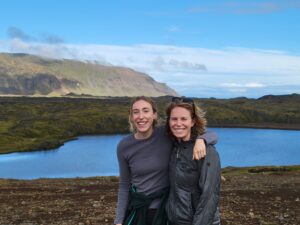
Maddie Immel, MPA ’22, and her younger sister Audrey, a Double Dawg with an undergraduate degree in Public Health-Global Health and now a first-year MPA student, recently sat down with us to discuss what brought them to Evans. Together, they reflected on the values they share and how their unique paths have influenced one another. 

What inspired each of you to choose the Evans School, and how did you decide it was the right place for your graduate education? 

Maddie: Seattle is the place that I wanted to be long-term, so I only actually applied to Evans. Audrey and I are from Redmond, and it’s important to us to be around family- I knew that going to a graduate program in the place I wanted to settle long term was going to be the best option professionally and personally. Evans has a wide Alumni network, and I wanted to make new friends!  I moved back to Seattle and started Evans in 2020 during the pandemic, and I feel like it was the reason I found a job that I’m passionate about and a community of friends who share similar values. 

Audrey: Maddie was a huge influence on my decision to come to Evans. I was torn between staying on the East Coast for a health policy-focused program or coming back to Seattle to be near family and start building my community here. I remember Maddie took me to meet Scott Allard, who shares similar policy interests with me, like social policy and food security. I was struck by how warm the interaction was, and walking around the building felt so welcoming. I realized that I wanted to be in Seattle long-term, and having the alumni network and strong professor connections was really important to me. 

Maddie, what was your experience like as an MPA student, and what advice do you have for Audrey as she navigates her own journey at Evans? 

Maddie: My experience was quite different from Audrey’s because I went during COVID. The majority of my MPA program was remote learning, which, honestly, changed the experience. The professors did their best, and leadership had to make a lot of tough decisions about whether we could come back in person. But even though it was challenging, it bonded our class in a special way. I remember studying on my front porch with my friend Liz, bundled up in 30-degree weather with gloves and hot chocolate while studying for econ—it was certainly a different experience. 

My advice to Audrey is to take advantage of all the job opportunities, even short-term ones, that come your way. I was able to work three different jobs in the winter quarter because the program was remote. I worked for the Milgard Women’s Initiative, did data analysis for North Seattle Community College, and working with Stephen Page and fellow Evans students for the City of Sultan on their downtown revitalization project. Working for-the City of Sultan and completing my capstone with Team Read, solidified that I want to continue supporting the public and nonprofit sector through consulting. I’ve worked for BERK Consulting for two years now, and I love that on such a wide range of projects.  

Audrey, how does it feel to follow in your sister’s footsteps at Evans? Has her experience shaped or influenced your own? 

Audrey: On one hand, it feels like I’m following my sister around in this world, but the cool thing is that we have very different interests and strengths. Maddie is great at managing people and community engagement, whereas I enjoy working more with numbers and data. So even though we’re in the same program, we’ll probably have very different concentrations. But so far, I’ve found it really helpful having Maddie there. She’s helped me navigate classes she liked and connected me with professors. She’s good at taking advantage of opportunities, and I sometimes need a little ‘big sister’ reminder to be proactive and make the most out of my time here. 

Are there any shared values or passions that led both of you to pursue public service and policy? 

Maddie: We were both really influenced by our mom, who was the main breadwinner in our family and worked for Microsoft Philanthropy for many years. She showed us that it’s possible to pursue a career aligned with your values and passion. Growing up with that example made us realize that we can both make a difference while doing something we care deeply about. I got my start at a nonprofit focused on getting young people active in democracy and social justice. That’s where I discovered my passion for registering people to vote and talking about the importance of politics at the local level. After a couple of years, I realized I wanted to have more of an impact at the policy level, so I came to Evans. 

Audrey: We share a desire to use our unique skills and privileges for the common good. Growing up in the Jewish community, the value of helping others and the community was ingrained in us from a young age. I think that’s what drives both of us to pursue public service and policy—we want to make a tangible difference in people’s lives. 

Looking ahead, how do you see the impact of your Evans education shaping your professional goals and shared commitment to making a difference? 

Maddie: What’s great about Evans is the flexibility—it doesn’t matter where you end up, as long as you make use of the professors, job opportunities, and connections. It can be a challenge to decide your path because Evans prepares you for so many different roles, but if you leverage the community, the sky’s the limit. 

Audrey: The classes and professors I’ve met so far have already challenged my narrow view of what I thought I wanted to do. I came in focused on health policy and data analysis, but after taking Sharon Kioko’s financial management course, I’m starting to realize how important it is to understand how money moves through organizations. It’s pushing me to expand my skills and see how they apply in the real world. I have no idea where I’ll end up after my two years here, but I know I’ll have transferable skills that will help me in any field. And the alumni network is a huge asset for my future. 

Maddie: Exactly, Audrey! Like you said, it’s the transferable skills that matter. At BERK, I’ve worked on such a wide variety of projects—from the Pike Place Market Master Plan to a Senior Needs Assessment for the Anacortes Senior Activity Center. It’s not about being an expert in everything but about using your problem-solving skills and communication abilities to tackle challenges. I got to hone those skills at Evans and use them every day in consulting.  

Anything else you two want to add? 

Maddie & Audrey: Go Dawgs! 

Event Recap | Dean’s Forum on Race & Public Policy: Political Participation & Voting Access

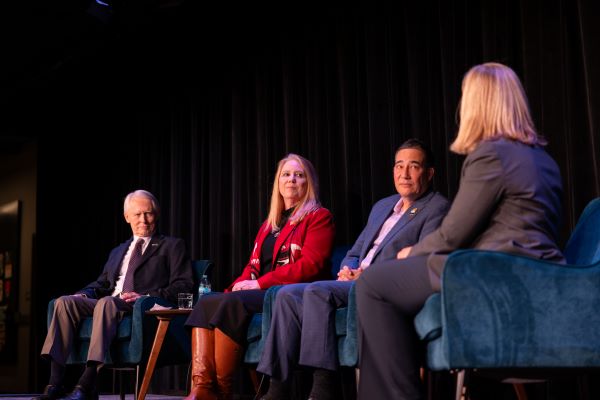
On Thursday, November 7, from 7:30 to 9:00 PM, the University of Washington’s College of Arts & Sciences and the Evans School of Public Policy & Governance hosted Trust on the Ballot: Voting in Washington. The forum brought together three Washington Secretaries of State to explore the history and evolution of voting systems in Washington, examining both the successes and challenges within the current polarized climate following the November 5, 2024, General Election.

The panel discussion featured insights from current Secretary of State Steve Hobbs, along with former Secretaries Kim Wyman and Sam Reed. Together, they discussed how Washington’s voting systems have adapted over the years and the factors shaping election integrity and voter trust today. Their collective experience provided an in-depth look at the complexities of securing elections in an era marked by increasing challenges to democratic processes.

Event Panelists

Steve Hobbs

Washington Secretary of State

Kim Wyman

Former Washington Secretary of State

Sam Reed

Former Washington Secretary of State