Skip to content

Evans Faculty Crystal Hall Receives Prestigious Career Service Award

Evans Associate Professor Crystal Hall has received the Society for Judgment and Decision Making’s (SDJM) 2021-22 Castellan Service Award. This award recognizes Professor Hall’s many important leadership and professional contributions to SDJM.

Of particular importance is Professor Hall’s service for the past two years as chair of SDJM’s first-ever Diversity & Inclusion Committee. In that role, she has centered equity and inclusion within SDJM’s work to better support scholars from underrepresented and historically excluded backgrounds.

Upon receiving the Castellan Service Award, Professor Hall noted: “SJDM has been my primary academic community. And, despite its interdisciplinary nature, it has historically fallen short in the creation of a diverse community of scholars. I hope some of the deep structural changes we are pursuing as a professional association will result in an inclusive environment that will be reflected in both the nature of our research and the way that research is applied to a wide range of social challenges.”

Professor Hall’s leadership within SDJM echoes her field-leading research and many contributions to the Evans School. Associate Dean for Research and Engagement Scott W. Allard underscored, “Professor Crystal Hall is a singular scholarly voice challenging behavioral science to confront structural racism. Her work within the Evans School also has been integral to our school’s commitments to promote equity, address racial bias, and train the next generation of public service leaders to dismantle systems of oppression.”

Food Assistance Policy: Sarah E. Charnes, Ph.D. ’21

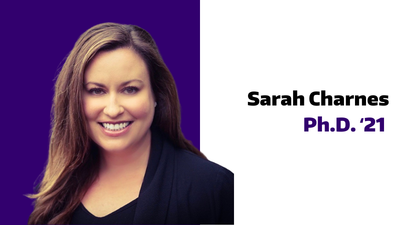
Sarah Charnes

Sarah Charnes finished her Ph.D. at the Evans School in December 2021, where her dissertation research focused on food assistance and food insecurity. The Evans School caught up with Sarah to talk about key findings from her research.

Your dissertation focuses on food assistance policy and food hardship in the U.S. — what drew you to those policy research areas?

Before starting my Ph.D. at the Evans School, from 2006 to 2013, I worked as a macroeconomist in the Office of Economic Policy at the U.S. Department of the Treasury in DC. While there, I worked on a wide variety of topics, including income inequality. When I decided to return to school for a Ph.D., it was with the intention of taking a deeper dive into issues of income inequality. At Evans my work around inequality initially focused on social policy and means-tested public benefits. Over time, I realized that my long-standing interests in food behaviors and my training in holistic health counseling gave me unique insights into the realities of food assistance and food insecurity – timely social policy topics.

Given your work around food assistance policy, what are some of the biggest misconceptions Americans have around food assistance and food hardship?

First, I would say the common belief that food insecurity “isn’t a problem in the United States” and that it’s only a problem in developing countries, which means it’s not a problem worth addressing through public policy solutions. To the contrary, the most recent estimate by the U.S. Department of Agriculture’s Economic Research Service estimates 10.5 percent of U.S. households are food insecure. That translates into 13.8 million households, which is a large number. The national food insecurity rate reached as high as 14.6 percent during the Great Recession. Those estimates are only the tip of the iceberg, which make food insecurity in the U.S. a problem worth investigating and addressing.

There are many other misconceptions around food assistance and food hardship that come to mind. What I have observed over the past several years is that food assistance and food hardship is a space where people often have a hard time getting past their own personal beliefs – especially if they haven’t experienced food insecurity or witnessed it first-hand. For example, if someone becomes convinced that SNAP (the Supplemental Nutrition Assistance Program, the modern-day food stamp program) recipients are prone to commit fraud, it can be very challenging (if not impossible) to change that person’s mind. In reality, fraud is very uncommon.

Another misconception is that there is a one-size-fits-all, or simple, solution to food insecurity. Food insecurity arises out of a wide array of risk factors operating at different tiers. Short of creating a form of universal income for food consisting of an adequate benefit level, it seems likely that there will need to be a continuation of a rather complicated, multi-pronged approach to tackling the problem of food insecurity through public-, nonprofit-, and private-sector efforts. That said, the idea of universal income for food has gotten some traction recently, so it’s possible that a policy window for this could eventually emerge.

As you reflect on the dissertation project, which research findings stand out to you as really important for current debates around food policy?

My dissertation involved three papers that covered a fairly broad range of topics related to food insecurity and food and nutrition assistance policy. The first paper evaluated a program designed to streamline the SNAP application process for recipients of Supplemental Security Income and found evidence suggesting that different modes of implementation for the program were more effective for some subpopulations than others – a point that does not always seem to be the primary focus when interventions are designed to try to improve access to means-tested benefit programs. The second paper tested the extent to which a relatively holistic measure of food access moderates the high degree of association between household disability and food insecurity status. Here, I find that access does not account for much of this relationship (Note: this paper has been accepted for publication in Physiology & Behavior.) The third paper examined acquisitions of free food – food having no price attached to it, such as meals from family or friends – as a function of the amount of time that has passed since a SNAP household received its last benefit payment. In this paper, I find little variability in the acquisition of free food across the SNAP month. This has potential implications for current debates about the behavioral mechanisms driving what is referred to as the “SNAP cycle,” where benefits are typically redeemed in their entirety within the first few days of receipt, rather than being consumed in a smooth fashion across the month as some might expect. I’m excited to dive deeper into the third paper, in particular, as I progress forward with the portions of the dissertation that I have not yet attempted to publish.

Prior to finishing your Ph.D. at Evans, you worked in the Department of Treasury. Given your experiences in both worlds – how can researchers do a better job of presenting and translating their research for policy audiences?

Presenting and translating research to policymakers really comes down to one skill: learning how to say what you want to say within 30 seconds. By “30 seconds,” I truly mean 30 secondsThat is MUCH easier said than done – and a skill that does not always seem to be very highly valued within academia.

I think a great way to practice is to create two or three “highlights” (i.e., brief bullet/talking points) about one’s research – as is asked for by several peer-reviewed academic journals upon submission. Bonus: this encourages clear thinking all around, which is never a bad thing.

What’s up next for you?

Currently – meaning, from January through June 2022 – I’ll be an instructor in the Evans School’s MPA program. Specifically, I’m teaching both of the quantitative analysis courses in the first-year core course sequence, with which I was heavily involved during my Ph.D. (as both a pre-doctoral lecturer and a teaching assistant). I’m really happy to be working with this year’s first-year cohort. I’m also currently on the job market for longer-term employment. Please cross your fingers for me!

Fingers crossed! It sounds like there are lots of good things in the future.

New Evidence from the Seattle Minimum Wage Study

In 2014, Seattle passed a minimum wage law that raised the city’s minimum wage from the state’s minimum wage of $9.47 to $15, phased-in over several years. Mayor Murray and his Income Inequality Advisory Committee developed the minimum wage law as a strategy to lower income inequality. Evans School faculty Mark C. Long examines earnings inequality in the city over the first three years of the law in an article, “Seattle’s Local Minimum Wage and Earnings Inequality” published in Economic Inquiry. Long analyzes Washington state administrative data to assess whether Seattle’s minimum wage ordinance led to a reduction in earning inequality among the city’s workers from 2014 to 2017, a period when the local minimum phased in to $13 an hour.

Findings show that inequality among workers who earned less than the city’s median hourly wage ($26.42) was reduced modestly as workers in the lowest wage jobs saw large increases in hourly wages. There is no evidence to suggest, however, that Seattle’s minimum wage lowered the overall level of earnings inequality across all workers in the city, which substantially widened during this period. Further, Long notes that “the results in this report pertain to earnings inequality of those employed and thus do not include any additional increase in inequality produced by a reduction in the number of employed low-skilled workers.”

Findings from Long’s study are consistent with another article recently published by Evans School and University of Washington scholars entitled, “Minimum Wage Increases and Low-Wage Employment: Evidence from Seattle,” in the American Economic Journal: Economic Policy. In this paper, the study team examines the labor market effects of the Seattle Minimum Wage Ordinance when the citywide minimum was set to $13 an hour in 2017. Findings indicates that those earning less than $19 an hour saw wages rise by 3.4% once the city’s minimum wage was $13, while experiencing a 7.0% decrease in hours worked.

Low-wage workers employed before the policy took effect saw their wages rise more than their hours fell, yielding a net increase of around $12 per week. This increase in pay was larger for low-wage workers with more prior labor market experience. The team found evidence of a decline in the rate of hiring of low-wage workers who were not previously employed in the state of Washington as the minimum wage in the city reached $13 an hour.

Publications

Mark C. Long, “Seattle’s Local Minimum Wage and Earnings Inequality” in Economic Inquiry

Ekaterina Jardim, Mark C. Long, Robert Plotnick, Emma van Inwegen, Jacob Vigdor, and Hilary Wething, “Minimum Wage Increases and Low-Wage Employment: Evidence from Seattle” in American Economic Journal: Economic Policy

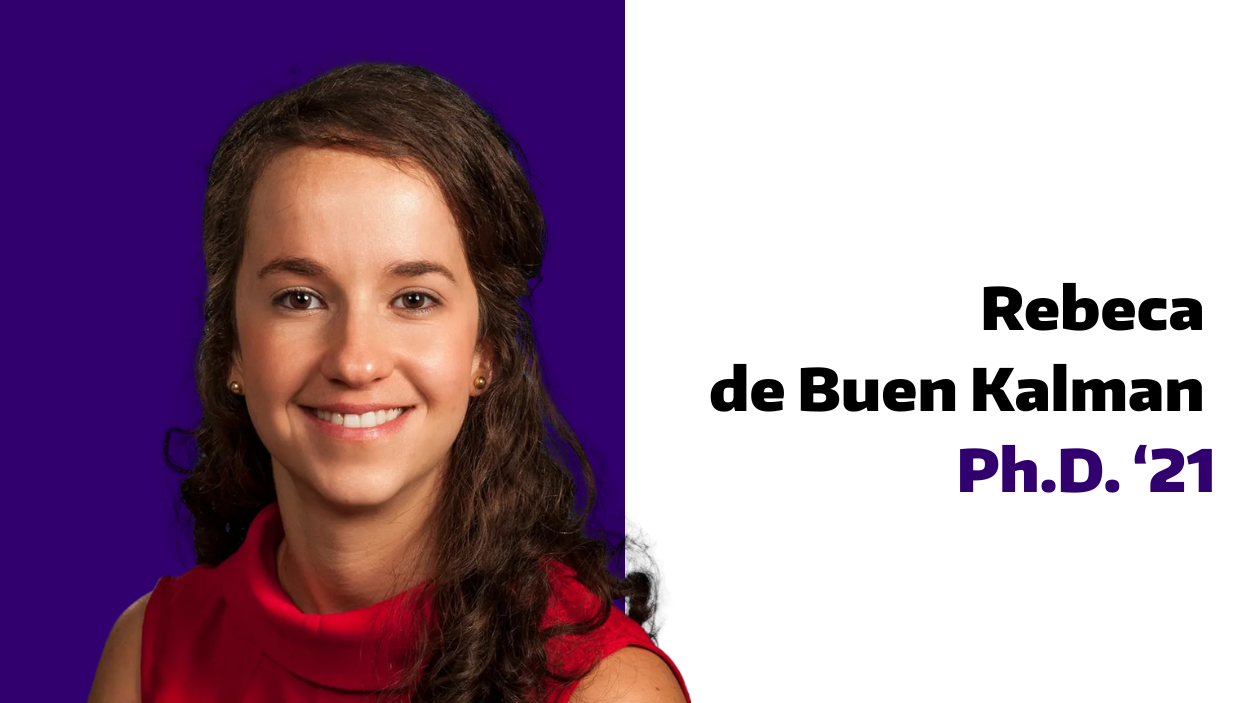
Cycling Policy in Mexican Cities: Rebeca de Buen Kalman, Ph.D. ’21

Rebeca de Buen Kalman

Rebeca de Buen Kalman completed her Ph.D. ’21 at the Evans School, where she focused on the intersections between environmental policy, climate change policy, transportation, and public health. Evans had a chance to sit down with her for a few minutes to talk about her dissertation research.

Your dissertation project is titled, “Pueblos Bicicleteros: Three Essays on Cycling Policy in Mexican Cities,” but you use the evolution of cycling policy in Mexico as a lens into contemporary urban environmental policy. Explain why cycling policy is so central to how major cities address today’s climate challenges.

Transportation is one of the largest and fastest-growing sources of greenhouse gas emissions globally and thus a critical area for climate mitigation policy. Increasing cycling commutes and trips in cities has the potential to reduce emissions and improve and health. Cycling policy can be especially compelling when it is integrated within a larger transportation strategy combined with transit.

Safety and equity concerns, however, must be present as we rethink transit policies. In the cities I studied, most urban cyclists are low-income workers who mostly cycle out of necessity. Framing a bicycle as “one less car” erases the experiences of these cyclists who might perceive the bicycle as a marker of poverty and whose perspective and needs are usually left out of cycling plans.

Why do you think cities in Mexico, as well as in the U.S. and in other places around the globe, struggle to better incorporate cycling within urban transportation strategies?

There are many reasons why incorporating cycling into transportation can be tricky in cities where low cycling rates are the status quo. Most barriers revolve around our current model of mobility, or ‘automobility’, which is centered around the cars and car-centric culture. In most cities, public policies, public spending, and regulations related to street design have historically favored car mobility at the expense of other modes like transit, walking, and cycling, which further entrenches car-centric life-styles. In many places, like the cities I studied in Mexico, some people associate cycling with low economic status and cars with progress and social mobility. Another common cultural barrier relates to society’s tendency to consider bikes as toys or means of recreation, rather than part of the transportation system.

While there are a lot of barriers, there is also a growing appetite from some sectors of the population to move towards multimodal lifestyles that include cycling. Evidence from travel-behavior data reveals an opportunity to reduce car use and substitute cycling for short trips, especially in core urban areas. There also is mounting evidence that younger generations are more environmentally conscious and inclined toward shared and multi-modal transportation when these are available.

We also might not think of cycling policy as a critical element of tackling inequality in modern cities. How does your dissertation show this is anything but the case?

The relationship between cycling and equity is not straightforward. Cycling policy can absolutely be a tool to tackle inequality, but bicycles and cycling policy are not inherently equitable. Bikes are a low-cost and efficient form of getting around in a city. In urban areas like the ones I studied in my dissertation, roughly one-fifth of trips are done by car but the vast majority of public funds for mobility are invested in car infrastructure. Improving cycling conditions through a variety of measures can be a way to improve people’s access to services and opportunities at a very low cost. Improving cycling conditions can also have benefits to pedestrians through improved street design, with important equity implications since riders from vulnerable communities are more likely to be hit by cars as pedestrians.

Measures that are meant to improve cycling conditions, however, are often implemented in visible central city areas and not necessarily accessible to lower-income people who might benefit the most from them. Cycling lanes are frequently implemented on sidewalks or at the expense of sidewalks, limiting pedestrian mobility and accessibility. Sometimes cycling-related policy can even further marginalize cyclists since cycling infrastructure is often determined once motor traffic needs have been prioritized, without addressing the fundamental asymmetry of power that makes cycling unattractive or unsafe.

Readers will be impressed with your research design, which involved the integration of many different data from many different parts of Mexico. How might environmental policy scholars use mixed methods designs to better inform policymaking?

The development of any project related to the built environment is situated in a complex web of actors, institutions, and social processes, where data is often scarce and disperse. I think that mixed methods are crucial for understanding these types of social phenomena. In my dissertation, I studied the trajectories of ten mid-sized and large cities who have implemented cycling infrastructure to different extents. I also took a deep dive into the local social movements that have sparked the adoption of cycling related policies. I used various qualitative and quantitative methods that leverage diverse data sources, including open source and crowdsourced transportation data on infrastructure and travel, administrative data, policy documents, and interview data.

The questions I asked in my dissertation were oriented towards understanding processes and mechanisms rather than questions of cause and effect. To have a full story on each of my cases and parameters that could be compared systematically in my analysis, I had to draw from a variety of sources. I also needed to be through for purposes of validation and triangulation.

Considering the bigger picture, in public policy and management, we ask cause and effect questions because we want to know how interventions impact our desired outcome. But we also need to know how to get things done, the mechanisms at play, and the nuances involved. There is an implementation process between a policy and its effect that requires organizations, institutions, and people. Policy and management are also contextual. We need to draw on various methods to situate ourselves to understand the nuances of public problems and potential policy solutions. Mixed methods are therefore a powerful tool for policy research to become more relevant to policymaking and implementation.

Tell us what you’ll be doing next for your next project at the Evans School.

I am a postdoctoral fellow for Ocean Nexus at the UW EarthLab and the Evans School. Ocean Nexus is an international network of ocean governance scholars based at the UW. Our team at the Evans School works with network members to develop applied policy analysis with an explicit focus on social equity. We are developing a framework to guide the operationalization of equity in ocean governance-related policy analysis through this process. We are also studying how policy problems are discussed in ocean governance research to identify gaps that reduce the applied impact of policy research in this field. Our ultimate goals are to help ocean governance scholars make their research more policy relevant and bring equity to the forefront of policy analysis.

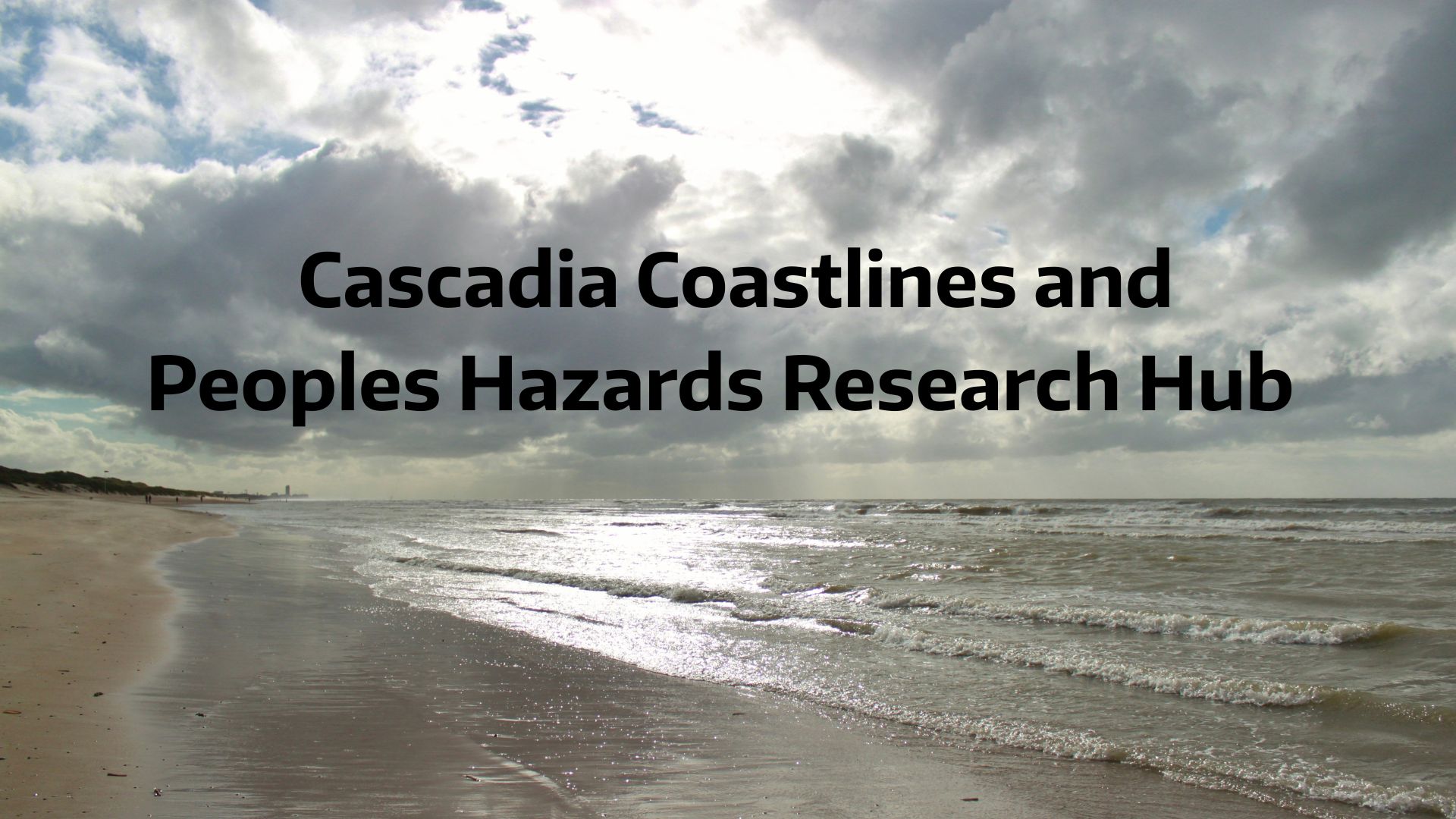
Cascadia Coastlines and Peoples Hazards Research Hub Launches

Partly sunny day at northwest beach

The National Science Foundation (NSF) funded a multi-institutional team (the Cascadia Coastlines and Peoples Hazards Research Hub, or Cascadia CoPes Hub) to advance hazards sciences and increase coastal resiliency in Pacific Northwest communities across Northern California, Oregon, and Washington. UW Evans School Professor Ann Bostrom serves as a co-principal investigator.

Why was the Cascadia CoPes Hub Formed?

We’re responding to needs identified locally, regionally, and nationally for improved coastal resilience, particularly in Cascadia, which stretches from Humboldt and Del Norte Counties in California to the Salish Sea. We face a confluence of coastal hazards that include not only three types of earthquakes, but also tsunamis, landslides, and of course sea level rise, changing patterns of storminess, and the increasing risks of intense precipitation due to climate change that can have compounding effects. Concerns about these risks and calls for increasing research on coastal resilience were clearly articulated in the 2017 Ruckelshaus Center Washington State Coast Resilience Assessment report, and the Oregon Resilience Plan of 2013.

The hub also responds to a suite of grand challenges identified in recent years by the National Academies and others, calling for better understanding of the causes and consequences of topographic change, along with more systematic research and better understanding of inclusive science with community engagement, and science communication. We’re grateful to reviewers and NSF for recognizing the value of these scientific endeavors and co-production of science the hub plans in response to these challenges.

What groups live along the Cascade coast? What are some of the environmental issues (and consequences) that our region collectively, and these communities specifically, are facing? 

Coastal areas in Cascadia are incredibly diverse! As noted in the Ruckelshaus report’s executive summary, but applicable to all of Cascadia: “The Washington coast and coastal communities are at an extraordinary confluence of cultures, unique ecosystems, influences, and potent threats. The coast is home to several tribes, is a gateway to iconic natural treasures, and the people are stewards of distinctive ecosystems that support shellfish growing fishing, cranberry growing, and timber production.” Intra- and inter-community disparities in residential longevity, economic precarity, and political exclusion are extreme, leading to differences and large variations in hazard preparedness.

Most communities on the Pacific Coast of Cascadia, and many on the Salish Sea, are rural and easily isolated—geographically, economically, and culturally—from urban cores. These communities have maintained place-based identities and cultures, and their stewardship results in natural, social, and cultural capitals, resources, and assets that are important for resilience; indigenous communities have knowledge of coastal processes from time immemorial.

Why do you believe it’s important to engage local communities in environmental hazards research? What is are some examples of the ways you are doing this? 

Environmental hazards research has the potential to inform coastal community planning and resilience in very immediate ways. The hub is chock full of projects that we plan to co-develop with collaboratories (specific areas of the coast where the project has the potential to leverage ongoing research and relationships). The hub also includes research broadly relevant across Cascadia, such as better understanding the recurrence rate of megaquakes on the Cascadia Subduction Zone, and examining how geological events – like increased sedimentation and erosion – may be affecting biodiversity and the marine ecologies on which coastal communities depend (e.g., shellfish habitat).

The hub also includes environmental hazards research projects focused on integrating diverse epistemologies into hazards mitigation planning and practices – to increase the exchange of information about hazards and resilience between communities with very different ways of knowing. And we have projects and processes, including community liaison leads for each research team in the hub, focused on helping coastal communities integrate new scientific advances into their planning. In addition, the hub will be funding seed grants to bring in new research ideas and projects over the five-year span of its activities.

Another way the hub is engaging local communities is through research co-design and educational engagement. Across Cascadia, Hispanics/Latinos are 14.8% of the population, Blacks/African Americans are 2.3% of the population, and American Indian/Alaska Natives are 1.6% of the population (as defined by the 2019 ACS). Hispanics/Latinos and American Indian/Alaska Natives are underrepresented in both undergraduate and graduate enrollments overall and particularly in science and technology degrees in the universities that are a part of the CoPes Hub; the hub will support hazards science projects and data collection in coastal schools, and actively recruit and support students from these coastal community groups.

Ideally, what would show that CoPes has been successful should a natural disaster like a tsunami or earthquake occur in 25 years? 

Ideally, coastal communities would be better prepared than they are now and would bounce back better than ever after such an event! And even more importantly, the intent is for the hub to help communities focus, protect, and develop the assets they value, across time and spatial scales. For example, we know that there are likely issues with “islanding” after hazardous events – that some communities might end up isolated due to damaged infrastructure, including bridges, roads, and communications. If we’re successful, we will help communities find ways to reduce islanding and its risks, so that they are not left stranded without essential supplies or support in the immediate aftermath of a tsunami. Some coastal tribal communities are already beginning the process of moving uphill, away from increasing risks of storm surges and sea level rise, and from the risks of tsunami inundation, which tribal coastal communities have long understood, and others have only begun to better appreciate over the last few decades.

On a broader scale, why should those not living in/near the CSZ care about this research? Where else in the world or in what other aspects could the research and collaboration modeled by CoPes be vital? 

Here in Cascadia we have the privilege of living on the Pacific rim ring of fire, as it is called. It’s a magnificent living landscape, even with the “Really Big One” lurking on the horizon. Cascadia CoPes Hub researchers are already collaborating with colleagues in British Columbia, Japan, New Zealand, and Chile – around the Pacific rim – but also with colleagues in other parts of the Americas and the world in productive exchanges of knowledge that will help all of us better understand and plan for the coastal dynamism and climate changes we know are on the horizon and that include increasing risks from extreme hazards.

Coastal populations are among the fastest growing in the world, which only increases the urgency of this work. The hub hopes to leave a legacy not only of more knowledge about the coastal hazards and risks we face in Cascadia, but also advance interdisciplinary hazard analyses, modeling and simulations, and inclusive decision support, community planning processes, and science communication. The hub is dedicated to bringing science, technology, engineering, arts, and mathematics (STEAM) to coastal communities, and coastal community members into STEAM, training a new generation of hazard and resilience researchers to lead this work forward in the future.

The Cascadia CoPes Hub represent a broad coalition including:

Nearly 50 individuals who participated in writing the grant as active investigators, including:

  • Peter Ruggiero (Principal Investigator, Oregon State University)
  • Alison Duvall (Co-Principal Investigator, University of Washington)
  • Harold Tobin (Co-Principal Investigator, University of Washington and Pacific Northwest Seismic Network)
  • Dwaine Plaza (Oregon State University)
  • and other stellar scholars at:
    • Oregon State University
    • University of Washington
    • Washington State University
    • The Ruckelshaus Center
    • University of Oregon
    • Humboldt State University
    • the Swinomish Indian Tribal Community
    • Washington and Oregon Sea Grant
    • S. Geological Survey

Nearly two dozen entities who signed letters of collaborative intent, such as:

  • Oregon State Resilience Office
  • Surfrider
  • The Humboldt State Seal Level Rise Initiative
  • Washington Department of Natural Resources
  • City of Westport (WA) Public Works Director
  • Regional tribal representatives

Beyond the Evans School, the UW contingency on the grant includes faculty and researchers in:

  • Applied Mathematics
  • School of Public Health
  • Urban Design and Planning
  • Civil and Environmental Engineering
  • Earth and Space Sciences and the Pacific Northwest Seismic Network
  • School of Marine and Environmental Affairs
  • School of Oceanography
  • Climate Impacts Group
  • Cooperative Institute for Climate, Ocean, and Ecosystem studies (CICOES – a collaboration of the UW, OSU, and the University of Alaska Fairbanks)
  • S. Geological Survey and WA Sea Grant collaborators at the UW

The hub builds on strong relationships established by hub members with coastal communities throughout Cascadia, including through the Ruckelshaus Center, and WA Sea Grant, and relationships developed in prior research projects (e.g., Oregon Coastal Futures; NSF-funded Hazards SEES M9; NSF-funded CoPe EAGER, CoPe Research Coordination Network, and PREEVENTS projects at the UW; the HSU Sea Level Rise Initiative; and the WA Coastal Resilience Project).

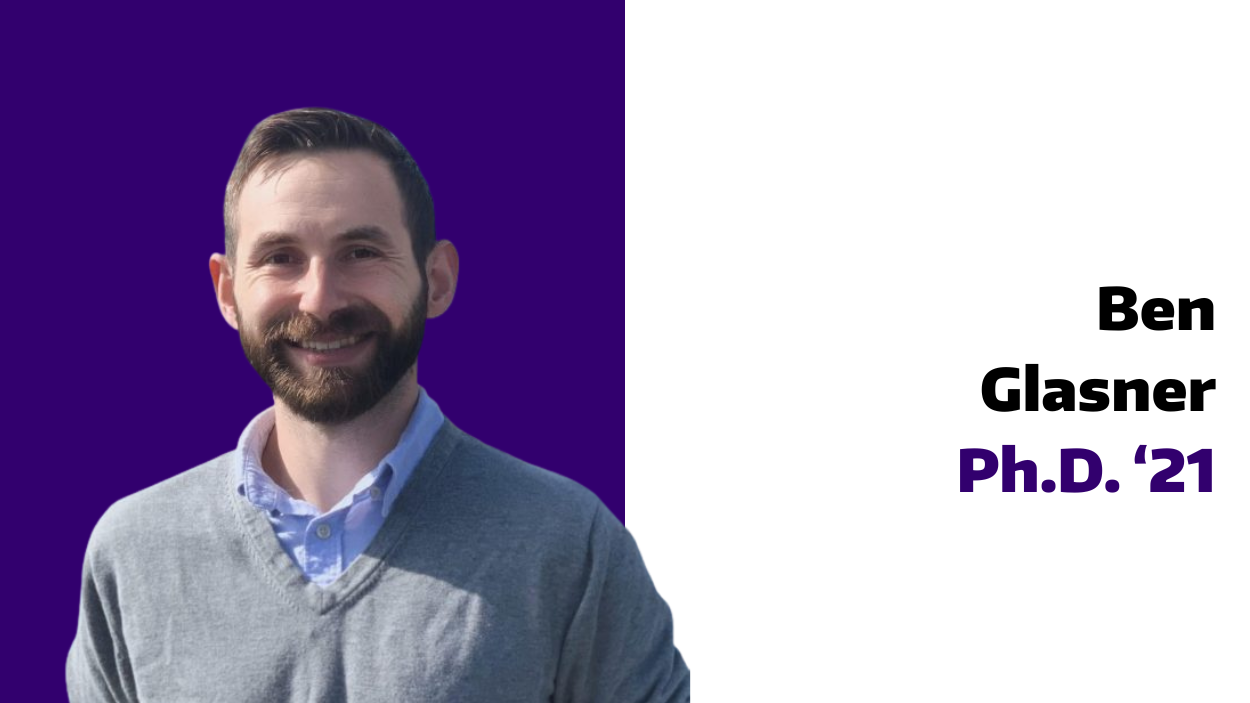
Self-employment and the Gig Economy: Ben Glasner, Ph.D. ’21

Ben Glasner

Ben Glasner completed his Ph.D. ’21 at the Evans School with expertise in labor market policy and the gig economy. He took some time from his work as a postdoctoral research scientist at Columbia University recently to chat about his dissertation work.

Your dissertation research focused on self-employment and the gig economy – explain why this is such a critical portion of the labor market for scholars and policymakers alike?

Self-employment work arrangements, and specifically work within the gig economy, are becoming increasingly commonplace. Yet, these types of work arrangements often are excluded from labor policy or regulations intended to protect and support workers. As a result, policy tools like the minimum wage are not designed for the self-employed. Workers who are operating simultaneously under multiple firms at a single point in time (e.g., driving for Uber and Lyft simultaneously), or whose hours are prohibitively difficult to track don’t receive the same coverage as a traditional hourly payroll employee who punches a time clock.

Such exclusions are nothing new. When the minimum wage was first introduced through the Fair Labor Standards Act, a number of jobs were not covered and those exclusions meant a significant share of black and female workers were not covered by the first minimum wage laws. Such exclusions remained in place well into the 1960s and were key parts of the civil rights movement.

Today, the remnants of past exclusions persist. We have ended up with a patchwork system of supporting workers. From health care to minimum standards of living, where a person works and how that work is done has important consequences to what protections or benefits they receive. I think the gig economy is really the front line of the debate over social support and the division between efficient labor markets and fair labor markets.

How does your dissertation research extend our understanding of the impact of minimum wage laws?

My dissertation project fills key gaps in the minimum wage literature. One key gap I explored was whether higher minimum wages changed the demand for workers or jobs exempted from minimum wage laws. When minimum wages increase, I find evidence of an increase in participation in the uncovered labor market, but it is driven by urban areas with access to the online gig economy. Another part of my dissertation project examines the question of minimum wage effects on multiple jobholding. The puzzle here is that if minimum wages theoretically could both increase and lower multiple jobholding. My work, however, I found that minimum wages had no significant impact on multiple jobholding in aggregate.

What are the key policy research questions we should be asking to better understand the experiences of workers holding multiple jobs?

Today, I’d say there are two key features about multiple jobholding to explore. One, hours and schedules can be difficult to coordinate between employers, which leads to unstable scheduling. Two, because individuals are more commonly combining earnings from payroll positions with self-employment, some workers may use on-demand “employment” through the gig economy to help fill the gaps of an instable schedule. We don’t know a lot about how workers make decisions about holding multiple jobs or balancing hours across jobs. This is particularly important when we consider the different experience of multiple jobholders with high earnings and those with multiple jobs who still struggle to keep their heads above water.

When you talk to state and local policymakers about raising the minimum wage, what advice or guidance would you give them?

Primarily, I’d encourage policymakers to consider the differences between federal, state, and local minimum wage rates in a given setting. I believe minimum wage increases are a positive tool for improving work outcomes, but they are not the solution to all issues of job quality or underemployment. In fact, minimum wage laws can be rather limited tools because they miss workers who are working in the uncovered or the informal labor market. This often means the most vulnerable workers will not be reached by these policies.

Tell us about what you’ve been up to since finishing your dissertation work.

I have just started a new position as a Postdoctoral Research Scientist with the Center on Poverty and Social Policy at Columbia University. While there I’ll be conducting analyses of the effects of major social policies and reforms on the poverty rate and other indicators of well-being. These analyses will include long-term studies of the intergenerational transmission of poverty, but also studies of contemporary policies and their effects. All the work will be under the great team headed by Irwin Garfinkel, Jane Waldfogel, and Christopher Wimer.

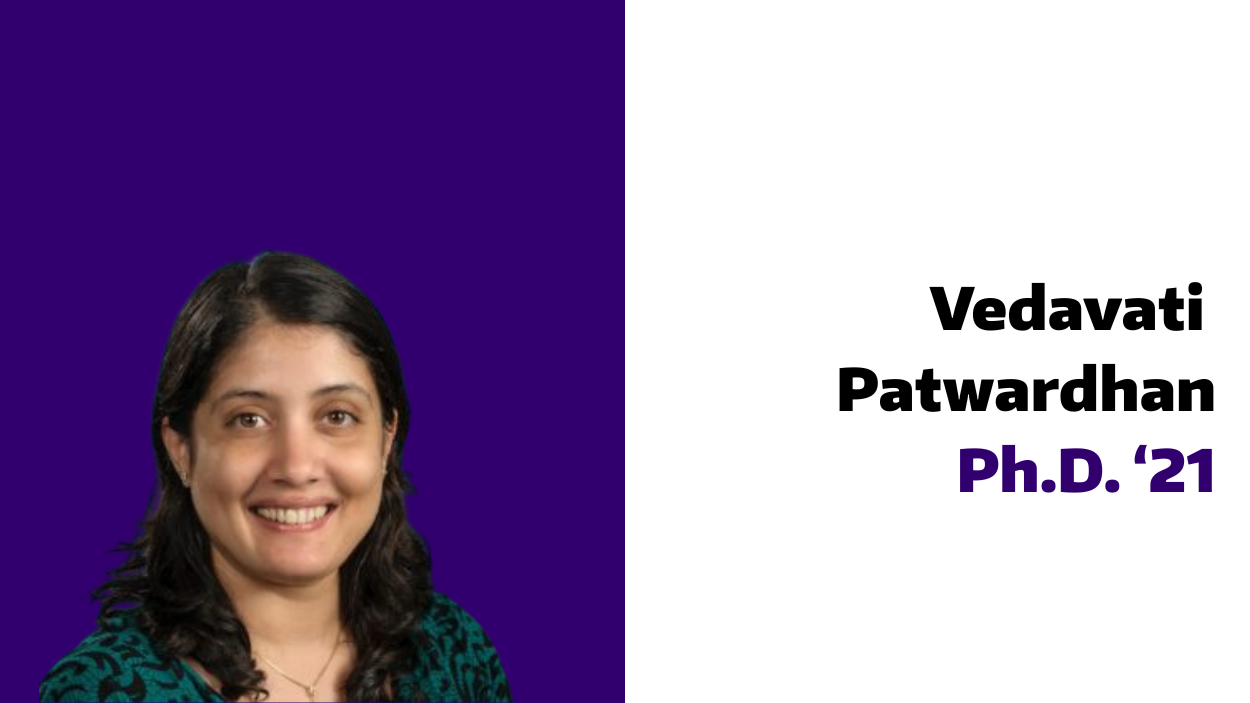
Household Economics and Gender: Veda Patwardhan, Ph.D. ’21

Vedavati Patwardhan

Veda Patwardhan recently finished her Ph.D. (’21) at the Evans School with expertise in household economics and gender. We caught up with her during a break in her day at the Institute for HealthMetrics and Evaluation (IHME) to talk about her dissertation project.

Your dissertation research focuses on how policy interventions and contextual factors shape the roles of women within households in India and Malawi. How did this project emerge over the course of your training at the Evans School?

As a Research Assistant for the Evans Policy Analysis and Research group (EPAR) during my first year as a doctoral student at Evans, I worked on a project conceptualizing the pathways through which empowering female farmers in low and middle-income countries may yield economic benefits. Thinking about the theory behind why gender differences AND inequalities have real consequences for individuals and families piqued a long-term research interest in this area. As that work progressed, I knew I wanted to focus on the intersection of public policy and gender inequality.

I also was motivated by the fact that women’s economic empowerment is an important policy objective internationally. Multi-lateral organizations, foundations, and several governments worldwide are making substantial commitments to gender equality and women’s economic empowerment. Many low and middle-income countries have implemented female-centric social protection and financial inclusion programs. For example, cash transfer schemes, self-help groups, microcredit, bank account provision and public works programs often explicitly target female beneficiaries.

Early in your dissertation, you powerfully note that “control over income is a crucial aspect of women’s economic empowerment.” What were some of the most important insights you discovered about factors shaping how women have control over household income and what having that power means for them and their families?

There are many important findings in my work. One that stands out relates to how the source of household income matters for women’ control over income (WCI). My work in Malawi finds that women have higher sole decision-making for income from public transfer sources like cash and food transfers, as well as remittances, compared with salaries, wages, and farm income. This is very interesting, as research on women’s economic empowerment hasn’t so far considered how the source of household income can really matter for who controls it! My findings in Malawi show women have higher control over transfers than other income sources, even when men are present in the household, suggesting that targeting transfers to women may yield benefits. This also helps unpack why maternal cash transfers like the Mamata Scheme in India (which I examine in another one of my dissertation chapters) have positive effects on children’s health.

This project analyzes data from two quite different settings. How might insights from your dissertation work shape your approach to comparative policy research in the future?

This is a great question. I think that conducting comparative policy research is important for the international development field, as generalizing across regions is difficult and may not always be desirable or accurate. The underlying theme of my work in India and Malawi is similar, but in India, I analyze the effect of a maternal cash transfer program on child outcomes, while my work in Malawi looks at the household and contextual drivers of women’s control over income. Over the course of my dissertation writing, I also realized that analyzing different types of research questions in these two geographies helped solidify my understanding of the existing literature, theoretical perspectives, and research gaps on women’s control over income. I look forward to conducting cross-country analyses in my future research.

What would you say are the biggest takeaways from your work for policymakers and nongovernmental organizations working to empower women in different contexts around the globe?

Policy design is incredibly important. For instance, while examining the impact of a maternal cash transfer scheme in India on child nutrition, I find that children in the poorest households benefit significantly less than those in wealthier households. This suggests that marginalized populations may face obstacles to participation and suggests changes in policy design. For example, policymakers may wish to modify eligibility criteria, or behavioral requirements — such as receiving prenatal care – that could hinder access for marginalized groups.

Paying attention to what drives women’s empowerment is important as well. In Malawi, I find that women’s decision-making over farm income increases following drought. However, this may not reflect an improvement in women’s well-being, if women have a higher workload on the farm and at home. Female farmers tend to have less access to information on climate change and climate-smart-agricultural practices, leading to lower adoption rates compared to men. So, we need policy to recognize the role climatic factors play in women’s farm decision-making. Interventions to improve women’s land tenure security, access to agricultural inputs, and safety nets like cash transfers can play an important role here.

Tell us a little about what’s next for you.

I am excited to start a Postdoctoral Scholar position with the Institute for Health Metrics and Evaluation (IHME), which is a global health research center based at the University of Washington. My work will focus on examining gender inequalities in health.

Coastal Resiliency Research and Education Hub

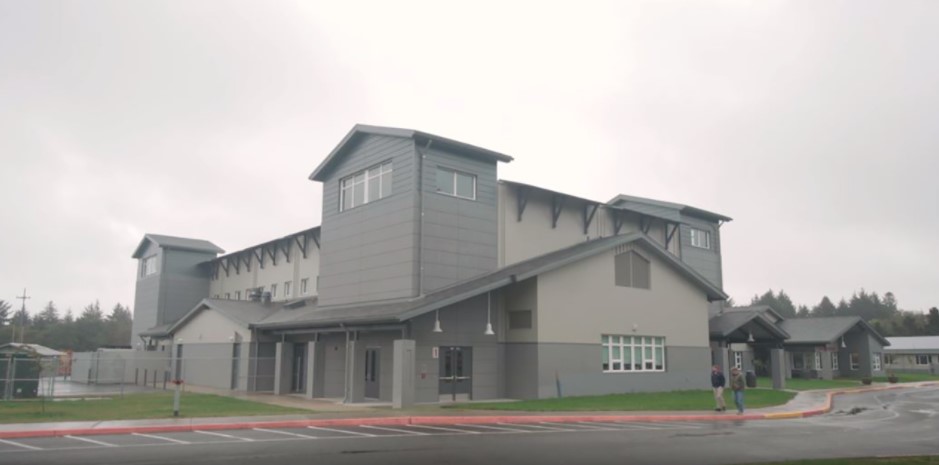
Ocosta Elementary School in Grays Harbor County, Washington, is home to the first tsunami vertical evacuation center in North America, completed in 2016. NOAA

 and 

September 7, 2021. The National Science Foundation has funded a multi-institutional team led by Oregon State University and the University of Washington to work on increasing resiliency among Pacific Northwest coastal communities.

The new Cascadia Coastlines and Peoples Hazards Research Hub will serve coastal communities in Northern California, Oregon and Washington. The hub’s multidisciplinary approach will span geoscience, social science, public policy and community partnerships.

The Pacific Northwest coastline is at significant risk of earthquakes from the Cascadia Subduction Zone, an offshore fault that stretches more than 600 miles from Cape Mendocino in California to southern British Columbia. The region also faces ongoing risks from coastal erosion, regional flooding and rising seas due to climate change.

The newly established Cascadia CoPes Hub, based at OSU, will increase the capacity of coastal communities to adapt through community engagement and co-production of research, and by training a new generation of coastal hazards scientists and leaders from currently underrepresented communities.

The initial award is for $7.2 million over the first two years, with the bulk split between OSU and the UW. The total award, subject to renewals, is $18.9 million over five years.

“This issue requires a regional approach,” said co-principal investigator Ann Bostrom, a UW Evans School professor of public policy and governance. “This new research hub has the potential to achieve significant advances across the hazard sciences — from the understanding of governance systems, to having a four-dimensional understanding of Cascadia faults and how they work, and better understanding the changing risks of compound fluvial-coastal flooding, to new ways of engaging with communities to co-produce research that will be useful for coastal planning and decisions in our region. There are a lot of aspects built into this project that have us all excited.”

The community collaborations, engagement and outreach will focus on five areas: Humboldt County, California; greater Coos Bay, Oregon; Newport to Astoria, Oregon; Tokeland to Taholah, Washington; and from Everett to Bellingham, Washington.

Read the full story on UW News.

Overcoming Barriers to Access Health Care The Challenges Facing Minorities and Immigrants in Washington State

Adult touches face of child wearing mask

The Challenges Facing Minorities and Immigrants in Washington State

Washington state’s BIPOC and immigrant communities face worse health outcomes and a lower standard of care compared to their white counterparts. Barriers to access, both at the individual and system levels, are the primary drivers for inadequate care and unmet needs. As a purchaser and regulator, Washington state and its agencies can exercise their authority to finance, implement, and oversee interventions to help reduce and/or eliminate systemic barriers that disproportionately affect minority and immigrant households.

In this report, Layla G. Booshehri (Associate Director of Center for Health Innovation and Policy Science) and Jerome Dugan (Faculty in Health Systems and Population Health & Adjunct Faculty at the Evans School of Public Policy and Governance) examine what Washington State can do to reduce disparities in health care access experienced by Black, Indigenous, and people of color (BIPOC) and immigrant communities.