Skip to content

Cultivating Leaders of Color: Florence Sum, MPA ’15

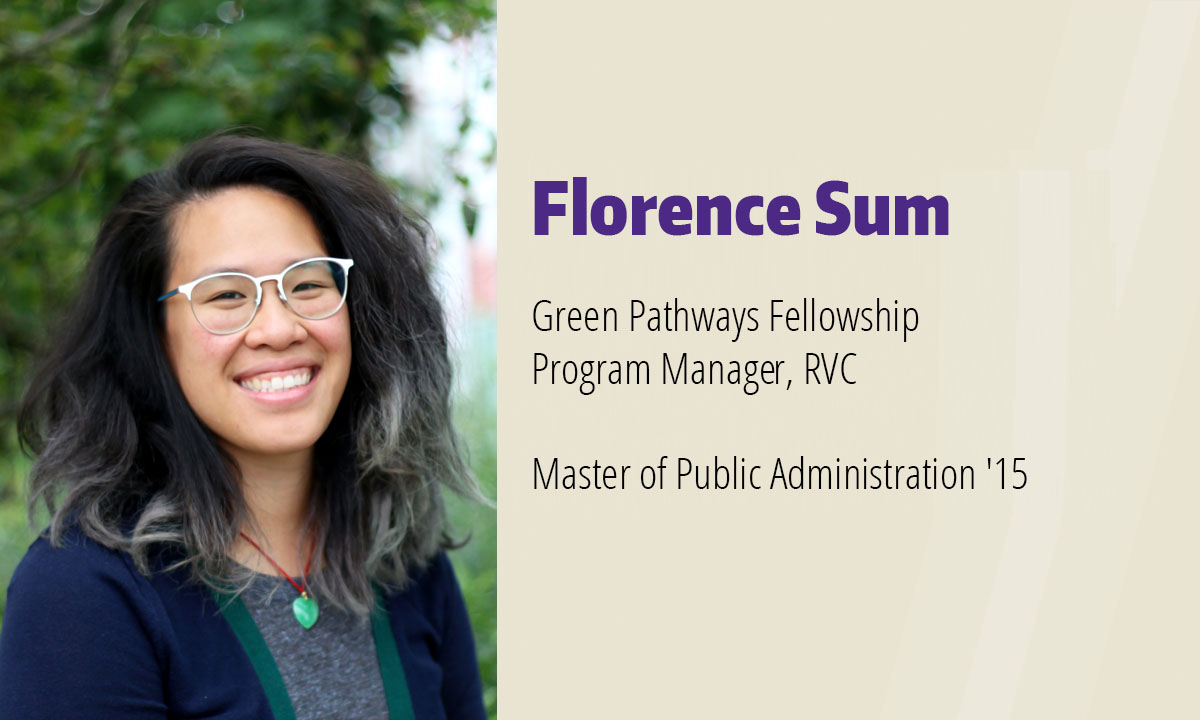
Florence Sum

As a Fellowship Program Manager at RVC – a nonprofit dedicated to building and supporting emerging nonprofit leaders of color – what are key takeaways you’d like everyone to know about your work? 

As reflected in RVC’s mission, in order to promote social justice, you must cultivate leaders of color, strengthen organizations led by communities of color, and foster collaboration between diverse communities. The key takeaway is by investing in Black, Indigenous, & People of Color, Disabled,  Trans, and Non-Binary folks, we will dismantle and transform the systems that target and harm these communities.

The work I am doing with leadership development through the Green Pathways Fellowship Program at RVC is what every workplace should be doing for everyone, especially leaders of color. This includes adjusting living wages and benefits for all positions based on the area they’re living in, including identities who are typically left out of workplace policies, ensuring that professional development is counted as paid hours, having a sizeable professional development budget, onboarding that equips employees to succeed (should be longer than 2 weeks), and creating a workplan for the first 6 months so employees are prepared and know what to do.

I believe that every person deserves to have their learning invested in, an environment that doesn’t scrutinize failure, paid a contribution that supports their livelihood, and a community to rely on.

BIPOC leaders know the solution to societal issues and the work I do is to support them to move issues in a way that honors the communities they are representing.

What is the biggest challenge you’ve had in your career and how did you address it?

As an East Asian-American, I have found that the white standard of communications for someone with a female appearance has been difficult in my career. There is a false sense of how people are supposed to communicate. Often, people are too concentrated on how people are communicating versus what they are communicating.

For example, when BIPOC people are speaking “passionately,” white people might feel attacked by the way content is delivered versus deeply listening to the message. Because of my outward appearance, people have assumed and desired my communication style to be soft, polite, quiet, and non-threatening. And, that’s not how I show up in spaces especially when I’m with folks whose values aligned. So, when people’s perceptions of me (especially those in power) and who I actually am don’t align, I have gotten in trouble. For a period of time, I was deflated.

However, I’ve learned to navigate this by being honest, vulnerable and transparent about who I am. I’ll name dynamics, try and open spaces for feedback, and hold myself accountable to my impact. I have learned and am continuing to learn how to reach people more effectively and clearly. I’m honing a habit where I ask people to repeat back what they heard or confirm my reflections to ensure we are all on the same page.

What are the most critical problems faced by people who work in your field? How do you think these problems should be handled? 

Especially for BIPOC-led nonprofit organizations, there is a lack of capacity and resources. And, there’s a direct correlation between the two – the more resources a non-profit has, the more capacity it has. My hope is that organizations are not signing up for too many projects and overworking their staff, but that’s another conversation. Unrestricted Grants or Funds are super helpful and is one way to help non-profits provide resources to those in need. Now is not the time for Foundations to reduce sharing their resources in hopes of maintaining their own financial security for decades to come.

Our world is experiencing both a global health crisis and a resurgence of racial uprising and organizing against the carceral state. The time to fight is now. We need to continue to organize and build the infrastructures that BIPOC communities have been fighting for. Now is the time to invest, because we cannot go back to the way the world once was prior to the pandemic: people should not be experiencing hunger, lack of access to healthcare, be concerned about their safety through institutions like the police or ICE, and experiencing houselessness.

UW and the Evans School are committed to Diversity, Equity, and Inclusion. How are you addressing Diversity, Equity, and Inclusion in your work and personal life?

Equity is a core value reflected in my work and in my work environment – RVC consists of all staff members who are people of color. We are wrestling with how anti-blackness shows up in our organization at all levels. RVC has shown me over the years their willingness and commitment to learn, be accountable to our mistakes, and make an effort to do better based on our learnings. These types of changes are slow and can be frustrating. The phrase DEI isn’t necessarily used at RVC because it’s just the thing we do and are continuing to do so. In all that we do, we are thinking about who is at this table, who are we not connected to, how can we make sure we are accountable and building those relationships with Black, Indigenous, and people of color communities and how are we showing up (is it in a transactional way or in an authentic way?). This occurs across the board from our HR policies and our programming.

In my personal life, the way I work towards liberation is getting educated, grounded, and practiced in transformative justice. One effort towards that is through my time with the Healing Education for Accountability and Liberation (HEAL) program. HEAL works to provide healing and accountability circles for incarcerated people – the first of its kind in Washington State. Drawing on restorative justice practices, we explore topics such as trauma, shame, resilience, accountability, structural and generational violence, and their impacts. The participants engage in a rigorous accountability process, unpacking the dynamics that led to the harm, and finally, dialoguing with people in our community who have experienced profound harm. The plan was to enter the prison in March but plans have changed and we are adjusting as a collective of facilitators to move this work forward. I’m excited as to where I will grow alongside an incredible team.

We’d love to learn more about you and your tremendous contributions to the public good, so we can share your story as we connect, learn and reflect. Share your story!

Evans Student Recognized in 2020 Husky 100

Meet the Husky 100

The Evans School is proud to recognize its newest member of the Husky 100 Charmila Ajmera, MPA ’20 whose passion, leadership and commitment inspires us to make a difference on campus, in our communities, and for the future.

Charmi was selected based on her ability to embrace innovation and novel ways of thinking, to seek understanding of and engagement with diverse communities, to lead proactively, and to take on her bright futures with enthusiasm, savvy, and fortitude.

“Charmi is a natural leader,” writes Evans School Senior Assistant Dean of Students Carrie Evans. “Other students look to her for guidance, direction and support.  She is remarkably strategic, astute and tactical in how she has sought to build a successful and effective coalition of students, faculty and staff working collaboratively towards shared goals on critical issues pertaining to race, equity and inclusion.”

Charmi contributes to the Evans School community in many ways, including as a leading member of the student-led Curriculum Advocacy Team. The Curriculum Advocacy Team has been instrumental in engaging with faculty to more effectively integrate race, equity, and inclusion as a core element of their syllabi, course delivery, and approach to teaching. This work has been transformative for the Evans School, and Charmi has been at the forefront.

In Charmi’s own words: “I am humbled to be recognized as one of the Husky 100 and so proud of the work that the Curriculum Advocacy Team has done in partnership with Evans students, faculty, and staff. This is hard, generational work to change public policy education (and public policy!) to center equity and to be intersectional, anti-racist, and anti-oppression. COVID-19 and all of its repercussions are revealing just how vital it is to center equity in policy and what tremendous losses we suffer as a society when we don’t. We have a unique and powerful opportunity to set the curve for how public policy institutions all over the country think about who – and how – they serve. I am honored to help further this vital work.”

The Husky 100 recognizes UW juniors, seniors and graduate students who are making the most of their Husky Experience, as demonstrated by the ways in which they fulfill the five program criteria. This year’s selection process was highly competitive, with more than 1,800 nominations and more than 600 applications from all three UW campuses.

Transportation and Cross-Sector Partnerships: Gabriel Scheer, MPA ’04

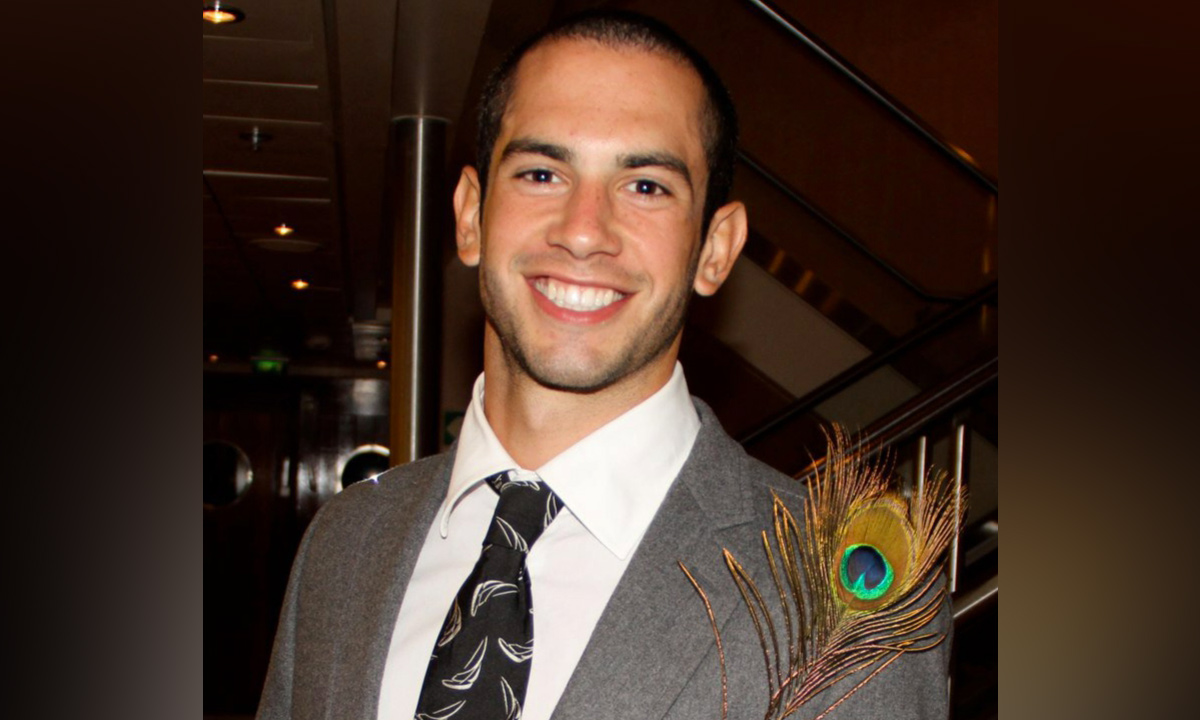
Gabriel Scheer

Meet Gabriel Scheer, MPA ’04 – an Evans School alum who exemplifies how a public sector education can help a private sector company promote the public good!

Since graduating from the Evans School, I have consistently utilized my public policy background to follow my passion for environmental sustainability. Most recently, this has been in my work at Lime, where I serve as the Senior Director of Data Policy & Strategic Partnerships. Equipped with a heart of public service (but perhaps with the patience of the private sector), I am driven to make a difference in the way people navigate cities.

It is my goal to help people see – and to help realize – the better world that is possible by dramatically reducing dependence on single occupancy cars. To do this effectively, I have experienced the critical need for the collaboration between the public sector and the private sector. By leading efforts to bring smart mobility (including: dock-less bike & scooter sharing and free-floating car sharing) to cities across North America and beyond, I work with officials at different levels of government to promote this cause.

The public sector has the unique and wonderful role of creating the most broadly beneficial frameworks for society to operate, while the private sector holds the ability to quickly leverage and mobilize massive amounts of funding to try new things. When paired together – transformative changes can be accomplished.

But that’s not to say that this type of partnership isn’t challenging. From redefining what a scooter is called in Salt Lake City to fit policy standards, to finding places to park our shared bikes in Seattle, I have worked with government officials to find optimal solutions to issues that arise. From our birth, Lime has been committed to working with government to minimize our negative impacts while taking best advantage of the positive impacts we can bring. I worked with councilmembers and mayors to showcase the promise and the potential of Lime’s vision, at a time when we did not have any concrete evidence on why this approach would be effective. Through close collaboration with government officials, we had the opportunity to prove our value – something that has seen us grow from no operations anywhere to providing service in more than 100 cities globally.

My work focuses on the big picture and how the private sector can collaborate with government to mitigate problems. And, my public-sector based education at the Evans School enabled me to represent a business with a more empathetic approach. I learned how to work with government first to improve lives of residents. Working at Lime, this opens all kinds of interesting questions: how should cities prioritize public space, such as sidewalks, to serve different needs? How do we integrate a previously-uncontemplated transportation option, at scale, into existing right of way? How can we best collaborate to educate the community as to appropriate, responsible usage of these new vehicles so as to minimize negative impacts – and how do we do so within a built environment that doesn’t typically change quickly? These are the type of questions I face in my position, and invariably the best approaches to answering them have been to collaborate, to respectfully push each other to imagine better ways of doing things. We are just the beginning.

We live in a time where dramatic change requires everyone work together. My public policy background has been great in helping me understand where people are coming from and the values and perspectives they hold. While at the Evans School, I relished the opportunity to collaborate with so many other students from across the UW – including the Law School, the Department of Engineering, and the Business School. That experience exemplified the collaboration necessary to do my job, and I apply the lessons I learned through that experience every single day in my work.

2019 Evans School Alumni Award Winners

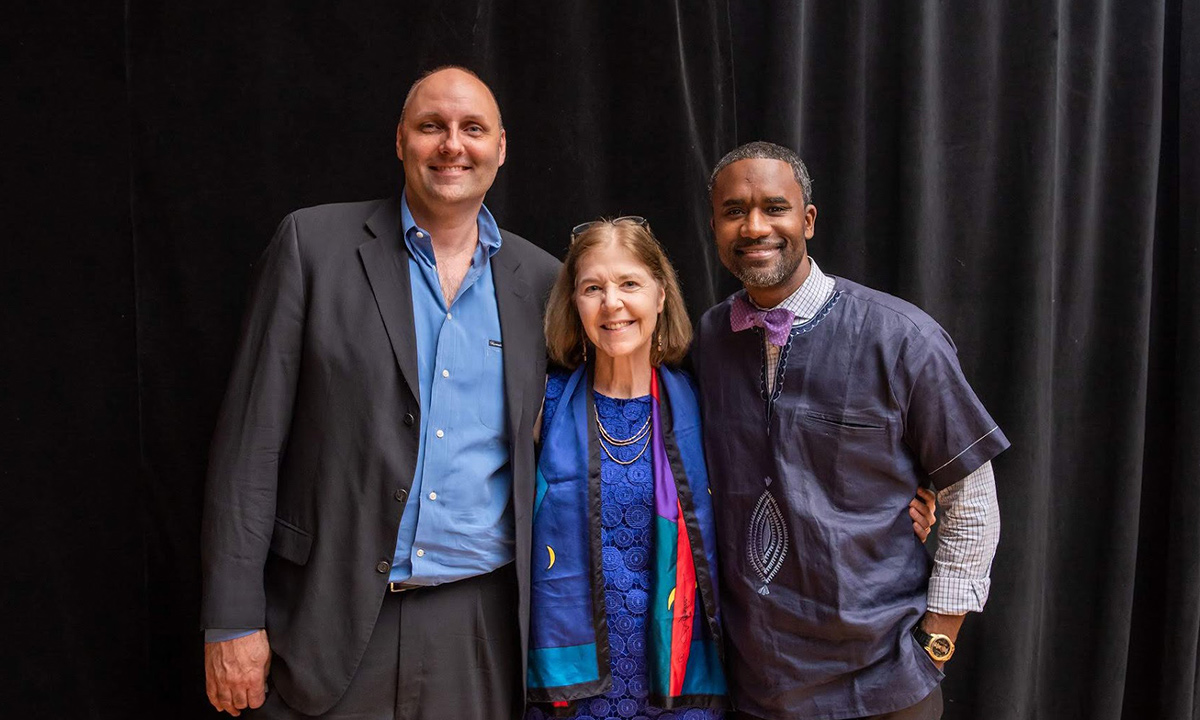
2019 Alumni Award Winners stand with Interium Dean Alison Cullen

Evans School Alumni make the world better in invaluable ways. By bringing passion, rigor, and kindness to their work in the public sector, these optimists make a lasting impact on communities across the globe.

We celebrate the remarkable accomplishments of Evans School Alumni this year with the Evans School Distinguished and Young Alumni Awards to recognize outstanding leaders in our communities.

We are so pleased to announce this year’s award recipients for their commitment to driving the public good!

Tom Uniack, MPA ’02, Distinguished Alumni Award

Tom graduated from the Evans School in 2002 and serves as the is the Executive Director of Washington Wild, a statewide nonprofit organization that works to permanently preserve and protect wild lands and rivers across Washington State. Equipped with the skillset he gained at Evans, Tom has led numerous campaigns that have resulted in permanent protection for wilderness areas and wild and scenic rivers in Washington State. He led the efforts that successfully resulted in the passage of the Wild Sky Wilderness Act of 2003 as well as the Alpine Lakes Wilderness Additions of 2014. A passionate conservationist and advocate, Tom works tirelessly to protect and preserve our environment for future generations.

Erin Hatheway, MPA ’13, Young Alumni Award

Erin graduated from the Evans School in 2013 and is currently the Deputy Director of A Way Home Washington, an innovative public-private partnership to end youth and young adult homelessness in Washington State. Using data-informed, performance-based, and equity-driven practices – with a special focus on eliminating the disproportionate experience of homelessness among youth of color and those who identify as LGBTQ – A Way Home Washington has an ambitious plan for Washington to be the first state in the country to not just manage youth homelessness, but to prevent and to end it, once and for all. Centered on serving vulnerable youth and young adults, Erin encourages collaboration amongst all key stakeholders to find solution to eliminate youth and young adult homelessness.

Anthony Shoecraft, MPA ’09, Young Alumni Award

Anthony graduated from the Evans School in 2009 and is currently serving the City of Seattle as Special Advisor to the Mayor on Black Male Achievement to make a positive difference in the lives of young black males. As a catalyst and an organizer, he has led critical efforts to establish and implement systems to offer better and more inclusive support to young black men to improve life outcomes and help them reach their full potential. Anthony continues to give back to both the Evans School community and the community at large.

These incredible recipients were honored at the 2019 Evans School Fellowship Dinner, and we are so proud of their work! Congratulations, Tom, Anthony and Erin!

Humility in Public Service: Eric Holzapfel, MPA ‘17

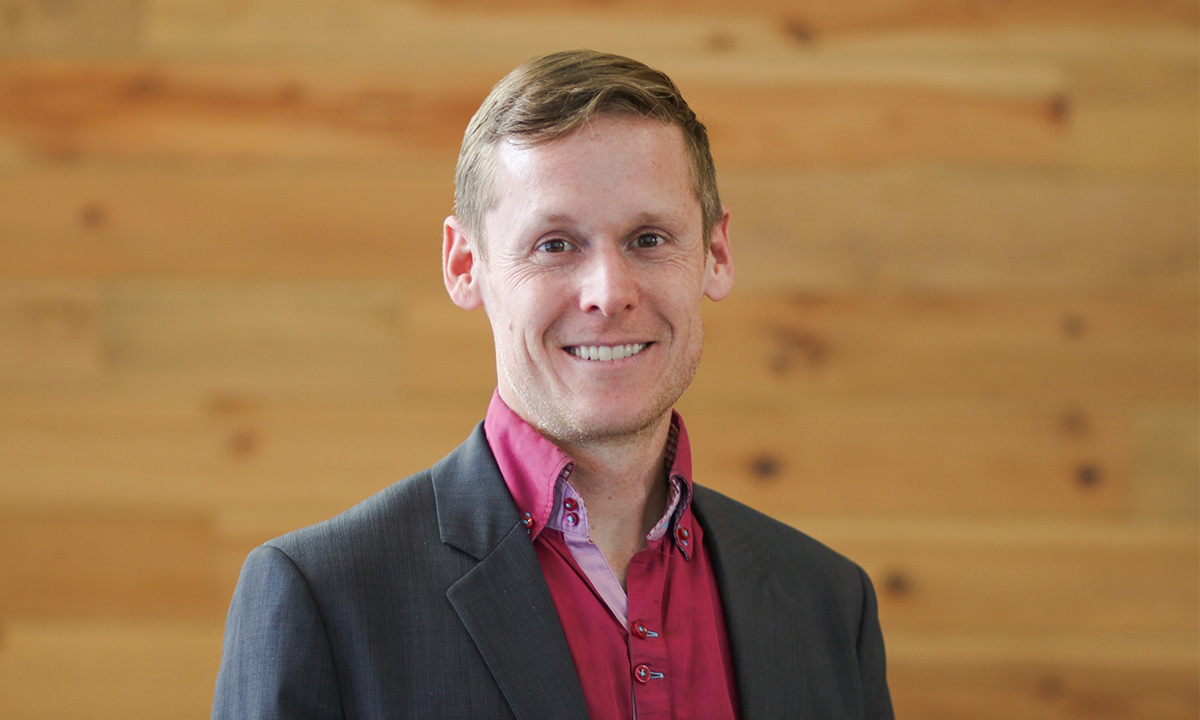
Eric Holzapfel

At the Evans School, we educate leaders who meet societal challenges with compassion, vision, humility, and authenticity. Eric Holzapfel, MPA ’17, embodies these traits in his work as the Immigration Manager of Entre Hermanos, a Latino LGBTQ nonprofit in Seattle. Read about what has sustained Eric throughout his career as a public servant, and hear his perspective on the necessity of integrating your own life experiences into the work we do for others.

Tell us a little about yourself, and the work you do at Entre Hermanos.

I am a graduate of the MPA program at the Evans School, and I have a Bachelor’s in Political Science and International Relations from the University of Kentucky. I am a native of Ecuador, and I have more than a decade of experience working with Latino and minority communities in criminal justice reform, immigration, youth mentorship, medical access, language rights, civic engagement, and wage theft in the United States and Ecuador.

I have worked as a legislative aid in the Ecuadorean Congress, a medical interpreter-patient advocate, policy writer for a Congressional campaign, and now serve as the Immigration Manager of Entre Hermanos, a Latino LGBTQ nonprofit in Seattle.

In the past year, I’ve led a series of state campaigns including: opposition to “public charge” changes in immigration law, immigration detention/bond reform, and Census funding for community-based outreach. I also oversee the expansion of our immigration representation of LGBTQ Latinos, particularly among asylum seekers from Central America.

What motivates you to do your work each day?

As a child my parents instilled in me an appreciation for life and the privileges I’ve had. I grew up in Ecuador at a time when child labor, especially on the streets, was common. This reality inspired me to dedicate my life to public service. I get up every morning excited to serve Entre Hermanos’ clients and the immigrant and refugee community of King County.

What’s a piece of advice you’d pass on to someone interested in pursuing a career in public service?

The first piece of advice I’d give is, “Check your ego at the door.” Confidence is important in any career, but I’ve learned that egos (especially in public service) only get in the way.

Second: your life experiences matter. Getting an MPA is a big accomplishment and it certainly provides you with a great skills to enter public service but your life experiences-both personal and professional- are what drive you and give you purpose in your work.

What’s a valuable lesson that you’ve learned from your time in the public service?

I think having a steady-hand is critical to public service. Working in advocacy and in the nonprofit world, you will have so many highs and lows from legislative, funding, and policy victories and losses. It’s important to keep a positive outlook and keep grinding.

Your efforts don’t always bear fruit right away, but when they do it’s so rewarding.

What’s something you’ll always remember about your time at the Evans School?

I’ll always remember my peers at Evans, especially the cohort that formed the Evans People of Color (E-POC) student organization. Our shared experiences in grad school and seeing the work that we’re all doing now is inspiring.

What’s on the horizon for you?

I’m currently helping my organization through a leadership transition and a time of immense growth. I want to continue working to expand legal and holistic services for the Latino LGBTQ community of Washington State. I am so thankful to my co-workers at Entre Hermanos for their endless dedication to promoting the health and well-being of the Latino LGBTQ community who are with me in that effort.

Meet the 2019 Evans School Husky 100s

Meet the newest Evans School members of the Husky 100Louie Tan Vital (MPA ’19) and Carter Osborne (MPA ’19)!

These two outstanding Evans School students know that education happens both inside and outside the classroom. Louie and Carter were selected based on their ability to embrace innovation and novel ways of thinking, to seek understanding of and engagement with diverse communities, to lead proactively, and to take on their bright futures with enthusiasm, savvy and fortitude.

Louie came to the Evans School determined to become a policy analyst and, eventually, a policymaker. Now, with new analytical skills and a thorough understanding of the policy process, she plans to carve a space for herself in between policy analysis and policy advocacy.

“Public administration as a field is guilty for codifying institutional racism in the United States, and it is my life’s mission to undo its harm,” Louie explained. “Using a race and equity lens at every step of the way, I want to change the narrative of what it means to be a public administrator and elected official.”

During his time at the Evans School, Carter committed himself to immediately applying the knowledge and skills gained in the classroom to his efforts advancing University of Washington mental health initiatives. Carter helped to bring together nearly 15 independent student groups to form the Student Mental Health Taskforce, which builds awareness and improves policies that address suicide prevention at the UW.”

“I’m optimistic when it comes to public service. I honestly believe that everyone has a public issue that they would commit themselves to, which is what suicide prevention is for me. I think my job is simply to help people find their issue and take action.”

The Husky 100 recognizes UW juniors, seniors and graduate students who are making the most of their Husky Experience, as demonstrated by the ways in which they fulfill the five program criteria. This year’s selection process was highly competitive, with more than 1,800 nominations and more than 600 applications from all three UW campuses.

Congratulations Louie and Carter!