Skip to content

Overcoming Administrative Burdens: Isaac Sederbaum, MPA ‘14, Ph.D. Candidate

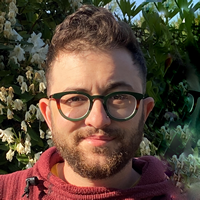
Isaac “Izzy” Sederbaum’s research has been getting a lot of attention lately. In the past few months, he has received funding awards from the University of Wisconsin at Madison’s Institute for Research on Poverty (IRP), the Russell Sage Foundation, and the University of Washington’s Population Health Initiative to study how administrative burdens affect transgender people in the United States. It’s enough support to fund two full quarters. But more importantly, the funding means that there are other people who are excited about his research.

Isaac Sederbaum

After completing his MPA at the Evans School in 2014, Izzy spent five years as a researcher working with jurisdictions around the country to rethink their approaches to youth incarceration, both at the Center for Court Innovation and the Vera Institute of Justice. While working with these institutions, he often tried to get a sense of how queer kids were moving through the justice system only to be told repeatedly that there simply weren’t any.

Interested in asking his own research questions, Izzy decided to pursue a Ph.D. and started back at the Evans School in Fall 2019. In his second year, he took a course on organizational theory with faculty member Benjamin M. Brunjes, who introduced him to academic literature on administration burden. Izzy noticed that literature failed to mention trans communities and people, despite their often precarious living situations and need for safety net programs.

As Izzy dug deeper, he noticed that many common technical fixes to administrative processes weren’t solving problems for trans people trying to navigate government systems. He noticed that no one was asking trans communities about the challenges they were facing or how administrative processes might be improved.

His dissertation is just the first step into making more accessible policies.

Improving the Quality of Life for Underrepresented Communities: Davon Thomas, MPA ’23

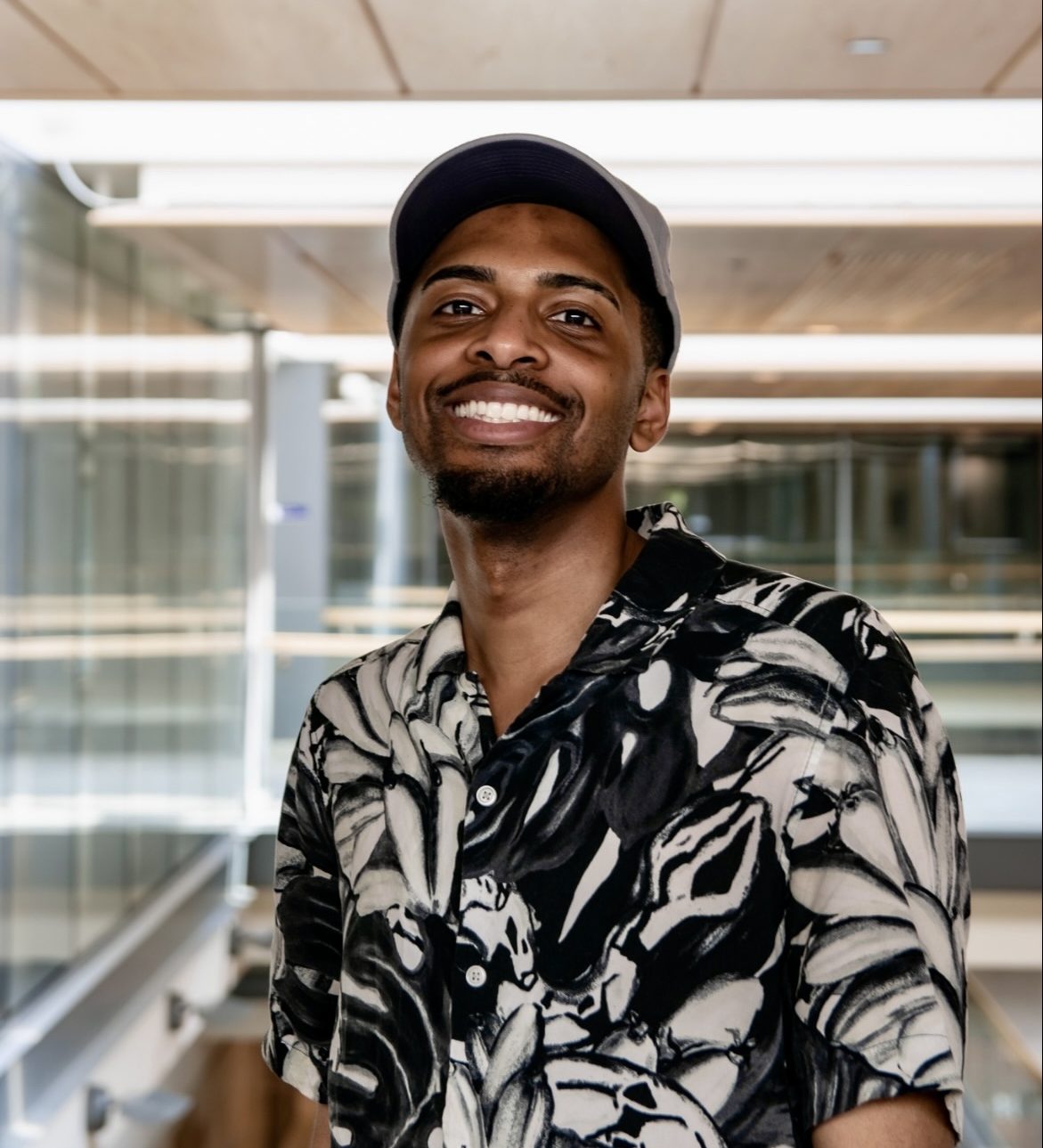
We recently had the opportunity to connect with soon-to-be MPA graduate Davon Thomas. In addition to years of student leadership as an undergraduate and graduate student, he has participated in civic leadership programs such as Washington Student Achievement Council and Institute for a Democratic Future. We asked Davon about his path to Evans, his memorable experiences as a student, and his aspirations to make an impact for communities of color.

Davon Thomas

Describe your journey towards pursuing your degree at Evans. What inspired you to pursue a career in public service?

Growing up, my father was in and out of prison. Like many Black men, he is a victim of a system designed to determine your life expectancy by your zip code. As a Black man in America, I have always cared deeply about righting the injustices my father and many others have faced. I can’t make excuses for him, but I can recognize that when you grow up in an underfunded and overpoliced community, your future and life opportunities are bleak. My journey to the policy world and Evans is about justice for those suffering under oppressive systems. I want to utilize the tools here at Evans to create a brighter future for communities of color.

Evans School is preparing to welcome the 2023 cohort of the Junior Summer Institute to campus. You were involved with JSI as an undergraduate student: could you share more about your time with JSI and the impact it made on your academic career and goals?

In 2019, I attended the JSI program at the Ford School of Public Policy at the University of Michigan. Prior to this, I had no intention of attending graduate school. JSI was an opportunity for me to see what the experience would look like and I thrived there. I took graduate-level policy, economics, and statistics courses. After the program was done, I knew I wanted to attend graduate school. JSI gave students from underrepresented backgrounds an experience like no other. We had students, staff, and faculty push us to be our best selves during this program. Now, most of the classmates in my JSI cohort have already or are currently pursuing their MPA.

The Evans School’s values are equity, courage, and service. In what ways have these values shaped your time as a student?

In January 2022, three months after moving to Seattle, I was appointed by Governor Jay Inslee to the Washington Student Achievement Council (WSAC). WSAC is a state agency tasked with raising educational attainment throughout the state and I continue to have the privilege of representing graduate students on council. I get to work on issues such as retention and recruitment, telehealth for students, and increased funding for students. Without the reputation of the Evans School’s commitment to equity, courage, and service, I felt that this appointment would not have happened.

You serve in leadership on the Graduate and Professional Student Senate (GPSS). Could you share more about your role with GPSS and how the Evans School has shaped that work?

I am the Vice President of Internal Affairs for the Graduate and Professional Student Senate (GPSS), which serves as the representative body for graduate students at the UW. In my role, I am responsible for event planning for graduate students across campus and for hiring GPSS staff. In a post-COVID world, it’s very important for students to have events to attend and opportunities to relax. I served as the vice president and president of my student body as an undergraduate, and I’ve continued in student leadership as a graduate student at Evans. Those who join student government do so because it’s a service and at the root of my heart is service. I love this work and I’m grateful I get to serve my fellow students in this capacity.

In addition to your role with GPSS, you’ve also recently returned from a week-long trip in Washington D.C. as part of the class of the Institute for a Democratic Future (IDF). Could you share more about your time with IDF?

Throughout the year, our cohort has spent ten intensive weekends meeting with leaders across Washington state, including local, state, federal, and native elected officials. Recently, we spent one full week in D.C. to meet with Democratic stakeholders, think tanks focusing on Arab American policy relations, and other leaders. This program has enlightened me on the issues impacting our own state. Policy in Washington is centered around Seattle and other major urban hubs, but having the opportunity to explore Eastern Washington and other rural areas reminded me why I went to graduate school in the first place – to improve the quality of life for underfunded and underrepresented communities. My north star, my heart, and my life are all rooted in service and I’m grateful to have participated in a program that aligns with my values.

What is the impact that you hope to leave as alumni of Evans and as you embark on your career journey?

I hope my impact is one of resilience and community. Graduate school has its trials and tribulations. There were more times than not when I wanted to drop out. However, I found a community here that pushed me to be better and do better. You might enter graduate school as an individual, but you leave here with a community. I’m better off for it.

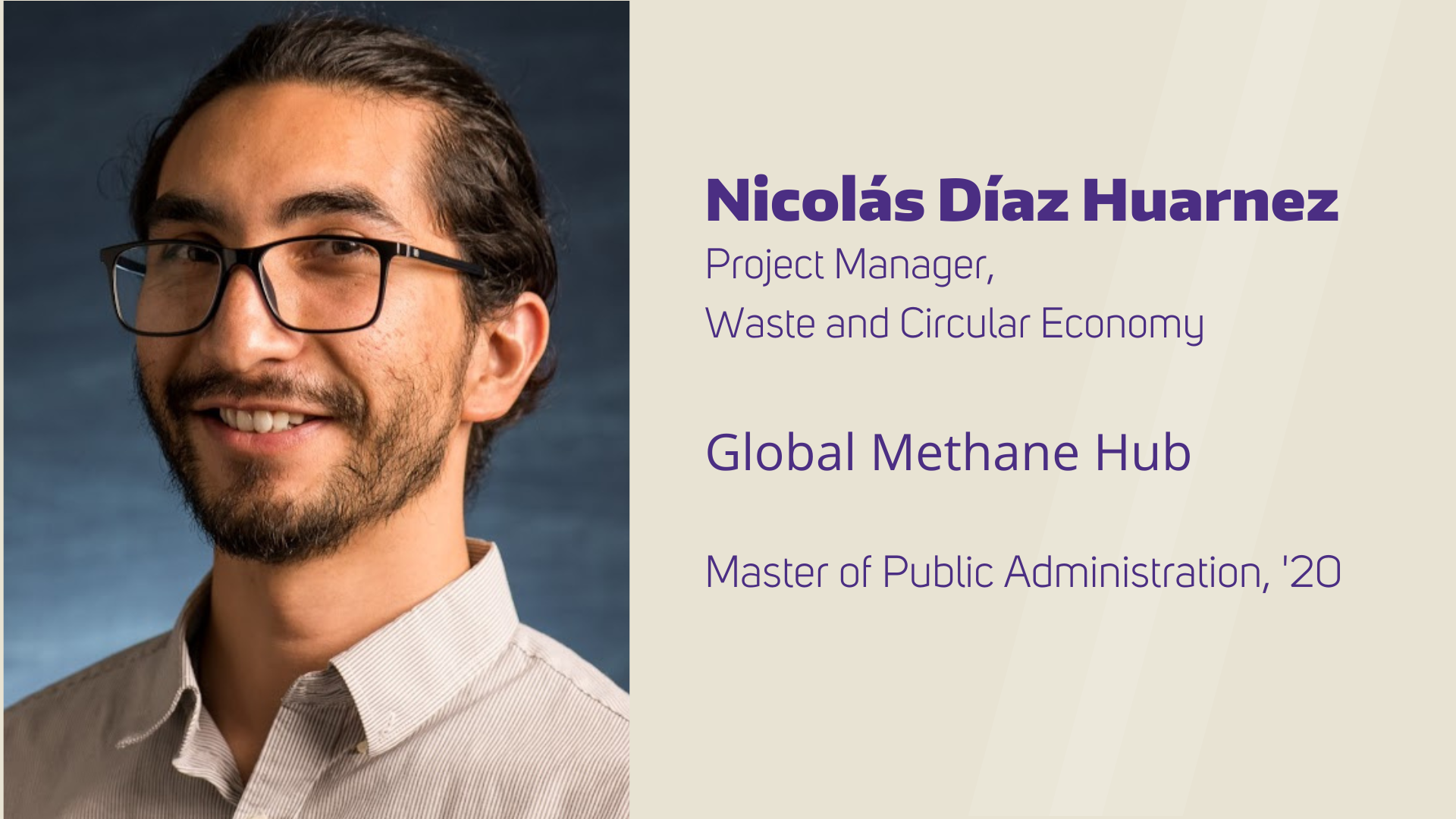
From Waste Research to Climate Policy Change: Nicolás Díaz Huarnez, MPA ‘20

Nicholas Diaz Huarnez

We had the opportunity to connect with Nicolás Díaz Huarnez, MPA ‘20. As a student, Nicolás supported research for Zero Waste Washington, which led to the passage of the 2022 Organics Management Law in Washington state We chatted with Nicolás about his experience at the Evans School, the work he is currently doing in Chile, and his passion for waste management and its connections to climate change. His current role is with Global Methane Hub as a Project Manager for the Waste and Circular Economy Program. The hub is a global philanthropic effort to address methane emissions in alignment with the Global Methane Pledge which has been subscribed by more than 160 countries to reduce methane emissions globally by 30% by 2030, compared to 2020 emissions.

Conversation edited for length and clarity.

Can you tell us a bit about yourself? What led you to pursue your degree at the Evans School?

Before coming to the Evans School, I wanted to connect science and policy for addressing climate change. I was accepted into the Fulbright program and chose to go to Evans because of its strengths in the environmental policy courses – Seattle and Washington state are also very inspiring places to live and to work on environmental policy.

Climate change is one of the most pressing threats to governments and people’s livelihoods. I have been working to connect efforts from policy, science, and from everything that’s been done in practice to overcome climate change, and, with time, I have deepened my focus to address the challenges posed by the management of waste.

While you were at Evans, you were involved in a research effort that led to the passage of the 2022 Organics Management Law in Washington state. Can you share a bit more background about your involvement in this cause? How did your Evans education inform and contribute to your approach to this work?

At Evans, I applied to The Cynthia L. and David S. Harrison Endowed Fellowship for Environmental Policy and was selected to take part as an intern with Zero Waste Washington. They do amazing work—it was a very good match for my interests, and they needed someone to focus on organizing a lot of data to assess the landscape of segregated waste collection and drop-off programs across the state and develop a report. In addition to the environmental policy concentration, I also took classes on quantitative analysis, and I ended up combining the work from those courses with the project at Zero Waste Washington.

It wasn’t easy to do an analysis of all jurisdictions across Washington state. I remember looking at more than 300 jurisdictions, so it was very detailed work. This project allowed me to understand the complexity of setting goals at the state level and the implementation at local jurisdictions. This process was a good learning experience of how challenging it can be to align efforts on a larger scale.

Because of the pandemic, I had to return to Chile with my wife and our two kids. I had just finished up my studies, but I reconnected with Zero Waste Washington before coming back to Chile and joined on to support follow-up report that was much more focused on organics.

This second report was very detailed, too, and it contributed to the 2022 Organics Management Law that Washington passed (HB 1799). We worked with data from the State Department of Ecology and conducted more than 60 interviews with representatives of the public and private waste sector across the state. This was a great combination of what I learned at Evans in terms of understanding the policy process in the U.S. –it is very different from my background here in Chile.I think this work was needed to push decision makers across the state to rethink the way it was targeting and dealing with compost and to share the experience from all the advancements that the City of Seattle was leading by then. We were showing what was required to take this big step at the state level given its climate commitments.

This law is great for Washington state, and we really need to address organics everywhere. I hope this work can permeate the rest of the country and beyond. We need this type of legislation now since we don’t have 100 years to address climate change but less than a decade to avoid its worst consequences.

The Evans School’s values are equity, and service. In what ways are these values part of the work you have done and continue doing?

It takes courage just to talk about climate change. Standing and speaking and doing something about it – and in the case of policy makers and everyone that works on public issues, it takes courage and commitment to work towards those types of targets and goals.

Equity is a cornerstone of what we are doing because you cannot think about waste or emissions without thinking about justice or development or human rights, especially in the waste landscape. It is important because you are talking about people that are exposed to the burden of society because of historical inequities. It is an integral part of whatever you are working on from a public policy lens.

When you come in against these challenges from a public standpoint, you have to believe in what you are doing and be consistent. Although it can be hard sometimes to stay consistent, it’s about being mindful of what you are trying to address through your work, and the way that this work relates to what you are doing as a citizen, as a person, and, in my case, as a father when considering the inter-generational implications of climate change.

I’m very happy to know that this is being highlighted as part of Evans’ alumni profiles, because it is critical. When you try to advance this type of agenda, you really need to commit to the values, too.

Could you share some resources that inspire you, either personally or professionally?

I follow the Freakonomics podcast. It’s very interesting because it’s not only economics, but it also covers how policy intersects with common problems that you find on a daily basis.

For everyone working on climate, please go and read IPCC report. Also try to connect with the people that are organizing around where you are. Get to know not only what’s being thought about and done on the global landscape, but also at the local level.

It’s always important to connect with different opinions – to challenge your potential biases and explore new approaches. It can give you a more complete idea of what the challenges and the problems are. And continue to grow as a person, because I think that’s a key part of understanding your place in the world. In Chile we have a saying “who looks for something finds it.” I use that advice all the time.

Legislative Win for Women and Girls: Absa Samba, MPA ’23

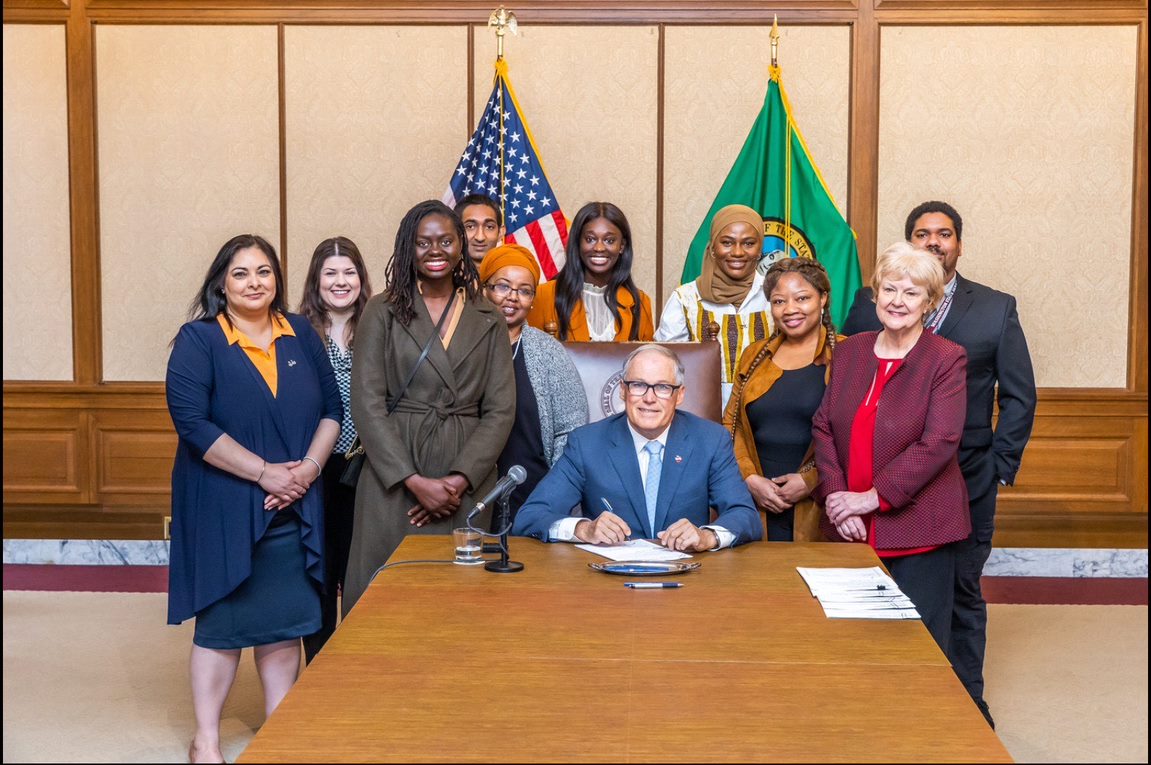
Group stands behind Gov Inslee as he signs bill

We recently had the opportunity to sit down for an interview with current MPA student Absa Samba to learn more about her work leading the Washington Coalition to End Female Genital Mutilation/Cutting and their major legislative victory this session – the passage of Washington’s first bill to protect children from this practice, support those who have experienced FGM/C, and educate communities and service providers.  

Tell us a bit about yourself? What led you to pursue an MPA at the Evans School?

I’m an international student from The Gambia, pursuing a Master of Public Administration and a Master of Social Work. Over the years, I’ve engaged in work and advocacy at the community level, and I’ve seen how policies can be detached from local, everyday realities – I’ve been frustrated by this. I became interested in better understanding how policy formulation works and to be involved in the process. That is what brought me to the MPA program – the disconnect I’ve seen with how policies are shaped and how they impact individuals and communities. I want to see policies work better for the people and communities I serve.  

You’ve been involved in an effort to bring forward legislation pertaining to female genital mutilation/cutting (FGM/C) in Washington State. Can you share more background about your involvement in this cause and the work that led to introducing legislation this year?

I am a survivor of female genital cutting, and, for so long, I didn’t understand why anyone would be subjected to this harmful practice. In middle school, I had the opportunity to be trained on gender equity. For the first time, I had language for what was happening around methe social and gender inequities in my society. I always felt it, but I now had a better understanding of the issue, and it changed my life. From then on, I started doing a lot of advocacies around education for girls and against harmful cultural practices like FGM/C.  

When I moved to the U.S. in 2016 to pursue my undergrad at Champlain College in Vermont, I was invited to classrooms to present on FGM/C, and I realized I needed to make the issue make sense to people here. Through research, I found out that FGM/C is an issue in the U.S. with at least 500,000 women and girls at risk. I made sure my presentations touched on FGM/C as a global issue by focusing on what it is in The Gambia, U.S. and globally. It was through those presentations that I was eventually introduced to a Senator in Vermont in 2019. At the time, Vermont, like Washington, did not have a law addressing FGM/C. I would later testify to the Vermont Senate Health and Welfare Committee on why the state should end the practice and why a preventative approach can help empower communities. In 2020, Vermont would pass a law prohibiting the practice of FGM/C. Later that year, I was invited to join the Connecticut Coalition to End FGM/C which aims to get the state to end this practice, and I continue to work with the coalition there to date.  

During my spring quarter of the MPA program at Evans School, I took the policy analysis core class. We were put in small groups to work on a policy issue. Since I had knowledge of the issue of FGM/C and experience with it—my own personal and advocacy work experiencemy team agreed to make this the focus of our project. We set out to research what the status of FGM/C is in Washington state. We found that Washington state is ranked the eighth highest risk state for FGM/C in the U.S., and that the Seattle-Tacoma-Bellevue metro area is ranked the fifth highest risk city in the U.S. with an estimated 25,000 girls and women at risk of or have undergone FGM/C. We also found that there were two bills introduced in the Washington legislature to address FGMC, but they hadn’t made it out of committee.  

Stephen Kosack, our professor, gave us feedback to research why those bills had failed, and, through this research, I connected with Senator Karen Keiser. She introduced a bill in 2019 but couldn’t get it out of committee due to some opposition from affected communities. Through my conversations with the senator, I saw a desire from her to do something about this issue, and to do it right. I decided then to take my work from a class assignment to actually implementing the project. I seized the opportunity – I offered to do a presentation on the issue in Washington, and she took me up on it.   

Senator Keiser invited other senators who chairs various committees to attend the presentation. I knew then that I needed to invite other people to join me in this space and present alongside me. I invited Bettina Shell-Duncan from the UW Department of Anthropology, who has 25 years of research on this subject, and Mariya Taher who runs an organization called SAHIYO. We did the presentation, and, afterwards, we decided we needed to keep the conversation going. We started to invite more and more folks, and it became apparent that there was a desire across the board to address this issue in Washington. 
Absa testifying before the Washington State Legislature

Personally, I wanted to make sure the voice and needs of individuals and communities impacted by this issue were informing the policy. This goes back to my desire to see policy, from design to implementation, support the best interest of those it’s intended to serve in the first place. We started a coalition of survivors, advocates, legislators, researchers, and national and local organizations to ensure we had an active say in how the bill was crafted. Sen. Kaiser was really generous in making sure the bill contained what we wanted – we had full say on what should and shouldn’t be included in the bill. The coalition itself became survivor-led, which was why it was successful.  

With this approach, it became really exciting to see the support this bill has received. Communities that opposed previous bills joined our coalition to work on this one. Lawmakers have shown their support too—the bill had a unanimous vote in the Senate and a 95 to 1 vote in the House. We also did extensive advocacy during the legislative process, submitting oral and written testimonies to get legislators to see why they should support the bill. 

What are you and your fellow advocates hoping to accomplish with this legislation?

We wanted a holistic approach to ending the practice of FGM/C in Washington state. We were particularly concerned about a potential law that would contribute to perpetuating the existing inequities in the criminal legal system—we wanted a bill that empowered our communities rather than disempowered them.  

We were successful in getting an FGM/C bill passed that prohibits the cutting of a female minor and allows for civil remedies. It also included a statute of limitations allowing a person up to 10 years after to bring civil action against a cutter or 10 years after their 18th birthday.  

The most crucial part of the bill is its education and outreach component which is intended to help communities across Washington State learn about the issue and support those that have been affected. This component will support education for medical practitioners, teachers, first responders, and service providers to help identify those at risk and to better provide care for survivors. The bill also mandates that the state Department of Health is responsible for the implementation of this provision. I believe this to be the most important part of the bill because there is a culture of silence across the board on FGM/C in Washington state. This bill presents an opportunity to have conversations in our communities and workspaces toward ending FGM/C and making sure survivors are accessing the support and care that they deserve. 

What have you learned from navigating the legislative process to date? In what ways has your Evans School experience informed this work?

During our class project, we had to identify the various stakeholders affected by FGM/C, what levels of engagement they should have in addressing the issue, and the powers they hold. That helped me to understand who needed to be involved in this process and what voices need to lead the work. I learned why coalitions are important and the power that they have to make meaningful change. Dean Jodi also gave me great advice to start thinking about what implementation looks like to make sure we protect the integrity and intent of the law once passed. This led our coalition to connect with the Department of Health – as the bill mandates, they are responsible for the education and outreach component.  

The biggest lesson I’ve learned is the value and power in having individuals and communities, who a policy is intended to serve, lead the work in shaping the change. In this case, through this approach, we were able to get allies in spaces where it was least expected. We also were able to get a policy we can all be proud of because it will leave communities and individuals empowered. 
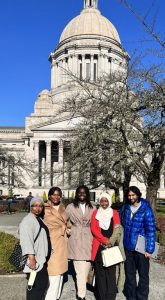
Five women stand in front of the Washington capitol

Another lesson I have learned is the importance of consensus building in this work. I went into this process with view of how easy it would be to work with a coalition of people who all share a common belief that this practice should be prohibited. But as our coalition grew larger, we had a challenge – we all strongly believed that FGM/C should be banned but had disagreements on what approach we should take. As the facilitator, I also had the responsibility of making sure everyone felt like they were heard and that their opinions are valued, which made it even harder. So, as you can imagine, it took a long and necessary amount of time to talk through the various options and come to a consensus as a group to help us move forward in this work together. In the end, everyone was happy with the decisions that were made. It was challenging and frustrating, but I learned that this is a necessary part of the process. 

I also learned the value of self-care. This work comes with a hidden cost which takes a mental and emotional toll on the people who do it. For many of us, it is our personal and lived experiences that we are using to make the change. The emotional and social implications are huge for many survivors who engage in this work. Which is why compassion is also a big part of the work. No one that did this work with our coalition was paid, and people gave their time, stories, expertise, and resources generously.  

We were driven by the desire to see a Washington state where future generations of girls and women will be protected against FGM/C.  

What’s ahead for you? What do you envision doing after you graduate from the Evans School?

I am not sure! I want to have a meaningful impact in the world, and I have a desire to see a world where people can be their whole selves. That is the type of work I want to do. 

Learn more about protecting children in Washington State from FFM/C from Washington Coalition to End FGMC.
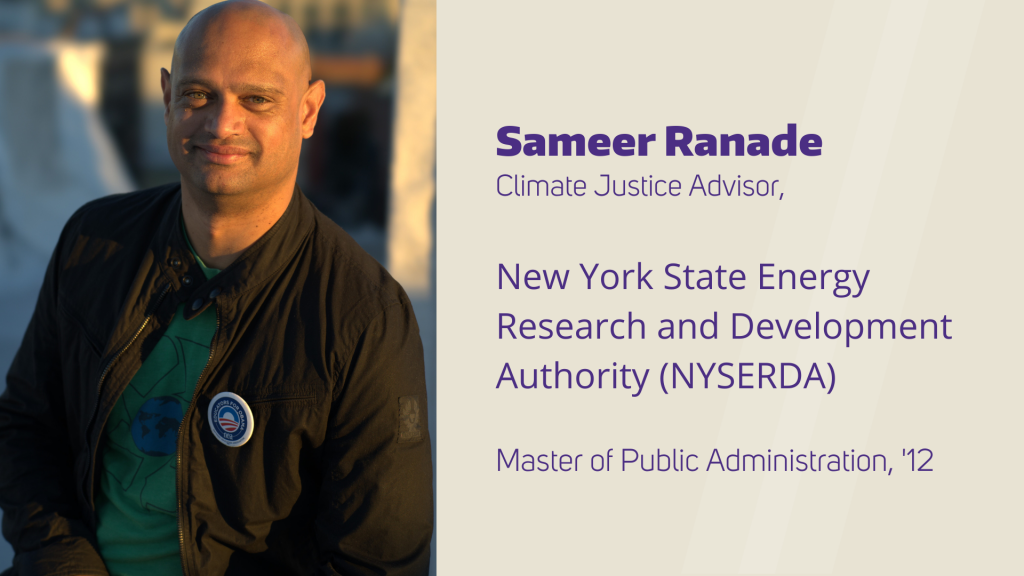
Climate Justice and Policy Implications: Sameer Ranade, MPA ’12

Sameer Ranade

We recently sat down with Sameer Ranade, MPA ’12, to learn more about his path in the space of Climate Justice. Sameer brings passion and policy know-how to one of our world’s most pressing issues from grassroots advocacy in Washington state to his current role as the Climate Justice Advisor at the New York State Energy Research and Development Authority. [Interview edited for length and clarity.]

Looking back on your time as an Evans student, what memorable experiences stand out to you? How does your Evans education inform and contribute to how you approach your work and life today?

Evans is where I came to truly appreciate what it meant to be an agency administrator responsible for delivering public value. It formed the foundation of my knowledge to solve environmental problems through policy, internal and external facing human relations, and critical and strategic thinking.

I maximized the value of my internships and the experience validated and augmented my Evans curriculum. I was a summer intern at the American Wind Energy Association (AWEA) in DC and then chose to stay in DC for the Autumn Quarter after receiving an unexpected internship offer from the White House Council on Environmental Quality, which I did along with a part-time finance internship for Senator John Kerry’s election campaign. While my position with Kerry wasn’t policy focused, it was fitting I got to work for him while he was the lead Senate author of the American Power Act, an economy wide climate bill. I wrote a paper on it in my climate and energy policy course the previous spring quarter. That course was invaluable in teaching me about emissions mitigation policy, including renewable energy standards, which I then worked on advocating for at AWEA.

My economics teacher was extremely passionate about climate change. I recall one instance where he let me speak in front of the class on the combined power of President Obama’s recently enacted stimulus and the Waxman Markey bill to grow a prosperous green economy. In addition, my public sector financing class gave me a terrific understanding of the accounting structures and budget management techniques for entities to wisely steward public dollars.

Lastly, as an advocate, it’s key to understand the policy avenues available to advance your cause. My Environmental Policy Process course exposed me to three available avenues–judicial, legislative, and regulatory bodies. The relevance of each was clear when I worked on the bills that failed to pass Congress as an intern at AWEA. Subsequently, I supported the Obama Administration’s response to this failure. The range of my Evans experience also taught me that well designed regulations can spur innovation and lower compliance costs, and theoretically strengthen their case in court. And investments in emissions mitigation can also reduce those costs and accelerate the cycle of innovation.

Can you share a bit about your current work and what you’re most excited about?

There’s a lot to be excited about. At the top is the implementation of New York’s Climate Leadership and Community Protection Act (CLCPA), the justice provisions of which my job was created to support. New York State is poised to cap greenhouse gases (GHGs) and implement a suite of clean air regulations and investments in clean energy and climate resilient infrastructure. Through pioneering equitable public involvement processes, these will be shaped by meaningful input from communities that bear the greatest climate burdens – as measured on a holistic basis that accounts for the social determinants of health. This will serve as an advanced policy toolkit for eliminating GHGs and creating an adequate standard of living for all in the process. It will address injustice across core social and physical dimensions such as race, wealth, gender, age, and geography. I have a major role in this by helping New York State in creating the Scoping Plan to achieve the CLCPA’s goal of building a carbon neutral economy by 2050 through a lens of justice.

My work is spread out across the spectrum of the numerous facets of the CLCPA. I help inform the design of the State carbon reduction, green workforce, and climate resilience programs and community engagement strategies so they are accessible. I facilitate input into the Scoping Plan from members of the Climate Justice Working Group – a critical advisory body of climate justice organizations whose main task is to develop the criteria for the State to prioritize its investments and regulations under the CLCPA to achieve maximum social benefit. I do a lot of community presentations and relationship building, which to date has been to encourage the public to comment on the criteria the Working Group is developing and the draft of the Scoping Plan that will be finalized at the end of this year.

I’m excited for the work ahead to implement the Plan and create a climate justice model, particularly through how it will give a greater voice to communities overburdened by pollution and poverty. I’m also eager to engage the public on the Plan’s contents and illustrate how it will broadly benefit all of us and specifically create social equity. This effort will contribute to social cohesion and bridge divides because it will be realized through collaboration and recognizing our common bond of humanity and that we live in a world of abundance and joy when we all look out for one another.

The Evans School’s values are equity, courage, and service. In what ways are these values part of your work?

Equity can exist in multiple forms. Foremost, it’s about being conscious of my own biases, power, and privilege and striving to make authentic connections and treating everyone with respect. My climate policy work involves accounting for social and economic marginalization in policy regarding access to infrastructure, education, and public involvement opportunities.

Service is about advancing the welfare of humanity, which the Evans nonprofit and public sector focus trained me for. The desire to serve has always run strong in me. A key example of that was my campaign for an open Washington State House seat in 2016 on a climate justice platform. I devoted significant time to talking with voters 1:1 by door knocking and raised money from small dollar donors. Although I was not elected, I believe my campaign contributed to an engaged electorate and made the case for equitable campaign finance laws–both of which are crucial for the egalitarian society I seek.

Courage is speaking truth to power and striving to find a fair equilibrium among a broad range of stakeholders across a breadth of power and perspectives. Climate justice practitioners must bring everyone to the table and thus build honest and meaningful relationships with people across the spectrum of values and beliefs. The outcome is for everyone to feel encouraged by the vision of a thriving and just green economy and appreciate the need to find consensus and act with compassion so that we can achieve solutions that are both equitable and durable. It takes courage to endeavor to make the world a better place. I’m blessed with the education and employment opportunities in which I can continuously practice and develop the courage to do that and meet inspirational people along the journey.

Could you share some resources that inspire you personally or professionally?

The podcast Volts by David Roberts, Netflix series like ‘Who Killed Malcom X’, spoken word artists, and The New York Times Climate section.

Working to End Homelessness: Matt Fowle, MPA, ’17, Ph.D., ’22

Matthew Fowle

Matt Fowle finished his Ph.D. at the Evans School in August 2022, where his work focused on homelessness and housing precarity. The Evans School caught up with Matt this fall to talk about his research program.

Your dissertation project centers on the racialization of homelessness in America. Why this is such an important lens through which to view housing precarity today?

About 1 in 5 Black households will be unhoused in their lifetime, yet we treat homelessness as if it were a rare experience for most Americans and seldom study the causes of racial disparities in homelessness. In a recently published article from my dissertation, I document the extensive history of homelessness among Black, Latinx, and Native American communities. I find that mass displacement has been publicly sanctioned in the US for centuries to segregate, exclude, and impoverish people of color. The persistence of racialized homelessness requires greater attention to the racist institutions and policies that reproduce homelessness rather than the individual conditions faced by people experiencing homelessness. For example, our primary approach to homelessness focuses on individual-level treatments that assume the causes of homelessness are a set of pathologies (e.g., drug addiction or mental illness). Instead, we must focus on structural interventions that situate homelessness in a broader system of racialized socioeconomic inequality, account for historic harms, and address longstanding systems that perpetuate racial stratification.

Eviction moratoria were put in place during the COVID-19 pandemic to protect vulnerable households from losing their homes. You explored the impact of Washington’s eviction moratoria – what did you find?

Our study of the experiences of low-income renters in Washington state found that landlords who were unable to use the housing courts to formally evict a tenant due to the moratorium turned to informal, and often illegal, evictions to remove tenants. These informal evictions sometimes involved landlords shutting off utilities, changing locks to front doors, and removing tenant possessions without permission. During our interviews with low-income tenants, one family’s apartment had a leaking roof that led to black mold spreading throughout her children’s bedroom. Their landlord refused to fix the roof because they owed rent. Using survey and administrative data, we estimated that the prevalence of forced mobility among low-income tenants nearly doubled from 6.5% in the year before the pandemic to 11.0% in the first year of the pandemic. Despite lower chances of formal eviction during the pandemic, low-income tenants faced a 179% increase in the odds of experiencing an informal eviction tactic compared to the year prior to the start of the pandemic.

One of the major contributions of your dissertation project is to draw attention to rising homeless deaths. You created a website that reports local homeless mortality figures from places around the country. How did this incredibly important part of your project emerge?

During my first year at UW, I witnessed an unhoused person die on a sidewalk. I felt compelled to help in some way. I found that we have no idea how many people experiencing homelessness die each year across the country. There is no nationwide database that helps us quantify the extent of this problem. In fact, even when these databases exist in major cities, the information is rarely made public. My dissertation and public scholarship shine a light on this hidden problem. I founded Homeless Deaths Count, an organization to collect and publicize data on deaths among unhoused people. As a public policy student, I have learned that it is often through public pressure that things change.

I incorporated the project as part of my dissertation because I wanted to better document trends in homeless mortality over time and understand why homeless deaths were increasing, even when the homeless population was shrinking in some parts of the country. In my research, I find that homeless people overwhelmingly die of preventable causes like heat stroke, hypothermia, alcohol poisoning, overdose, and heart disease at between on average 49 and 53 years of age. I attribute these deaths to what I call “systemic neglect.” These people have been collectively abandoned by systems that provide housing, healthcare, and social support. I shared some of the preliminary results from this work with the Guardian and Jacobin. In future work, I plan to examine excess homeless deaths during the pandemic and identify successful policy responses that reduce homeless mortality.

It is moving to hear how you translated this personal experience into an important tool to improve awareness about homeless deaths. Much of your dissertation work has direct relevance for policy and practice – how do you manage your research program so that it is meaningful to scholars and to policy communities?

I believe in a future where housing is not a privilege but a right that we all deserve. Through my research and collaborations, I am determined to not only end the human devastation resulting from homelessness but to contribute to efforts that seek to end homelessness itself. In addition to publishing in academic journals, I feel a responsibility to engage the public on topics on which I have expertise and to share research findings with policymakers and practitioners who might be able to affect change. I also believe that academics can facilitate change by using their research skills to support communities making a difference. Generally, I think that if the topic you are studying has relevance to people’s health and well-being, it is (or can be made) meaningful to scholars and policy communities.

You are just starting an exciting postdoctoral research position – tell us about it.

I joined the University of Pennsylvania’s School of Design as a Postdoctoral Fellow at the Housing Initiative at Penn. Much of my work focuses on the Housing Choice Voucher program, formerly known as Section 8. There is an incredible amount of administration required to implement these programs across the country, and considerable burdens are placed on low-income renters to successfully use a housing voucher. One area of research involves examining who drops out of the voucher application process from when a household first applies to when they successfully rent a home with their voucher. We’re also trying to identify why low-income households might not want to apply for a housing voucher. Another area of research that I am excited about is an evaluation of a Universal Basic Rent program in Philadelphia. The Philadelphia Housing Development Corporation is distributing rental assistance as cash with no strings attached to households rather than through the traditional housing voucher system. The goal of the program is to understand the impact of cash infusions on household stability and economic well-being.

Changing the Future of Colorado’s Healthcare: Hannah Sieben, MPA ’21

Hannah Sieben

After finishing her MPA in 2021, Hannah Sieben returned to her home state of Colorado, where she is using her experience and the skills she gained at the Evans School for the public good. In her current work as a Policy Analyst with Connect for Health Colorado, Hannah is working to create greater public health care access for all Coloradans.

Can you tell us a little about yourself?

The week that I graduated from Evans, I moved back to Colorado, adopted a puppy (Fig! 7 lbs of chihuahua/terrier perfection!), and started a new job. I love being in Colorado; my whole family is here, the mountains and sunshine are a great combo, and there is so much to see and do. In my free time, I’ve been participating in a Master Composter program (to teach Denverites how to start their own compost pile), reading for fun, and scouring Facebook Marketplace for my next DIY project.

What contributed to your decision to pursue an MPA degree? Was there a defining moment in particular?

After returning from Peace Corps service in Namibia, I worked as a civic engagement program manager at a nonprofit. I helped more than 5,000 high school students register to vote during this time, but I knew that I needed to learn so much more if I wanted to contribute to the vision and direction of an organization instead of just the day-to-day responsibilities if I wanted to have the career I was interested in. Pursuing an MPA seemed like the ideal way to gain experience and practice to complement my policy and legislative interests.

Looking back on your Evans School experience, what stands out as being particularly impactful while you were a student?

I was part of the Covid Cohort, MPA Class of 2021, so more than a year and a half of my time at the Evans School was virtual. While that alone was impactful, it also provided me the opportunity to collaborate with my peers in different ways. I learned so much about working as a team with people you may have never gotten to meet in person before, which has been an asset in my current position. I also served as the Vice President of External Affairs for the Graduate and Professional Student Senate and managed to rope in so many of my Evans peers to help us with our legislative priorities. Together, we passed important legislation to get graduate student representation on the Washington Student Achievement Council. All that to say, I was surrounded by incredibly smart and encouraging people at the Evans School, which gives me a lot of confidence about the future of public policy.

Can you share about where you work and your current role?

I’m currently working at Connect for Health Colorado, the official Marketplace for health insurance in Colorado, as a policy analyst. We are technically a non-profit but are really a quasi-governmental organization that implements the Affordable Care Act. I provide a wide range of research and support on policy and legislative issues, including advocacy, education, research, and analysis to help Coloradans get access to more affordable health care.

Can you tell us about some of the projects you are working on or excited about?

Colorado is truly a leader in the health insurance marketplace space, and it’s been inspiring to be a part of the policy and implementation team at Connect for Health Colorado. One of the most impactful projects I am working on is around providing low-income undocumented Coloradans with state-subsidized health insurance. We are the first state to implement this type of program and much of my research has been around the health needs, barriers to health care access, and the eligibility requirements of our undocumented communities. In 2023, more than 9,000 undocumented people will have affordable, quality health coverage for the first time! It’s amazing to lay the groundwork for other states to implement similar programs and really put our money where our mouth is when talking about equity and inclusion.

Are there any specific skills from your time at Evans that have been crucial to the work you are doing today?

One of the best things that I was able to practice at Evans was taking complex pieces of information and distilling them into something that non-policy people can understand. I have coworkers who specialize in communications and product development without a public health or policy background, so I use this skill all the time. I am also a confident public speaker, something that I practiced all throughout my time at Evans.

What are one or two resources that inspire you personally or professionally?

I recently read Dear America, Notes from an Undocumented Citizen by Jose Antonio Vargas. He later joined my colleagues and me to discuss his book and his organization, “Define American”, and to explain how he thought we could do our work in a better, more inclusive way. Both his book and organization really highlight the diversity and uniqueness of undocumented narratives.

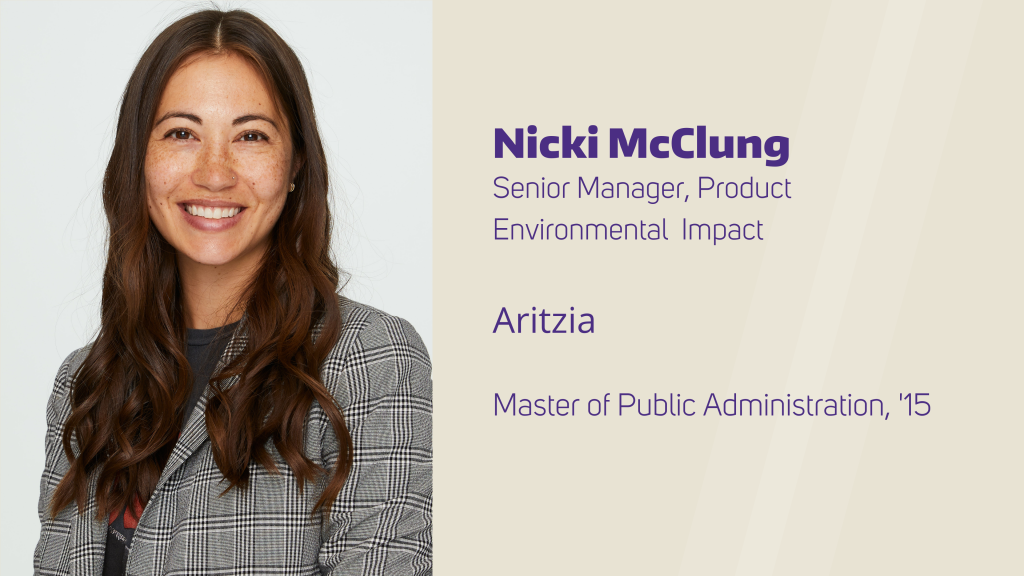
Sustainability and Impact: Nicki McClung, MPA ’15

Nicki McClung

Evans Alum and Aritzia’s Senior Manager of Product Environmental Impact, Nicki McClung (MPA ’15), is leveraging her experience, Evans education, and passion for social justice to positively impact product sustainability and climate strategy.

Can you tell us a little about yourself? 

My name is Nicki and I use she/her pronouns. I grew up in a tiny town in the foothills of the Canadian Rocky Mountains. I am of mixed Japanese/Irish ancestry, which was a bit of a novelty where I grew up. My undergrad is in accounting and finance, and after a couple of years living and working in Banff, Alberta, South Korea, and Australia and doing some travel in between, I landed in Seattle with my then-boyfriend trying to make it in a new city. 

Fast forward a few years and I left Seattle in the middle of the pandemic to relocate to a small ski town in British Columbia with my husband, two kiddos, and dog. I work remotely with Aritzia, a contemporary women’s wear brand based out of Vancouver, BC, and whenever I can, I’m biking, skiing, or somehow enjoying the outdoors with my family.

What contributed to your decision to pursue an MPA degree? Was there a defining moment in particular?

When I moved to Seattle, I thought I would have no trouble finding a role in my field. With the boom in tech, and my corporate finance and accounting background, surely someone would sponsor me.

My theory proved to be wrong.

I wanted to go back to school to have work eligibility primarily, and someone suggested I look into an MPA. For me, I already had worked in huge corporations, I could make a business case, I could operate easily in the private sector, so an MBA seemed redundant.

The MPA program was like an MBA but with the lens of impact and social justice. Through the wonderful support of the admissions team at Evans, I was able to determine it was the right fit for me, and they helped me through the process.

Looking back on your Evans School experience, what stands out as being particularly impactful while you were a student?

So much changed during my time at Evans, both personally and professionally. There were a lot of social and political changes happening during that time. George Zimmerman had just been acquitted in the homicide of Trayvon Martin, and Michael Brown and Eric Garner were murdered months later. The conversation shifted dramatically I found, especially as a newcomer to the US, from bi-partisan politics to the deep and entrenched racism prevalent in the country (and bi-partisan politics).

I learned so much from my professors and cohort at Evans. I’m still learning, but my time at Evans shifted my perspective. I finally had the opportunity to embrace my own identity and my intersectionality. I began to work through the questions and traumas of my own experience, and it has helped me immensely in my career, as a leader, and community member.

Can you share a bit about the work you are currently doing and what a typical day in your work looks like?

I currently work on the sustainability team at Aritzia. Officially I am the senior manager of product environmental impact, but my scope includes beyond just product. I’ve been working on what our climate strategy looks like, both from a high-level organizational view and then specifically what we are doing along parts of our value chain.

My days are nicely varied, but it’s a lot of internal and external stakeholder engagement – and report and memo writing! Thanks, Evans!

As an MPA working in the private sector, how has your Evans education contributed to your work?

Other than the stakeholder engagement and writing pieces I already mentioned – probably critical thinking! Specifically how to dig into the sources of information, and not cherry-pick data! Embracing the data – good and bad – is so hard to do but Evans taught me how to work through that.

I think something else that I credit Evans for is the reminder to always think about the bigger impact and the danger of inappropriate interventions.

Can you tell us about some of the projects you are working on or excited about?

I am so excited about some big projects coming up soon. In the past, many teams worked in silos, with different goals and KPIs, that didn’t all track towards a common objective. Now, we are entering a very exciting phase of being able to set a comprehensive environmental impact strategy. I hope to be able to share more soon!

What are one or two resources that inspire you?

Overdressed: The Shockingly High Cost of Cheap Fashion by Elizabeth Cline is probably one of the most realistic portrayals of how products are made and what factories are like. It doesn’t tell the whole picture, but it’s a great primer for anyone interested in the industry.

This New York Times piece on organic cotton is super fascinating and extremely relevant to my world: That Organic Cotton T-Shirt May Not Be as Organic As You Think.

Harvard Business Review’s article The Myth of Sustainable Fashion is a little depressing, but some good guiding principles.

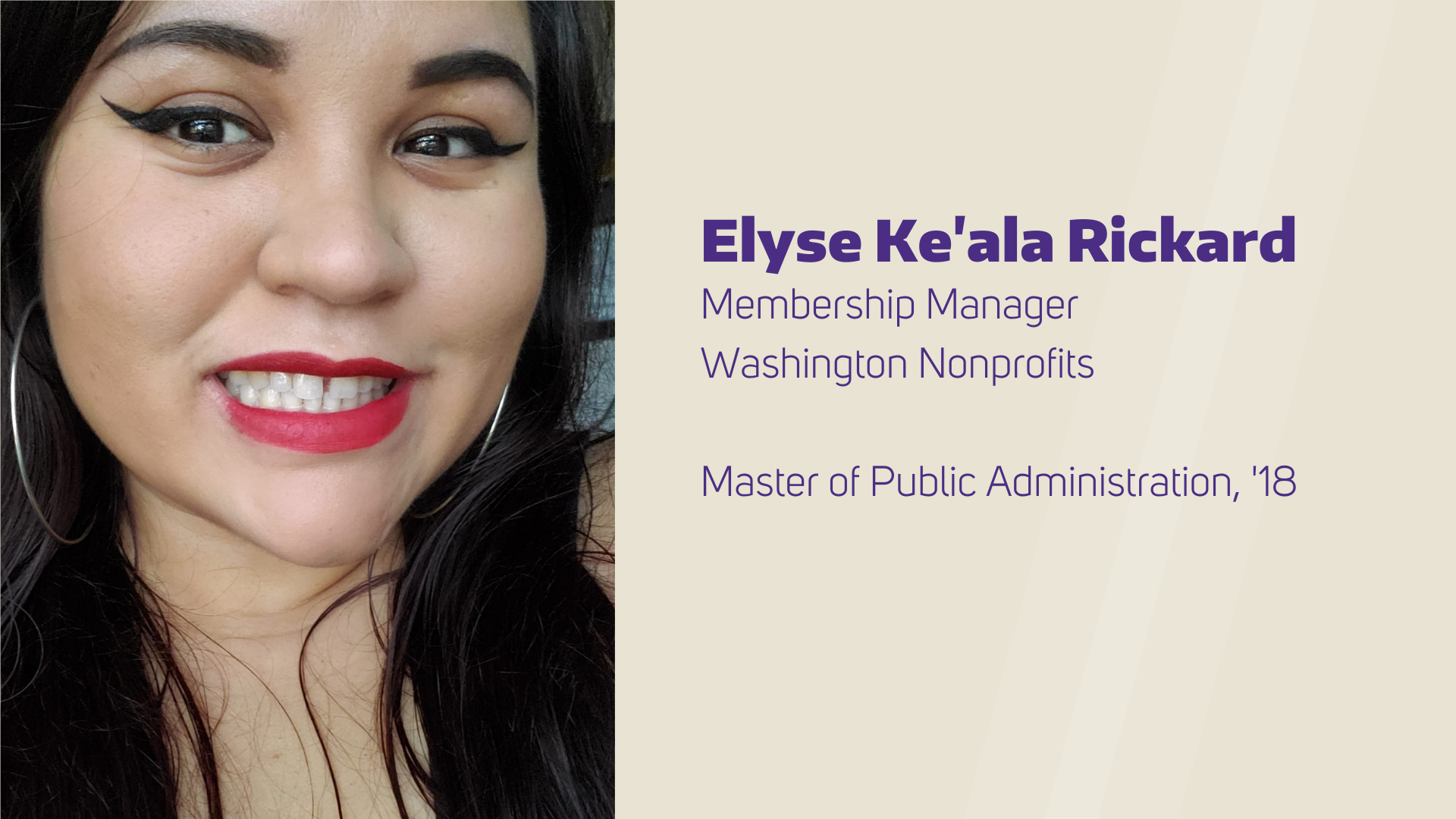
Ensuring Washington Nonprofits Thrive: Elyse Ke’ala Rickard, MPA ’18

Elyse Ke'ala Richard

Elyse Ke‘ala Rickard, MPA ’18, is driven by a passion for equity, justice, and service. As the Membership Manager at Washington Nonprofits, she works to ensure that nonprofit organizations in Washington have access to the resources they need to prosper.

What contributed to your decision to pursue a career in support of the public good? Was there a defining moment in particular?

I grew up in the Los Angeles Harbor area in a blue-collar union family, where I learned to identify how different institutions perpetuate racist, sexist, and classist policies and was encouraged to speak out against these injustices. As I moved through my higher education journey, I majored in sociology and knew that I wanted to enter a field that worked on addressing and dismantling inequities through structural change. During my senior year of undergrad, I had a mentor who was also a Pacific Islander woman and a first-generation student who encouraged and supported me in applying to graduate school. Because of the support of my family and other BIPOC mentors, I wanted to pursue a career that builds upon the work of those who came before me and continue to carry on their work of creating a more equitable society.

Can you share a bit about the work you are currently doing and what a typical day in your work looks like?

I was promoted to Membership Manager at Washington Nonprofits earlier this month and have been with the organization since August 2021. Right now, my work focuses on fostering relationships with our current members and connecting with other nonprofits across the state who may benefit from being a member of our organization. My daily work is composed of providing assistance to our members (that could range from membership renewals, answering questions about member benefits, etc.), promoting our programs and events, and working with colleagues on how to increase access to memberships for nonprofits across the state.

What’s one thing you want everyone to know about your work?

I believe that listening to my intuition has helped me to carve the professional path that I am currently on. If you are doing work that you do not feel connected to or does not align with your values or goals, do not be afraid to speak out or seek out new opportunities that will allow you to grow.

Looking back on your time as an Evans student, do you have any memorable experiences that really stand out to you?

To be honest, I’ve had a variety of experiences at Evans. I met people who are now lifelong friends, learned skills that I sought out, and conducted an impactful capstone with colleagues, which is currently being used in a lawsuit to address racial and gender inequities in the Seattle Parks and Recreation department.

I also faced barriers that graduate students from historically marginalized communities must navigate, including speaking out against curriculum and practices that perpetuate white supremacy. I remember a meeting that I and four other students held with a professor to discuss how they framed the Department of Justice’s report for the City of Baltimore’s police department—their framing felt insensitive to BIPOC students because they did not want to address the historical impact of race and policing. I remember having another meeting with a white professor who had a kapa moe (Native Hawaiian quilt) in their office who was teaching about Indigenous environmental policy who told me they would not, and did not, want to discuss Native Hawaiian environmental issues. However, despite these difficulties, I was able to connect and build relationships with other students, faculty, and staff who did advocate and support for marginalized people in our program and that is something that I will always remember from my time as a student at Evans.

How does your Evans education inform how you approach your work today? Are there two or three things that directly impact your work?

My time at Evans has heavily influenced my career path. I work in an organization that focuses on providing nonprofit education courses across the state, which I feel is a continuation of my own education as well. I have worked on projects where I utilized my analysis and evaluation skills, ranging from implementing new systems, improving administrative procedures, and conducting policy research. Finally, the most important skill that I have learned from Evans is project management because I am collaborating with other people and entities frequently, which includes keeping track of several tasks and deadlines, as I did in most classes during my time as a student.

In what ways are Diversity, Equity, and Inclusion part of the work you have done and continue doing?

As a mixed Native Hawaiian/Latina woman, holding these identities radicalized me from a young age to speak about racism and other societal inequities. During my undergraduate years, I took part in student organizing around a variety of issues and worked in positions that focused on providing support to other BIPOC students.

While at Evans, I became involved in Evans People of Color and worked with other Student Interest Groups (SIGS)–later known as the Coalition–to organize around addressing issues within the Evans school and public policy issues beyond the campus. I am proud of my colleagues, the alumni who laid down the work before us, and the current students who are continuing the work to create a more equitable environment for Evans ’students and beyond.

In the work that I currently do, there are a lot of nonprofits in Washington State that are doing amazing things in their communities, especially those whose work is guided and led by marginalized communities. However, there are several barriers that these organizations face, which can hinder their growth and ability to provide programs or services they are offering to their constituents. Some of these barriers can range from lack of financial resources to unclear guidance from local, state, and federal partners. I hope that in my role I can serve as a point of contact for people to access the resources they may need so that these organizations can continue to focus on serving and thriving in their communities.

What are one or two resources that inspire you personally or professionally?

I recently finished From a Native Daughter by the late Dr. Haunani Kay-Trask. As someone who is a mixed Native Hawaiian woman, I have felt, seen, and heard many of the things discussed in her book, especially in the latter half, where Dr. Haunani Kay-Trask discusses her experiences with the University of Hawai’i. I feel inspired that her work remains relevant in 2022 and will continue to do so beyond my lifetime. I am also very into listening to podcasts and a favorite of mine that I recommend to folks is Code Switch by NPR. Every week they focus on a different story, connect the story to larger themes of race, and connect listeners to resources they can follow up on if they want to learn more about that week’s topic.

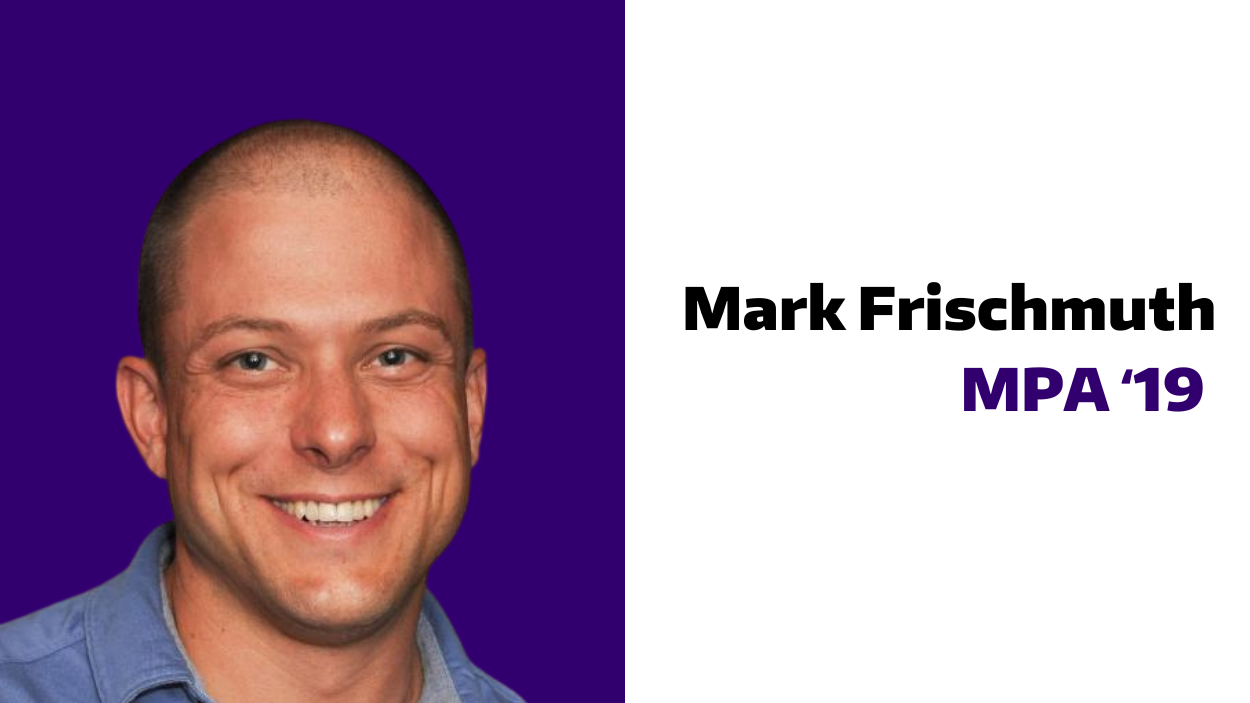
Technology and Advancing the Public Good: Mark Frischmuth, MPA ʻ19

Mark Frischmuth

Mark Frischmuth, MPA 2019, believes that technology can help solve challenging social, economic, environmental, and civic problems while empowering all members of society. At DemocracyLab, he is building on that vision by connecting tech-for-good projects with skilled volunteers and socially responsible companies.

What contributed to your decision to pursue a career in support of the public good? Was there a defining moment in particular?

I have always been motivated by a search for meaning and majored in philosophy as an undergraduate. Two sources of meaning I have found are authentic personal relationships and contributing to the public good. A spark of insight the day after the 2004 Presidential election motivated me to explore how technology could be used to crowdsource public policy by mapping connections between the values people believe, the objectives they seek to accomplish, and the policies they would like to see implemented. It was from that exploration process that I formed DemocracyLab in 2006, and it began a long journey that eventually led me to the Evans school and my full-time dedication to advance public interest technology.

Can you share a bit about the work you are currently doing and what a typical day in your work looks like?

DemocracyLab empowers people who use technology to advance the public good by connecting tech-for-good projects with skilled volunteers and socially responsible companies. Our platform and programs help tech-for-good projects to launch without funding, volunteers to upskill and advance their careers, and companies to build cultures of purpose. DemocracyLab is a volunteer-driven organization and thousands of hours of volunteer labor have been contributed toward the research, design, and development of our open-source online platform. I spend time every day coordinating volunteer efforts, engaging with current and prospective partners, reaching out to companies to solicit employee engagement opportunities, and building relationships with prospective funders.

Can you share how diversity, equity, and inclusion are central to your work and the work you continue doing?

Our world and our communities face many very difficult problems. Many of these problems were created by systems that exploited people, land, and resources for profit. I believe that addressing these problems will require the voice, perspective, and talent of as many people as possible. I believe an extroverted culture of inclusion leads to diversity, and that open-minded and respectful teams of diverse people can create communities and products that advance equity. I have experienced much personal privilege in life, and feel a responsibility to use that privilege to create greater equity at whatever scale I can.

If there was one thing you’d want people to know about your work, what would it be?

One of the most important effects of DemocracyLab’s work is that it increases the sense of agency of members of our community. We help people recognize that they have something valuable to contribute to solutions to public problems, and, that their response to these problems is within their control. The infrastructure that DemocracyLab creates has positive impacts on many other problems in society. By activating skilled volunteers and encouraging them to contribute their talents, we make it possible for organizations addressing a host of other issues to pursue their missions more effectively.

Looking back on your Evans School experience, what stands out as being particularly impactful during that time?

While the Evans classroom instruction was invaluable, I found my interactions and conversations with my classmates to be the most impactful aspect of my Evans experience. The diversity of backgrounds, experiences, and perspectives of my classmates helped me better understand my own worldview and challenged me to think more broadly. The education I received at Evans helps me see my work in the larger context of society and to better understand the complex range of stakeholders whose engagement is important to the success of my work.

What are 1 or 2 resources that inspire you personally or professionally?

A book I read long ago that stuck with me is Ken Wilbur’s A Brief History of Everything, where he made some very interesting points about systems thinking. The biggest takeaway for me was that any particular thing can be understood simultaneously as a whole, as a sum of its parts, and as a part of a larger whole.