Skip to content

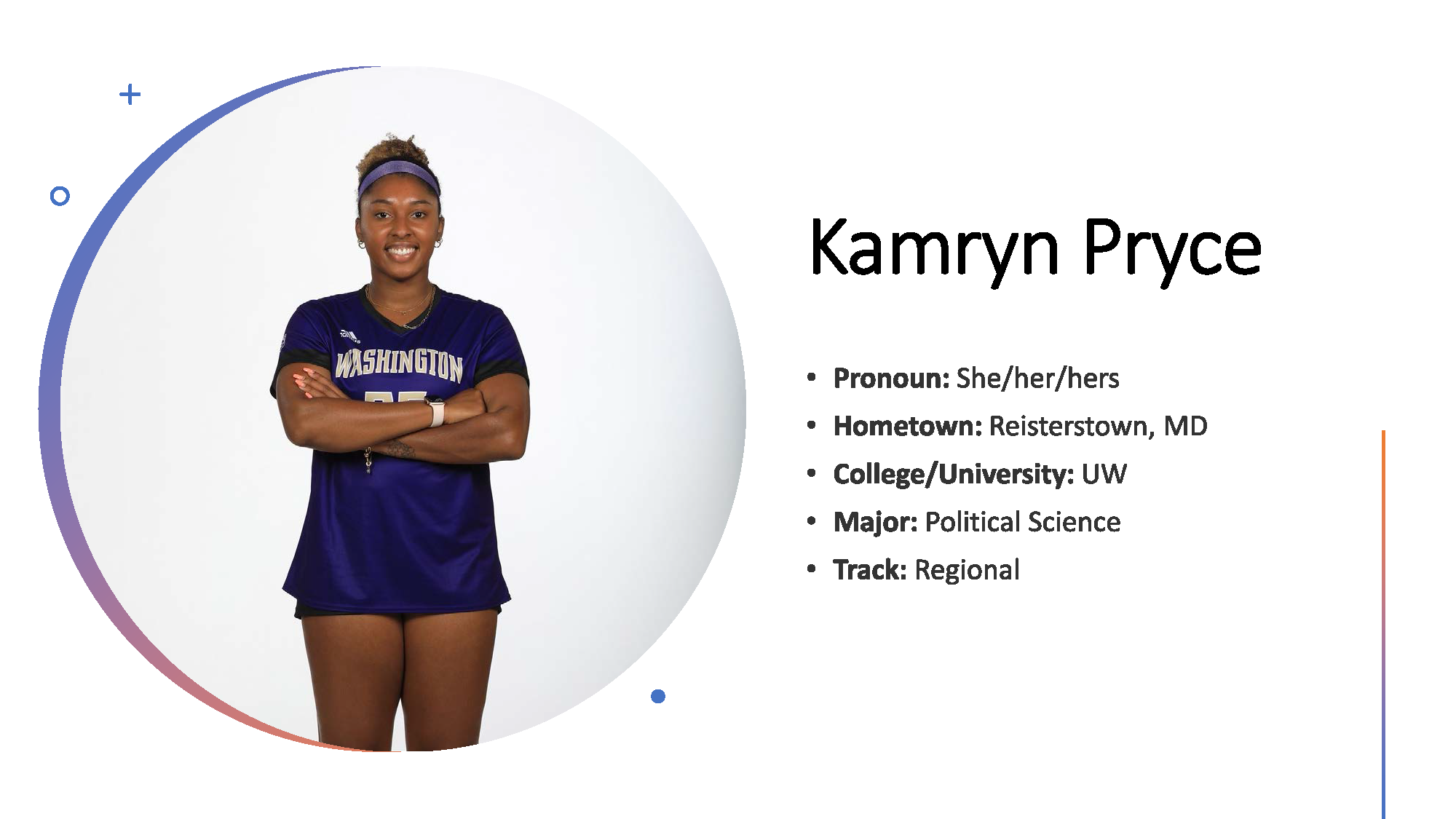
JSI Scholar: Kamryn Pryce

Kamryn Price

Tell us about your story

My name is Kamryn Pryce and I am so excited to take part in the Junior Summer Institute this summer. I was born in Denver, Colorado, but moved to Baltimore, Maryland when I was younger. I have always been drawn to public policy and public service because I have a strong affinity for people, connection, and making a difference. I have been an athlete my entire life, but it was my time as a student athlete, here at UW, that helped me recognize just how far reaching public policy is. It is because of policy, like Title IX, that I get to play the sport that I love at one of the highest levels possible. The ways public policy has positively impacted my life inspired me to continue exploring the field. A career in public policy and public service is a direct way to connect my commitment to equity and accessibility to my strong passion for diversity and advocacy.

What path did you take when you first started college?

I have always wanted to major in Political Science, but as I continued on that path, I realized public policy was my passion because I knew I wanted to make a tangible difference, similar to the way it did in my life.

What made you consider a career in public policy/public service/international affairs?

A main thing that made me consider a career in public policy is that I have felt the positive effects of it firsthand. Along with this, my strong passion for social justice really drove me to further consider a career in public policy. Living in Baltimore during the height of Black Lives Matter protests, I saw how public policy can be so polarizing. Seeing this sparked my desire to continue exploring public policy and see how it can be used as a uniting force, rather than as a dividing one.

Who inspires you to think about public service?

My community at home inspires me to think about public service.

What are you most excited about the JSI program at UW?

I am most excited to be a part of a diverse group of students, who all share similar interests but come from different backgrounds. I am so excited to engage with and learn from one another, while also learning more about effective policy making and what goes into it.

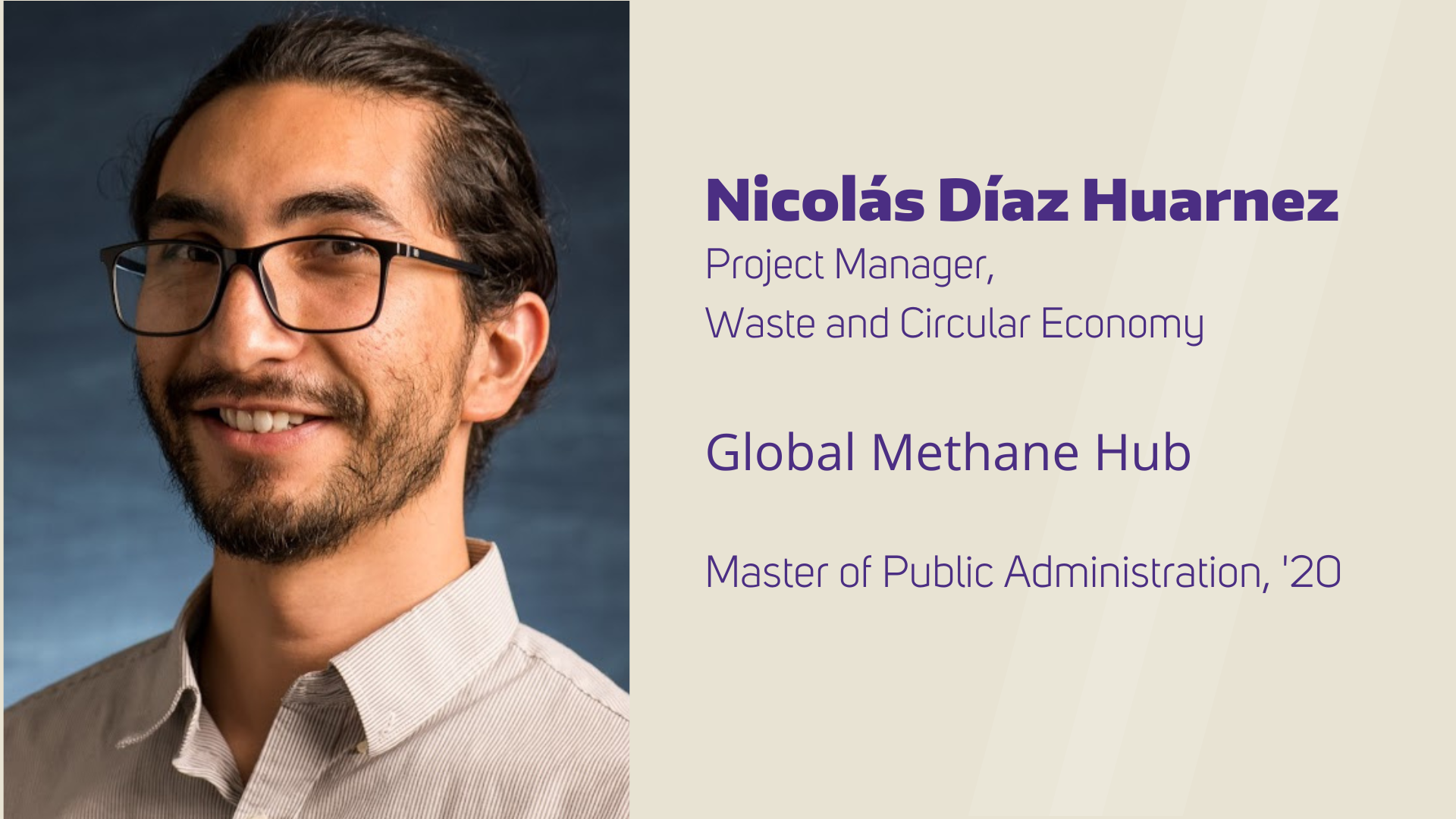
From Waste Research to Climate Policy Change: Nicolás Díaz Huarnez, MPA ‘20

Nicholas Diaz Huarnez

We had the opportunity to connect with Nicolás Díaz Huarnez, MPA ‘20. As a student, Nicolás supported research for Zero Waste Washington, which led to the passage of the 2022 Organics Management Law in Washington state We chatted with Nicolás about his experience at the Evans School, the work he is currently doing in Chile, and his passion for waste management and its connections to climate change. His current role is with Global Methane Hub as a Project Manager for the Waste and Circular Economy Program. The hub is a global philanthropic effort to address methane emissions in alignment with the Global Methane Pledge which has been subscribed by more than 160 countries to reduce methane emissions globally by 30% by 2030, compared to 2020 emissions.

Conversation edited for length and clarity.

Can you tell us a bit about yourself? What led you to pursue your degree at the Evans School?

Before coming to the Evans School, I wanted to connect science and policy for addressing climate change. I was accepted into the Fulbright program and chose to go to Evans because of its strengths in the environmental policy courses – Seattle and Washington state are also very inspiring places to live and to work on environmental policy.

Climate change is one of the most pressing threats to governments and people’s livelihoods. I have been working to connect efforts from policy, science, and from everything that’s been done in practice to overcome climate change, and, with time, I have deepened my focus to address the challenges posed by the management of waste.

While you were at Evans, you were involved in a research effort that led to the passage of the 2022 Organics Management Law in Washington state. Can you share a bit more background about your involvement in this cause? How did your Evans education inform and contribute to your approach to this work?

At Evans, I applied to The Cynthia L. and David S. Harrison Endowed Fellowship for Environmental Policy and was selected to take part as an intern with Zero Waste Washington. They do amazing work—it was a very good match for my interests, and they needed someone to focus on organizing a lot of data to assess the landscape of segregated waste collection and drop-off programs across the state and develop a report. In addition to the environmental policy concentration, I also took classes on quantitative analysis, and I ended up combining the work from those courses with the project at Zero Waste Washington.

It wasn’t easy to do an analysis of all jurisdictions across Washington state. I remember looking at more than 300 jurisdictions, so it was very detailed work. This project allowed me to understand the complexity of setting goals at the state level and the implementation at local jurisdictions. This process was a good learning experience of how challenging it can be to align efforts on a larger scale.

Because of the pandemic, I had to return to Chile with my wife and our two kids. I had just finished up my studies, but I reconnected with Zero Waste Washington before coming back to Chile and joined on to support follow-up report that was much more focused on organics.

This second report was very detailed, too, and it contributed to the 2022 Organics Management Law that Washington passed (HB 1799). We worked with data from the State Department of Ecology and conducted more than 60 interviews with representatives of the public and private waste sector across the state. This was a great combination of what I learned at Evans in terms of understanding the policy process in the U.S. –it is very different from my background here in Chile.I think this work was needed to push decision makers across the state to rethink the way it was targeting and dealing with compost and to share the experience from all the advancements that the City of Seattle was leading by then. We were showing what was required to take this big step at the state level given its climate commitments.

This law is great for Washington state, and we really need to address organics everywhere. I hope this work can permeate the rest of the country and beyond. We need this type of legislation now since we don’t have 100 years to address climate change but less than a decade to avoid its worst consequences.

The Evans School’s values are equity, and service. In what ways are these values part of the work you have done and continue doing?

It takes courage just to talk about climate change. Standing and speaking and doing something about it – and in the case of policy makers and everyone that works on public issues, it takes courage and commitment to work towards those types of targets and goals.

Equity is a cornerstone of what we are doing because you cannot think about waste or emissions without thinking about justice or development or human rights, especially in the waste landscape. It is important because you are talking about people that are exposed to the burden of society because of historical inequities. It is an integral part of whatever you are working on from a public policy lens.

When you come in against these challenges from a public standpoint, you have to believe in what you are doing and be consistent. Although it can be hard sometimes to stay consistent, it’s about being mindful of what you are trying to address through your work, and the way that this work relates to what you are doing as a citizen, as a person, and, in my case, as a father when considering the inter-generational implications of climate change.

I’m very happy to know that this is being highlighted as part of Evans’ alumni profiles, because it is critical. When you try to advance this type of agenda, you really need to commit to the values, too.

Could you share some resources that inspire you, either personally or professionally?

I follow the Freakonomics podcast. It’s very interesting because it’s not only economics, but it also covers how policy intersects with common problems that you find on a daily basis.

For everyone working on climate, please go and read IPCC report. Also try to connect with the people that are organizing around where you are. Get to know not only what’s being thought about and done on the global landscape, but also at the local level.

It’s always important to connect with different opinions – to challenge your potential biases and explore new approaches. It can give you a more complete idea of what the challenges and the problems are. And continue to grow as a person, because I think that’s a key part of understanding your place in the world. In Chile we have a saying “who looks for something finds it.” I use that advice all the time.

Evans School Remains Among Best in the Nation

U.S. News & World Report’s 2024 Best Graduate Schools places the Evans School of Public Policy & Governance among the best schools in the nation and the world.  We are proud that our perennially ranked, top-ten graduate program continues to demonstrate the relevance of our curriculum, the influence of our alumni and the impactful research of our faculty. Having held a top-ten ranking concurrently for more than 10 years is a powerful reminder that the impact we make is real. 

Three of our specializations were also ranked in the top ten: Environmental Policy (2), Nonprofit Management (5), and Public Finance & Budgeting (9).   

Evans School Dean Jodi Sandfort noted: “Our strong national reputation is an important resource we draw upon in setting the direction of public policy education in our country at this time.  Our focus upon democratizing public policy and inspiring public service is being recognized as the next generation of strategies for public policy education. Our students benefit from our engagement with important questions and support for innovating new approaches to policy and management. Through these strategies, we are working to address the inequities built into our institutions and spark a shared belief in the sacred work of public service.”  

These rankings are released annually and are based on reputation and respect among peer institutions. 


Legislative Win for Women and Girls: Absa Samba, MPA ’23

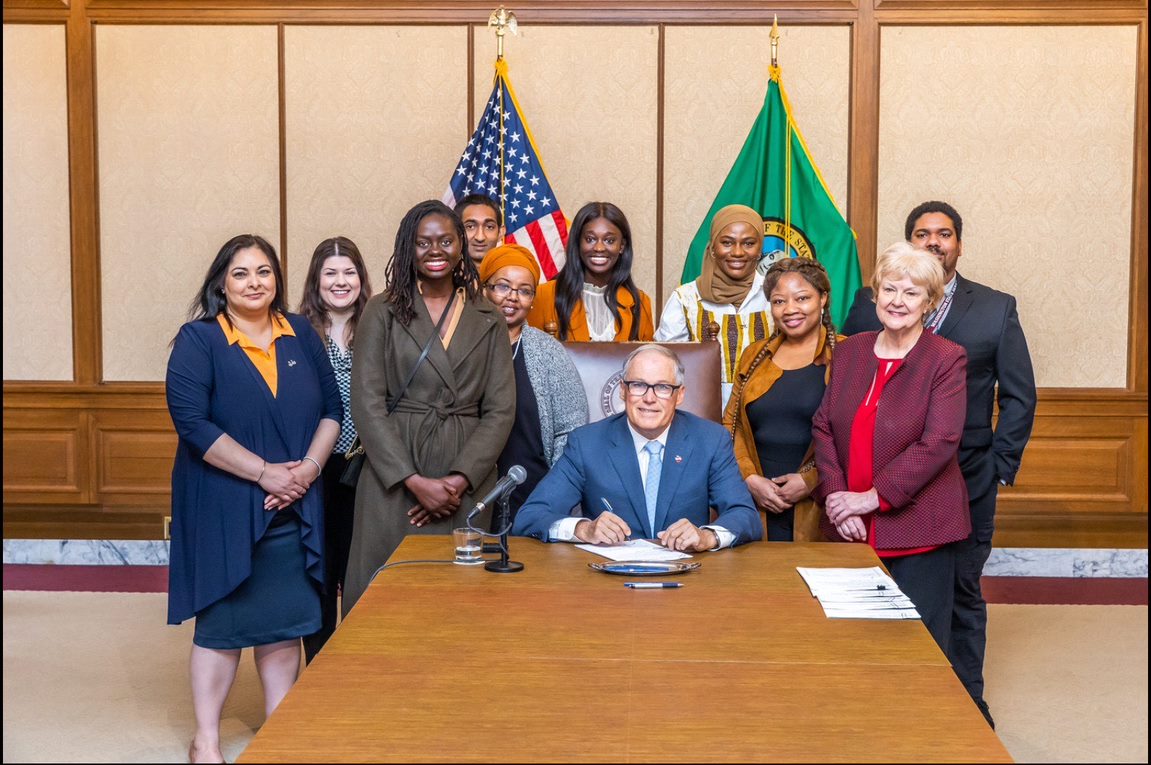
Group stands behind Gov Inslee as he signs bill

We recently had the opportunity to sit down for an interview with current MPA student Absa Samba to learn more about her work leading the Washington Coalition to End Female Genital Mutilation/Cutting and their major legislative victory this session – the passage of Washington’s first bill to protect children from this practice, support those who have experienced FGM/C, and educate communities and service providers.  

Tell us a bit about yourself? What led you to pursue an MPA at the Evans School?

I’m an international student from The Gambia, pursuing a Master of Public Administration and a Master of Social Work. Over the years, I’ve engaged in work and advocacy at the community level, and I’ve seen how policies can be detached from local, everyday realities – I’ve been frustrated by this. I became interested in better understanding how policy formulation works and to be involved in the process. That is what brought me to the MPA program – the disconnect I’ve seen with how policies are shaped and how they impact individuals and communities. I want to see policies work better for the people and communities I serve.  

You’ve been involved in an effort to bring forward legislation pertaining to female genital mutilation/cutting (FGM/C) in Washington State. Can you share more background about your involvement in this cause and the work that led to introducing legislation this year?

I am a survivor of female genital cutting, and, for so long, I didn’t understand why anyone would be subjected to this harmful practice. In middle school, I had the opportunity to be trained on gender equity. For the first time, I had language for what was happening around methe social and gender inequities in my society. I always felt it, but I now had a better understanding of the issue, and it changed my life. From then on, I started doing a lot of advocacies around education for girls and against harmful cultural practices like FGM/C.  

When I moved to the U.S. in 2016 to pursue my undergrad at Champlain College in Vermont, I was invited to classrooms to present on FGM/C, and I realized I needed to make the issue make sense to people here. Through research, I found out that FGM/C is an issue in the U.S. with at least 500,000 women and girls at risk. I made sure my presentations touched on FGM/C as a global issue by focusing on what it is in The Gambia, U.S. and globally. It was through those presentations that I was eventually introduced to a Senator in Vermont in 2019. At the time, Vermont, like Washington, did not have a law addressing FGM/C. I would later testify to the Vermont Senate Health and Welfare Committee on why the state should end the practice and why a preventative approach can help empower communities. In 2020, Vermont would pass a law prohibiting the practice of FGM/C. Later that year, I was invited to join the Connecticut Coalition to End FGM/C which aims to get the state to end this practice, and I continue to work with the coalition there to date.  

During my spring quarter of the MPA program at Evans School, I took the policy analysis core class. We were put in small groups to work on a policy issue. Since I had knowledge of the issue of FGM/C and experience with it—my own personal and advocacy work experiencemy team agreed to make this the focus of our project. We set out to research what the status of FGM/C is in Washington state. We found that Washington state is ranked the eighth highest risk state for FGM/C in the U.S., and that the Seattle-Tacoma-Bellevue metro area is ranked the fifth highest risk city in the U.S. with an estimated 25,000 girls and women at risk of or have undergone FGM/C. We also found that there were two bills introduced in the Washington legislature to address FGMC, but they hadn’t made it out of committee.  

Stephen Kosack, our professor, gave us feedback to research why those bills had failed, and, through this research, I connected with Senator Karen Keiser. She introduced a bill in 2019 but couldn’t get it out of committee due to some opposition from affected communities. Through my conversations with the senator, I saw a desire from her to do something about this issue, and to do it right. I decided then to take my work from a class assignment to actually implementing the project. I seized the opportunity – I offered to do a presentation on the issue in Washington, and she took me up on it.   

Senator Keiser invited other senators who chairs various committees to attend the presentation. I knew then that I needed to invite other people to join me in this space and present alongside me. I invited Bettina Shell-Duncan from the UW Department of Anthropology, who has 25 years of research on this subject, and Mariya Taher who runs an organization called SAHIYO. We did the presentation, and, afterwards, we decided we needed to keep the conversation going. We started to invite more and more folks, and it became apparent that there was a desire across the board to address this issue in Washington. 
Absa testifying before the Washington State Legislature

Personally, I wanted to make sure the voice and needs of individuals and communities impacted by this issue were informing the policy. This goes back to my desire to see policy, from design to implementation, support the best interest of those it’s intended to serve in the first place. We started a coalition of survivors, advocates, legislators, researchers, and national and local organizations to ensure we had an active say in how the bill was crafted. Sen. Kaiser was really generous in making sure the bill contained what we wanted – we had full say on what should and shouldn’t be included in the bill. The coalition itself became survivor-led, which was why it was successful.  

With this approach, it became really exciting to see the support this bill has received. Communities that opposed previous bills joined our coalition to work on this one. Lawmakers have shown their support too—the bill had a unanimous vote in the Senate and a 95 to 1 vote in the House. We also did extensive advocacy during the legislative process, submitting oral and written testimonies to get legislators to see why they should support the bill. 

What are you and your fellow advocates hoping to accomplish with this legislation?

We wanted a holistic approach to ending the practice of FGM/C in Washington state. We were particularly concerned about a potential law that would contribute to perpetuating the existing inequities in the criminal legal system—we wanted a bill that empowered our communities rather than disempowered them.  

We were successful in getting an FGM/C bill passed that prohibits the cutting of a female minor and allows for civil remedies. It also included a statute of limitations allowing a person up to 10 years after to bring civil action against a cutter or 10 years after their 18th birthday.  

The most crucial part of the bill is its education and outreach component which is intended to help communities across Washington State learn about the issue and support those that have been affected. This component will support education for medical practitioners, teachers, first responders, and service providers to help identify those at risk and to better provide care for survivors. The bill also mandates that the state Department of Health is responsible for the implementation of this provision. I believe this to be the most important part of the bill because there is a culture of silence across the board on FGM/C in Washington state. This bill presents an opportunity to have conversations in our communities and workspaces toward ending FGM/C and making sure survivors are accessing the support and care that they deserve. 

What have you learned from navigating the legislative process to date? In what ways has your Evans School experience informed this work?

During our class project, we had to identify the various stakeholders affected by FGM/C, what levels of engagement they should have in addressing the issue, and the powers they hold. That helped me to understand who needed to be involved in this process and what voices need to lead the work. I learned why coalitions are important and the power that they have to make meaningful change. Dean Jodi also gave me great advice to start thinking about what implementation looks like to make sure we protect the integrity and intent of the law once passed. This led our coalition to connect with the Department of Health – as the bill mandates, they are responsible for the education and outreach component.  

The biggest lesson I’ve learned is the value and power in having individuals and communities, who a policy is intended to serve, lead the work in shaping the change. In this case, through this approach, we were able to get allies in spaces where it was least expected. We also were able to get a policy we can all be proud of because it will leave communities and individuals empowered. 
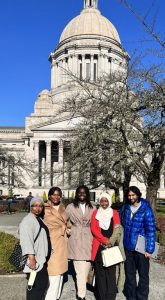
Five women stand in front of the Washington capitol

Another lesson I have learned is the importance of consensus building in this work. I went into this process with view of how easy it would be to work with a coalition of people who all share a common belief that this practice should be prohibited. But as our coalition grew larger, we had a challenge – we all strongly believed that FGM/C should be banned but had disagreements on what approach we should take. As the facilitator, I also had the responsibility of making sure everyone felt like they were heard and that their opinions are valued, which made it even harder. So, as you can imagine, it took a long and necessary amount of time to talk through the various options and come to a consensus as a group to help us move forward in this work together. In the end, everyone was happy with the decisions that were made. It was challenging and frustrating, but I learned that this is a necessary part of the process. 

I also learned the value of self-care. This work comes with a hidden cost which takes a mental and emotional toll on the people who do it. For many of us, it is our personal and lived experiences that we are using to make the change. The emotional and social implications are huge for many survivors who engage in this work. Which is why compassion is also a big part of the work. No one that did this work with our coalition was paid, and people gave their time, stories, expertise, and resources generously.  

We were driven by the desire to see a Washington state where future generations of girls and women will be protected against FGM/C.  

What’s ahead for you? What do you envision doing after you graduate from the Evans School?

I am not sure! I want to have a meaningful impact in the world, and I have a desire to see a world where people can be their whole selves. That is the type of work I want to do. 

Learn more about protecting children in Washington State from FFM/C from Washington Coalition to End FGMC.
New Ruckelshaus Center director named

Ruckelshaus Center Logo

The William D. Ruckelshaus Center – a public policy-minded collaboration between Washington State University and the University of Washington – has found its next director.

Julia Carboni, an associate professor with Syracuse University’s Maxwell School of Citizenship and Public Affairs, was selected to lead the Seattle-based center following a nationwide search. Carboni’s first day in the role will be July 1, 2023.

“The work done by both the Ruckelshaus Center is tremendously important for the impact it has in Washington, as well as its ability to serve as a model for other states and regions. “I am thrilled for the opportunity to lead the Ruckelshaus Center jointly supported by WSU and UW and to partner with elected officials, public and private sector, and other key stakeholders to help expand its impact across the Pacific Northwest and beyond,” Carboni said.

The Ruckelshaus Center offers leaders of public, private, tribal, and non-profit organizations the ability to tap into the experience of WSU and UW researchers and experts to meet the needs of their communities and constituencies. Such projects include assessing the state’s K-12 governance structure, redesigning Washington’s intellectual and developmental disabilities policy, and working toward the preservation of the state’s coastline, among other efforts.

The Office of the Provost and Executive Vice President administers the program at Washington State University in collaboration with UW’s Daniel J. Evans School of Public Policy and Governance.

“It is vital that the next leader of the Ruckelshaus Center advances its core mission to help diverse groups find solutions to some of the most important challenges facing our state and region, and Dr. Carboni is the perfect person to be at the helm,” Elizabeth Chilton, WSU provost and executive vice president, said.

Carboni joined the faculty at Syracuse’s Maxwell school in 2016 as an assistant professor in the Department of Public Administration and International Affairs. In 2020, she was named research director of the school’s Program for the Advancement of Research on Conflict and Collaboration, and a year later was named chair of the school’s Citizenship and Civic Engagement Program.

Carboni holds a Masters of Public Administration as well as a Ph.D. in management from the University of Arizona. Carboni has served numerous non-profit and public service groups, including the Foodbank of Central New York, the Association for Research on Nonprofit Organizations and Voluntary Action, and the University Network for Collaborative Governance.

As part of the nationwide search for the center’s next director, WSU laid out what it envisions as key opportunities and challenges ahead.

“Enhancing Ruckelshaus Center’s visibility and impact, leveraging the full combined capacity of WSU and UW, facilitating cooperation across sectors, and diversifying the financial support the center receives are among the priorities Dr. Carboni will be advancing as she assumes this role,” Chilton said. “It’s also important that the center continues to foster meaningful connections across the state and foster our shared principals of diversity, equity, inclusion and access.”

The center is named in honor of William D. Ruckelshaus, an American politician whose legacy centers on his ability to bring disparate groups together to craft policy. Ruckelshaus was the first to serve as the administrator of the Environmental Protection Agency in 1970. His expertise in navigating disagreements between political parties resonates to this day, with these principals serving as the guides for the center that now bears his name.

WSU and UW opened the center in October 2006 with commitments from the leaders of both universities, Ruckelshaus, and then-Washington state Governor Christine Gregoire.

Visit Ruckelshaus Center Website

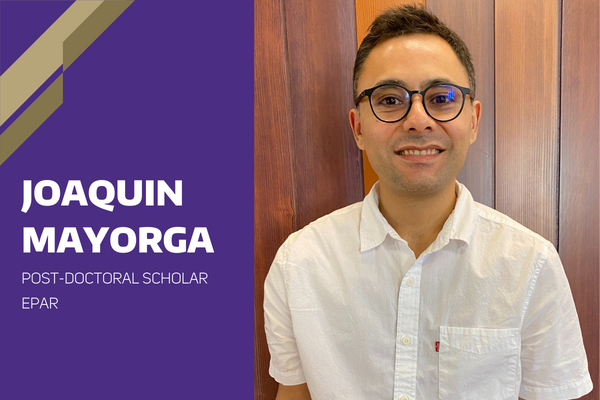
Postdoc Profile: Five Questions with Joaquin Mayorga

Joaquin Mayorga

Joaquin Mayorga recently joined the Evans School of Public Policy & Governance as a postdoctoral scholar with the Evans School Policy Analysis and Research Group (EPAR). He received his Ph.D. in Business Administration with a concentration in Agribusiness from the WP Carey School of Business at Arizona State University and an MA in Economics from the Center for Economic Research and Teaching (Mexico City). Before his graduate studies, he worked as a Junior Researcher at the Center for Environmental-Economic Modeling and Analysis at INESAD in La Paz, Bolivia.

The Evans School spent time with Joaquin to learn more about his research program and interests.

Welcome to the Evans School! You have extensive expertise around the effects of climate hazards on agricultural productivity and small-scale producers’ livelihoods. How did you first become interested in this area of policy research?

Thank you for the welcome! My interest in this area comes from my experience growing up in Bolivia, where about a third of the labor force works in agriculture. I saw firsthand the impact of droughts and receding mountain glaciers on the water supply for cities and small-scale producers in my region. After my undergraduate studies, I worked on data-driven and policy-oriented projects related to forest conservation and agricultural productivity. This experience further motivated me to pursue graduate studies in agricultural economics.

If you reflect on your research portfolio to date, what are a couple findings that stand out to you as particularly important for policymakers to understand?

I think two findings stand out in my research portfolio. One result shows that small-scale producers in Nigeria tend to increase the area planted in adaptation to high-temperature shocks. This adaptation may mitigate income shocks in the short term but may not be sustainable in the long run if it reduces soil quality. The other finding indicates that supply chain contracts between small-scale producers and intermediary firms with a fixed output price and training provision raise farm productivity, particularly for more risk-averse farmers. These findings show the need for policymakers to consider the long-term implications of climate adaptation practices and the advantages of promoting supply chain contracts between small-scale producers and intermediary firms.

Your work leads you to studying agricultural production across the globe. How does working in many different social and cultural settings strengthen your approach to understanding the relationship between climate change and agricultural policy?

In my experience, small-scale producers worldwide face some common climate-related challenges, but the responses and adaptations can vary across countries. Understanding the drivers of these variations is critical in identifying effective policy solutions for climate change challenges. Working across different regions has deepened my appreciation for the importance of context-specific policies to support agricultural producers.

You draw upon many different sources of data in your work. What are the common challenges you encounter around data quality in this area of research? Where are data quality investments most needed?

I sometimes encounter challenges with measurement error, especially when variables like plot size are self-reported by farmers. Also, data availability varies by location, as some low- and middle-income countries have high-quality small-scale producer surveys while others have little to no farm-level data. Given the need to address climate change, I believe it would be helpful to include questions about farmers’ perceptions of climate change in farmer surveys. This addition could provide policymakers with valuable insights.

What excites you most about this post-doctoral research position with EPAR?

What excites me the most about this position is the chance to work on policy-oriented analysis and research in collaboration with stakeholders in the policy-making process. I’m also thrilled to work with a great team of researchers and be part of the broader community at the Evans School and UW. I am looking forward to producing research with real-world impact.

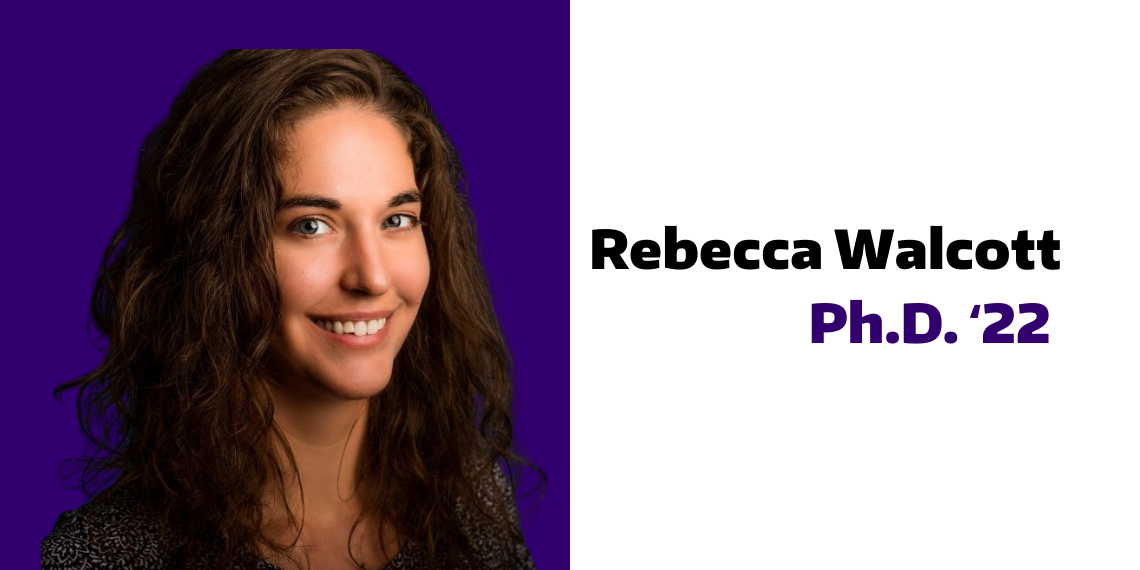
Mobile Interest Policy: Rebecca Walcott, Ph.D. ’22

Rebecca Walcott

Becka Walcott finished her Ph.D. at the Evans School in December 2022, with dissertation work focused on mobile money and financial inclusion tools in sub-Saharan Africa. The Evans School spoke early in the new year with Becka about her dissertation project.

Your project examined innovative mobile money tools. What is mobile money and why are these critical finance tools for households in sub-Saharan Africa?

Mobile money refers to financial transactions that take place over SMS networks on mobile phones. SMS is just regular texting – so users don’t need a smartphone or Wi-Fi connection. Plus, mobile money is usually administered through a telecoms company with agents in village bodegas, which means people don’t need to access formal banks to use it. Thus, mobile money is broadly accessible to populations without internet infrastructure or brick and mortar banks.

You find that earned interest can encourage households to use their mobile wallets to store money. You also find increases in mobile savings do not reduce conventional bank account use. Tell us more about the original insights of this study.

Mobile money regulations vary across countries, and Tanzania was the first country to require mobile money providers to distribute interest to mobile wallet accounts. The banks were worried that the ability to earn mobile wallet interest would cause people to pull their money out of formal savings accounts – or act as a disincentive from opening such accounts. My study was the first to examine the effects of providing mobile interest – and I was able to demonstrate that interest can encourage mobile savings without harming the banking sector. Hopefully this evidence can mitigate the concerns of the banking sector and also encourage other countries to offer more mobile financial tools.

Another study in your dissertation examined preferences for digital repayment among microfinance borrowers in Uganda. Here you use a mixed methods research design to understand why individuals would opt for digital repayment. Why was it valuable to have both quantitative and qualitative evidence in this instance?

The quantitative data could tell us a borrower’s repayment preference at the time the question was asked, plus some important contextual data – but we needed the qualitative data to learn about how each borrower was framing the repayment options. Some were updating their preferences with new information, some were not receiving that new information, and some were influenced by other borrowers. The qualitative data revealed these important nuances that contributed to repayment preference.

You also examine how countries adopt policies governing identity verification across mobile money tools. What did you learn about when countries enact identity verification regulation?

I learned that policy diffusion from regional neighbors likely plays a large role in adoption timing for these policies. I was surprised that I didn’t find more support for hypotheses around domestic factors and policy adoption, and I think there is room for a deeper examination of the way the domestic political economy can influence the diffusion of mobile money regulations.

What’s up next?

I just started my new job as an economist at the American Institutes for Research, primarily working on international development projects. I’m super excited for this new chapter!

Public Health and Policy: Ikrama Hassan, IPPHL ’19

Ikrama Hassan

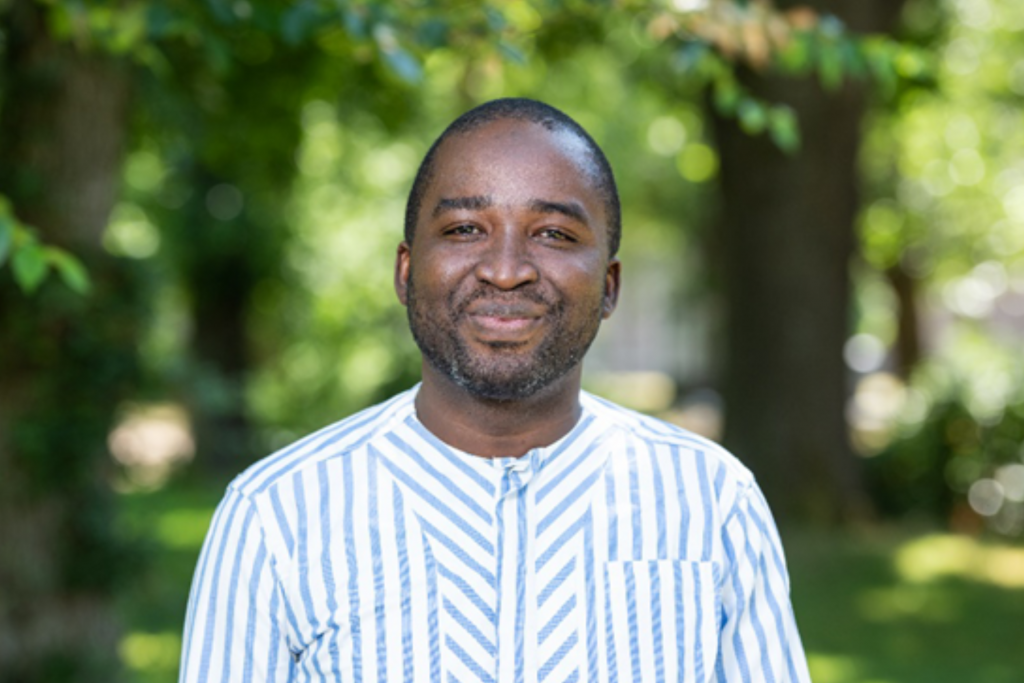
My name is Ikrama Hassan. I am currently the Chief Medical Director of the state specialist hospital – Dalhatu Araf Specialist Hospital – the largest hospital in Nasarawa State, in north central Nigeria. I am a public health physician with experience in health planning, policy and management.

What made you decide to apply to the International Program in Public Health Leadership?

I learned about the program through a colleague and alum of the program who encouraged me to apply. At the time, I was the Director of Health Planning, Research and Statistics at the Nasarawa State Ministry of Health. I am a medical doctor by training, and because there is no formalized leadership and policy training in the medical curriculum, a lot of learning typically happens on the job. Applying for the program turned out to be one of the best decisions I have ever taken.

Looking back at your time as a fellow, do you have any memorable experiences that stand out to you? How does the program inform and contribute to your approach to work and life today?

The composition of the cohort is a special part of this program. Prior to coming to the Evans School, my professional network was limited to within Nigeria and a few individuals in the U.S. and UK. On our first IPPHL class, I found myself in a virtual room with different people from across different African countries. We got to know each other virtually, so when we met in person in Seattle, it was like we knew each other already. By the end of the program, we were all looking forward to meeting again in person during the Capstone, and after that the bond and friendship has continued up till today. In fact, the last time I was in South Africa, one of my cohort members traveled from her home in Pretoria to Johannesburg to welcome me to the country. Whenever I have any issues that I want a second opinion on, I just need to pick up my phone and make a call, and I have friends from across Africa that can help.

I became the Chief Medical Director of the State Hospital during my time in the program. It was a new role for me, and I needed to hit the ground running. The executive coaching component became even more important for me as I entered my new position. Working with my coach, I was able to reorient and start asking the right questions: How do you start? How do you compose your team? How do you begin identifying and mapping stakeholders? Stakeholder engagement is a skill that has served me well, especially when dealing with the labor unions.

I apply the concept of the theory of change daily in my work. It enables me to have a helicopter view of a project. Another part of the program that I have internalized and deploy frequently in my work today is the pitch event, where we practiced compressing our policy papers into a 5-minute delivery. In my role, I meet frequently with the governor, deputy governor, and other political leaders. It’s an extremely valuable skill to be able to condense your thoughts and get to the point in a brief period of time.

What inspired you to pursue a career in public health?

Initially, I wanted to be either a cardiac or neurosurgeon, but after medical school, my father asked me to come back home to work for a while. During this time, I saw the real problems that people in my community were facing. What we most needed was not the high-tech medicine. We needed skills in the prevention and control of epidemic-prone diseases such as Lassa Fever, meningitis, and cholera. We needed basic things in our primary healthcare system. Out of pocket expenditures stood between our poor population and the healthcare system. So, I realized I would be more useful in the public health space than in a consulting room. I wanted to think up and provide solutions at the community and population level than at individual level. I became much more driven by the idea of preventing the diseases from happening, rather than waiting in the consulting room for someone to come in who was already sick. It was not easy making that shift to public health, but I have been happy with it ever since.

Can you share a little bit about the work that you’re doing right now, and what you’re most excited about?

There are so many areas. I’ll highlight a few. One of the major challenges in our healthcare system is the ability for individuals to pay for services. At the hospital, equity in service provision is extremely important. We believe people should be able to access services regardless of their socio-economic background and receive top notch care at an affordable price. While costs are nowhere near what they are in the U.S., we still have a very large population unable to afford services. In my previous role, as Director of Health Planning, Research, and Statistics. I was part of the team that established a social health insurance scheme for the state. Currently 100,000 people have been enrolled in the plan. This is something that I am proud of and continues to have an immense impact.

Recently, I’ve also been really focused on building our hospital’s capacity to conduct research. I’ve set up a team that is encouraging and supporting all our health care workers to participate in research, and I am happy to say that, so far, we have published nearly 20 papers in peer reviewed journals.

One of the major challenges that we’re dealing with in Nigeria is an exodus of skilled health care workers out of Nigeria and Africa to other parts of the world. I’m currently giving a lot of attention to training healthcare workers in our hospital at both post-graduate and undergraduate levels. I’m excited about progress that we’re making, and these are the future of healthcare delivery system in the country.

The Evan School’s values are equity, courage, and service. In what ways are these values part of the work that you have done, and that you continue doing?

Let me start with the courage part of the question. You see, right now, the world at large is going through severe economic difficulties. Many healthcare workers in Nigeria who can find work elsewhere are leaving in droves. For those who have stayed, it requires a lot of courage. My work every day is guided by service and equity. How can we provide services to these millions of people that otherwise could not afford it? And, if all of us leave, who will provide those services?

How do you think about global engagement in your line of work?

So far it has been a one-way traffic from the wealthy donors to us the poor recipients. Although the intention is good, there have been unintended consequences. On the part of the donors, there is the tendency to dictate the tune as well as donor fatigue. On the part of the recipients, the relationship breeds dependence and poor bargaining capacity.

In all, the most important underlying factor in the power asymmetry is the level of economic development. What we need therefore in Africa is no longer the conventional aid but one that will spur economic development on the continent. A country that successfully transits from poor to middle income category no longer needs handouts as aid. That country is more useful to the rest of the world than a poor one dependent on aid.

There is an ongoing debate on how best the global community can help Africa stand on its own. The trend for the last two decades has been an investment on its infrastructure. This is intended to spur manufacturing and an export-led economy a la the Asian Tigers. Critics of this model have pointed to the poor tangible success that have been recorded so far and are drawing attention to the model employed by Latin America where, based on areas of comparative advantage, they invested in agriculture. This paid off and saw the transition of many countries to middle income category.

We need a logical conclusion of this debate and the implementation of the most economically viable option for Africa. An economically strong Africa will be able to finance its public health needs and be a productive partner in the international arena.

Exciting Year for IPPHL

Group of IPPHL scholars engaged in conversation at a table in Parrington Hall

The International Program in Public Health Leadership (IPPHL) is celebrating its seventh year with the announcement of its next cohort, the return to international travel, and the creation of a new Summit gathering in Kenya to spotlight and support alumni in global collective action.

Public Health Leaders as Policy Leaders

IPPHL’s annual fellowship program provides an experiential eight-month learning journey for public health professionals as they design and lead critical policy and program implementation in their countries. Through a mix of online and in-person engagement, fellows work their way through a curriculum designed to build or expand on topics such as theory of change, policy analysis, stakeholder engagement, and personal leadership development.

Fellows identify evidence-based recommendations and plans for real-time implementation, graduating with a policy project ready for action. IPPHL offers a unique combination of approaches to integrate the policy and leadership curriculum including:

  • 1:1 advising relationship with approximately 20 Evans and UW faculty
  • A continent-wide peer network and collaboration opportunities with their cohort and 115 program alumni across Africa
  • Executive coaching for individual leadership development
  • Online and in-person engagement in Seattle and Africa (this year in Nairobi)

Cohort 6

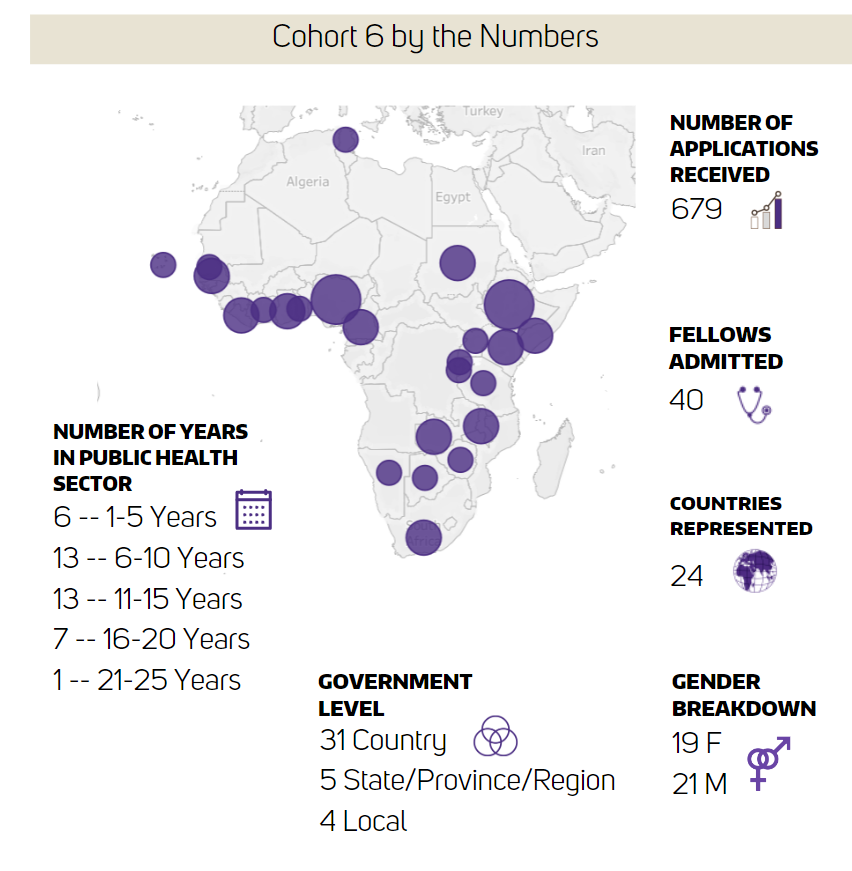
This year’s cohort of 40 fellows hail from 24 different countries and bring a range of expertise including HIV/AIDS, mental health, nutrition, health system strengthening, primary health care, and so much more. Primarily working at the country level within ministries of health, fellows lead in a variety of roles from medical officers to directors to chiefs of staff.

Cohort 6 by the numbers, a map of Africa that shows dots where each participant comes from

Beginning in March, fellows will participate in a series of live virtual sessions to set the foundation of policy analysis and begin development of their chosen policy or implementation challenge.

Past themes from these policy projects include the importance of strategies to increase access to healthcare services, with a strong focus on health equity. These strategies included developing community-based approaches and attending to the most vulnerable populations, including people living with HIV and those dealing with substance use disorders. Health systems strengthening themes also cut across many project areas from telehealth services, supply chain improvements, service coordination, and developing universal health coverage programs. Explore the full compilation of policy project memos from our 2022 cohort.

In June, we will return to international travel for the first time in three years, welcoming Cohort 6 to the Evans School and Seattle for two weeks of workshops and community connections. Fellows meet up again this August in Kenya for their capstone and graduation, entering our robust and active alumni network.

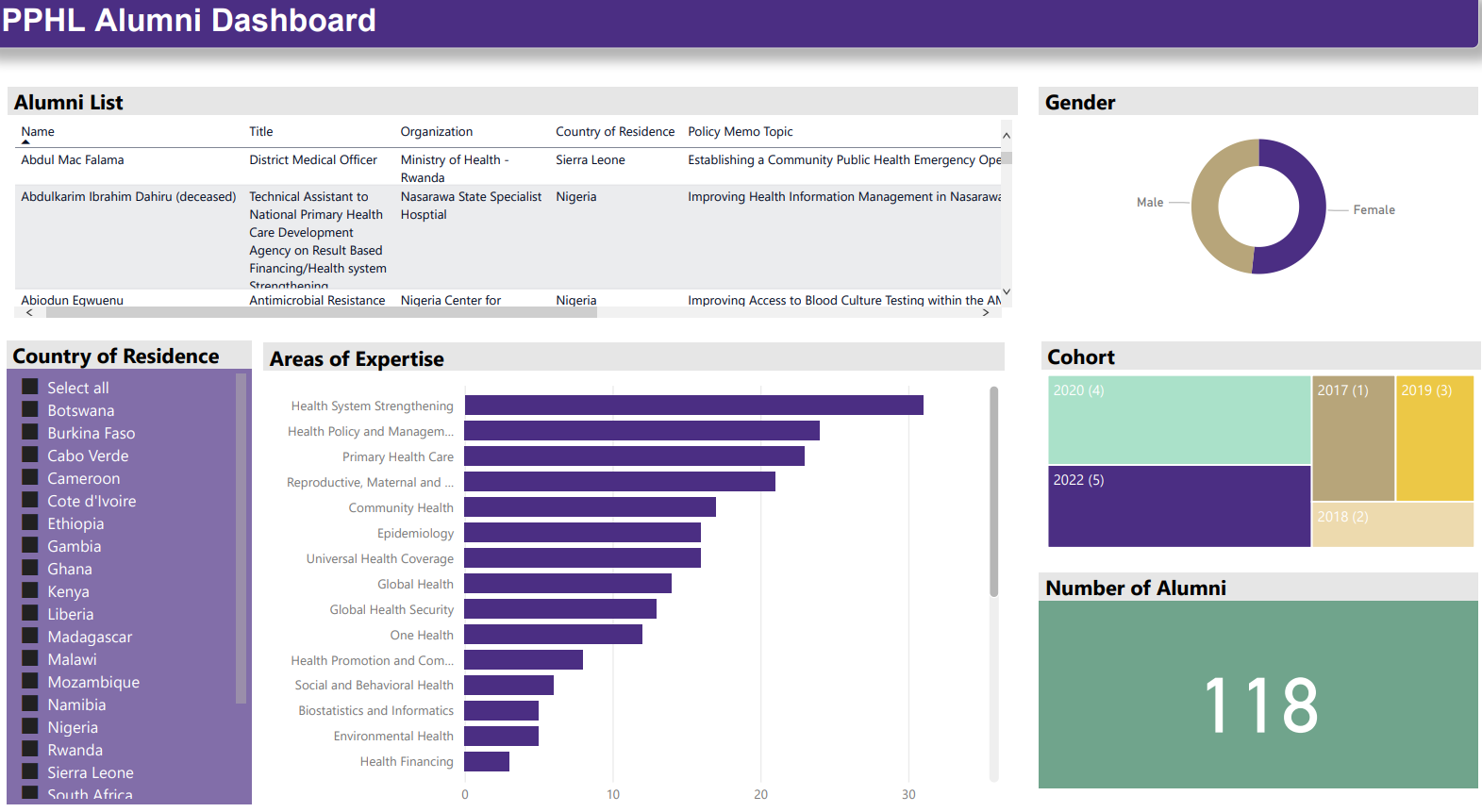
IPPPHL Alumni Dashboard

For the first time ever, IPPHL will host an all-alumni Summit in Nairobi, Kenya this September, bringing together over 150 alumni from 20+ countries across Africa for a series of activities and action. The Summit will launch our community into the next phase of collective action, solidify connections, co-create a shared vision for the future of IPPHL programming, and amplify the work and impact alumni are leading.

Our alumni expertise runs deep, and we invite you to explore our new Alumni Dashboard and imagine how your work might overlap or integrate. Do you have ideas or suggestions on ways to collaborate with the program or our alumni? Let us know: ipphl@uw.edu.

Agricultural Adaptations: Didier Alia, Research Faculty

Didier Alia

Didier Alia recently was appointed a Research Assistant Professor at the Evans School. Alia is an agricultural economist with a broad research interest and expertise in international development with a focus on agricultural technology adoption, agricultural transformation, climate risks and adaptation. He received a Ph.D. in Agricultural Economics from the University of Kentucky in 2017. Prior to this appointment as a Research Assistant Professor, Alia worked for several years as a Research Associate at the Evans School Policy Analysis and Research Group (EPAR).

The Evans School grabbed a few minutes with Didier at the start of this new appointment. 

You are a noted expert in agricultural economics, with a focus on crop productivity and agricultural transformation in Africa. How did you become interested in a research career and in this particular area of study? 

 I came from a small West African country, Benin, that is resource-poor and where agriculture is still the primary source of livelihood for most households. My own family is an agricultural family unable to rely solely on farming to a point that my parents have migrated to the city to seek informal non-farm employment. Growing up, I have seen firsthand the constraints facing farmers in my community. Later in my studies, both at the undergraduate and graduate levels, I learned that these constraints are common across most of sub-Saharan Africa and other developing nations. After my Master in Statistics and Applied Economics, I worked at AfricaRice, a leading rice research center and this experience further motivated me in pursuing doctoral studies in agricultural economics and specializing in crop productivity and rural transformation in Africa with the hope to contribute to solving issues facing rural farmers through policy-oriented empirical studies. 

You are active in many other areas of research as well, right? 

Currently, my research also relates to agricultural price analysis, barriers to trade and developing countries’ access to global markets, and food safety and food regulation in the global food value chain. I often approach this work through gender and inclusion lenses. My work also engages issues related to urbanization, education, health, and trade and their implications for rural development in Africa. 

What are some of the most important research findings to have emerged from your work with EPAR? 

When I joined EPAR in 2017, my first project involved processing large-scale multi-topics household surveys for African countries. It has become incredibly clear to me how important data are to evidence-based decision-making, and yet statistics on agricultural households for most African countries are rare. So, my work with colleagues at EPAR has contributed to global public good with various agricultural development indicators made available. Our work has contributed to the research community by making our code freely available on GitHub for researchers based in Africa or interested in African agriculture to use. My other projects at EPAR involve analyzing decisions around indicator definition and constructions that have important implications about how specific and marginalized sub-groups (women and small farmers) are represented in statistics and policy analyses. Another important finding of my work includes assessing the constraints and drivers of agricultural technologies adoption, productivity growth, and rural transformation in Africa. 

Even though much of your research is grounded in Africa, it connects to a host of issues in other global settings. What research insights from your work stand out as particularly relevant to other regions of the world?

Although Sub-Saharan Africa as a region has its own specificities, issues facing small farmers and their communities in Africa are also prevalent in other regions of the world, most notably South Asia. My work at EPAR also involves India and other South Asian countries. In that region, and in other low-income nations, farmers increasingly face the challenges of climate change and its threats to livelihoods and way of life. My work on agricultural statistics measurement, understanding the drivers of agricultural technologies adoption, productivity growth, and rural development in Africa can inform both the research agenda and policy interventions in these other regions of the world. 

Given your training and experience, what are a few key professional skills or competencies you see as essential to achieving success in agricultural development? 

Like all other social sciences, Agricultural economics has become empirical and data-intense. So, a good understanding of statistics and data and a passion for empirical questions are essential skills for success in this field. Additionally, developing the ability to engage other disciplines and proximate partners in Africa are important professional skills. 

How do you envision your work and research program evolving in the coming years? 

My work is already shifting toward an integration of climate risks and how climate shocks affect rural households’ production and livelihoods. In the coming years, I envision my work and research program to continue to expand in this area. I am also increasingly interested in using a diversified set of datasets in my work, including merging data from novel sources such as remotely sensed and social media data with traditional household survey data to timely study rural development issues. Finally, I envision expanding my work into the capacity development of analysts in Africa who are instrumental to the design, implementation, monitoring, and evaluation of policies that affect the lives of the poor. 

We are lucky to have your work and ideas contribute to our Evans community and to the broader global scholarly community. Thanks for chatting! 

Thank you.