Evans Professor Heather D. Hill and MPA Student Diana Rucavado have published a new Evans Research Brief on Paid Family Medical Leave. The Washington Paid Family and Medical Leave Program (WA Paid Leave) provides up to 12 weeks of paid leave for workers who need time to care for their own medical needs, care for a familymember, or bond with a new child. In interviews with parents who used WA Paid Leave for physical health reasons, either their own or a family member’s, we find that the program allowed the parents to take the time needed to address health issues with less stress about work or income. However, for some taking leave was financially challenging or offered insufficient time for recovery or illness management. The findings of the study provide insight on how specific economic circumstances and/or health conditions affected workers’ experiences during leave.
Category: Research
Isabelle Cohen New Blog on Reducing Child Marriage in Northern Nigeria
Evans faculty Isabelle Cohen has blog post at VoxDev feature her collaborative work with Maryam Abubakar (Chief Technologist, Ahmadu Bello University, Zaria Nigeria) and Daniel Perlman (Girls Education Program Lead, OASIS) around a local intervention to reduce child marriage in Northern Nigeria.
Student Consulting Lab Project Shapes Wildland Firefighter Compensation Policy Conversation
Recent MPA grads Mohammed Alkhars, David Lu, Sam Perkins, and Evan Pierce are helping shape the conversation around wildland firefighter compensation through their capstone project. Not only have they talked with senate and congressional staffers about the report, it’s been picked up by media outlets including the Guardian, Al Jazeera, Washington Post, and NBC, among quite a few others.
Check out their Student Consulting Lab report.
UW Center on Risk and Inclusion in Food Systems (CRIFS) Launches
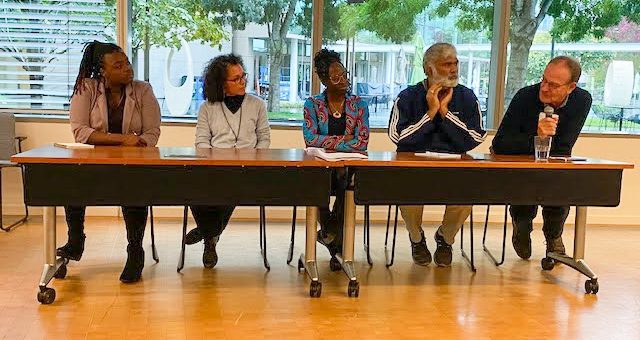
We are excited to announce the launch of the Center on Risk and Inclusion in Food Systems (CRIFS).
CRIFS’ mission is to generate policy and action-focused research for improving the lives and livelihoods of small-scale agricultural producers (SSPs), inclusive of women, in low- and middle-income countries, through increased contributions of social, climate, and other scientists to advancing cost-effective strategies for managing risks and volatility as food systems transform.
The CRIFS launch kicked off on the UW campus with a technical workshop on measuring resilience in collaboration with UC Davis Professor Michael Carter and his USAID Feed the Future Lab on October 16. A day of small working group meetings was followed by a learning event co-hosted by CRIFS and the Gates Foundation, focused on topics central to investing in food systems facing heightened climate and associated risks in South Asia and sub-Saharan Africa. The event brought together a blend of donors, practitioners, and researchers to provide a common grounding in key concepts and definitions, current and projected climate risks faced by food systems actors, and the state of applied research.
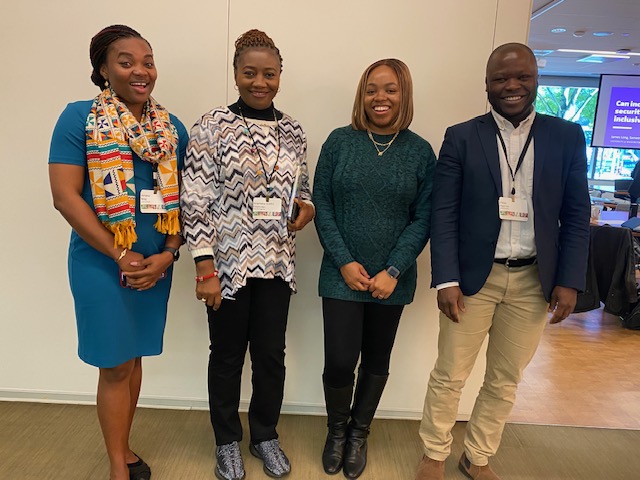
Learning Event Sessions
The six sessions of the learning event covered the broad themes of risk measurement, sub-national heterogeneity, statistical vs. perceived risk, and decision-making under uncertainty, with a strong emphasis on perspectives and methods that embed gender and nutrition dimensions.
- Session 1: Risk Fundamentals 1 – Biophysical food system risks and SSPs
- Chris Funk (UCSB), Mario Herrero (Cornell), Tess Russo (BMGF), and Heidi Webber (ZALF)
- Session 2: Bringing Risk, Nutrition, and Gender into South Asian Climate Platforms and Policies
- Pramod Aggarwal (Borlaug Institute for South Asia), Prabhu Pingali (Cornell), and Shelly Sundberg (BMGF)
- Session 3: Risk Fundamentals 2 – Decision-making and Behavior Change: Risk Perceptions, Poverty, and Risk Communication
- Ann Bostrom (UW), Alison Cullen (UW), and Crystal Hall (UW)
- Session 4: SSP Commercialization and Income Diversification under Risk: Institutions, Infrastructure and the Enabling Environment
- Stanley Wood (BMGF), Ana Paula de la O Campos (FAO), Ken Giller (Wageningen), Avinash Kishore (IFPRI), June Lukuyu (UW), Saweda Liverpool-Tasie (MSU), and Shelly Sundberg (BMGF)
- Session 5: Advancing Measurement of Post-Shock Resilience
- Peter Agamile (UW), Michael Carter (UC Davis), and Jenny Frankel-Reed (BMGF)
- Session 6: Can Increased Food Security Strengthen Inclusive Institutions?
- Didier Alia (UW), James Long (UW), Sameer Shah (UW)
CRIFS to Address Key Elements of Decision-Making
There has been a steady supply of innovative agricultural technologies over the last few decades, but the rate of sustained uptake remains stubbornly low. This is due, in part, to technical knowledge about potential adaption strategies outpacing our understanding of SSP decision-making facing risks. Addressing this disconnect is urgent as climate change increases many SSPs’ exposure to flooding, drought, and extreme temperatures, which compromises rural household production and leads some families to cope by dipping into savings, selling livestock, or reducing food intake.
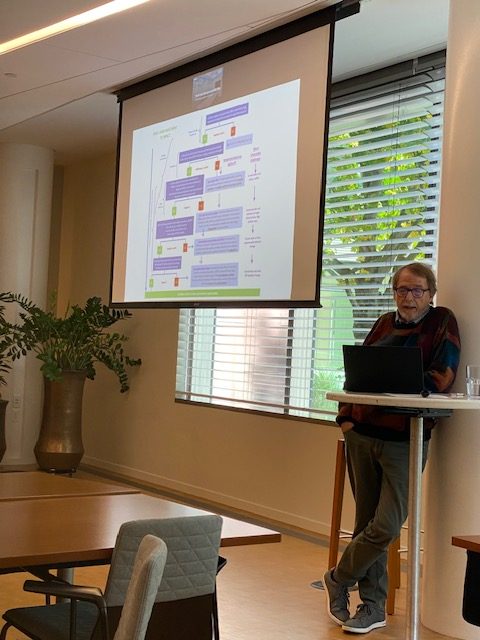
Which is why CRIFS is interest in the bio-physical and political economy of food systems that matter as SSPs make daily decisions on risk/return trade-offs that affect their enterprise and livelihood trajectory. CRIFS is concerned not only with decisions made for managing extreme events, or climate shocks, but with the ongoing communication and choices that may either expose SSPs to excessive risk, or limit their investment potential and, in aggregate, hinder inclusive agricultural transformation.
Public Investments in Community College Baccalaureate Degrees
Investigating Program Approval and Development Data
In recent years, the landscape of higher education has witnessed a significant shift, marked by the proliferation of Community College Baccalaureate (CCB) degrees across 24 states that now award more than 25,000 bachelor’s degrees annually, and growing. Advocates of CCB degrees argue they cultivate talent and bolster state and regional economies, at the same time providing access to baccalaureate programs of study for adult learners and others who are rooted in communities where they work and care for family members and friends.
The University of Washington, in partnership with the firm Bragg & Associates and the Community College Baccalaureate Association is pleased to announce a new $250,000 grant from the Strada Education Foundation to research the data that states and colleges use to make the case for CCB degrees, identifying the strengths and limitations of current CCB policies and program approval processes. Phase one of this multiphase study occurs over the next 18 months and allows the research team to investigate program approval and development processes for new CCB programs in two states. By leveraging mixed methods and data-driven insights, results of the study will inform higher education decision-making and, ultimately, fortify state and local economies by ensuring adults and others served by community colleges gain opportunities for well-paying careers and lifelong learning. While the focus is on CCB degrees, the implications extend beyond community colleges to public investments in higher education.
Dr. Elizabeth Meza, Principal Investigator at the University of Washington Evans School of Public Policy and Governance described this study as “the first to systematically investigate data used for decision-making about CCB program approval and development. If colleges get this right and can provide quality degrees that students want and the labor market demands, all for an affordable cost, it can be a big win. However, the challenge is that’s a lot of moving pieces to consider.”
Dr. Meza, working in partnership with co-Principal Investigator Dr. Debra Bragg of Bragg & Associates, Inc., will examine data used for supply and demand analysis, curriculum and instructional design, partnerships involving colleges and employers and community-based organizations, and equity in student access and program outcomes. According to Dr. Bragg, “an important question the study will ask is how the case for new CCB programs address whether these programs create more equitable baccalaureate pathways for racially minoritized and other under-served populations.”
The Community College Baccalaureate Association (CCBA) is partnering in this project to ensure a robust network of colleges is involved and results are shared nationwide.
Evans School research team studies ballot rejections to improve voter experience

Registered voters in Washington State will be receiving their vote-by-mail ballots in the next few days. Washingtonians have been voting by mail for over a decade and voter turnout in Washington routinely is among the highest in the country. Despite the success of vote-by-mail, a research study by the Evans School of Public Policy & Governance at the University of Washington has been examining why ballots are rejected to improve the voter experience and inform efforts by state and county leaders to continue to reduce the number of ballots rejected in any election.
For a ballot to be valid and counted, it must meet three conditions: Completed ballots must be placed in an official ballot drop box by 8 p.m. on election day or postmarked by election day. Ballot envelopes must be signed by the voter. And, that signature must match the voter’s signature on file with their county elections office. For most voters the signature to match is the one on your driver’s license or state ID, because people commonly register to vote when getting or updating their driver’s license and the Department of Licensing.
County elections offices process ballots and decide whether the signature from the ballot envelope matches what is on file. Ballots without a signature or without a matching signature are thus “challenged” and voters have the opportunity to “cure” or correct their ballot. Counties send out ballot cure letters within 24 hours of a ballot being challenged, which invites voters to submit by mail or in-person a signature verification that cures the ballot. If voters have a phone number on file, they also should receive a phone call from their county election office. Challenged ballots are rejected if they are not cured at the time election results are certified, which occurs about three weeks after election day.
Study director and Evans School Professor Scott Allard reports that roughly 98 to 99 percent of ballots cast in November elections since 2012 have arrived on time with an envelope signature that matches the voter’s signature on file. “Even with this level of success, far too many ballots are rejected each election,” according to Allard. Although each general election is a little different, the study finds that about one-half of rejected ballots in November elections without a presidential or midterm congressional election (a.k.a. off-off-year elections) are simply received late. “Off-off-year elections like those this November get less media attention and less public discussion, which makes it easier to forget to return your ballot on time,” Allard notes.
Project team member Calista Jahn observed several counties processing ballots in November 2022, “it is clear from watching county election offices work that they process ballots carefully and securely and receive training in signature matching that ensures integrity in the voting process. Our election workers are focused on ensuring elections have integrity and that all valid ballots are counted.” The study finds that about 1 in 8 rejected ballots lack a signature, with roughly one-third of rejected ballots challenged for signature mismatches in off-off-year elections.
UW researchers found, however, that about 60 percent of all challenged ballots in November elections are cured before counties certify their final election results. “While this shows that ballot curing processes work, we should still have it be a goal to reduce the number of ballots needing to be cured,” Allard said.
The Evans School study team final report will be delivered to the Secretary of State in early November, but other key findings stand out as voters prepare to fill out their ballots in the next few weeks.
With these results in mind, the study team offers three simple guidelines for voters this election season. “First, sign your envelope,” notes Professor Allard. “Second, when you sign your envelope – sign your name as you do on your driver’s license or state ID. Third, mail or deposit your ballot early – ideally the week before election day, which this year is on Tuesday, November 7, 2023. This will ensure your ballot arrives on time and that you have time to cure your ballot before election day, just in case you forget to sign the envelope or signed too quickly for there to be a good match.”
Voters can go to the Secretary of State elections website and follow their ballot through processing. Allard recommends that voters contact their county election offices with any questions they have about their ballot. He notes that voters also can go to their county election office websites to learn more about vote-by-mail and about ballot curing processes. “Sign your envelope, sign with your license signature, and return your ballot early,” encourages Allard.
David Suarez receives grant from Surdna Foundation
Evans faculty member and nonprofit scholar David Suarez received a research grant from the Surdna Foundation for a project entitled, “What is Effective Participatory Grantmaking? A Comparative Assessment of Four Initiatives.” This project extends Suarez’s growing expertise and research program in participatory grantmaking, a power-sharing approach to grantmaking, which a number of private foundations have pursued in recent years. Since few foundations have evaluated their efforts to share power with stakeholders, the purported benefits of adopting such innovations remain unproven, and insufficient knowledge has accumulated in the field to elucidate critical questions such as whether some practices shape outcomes more than others. To begin to fill this gap, Suarez will complete a field scan of participatory grantmaking practices and initiatives in institutional philanthropy. Then, building on that work, as well as the literature on participation in nonprofit organizations, he will utilize a comparative case study approach to investigate four participatory grantmaking initiatives.
PostDoc Profile: Five Questions with Amaka Nnaji
The Evans School welcomes Amaka Nnaji as a new postdoctoral scholar with the Evans School Policy Analysis and Research Group (EPAR). Dr. Nnaji received her Ph.D. in Development Economics from Lincoln University in New Zealand. She has served as a research fellow for several organizations focused on development economics in Nigeria. Before completing her doctoral work, Amaka received a master’s degree in Agricultural Development Economics from the University of Reading in England.
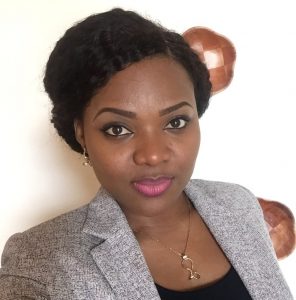
Arriving at EPAR in April 2023, the Evans School caught up with Amaka to talk about her research in development economics.
Evans: Congratulations on your postdoctoral research position at EPAR! Your professional path has focused on a host of economic and environmental topics within Nigeria. What were some formative experiences early on that helped you identify this particular policy research path?
Amaka: Thank you for the warm welcome. My interest in agricultural development economics, particularly in the gender-conflict nexus, comes from my experience growing up in Nigeria where smallholder farmers make up about 35% of the workforce with women contributing the most to crop agronomy with the least remuneration from farm proceeds. Also, the unprecedented impacts of drought and the resulting desertification of available arable land further worsen the situation. The obvious lack of gender-disaggregated and transformative research invariably resulting in the enactment of poor-functioning and ineffective policies further motivated me to pursue this research path.
Evans: Your dissertation and recent publications have focused on farmer-herder conflicts in rural Nigeria. Why is this such a critical issue in sub-Saharan Africa?
Amaka: Farmer-herder conflict is a critical problem in most sub-Saharan African Countries due to rapid population growth and the escalating effects of climate change. Rising temperatures and subsequent drought and desertification have reduced the availability of pasture for nomadic herders to graze their animals. Also, rising population growth has signaled increased crop production which sometimes results in the conversion of grazing reserves to farmland. As a result, sometimes herders graze their animals on farmer’s cropland resulting in a loss of crop yield and income. Some farmers may maim the animals or pursue herders out of their farmlands, herders retaliate, and the vicious cycle of farmer-herder conflicts ensues. Considering the negative impacts of climate change are not stopping anytime soon, there is a need to provide evidence to engender the enactment of suitable policies that enhance adaptation to the adverse conditions increasing the occurrence of these conflicts.
Evans: What are some of the biggest challenges you encounter when conducting research in rural communities and regions?
Amaka: Some challenges I have experienced conducting research in rural regions is a dearth of reliable secondary data on community population, number of farmers and farm size. Also, when carrying out surveys, the lack of efficient internet connectivity and unreliable transportation options through poorly maintained access roads are major problems. For my thesis, I had to collect data from remote conflict-affected regions, and these were the main issues faced by the field team.
Evans: Your published research focuses on many important areas for policy action – climate change, household consumption and food security, land use and farming practice – what are some immediate policy recommendations that stand out from your recent work?
Amaka: Some of my most recent work show that female farmers are more likely to be food secure when given more access to productive resources like land. This demonstrates the need for more gender-transformative policies to bridge the persistent gender gap in access to productive resources. Also, empirical evidence of both direct and indirect negative impacts of climate change induced farmer-herder conflicts on agricultural productivity shows the need for policies to facilitate the migration to more sustainable farming systems like ranching and paddock grazing in developing countries.
Evans: How do you see your research program evolving in the next few years?
Amaka: I have always been passionate about using academic research to support and influence public policymaking. In the next couple of years, I am looking forward to using spatial modeling techniques to facilitate the development of sustainable livestock production systems in developing countries. Also, working with the amazing team of researchers in the Evans School will enable me to contribute to research with clear social and political development relevance, that produces valuable evidence for the academic community, policymakers and non-governmental stakeholders in the continued fight for global gender equity, women’s empowerment, poverty reduction and inclusive growth.
Evans: We are lucky to have you join our community – welcome!
Amaka: Thank you!
Visiting Scholar: Q&A with Debra Hevenstone
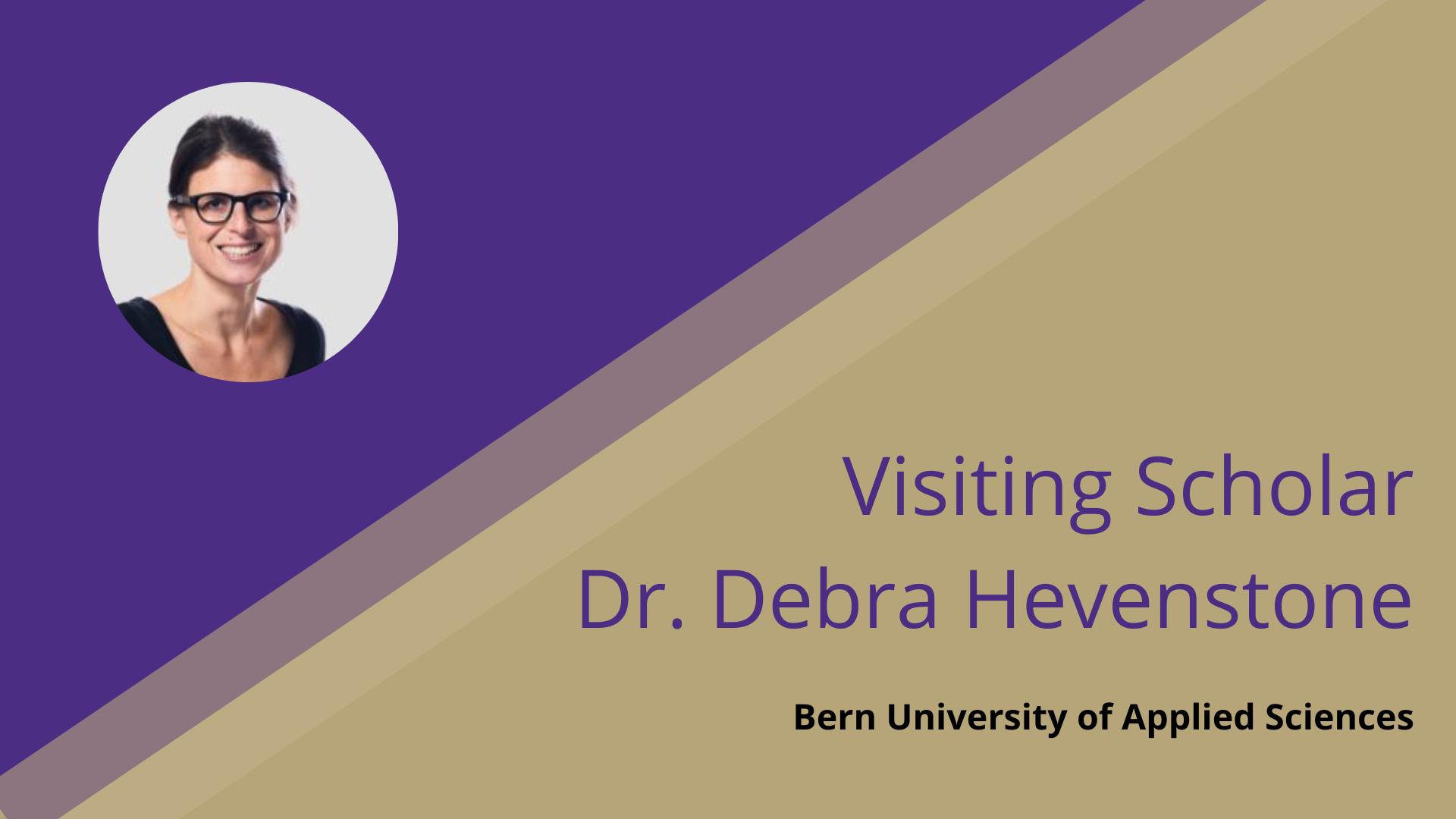
The Evans School welcomes Professor Debra Hevenstone from the Bern University of Applied Sciences in Switzerland, as a Visiting Scholar for Spring Quarter 2023. Debra, who received her Ph.D. in the joint Sociology-Public Policy Program at the University of Michigan, sat down with the Evans School when she arrived in mid-April.
Evans School: Welcome to Seattle and the Evans School! Tell us a little about your research program and current projects.
Debra: Great to be here! This is an exciting time because I am at a critical juncture with respect to projects. In the past few years, I had several big projects which are mostly being wrapped up. One study funded by the Swiss National Science Foundation (SNF) looked at how a reduction in Swiss unemployment insurance entitlement impacted divorce, health, employment, and poverty differentially depending on family circumstances. A second SNF project (not yet published!) looks at the Swiss child penalty, the reduction in earnings experienced by women upon having their first child, examining the extent to which it can be explained by part-time work, the standard working model for Swiss mothers. Another project funded by the Swiss Network for International Studies looked at Social Impact Bonds, a newish way to fund social services that involves investors. The project goal was to estimate the counterfactual impact of financing. The project brought up a lot of questions for me beyond the published results about how scientific paths of inquiry are set and about efficiency in social policy provision.
Looking forward, I am planning a project examining how Hackathons, multi-day volunteer events where digital or technical prototypes are developed, might be used as labor market integration tools for high-skill refugees to integrate at-level, an area where few interventions have been found to be effective. of the project will also use Hackathons as a sort of laboratory in market design, testing whether deferred acceptance algorithms can be used to create stable and inclusive teams.
Evans School: Your work has clear real-world policy application. How do you connect your research findings to policy and practice?
Debra: This is one of the things that is most important to me in my work. The interplay between empiricism and practice became a focus for me when I was a college student, and read a lot of Dewey and Rorty in a philosophy class on pragmatism. I try to integrate in my projects not just a one-way science communication, but an exchange. For example, within the SNF project on unemployment we hosted an end-event called “Dialogue between research and policy: An interactive workshop about work, family, and social policy,” where we brought together policy makers (from all levels of government), leaders of non-profits, and academics. For our project on the Swiss child penalty, we presented our results not only at academic conferences, but also at the Swiss Federal Social Insurance Office. To be totally honest, when it comes to the exchange between research and practice – I am constantly learning what works.
Evans School: That is an important observation that resonates across our research community. One of your new project ideas focuses on comparing social policy across European and North American federal systems. This project is in its earliest stages, but what core questions are guiding your inquiry?
Debra: As you say, this project is at the very beginning stages. When I was a young analyst at the Brookings Institution, I worked for a political scientist studying the devolution of U.S. welfare cash assistance. Back then I felt like devolution just introduced unnecessary inequities—I was not convinced by arguments about “laboratories of democracy.” But over the decades I have seen many cases where I think federalism has advantages – like in our study of social impact bonds (SIBs) we saw more fiscal constraint in our Swiss SIB, where policy choices were local, compared to our UK case where key choices were federal – with qualitative research suggesting it was about political accountability. I am hoping to take the case of childcare subsidies, where there is variability over time and space in state versus local control and look at the negative effects of devolution (inequality in support or access and discontinuous or downward sloping benefit reduction rates) versus the positives (fiscal constraint and adjustment to local conditions).
Evans School: While in residence at UW, you will be collaborating with Social Work and Evans adjunct faculty to connect social work students in Bern and Seattle. Please share how you and Jennie will facilitate learning across these two different social and political settings.
Debra: My university is encouraging digital exchange classes in a particular format called COIL, where students first meet in a few sessions all together, then work in small mixed-nationality groups, and finally rejoin at the end of the semester presenting their work. The idea is that we can have an environmentally friendly academic and cultural exchange, with students only flying for longer semester or year-long exchanges. This is important as our shorter exchanges are being geographically limited: no more travels outside of Europe. Jennie and I are going to do a single session exchange to test how it works. The Swiss and American students will read the same or similar materials, and then we will meet for an online seminar. Depending on student feedback following the exchange, I am hoping we might develop a semester-long course. This is, however, not such a simple thing. Administratively there must be similar course needs in the two locations, and then there is the question of whether students can really exchange on a long-term joint international project on-line. And then I wonder if such a course could be a first step towards an exchange agreement. This is hard for us in Switzerland, as a few students would want to visit the US, but the US universities – even state schools – are just too expensive comparatively. Anyhow, the potential positive is big, so it’s worth a try, right? I also think the Swiss students would like the Pacific Northwest – related to the next question!
Evans School: Exciting work! Last question – what kind of adventures do you and your family hope to have while in the Pacific Northwest this spring and summer?
Debra: We are really thrilled to be in the Pacific Northwest!! We are planning camping in the San Juan Islands and Olympic Peninsula. Maybe an outing to Portland and Mount Rainier. I have fond memories of climbing around Leavenworth, but I think my daughter is still too young for that. Locally I am really excited to show my daughter the Ballard locks in June when the fish start to run, and we have already enjoyed the Burke Gillman trail. My husband is really excited about the biking around Seattle while I am working – and I am jealous! The nature here is just breathtaking and it is a privilege to be here.
Evans School: Sounds like you have a wonderful spring ahead! Welcome to our community!
Debra: Thanks!
New Ruckelshaus Center director named

The William D. Ruckelshaus Center – a public policy-minded collaboration between Washington State University and the University of Washington – has found its next director.
Julia Carboni, an associate professor with Syracuse University’s Maxwell School of Citizenship and Public Affairs, was selected to lead the Seattle-based center following a nationwide search. Carboni’s first day in the role will be July 1, 2023.
“The work done by both the Ruckelshaus Center is tremendously important for the impact it has in Washington, as well as its ability to serve as a model for other states and regions. “I am thrilled for the opportunity to lead the Ruckelshaus Center jointly supported by WSU and UW and to partner with elected officials, public and private sector, and other key stakeholders to help expand its impact across the Pacific Northwest and beyond,” Carboni said.
The Ruckelshaus Center offers leaders of public, private, tribal, and non-profit organizations the ability to tap into the experience of WSU and UW researchers and experts to meet the needs of their communities and constituencies. Such projects include assessing the state’s K-12 governance structure, redesigning Washington’s intellectual and developmental disabilities policy, and working toward the preservation of the state’s coastline, among other efforts.
The Office of the Provost and Executive Vice President administers the program at Washington State University in collaboration with UW’s Daniel J. Evans School of Public Policy and Governance.
“It is vital that the next leader of the Ruckelshaus Center advances its core mission to help diverse groups find solutions to some of the most important challenges facing our state and region, and Dr. Carboni is the perfect person to be at the helm,” Elizabeth Chilton, WSU provost and executive vice president, said.
Carboni joined the faculty at Syracuse’s Maxwell school in 2016 as an assistant professor in the Department of Public Administration and International Affairs. In 2020, she was named research director of the school’s Program for the Advancement of Research on Conflict and Collaboration, and a year later was named chair of the school’s Citizenship and Civic Engagement Program.
Carboni holds a Masters of Public Administration as well as a Ph.D. in management from the University of Arizona. Carboni has served numerous non-profit and public service groups, including the Foodbank of Central New York, the Association for Research on Nonprofit Organizations and Voluntary Action, and the University Network for Collaborative Governance.
As part of the nationwide search for the center’s next director, WSU laid out what it envisions as key opportunities and challenges ahead.
“Enhancing Ruckelshaus Center’s visibility and impact, leveraging the full combined capacity of WSU and UW, facilitating cooperation across sectors, and diversifying the financial support the center receives are among the priorities Dr. Carboni will be advancing as she assumes this role,” Chilton said. “It’s also important that the center continues to foster meaningful connections across the state and foster our shared principals of diversity, equity, inclusion and access.”
The center is named in honor of William D. Ruckelshaus, an American politician whose legacy centers on his ability to bring disparate groups together to craft policy. Ruckelshaus was the first to serve as the administrator of the Environmental Protection Agency in 1970. His expertise in navigating disagreements between political parties resonates to this day, with these principals serving as the guides for the center that now bears his name.
WSU and UW opened the center in October 2006 with commitments from the leaders of both universities, Ruckelshaus, and then-Washington state Governor Christine Gregoire.