Skip to content

Postdoc Profile: Five Questions with Joaquin Mayorga

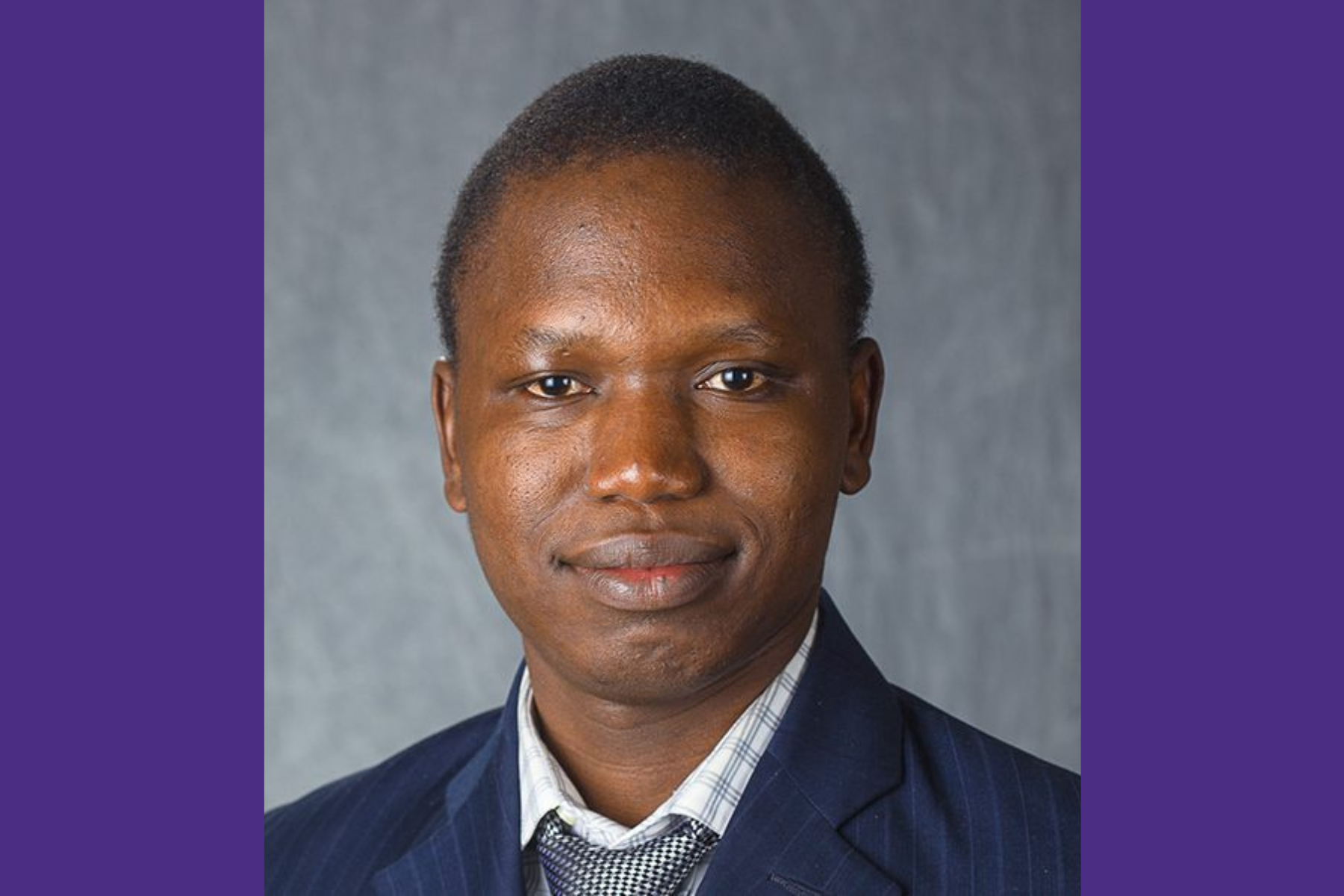
Joaquin Mayorga

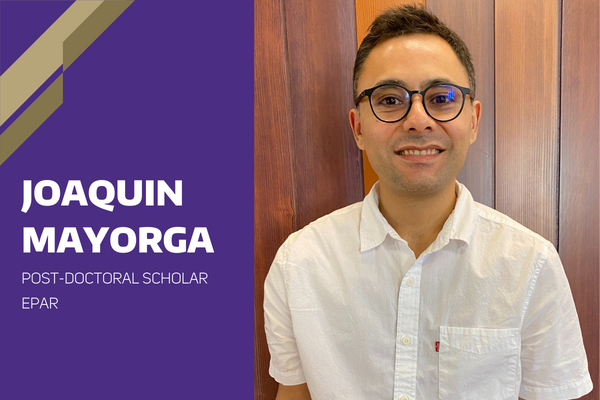
Joaquin Mayorga recently joined the Evans School of Public Policy & Governance as a postdoctoral scholar with the Evans School Policy Analysis and Research Group (EPAR). He received his Ph.D. in Business Administration with a concentration in Agribusiness from the WP Carey School of Business at Arizona State University and an MA in Economics from the Center for Economic Research and Teaching (Mexico City). Before his graduate studies, he worked as a Junior Researcher at the Center for Environmental-Economic Modeling and Analysis at INESAD in La Paz, Bolivia.

The Evans School spent time with Joaquin to learn more about his research program and interests.

Welcome to the Evans School! You have extensive expertise around the effects of climate hazards on agricultural productivity and small-scale producers’ livelihoods. How did you first become interested in this area of policy research?

Thank you for the welcome! My interest in this area comes from my experience growing up in Bolivia, where about a third of the labor force works in agriculture. I saw firsthand the impact of droughts and receding mountain glaciers on the water supply for cities and small-scale producers in my region. After my undergraduate studies, I worked on data-driven and policy-oriented projects related to forest conservation and agricultural productivity. This experience further motivated me to pursue graduate studies in agricultural economics.

If you reflect on your research portfolio to date, what are a couple findings that stand out to you as particularly important for policymakers to understand?

I think two findings stand out in my research portfolio. One result shows that small-scale producers in Nigeria tend to increase the area planted in adaptation to high-temperature shocks. This adaptation may mitigate income shocks in the short term but may not be sustainable in the long run if it reduces soil quality. The other finding indicates that supply chain contracts between small-scale producers and intermediary firms with a fixed output price and training provision raise farm productivity, particularly for more risk-averse farmers. These findings show the need for policymakers to consider the long-term implications of climate adaptation practices and the advantages of promoting supply chain contracts between small-scale producers and intermediary firms.

Your work leads you to studying agricultural production across the globe. How does working in many different social and cultural settings strengthen your approach to understanding the relationship between climate change and agricultural policy?

In my experience, small-scale producers worldwide face some common climate-related challenges, but the responses and adaptations can vary across countries. Understanding the drivers of these variations is critical in identifying effective policy solutions for climate change challenges. Working across different regions has deepened my appreciation for the importance of context-specific policies to support agricultural producers.

You draw upon many different sources of data in your work. What are the common challenges you encounter around data quality in this area of research? Where are data quality investments most needed?

I sometimes encounter challenges with measurement error, especially when variables like plot size are self-reported by farmers. Also, data availability varies by location, as some low- and middle-income countries have high-quality small-scale producer surveys while others have little to no farm-level data. Given the need to address climate change, I believe it would be helpful to include questions about farmers’ perceptions of climate change in farmer surveys. This addition could provide policymakers with valuable insights.

What excites you most about this post-doctoral research position with EPAR?

What excites me the most about this position is the chance to work on policy-oriented analysis and research in collaboration with stakeholders in the policy-making process. I’m also thrilled to work with a great team of researchers and be part of the broader community at the Evans School and UW. I am looking forward to producing research with real-world impact.
Mobile Interest Policy: Rebecca Walcott, Ph.D. ’22

Rebecca Walcott

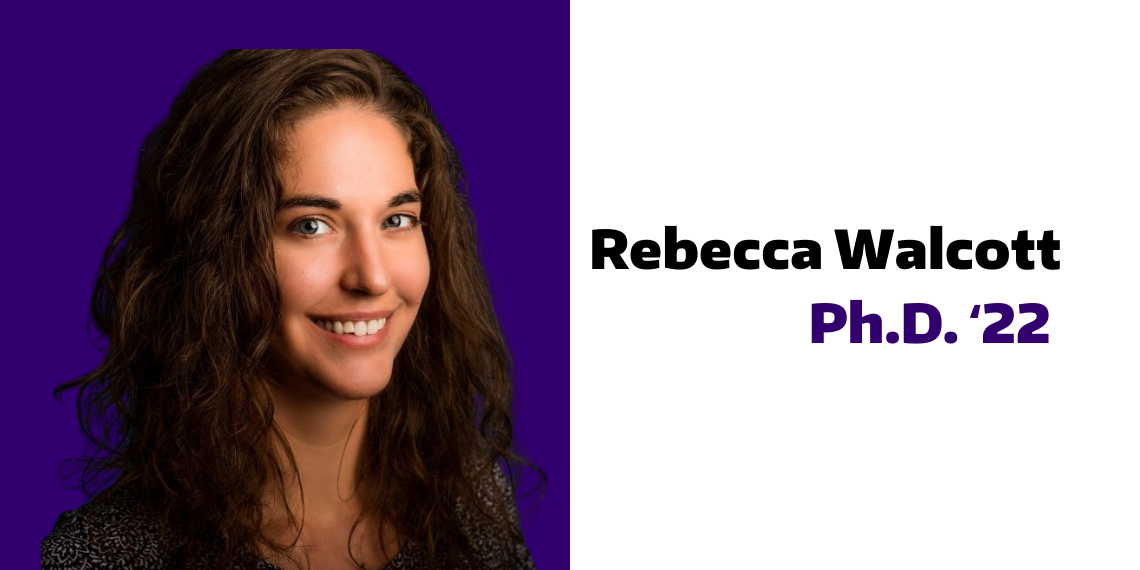
Becka Walcott finished her Ph.D. at the Evans School in December 2022, with dissertation work focused on mobile money and financial inclusion tools in sub-Saharan Africa. The Evans School spoke early in the new year with Becka about her dissertation project.

Your project examined innovative mobile money tools. What is mobile money and why are these critical finance tools for households in sub-Saharan Africa?

Mobile money refers to financial transactions that take place over SMS networks on mobile phones. SMS is just regular texting – so users don’t need a smartphone or Wi-Fi connection. Plus, mobile money is usually administered through a telecoms company with agents in village bodegas, which means people don’t need to access formal banks to use it. Thus, mobile money is broadly accessible to populations without internet infrastructure or brick and mortar banks.

You find that earned interest can encourage households to use their mobile wallets to store money. You also find increases in mobile savings do not reduce conventional bank account use. Tell us more about the original insights of this study.

Mobile money regulations vary across countries, and Tanzania was the first country to require mobile money providers to distribute interest to mobile wallet accounts. The banks were worried that the ability to earn mobile wallet interest would cause people to pull their money out of formal savings accounts – or act as a disincentive from opening such accounts. My study was the first to examine the effects of providing mobile interest – and I was able to demonstrate that interest can encourage mobile savings without harming the banking sector. Hopefully this evidence can mitigate the concerns of the banking sector and also encourage other countries to offer more mobile financial tools.

Another study in your dissertation examined preferences for digital repayment among microfinance borrowers in Uganda. Here you use a mixed methods research design to understand why individuals would opt for digital repayment. Why was it valuable to have both quantitative and qualitative evidence in this instance?

The quantitative data could tell us a borrower’s repayment preference at the time the question was asked, plus some important contextual data – but we needed the qualitative data to learn about how each borrower was framing the repayment options. Some were updating their preferences with new information, some were not receiving that new information, and some were influenced by other borrowers. The qualitative data revealed these important nuances that contributed to repayment preference.

You also examine how countries adopt policies governing identity verification across mobile money tools. What did you learn about when countries enact identity verification regulation?

I learned that policy diffusion from regional neighbors likely plays a large role in adoption timing for these policies. I was surprised that I didn’t find more support for hypotheses around domestic factors and policy adoption, and I think there is room for a deeper examination of the way the domestic political economy can influence the diffusion of mobile money regulations.

What’s up next?

I just started my new job as an economist at the American Institutes for Research, primarily working on international development projects. I’m super excited for this new chapter!

Agricultural Adaptations: Didier Alia, Research Faculty

Didier Alia

Didier Alia recently was appointed a Research Assistant Professor at the Evans School. Alia is an agricultural economist with a broad research interest and expertise in international development with a focus on agricultural technology adoption, agricultural transformation, climate risks and adaptation. He received a Ph.D. in Agricultural Economics from the University of Kentucky in 2017. Prior to this appointment as a Research Assistant Professor, Alia worked for several years as a Research Associate at the Evans School Policy Analysis and Research Group (EPAR).

The Evans School grabbed a few minutes with Didier at the start of this new appointment. 

You are a noted expert in agricultural economics, with a focus on crop productivity and agricultural transformation in Africa. How did you become interested in a research career and in this particular area of study? 

 I came from a small West African country, Benin, that is resource-poor and where agriculture is still the primary source of livelihood for most households. My own family is an agricultural family unable to rely solely on farming to a point that my parents have migrated to the city to seek informal non-farm employment. Growing up, I have seen firsthand the constraints facing farmers in my community. Later in my studies, both at the undergraduate and graduate levels, I learned that these constraints are common across most of sub-Saharan Africa and other developing nations. After my Master in Statistics and Applied Economics, I worked at AfricaRice, a leading rice research center and this experience further motivated me in pursuing doctoral studies in agricultural economics and specializing in crop productivity and rural transformation in Africa with the hope to contribute to solving issues facing rural farmers through policy-oriented empirical studies. 

You are active in many other areas of research as well, right? 

Currently, my research also relates to agricultural price analysis, barriers to trade and developing countries’ access to global markets, and food safety and food regulation in the global food value chain. I often approach this work through gender and inclusion lenses. My work also engages issues related to urbanization, education, health, and trade and their implications for rural development in Africa. 

What are some of the most important research findings to have emerged from your work with EPAR? 

When I joined EPAR in 2017, my first project involved processing large-scale multi-topics household surveys for African countries. It has become incredibly clear to me how important data are to evidence-based decision-making, and yet statistics on agricultural households for most African countries are rare. So, my work with colleagues at EPAR has contributed to global public good with various agricultural development indicators made available. Our work has contributed to the research community by making our code freely available on GitHub for researchers based in Africa or interested in African agriculture to use. My other projects at EPAR involve analyzing decisions around indicator definition and constructions that have important implications about how specific and marginalized sub-groups (women and small farmers) are represented in statistics and policy analyses. Another important finding of my work includes assessing the constraints and drivers of agricultural technologies adoption, productivity growth, and rural transformation in Africa. 

Even though much of your research is grounded in Africa, it connects to a host of issues in other global settings. What research insights from your work stand out as particularly relevant to other regions of the world?

Although Sub-Saharan Africa as a region has its own specificities, issues facing small farmers and their communities in Africa are also prevalent in other regions of the world, most notably South Asia. My work at EPAR also involves India and other South Asian countries. In that region, and in other low-income nations, farmers increasingly face the challenges of climate change and its threats to livelihoods and way of life. My work on agricultural statistics measurement, understanding the drivers of agricultural technologies adoption, productivity growth, and rural development in Africa can inform both the research agenda and policy interventions in these other regions of the world. 

Given your training and experience, what are a few key professional skills or competencies you see as essential to achieving success in agricultural development? 

Like all other social sciences, Agricultural economics has become empirical and data-intense. So, a good understanding of statistics and data and a passion for empirical questions are essential skills for success in this field. Additionally, developing the ability to engage other disciplines and proximate partners in Africa are important professional skills. 

How do you envision your work and research program evolving in the coming years? 

My work is already shifting toward an integration of climate risks and how climate shocks affect rural households’ production and livelihoods. In the coming years, I envision my work and research program to continue to expand in this area. I am also increasingly interested in using a diversified set of datasets in my work, including merging data from novel sources such as remotely sensed and social media data with traditional household survey data to timely study rural development issues. Finally, I envision expanding my work into the capacity development of analysts in Africa who are instrumental to the design, implementation, monitoring, and evaluation of policies that affect the lives of the poor. 

We are lucky to have your work and ideas contribute to our Evans community and to the broader global scholarly community. Thanks for chatting! 

Thank you. 

West Coast Fishing Community Climate Vulnerability

Row of Fishing Boats

A study conducted in partnership between The Nature Conservancy and the University of Washington was published today in the journal PLOS Climate. Led by Dr. Laura Nelson, the study asked fishers operating in the California Current along Washington, Oregon and California, about their perceptions of climate vulnerability, inquiring about the degree to which they felt that they are personally, and the industry is able to respond and adapt to climate change.

This article is part of an ongoing research series funded by Lenfest Ocean Programs and spearheaded by Dr. Phillip Levin at The Nature Conservancy and University of Washington, and Dr. Alison Cullen, University of Washington, which takes an interdisciplinary approach to studying the social and ecological vulnerability of fishing communities along the U.S. West Coast to changing ocean conditions.

The study provides a previously missing piece of the insight into climate communications, potential barriers to adaptation, and approaches for equitable and effective climate adaptation in the fisheries industry. Researchers surveyed 162 respondents working in fisheries across California, Oregon, and Washington and found that perceptions of climate vulnerability differed widely based on fundamental beliefs about whether or not climate change is occurring, and that people who fished on larger vessels felt they had a greater ability to adapt to climate change. In addition to climate impacts, survey respondents named operational costs, regulations, and habitat loss as key concerns; factors that if left unaddressed could present barriers to long-term adaptation.

Perceptions of climate vulnerability play an important role in behavior and will be a factor in how and to what extent individuals take action to adapt to climate change. Insight into these perceptions can be applied to climate communications within the fisheries industry as well, as policy actions that improve the ability of fishers to adapt to climate change can increase overall resilience, and the benefits outside of climate adaption need to be clearly articulated. As the industry and fisheries management work to support fishers in the future, understanding the concerns of fishers and how they perceive climate risks is valuable and essential to inform climate adaptation efforts moving forward.

This paper builds on recent research also conducted by the TNC and UW partnership and published in PLOS One, which developed a framework to assess community vulnerability by quantitively analyzing factors such as species exposure and sensitivity to changes in climate, economic reliance, and community social factors that are indicators of a communities’ ability to adapt to climate change.

Together, these studies provide a holistic understanding of climate vulnerability and adaptation potential for the fisheries industry in the California Current which fisheries managers and regional governing bodies can apply to create equitable and effective climate adaptation measures that benefit both people and marine ecosystems.

Community Colleges and Policy: Elizabeth Meza, Research Scientist

Elizabeth Meza

Elizabeth Meza joined the Evans School as a Senior Research Scientist with expertise in workforce development, career and technical education, and community colleges. She earned her Ph.D. in Higher Education from the University of Washington in 2015 and is founder of Apple Meza Education Consulting. Prior to joining Evans, Elizabeth held several research positions focused on higher education both on the UW campus and at several local community colleges.

Currently, Elizabeth is working on several grant funded projects including one that researches student outcomes in Community College Bachelor’s degrees with New America and an NSF funded project with Evans faculty Grant Blume looking at data use by community college faculty. Elizabeth also has a new NSF-funded research Hub entitled, Community College S-STEM Network (CCSN).

The Evans School took a few minutes to chat about her growing research program and connections to our community.

Welcome! Before moving to talk about specific projects – tell us how you developed a passion for higher education policy research.

Thank you for giving me the opportunity to share! I became interested in education as a Peace Corps volunteer in Bolivia. I got very close with my neighbor who was about 10-years-old at the time. He was one of six siblings and to help the family he would come cook dinner with me almost every night and we would send the dish back to his house. He taught me a lot and we started an extended conversation about how he could get out of the extreme poverty he was facing. Together, we came to the conclusion that getting a good education was his best path forward. When I returned to the U.S. this idea stuck with me and I started working at community colleges. I absolutely love community college students and their stories and worked for many years directly with students as an administrator and faculty member teaching Sociology. My research now focuses as much as possible on practical projects that can directly impact students.

What do you see as the most significant opportunities and challenges facing community colleges in the Puget Sound region today?

That’s a great question! With the pandemic the most immediate challenge has been around enrollment although there does seem to be an enrollment pick up now and we’ll have to watch how minoritized and other non-traditional students are returning. One big opportunity I see is with community college bachelor’s degree programs (CCB’s). Our region faces an Opportunity Mirage where we should be seeing lots of opportunities to get bachelor’s degrees in high demand areas like healthcare and IT but in reality, those programs at our university and regional public universities are capacity constrained or students may not be able to access them for a number of other reasons. This leaves community college students and returning students in a bind. They often can’t find the programs they want or they turn to for-profit entities. The opportunity to offer bachelor’s degrees has the potential to be a game changer for institutions and students.

Your work exemplifies how scholars can use a range of research methods to explore pressing policy questions of the day. What has drawn you to mixed methods research?

Many of the questions I am looking at are under researched so there is both a “what is happening?” and a “why is this happening?” component. I like to use quantitative and qualitative methods to answer as much as possible.

Reflecting on our work to date, share with us two or three key insights into higher education that have emerged from your research program?

I am now a nationally recognized expert on community college bachelor’s degree outcomes and when I started researching this topic no one really knew much about who takes up CCB degrees, why they do so, or what their outcomes are. My research (along with my excellent colleague and mentor Dr. Debra Bragg and others) has led to us discovering that CCB students look like other students at the community college in terms of demographics but are older, more likely to have dependents, and more likely to be veterans than community college transfer students. So, this is really a different population of students that are entering CCB programs and thus, these programs are extending educational opportunities. We’ve also found that CCB students have similar employment outcomes to students who attend a regional public university in a similar degree program.

Tell us about your new NSF-funded project.

That is going to be a great project and I’m excited to share it with you. I’m a Co-PI working with PI Michelle Van Noy from Rutgers, and others from the University of Southern Florida, the Foundation for California Community Colleges as well as colleagues from community colleges including Everett Community College. Essentially, the National Science Foundation has a large grant program called S-STEM where they provide funding to STEM students directly for scholarships, and also funding for colleges to enhance STEM completion through efforts like mentoring, tutoring, or specialized advising among many others. We have won a “Research Hub” to bring together what is known about community college student decision making processes in STEM. I’ll be leading an effort to do a systematic review about what is known about S-STEM in community colleges. The Hub as a whole has lots of components including building a nation-wide learning community so it will be a great opportunity for Evans scholars to become more involved with the community college world.

We are excited to have your voice and work contributing to our community – thanks for meeting up to talk!

Thanks so much! I’d love to share more and learn more about how my work might overlap with others at Evans! I joined just as the pandemic was getting started and work mostly remotely from my home on the Eastside so I don’t know as many people at Evans as I would like, please reach out if you’d like to talk.

Working to End Homelessness: Matt Fowle, MPA, ’17, Ph.D., ’22

Matthew Fowle

Matt Fowle finished his Ph.D. at the Evans School in August 2022, where his work focused on homelessness and housing precarity. The Evans School caught up with Matt this fall to talk about his research program.

Your dissertation project centers on the racialization of homelessness in America. Why this is such an important lens through which to view housing precarity today?

About 1 in 5 Black households will be unhoused in their lifetime, yet we treat homelessness as if it were a rare experience for most Americans and seldom study the causes of racial disparities in homelessness. In a recently published article from my dissertation, I document the extensive history of homelessness among Black, Latinx, and Native American communities. I find that mass displacement has been publicly sanctioned in the US for centuries to segregate, exclude, and impoverish people of color. The persistence of racialized homelessness requires greater attention to the racist institutions and policies that reproduce homelessness rather than the individual conditions faced by people experiencing homelessness. For example, our primary approach to homelessness focuses on individual-level treatments that assume the causes of homelessness are a set of pathologies (e.g., drug addiction or mental illness). Instead, we must focus on structural interventions that situate homelessness in a broader system of racialized socioeconomic inequality, account for historic harms, and address longstanding systems that perpetuate racial stratification.

Eviction moratoria were put in place during the COVID-19 pandemic to protect vulnerable households from losing their homes. You explored the impact of Washington’s eviction moratoria – what did you find?

Our study of the experiences of low-income renters in Washington state found that landlords who were unable to use the housing courts to formally evict a tenant due to the moratorium turned to informal, and often illegal, evictions to remove tenants. These informal evictions sometimes involved landlords shutting off utilities, changing locks to front doors, and removing tenant possessions without permission. During our interviews with low-income tenants, one family’s apartment had a leaking roof that led to black mold spreading throughout her children’s bedroom. Their landlord refused to fix the roof because they owed rent. Using survey and administrative data, we estimated that the prevalence of forced mobility among low-income tenants nearly doubled from 6.5% in the year before the pandemic to 11.0% in the first year of the pandemic. Despite lower chances of formal eviction during the pandemic, low-income tenants faced a 179% increase in the odds of experiencing an informal eviction tactic compared to the year prior to the start of the pandemic.

One of the major contributions of your dissertation project is to draw attention to rising homeless deaths. You created a website that reports local homeless mortality figures from places around the country. How did this incredibly important part of your project emerge?

During my first year at UW, I witnessed an unhoused person die on a sidewalk. I felt compelled to help in some way. I found that we have no idea how many people experiencing homelessness die each year across the country. There is no nationwide database that helps us quantify the extent of this problem. In fact, even when these databases exist in major cities, the information is rarely made public. My dissertation and public scholarship shine a light on this hidden problem. I founded Homeless Deaths Count, an organization to collect and publicize data on deaths among unhoused people. As a public policy student, I have learned that it is often through public pressure that things change.

I incorporated the project as part of my dissertation because I wanted to better document trends in homeless mortality over time and understand why homeless deaths were increasing, even when the homeless population was shrinking in some parts of the country. In my research, I find that homeless people overwhelmingly die of preventable causes like heat stroke, hypothermia, alcohol poisoning, overdose, and heart disease at between on average 49 and 53 years of age. I attribute these deaths to what I call “systemic neglect.” These people have been collectively abandoned by systems that provide housing, healthcare, and social support. I shared some of the preliminary results from this work with the Guardian and Jacobin. In future work, I plan to examine excess homeless deaths during the pandemic and identify successful policy responses that reduce homeless mortality.

It is moving to hear how you translated this personal experience into an important tool to improve awareness about homeless deaths. Much of your dissertation work has direct relevance for policy and practice – how do you manage your research program so that it is meaningful to scholars and to policy communities?

I believe in a future where housing is not a privilege but a right that we all deserve. Through my research and collaborations, I am determined to not only end the human devastation resulting from homelessness but to contribute to efforts that seek to end homelessness itself. In addition to publishing in academic journals, I feel a responsibility to engage the public on topics on which I have expertise and to share research findings with policymakers and practitioners who might be able to affect change. I also believe that academics can facilitate change by using their research skills to support communities making a difference. Generally, I think that if the topic you are studying has relevance to people’s health and well-being, it is (or can be made) meaningful to scholars and policy communities.

You are just starting an exciting postdoctoral research position – tell us about it.

I joined the University of Pennsylvania’s School of Design as a Postdoctoral Fellow at the Housing Initiative at Penn. Much of my work focuses on the Housing Choice Voucher program, formerly known as Section 8. There is an incredible amount of administration required to implement these programs across the country, and considerable burdens are placed on low-income renters to successfully use a housing voucher. One area of research involves examining who drops out of the voucher application process from when a household first applies to when they successfully rent a home with their voucher. We’re also trying to identify why low-income households might not want to apply for a housing voucher. Another area of research that I am excited about is an evaluation of a Universal Basic Rent program in Philadelphia. The Philadelphia Housing Development Corporation is distributing rental assistance as cash with no strings attached to households rather than through the traditional housing voucher system. The goal of the program is to understand the impact of cash infusions on household stability and economic well-being.

Evaluting King County Emergency Shelter Program

Apartment Front

The COVID-19 pandemic presented numerous challenges to housing and homeless service providers. Congregate emergency shelters–one of the most common homeless interventions–became high-risk locations for transmission of COVID-19. At the start of the pandemic, King County, Washington shifted more than 700 people from congregate shelters into hotels to reduce the risk of transmission.  

The College of Built Environments and Evans School adjunct faculty Gregg Colburn, Evans faculty Rachel Fyall, and a team of collaborators evaluated the impact of this King County pilot program in real-time. Results from this mixed methods evaluation were published in the highly regarded journal Housing Policy Debate.  Hotels as Noncongregate Emergency Shelters: An Analysis of Investments in Hotels as Emergency Shelter in King County, Washington During the COVID-19 Pandemic, drew on housing service data, state COVID disease reporting, and emergency dispatch calls, as well as interviews with program clients and staff.  

The study found that those who moved to hotels had much lower exposure to positive COVID cases compared to those who remained in congregate settings. Moreover, program clients reported that group hotels offered a more stability and opportunities to engage staff. Consistent with expectations of the housing literature, the presence of designated personal spaces, greater personal security, and predictable delivery of meals were found to enhance the well-being of residents. Group hotels provided safe and stable environments, but did not offer permanent or long-term housing solutions. Lessons from this novel intervention, however, demonstrate the types of changes and improvements that can be made to emergency homelessness responses in order to better serve those experiencing housing precarity. 

Tackling Common Challenge in Administrative Data

Chats and graphs laying on a table

Scholars and policymakers increasingly utilize administrative data from public program systems to understand program trends, implementation, and impact. Often times, however, administrative data resources lack key pieces of information or are not linked in a manner that allows researchers to examine questions about interplay between different types of programs.

For the last several years, a team of scholars at the Evans School and the UW School of Social Work have been building a large linked administrative data set that overcomes some of the common limitations. UW Social Work and Evans adjunct faculty Jennie Romich, along with Evans School faculty Mark Long, Heather Hill, and Scott Allard and doctoral students Callie Freitag and Elizabeth Pelletier, have worked to create the Washington Merged Longitudinal Administrative Data (WMLAD), which can be analyzed help answer a host of questions about employment, safety net program participation, and well-being. WMLAD links data from 2010 to 2017 across a number of Washington State agencies: Employment Security Department (ESD); Department of Social and Health Services (DSHS); Health Care Authority (HCA); Department of Health (DOH); Secretary of State (SOS); Department of Licensing (DOL); Washington State Patrol (WSP).

Another common challenge confronting administrative data involves identifying household spatial location at regular intervals, while protecting the confidentiality and anonymity of households in the data. Not all administrative data contain address information and addresses may not be consistently updated over time.

Recently, WMLAD team members Mark Long, Elizabeth Pelletier, and Jennie Romich developed an analytic strategy to construct regular spatial location information in instances where WMLAD has sporadic information about spatial location. This important technical work was featured in a Population Studies article entitled, “Constructing Monthly Residential Locations of Adults Using Merged State Administrative Data. The authors develop a simple, but powerful, algorithm for predicting monthly residential location when information about location may occur less often in the data. Of particular importance is developing a rigorous way to impute the timing of a residential move for an individual, when long spells exist between two different address entries and it is not clear when the move may have occurred. Not only is this work critical to generating meaningful insights about the interplay of work, social programs, and workplace regulation, but it serves as a model for other scholars to follow in similar administrative data settings.

Alison Cullen Leads Research on Wildfire Risk

Wildfire

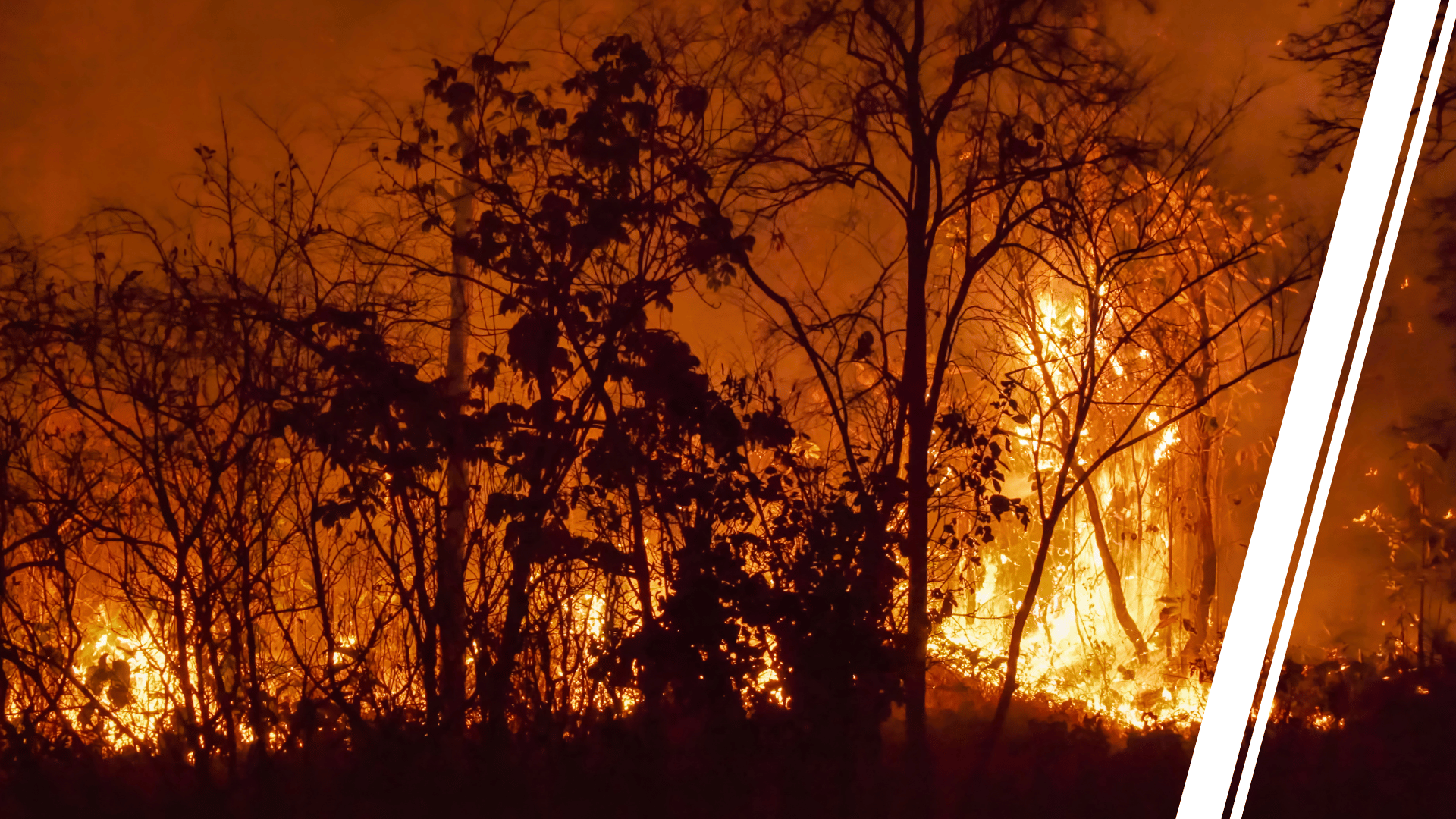
Alison Cullen, the Daniel J. Evans Endowed Professor of Environmental Policy at the Evans School, along with researchers from University of Washington, NCAR (National Center for Atmospheric Research), and University of California, Merced, leads an NSF-funded project titled, ”Managing Future Risk of Increasing Simultaneous Megafires,“ that explores the challenges megafires currently pose to decision makers and stakeholders, and supports proactive planning for future scenarios to mitigate risk. This interdisciplinary research team brings expertise in decision science, climate science, statistics, and fire science to collaborations with a host of decision makers including fire managers, fire ecologists, and land managers for tribal and U.S. government agencies.

Emblematic of this work have been two recent co-authored publications the explore wildfire risk and managements strategies. In June 2022, Evans Ph.D. student Sunniva Bloem, along with Cullen and co-authors, published an article, “The Role of International Resource Sharing Arrangements in Managing Fire in the Face of Climate Change,” in the journal, Fire. Longer and more impactful fire seasons are proving to outstrip national fire suppression capacity in many settings, which have led to resource sharing arrangements between countries across the globe. The authors explore the recent emergence of these partnerships and identify paths to strengthening cross-national resource sharing agreements.

More recently, Cullen contributed to the work of a large team that published an article entitled, “Reimagine Fire Science for the Anthropocene,” in Proceedings of the National Academy of Sciences (PNAS) Nexus. Amid rising fire dangers globally, the article develops a cross-disciplinary research agenda essential to improving mitigation of and response to an “increasingly flammable world.”

Effectiveness of Balanced Budget Laws 

Capitol Building on back of money

Nearly all states have adopted balanced budget laws that limit spending and borrowing to ensure budgeting processes rely on currently available resources. However, despite their salience in statehouses, there isn’t clear evidence of how balanced budget requirements affect state budgets.

Using a unique mix of budgeting and accounting data, Evans School Associate Professor Sharon Kioko, and University of Georgia Assistant Professor Michelle L. Lofton examine how different types of balanced budget laws affect the health of state budgets. Their study finds evidence that most balanced budget requirements don’t dramatically increase the likelihood a state will report a balanced budget or higher balances in the General Fund. The authors largely attribute these findings to the fact that balanced budget requirements are from the late 1800s and are not well-suited for the complexities in state budgets today. Kioko and Lofton conclude, “without reforms to their structure and operation, [balanced budget requirements] BBRs will likely continue to be ineffective instruments of budget constraints.” Kioko and Lofton published their findings in a recent Public Finance Review article entitled, “Balanced Budget Requirements Revisited.”