Skip to content

Effectiveness of Balanced Budget Laws 

Capitol Building on back of money

Nearly all states have adopted balanced budget laws that limit spending and borrowing to ensure budgeting processes rely on currently available resources. However, despite their salience in statehouses, there isn’t clear evidence of how balanced budget requirements affect state budgets.

Using a unique mix of budgeting and accounting data, Evans School Associate Professor Sharon Kioko, and University of Georgia Assistant Professor Michelle L. Lofton examine how different types of balanced budget laws affect the health of state budgets. Their study finds evidence that most balanced budget requirements don’t dramatically increase the likelihood a state will report a balanced budget or higher balances in the General Fund. The authors largely attribute these findings to the fact that balanced budget requirements are from the late 1800s and are not well-suited for the complexities in state budgets today. Kioko and Lofton conclude, “without reforms to their structure and operation, [balanced budget requirements] BBRs will likely continue to be ineffective instruments of budget constraints.” Kioko and Lofton published their findings in a recent Public Finance Review article entitled, “Balanced Budget Requirements Revisited.”

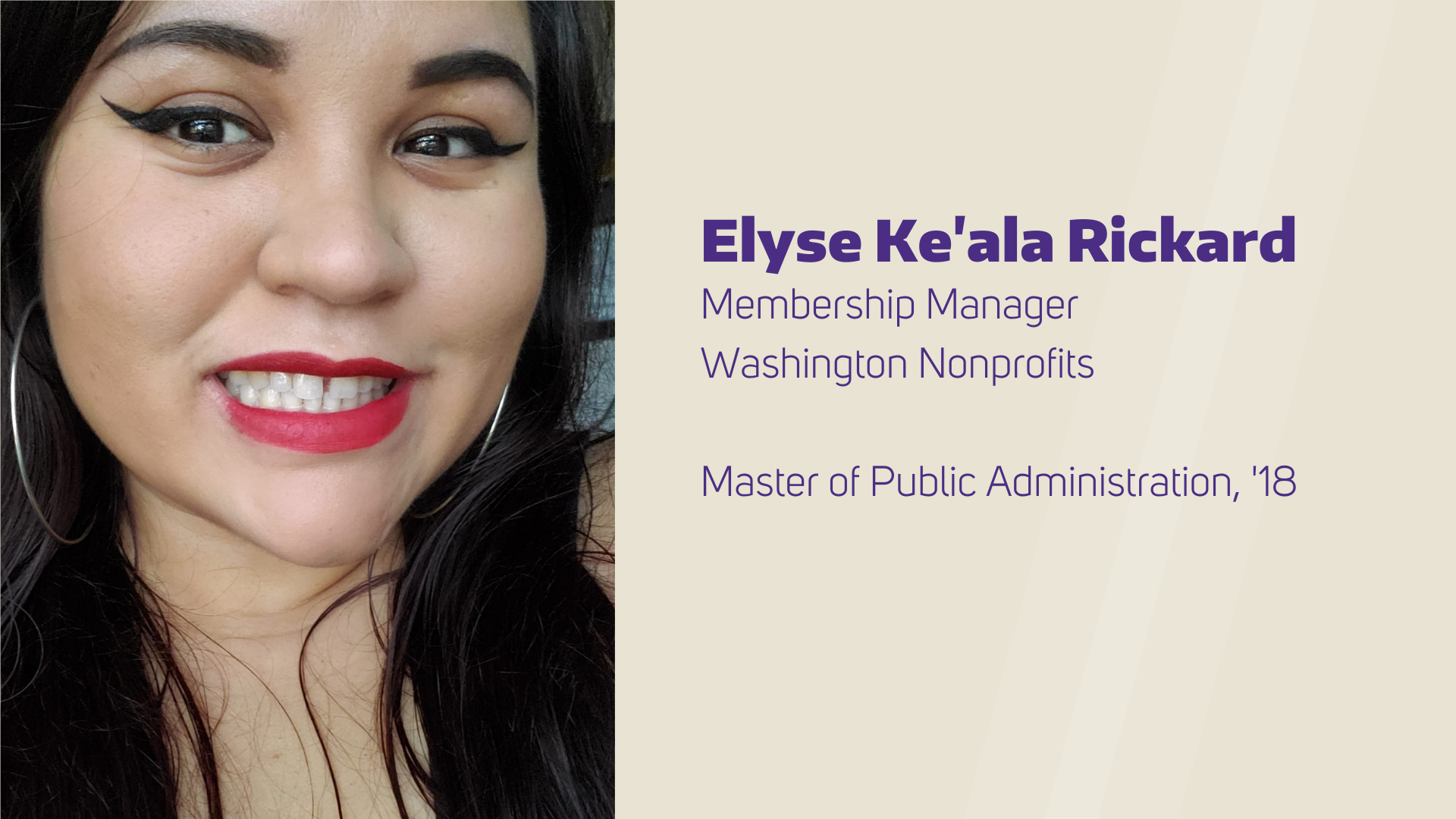
Ensuring Washington Nonprofits Thrive: Elyse Ke’ala Rickard, MPA ’18

Elyse Ke'ala Richard

Elyse Ke‘ala Rickard, MPA ’18, is driven by a passion for equity, justice, and service. As the Membership Manager at Washington Nonprofits, she works to ensure that nonprofit organizations in Washington have access to the resources they need to prosper.

What contributed to your decision to pursue a career in support of the public good? Was there a defining moment in particular?

I grew up in the Los Angeles Harbor area in a blue-collar union family, where I learned to identify how different institutions perpetuate racist, sexist, and classist policies and was encouraged to speak out against these injustices. As I moved through my higher education journey, I majored in sociology and knew that I wanted to enter a field that worked on addressing and dismantling inequities through structural change. During my senior year of undergrad, I had a mentor who was also a Pacific Islander woman and a first-generation student who encouraged and supported me in applying to graduate school. Because of the support of my family and other BIPOC mentors, I wanted to pursue a career that builds upon the work of those who came before me and continue to carry on their work of creating a more equitable society.

Can you share a bit about the work you are currently doing and what a typical day in your work looks like?

I was promoted to Membership Manager at Washington Nonprofits earlier this month and have been with the organization since August 2021. Right now, my work focuses on fostering relationships with our current members and connecting with other nonprofits across the state who may benefit from being a member of our organization. My daily work is composed of providing assistance to our members (that could range from membership renewals, answering questions about member benefits, etc.), promoting our programs and events, and working with colleagues on how to increase access to memberships for nonprofits across the state.

What’s one thing you want everyone to know about your work?

I believe that listening to my intuition has helped me to carve the professional path that I am currently on. If you are doing work that you do not feel connected to or does not align with your values or goals, do not be afraid to speak out or seek out new opportunities that will allow you to grow.

Looking back on your time as an Evans student, do you have any memorable experiences that really stand out to you?

To be honest, I’ve had a variety of experiences at Evans. I met people who are now lifelong friends, learned skills that I sought out, and conducted an impactful capstone with colleagues, which is currently being used in a lawsuit to address racial and gender inequities in the Seattle Parks and Recreation department.

I also faced barriers that graduate students from historically marginalized communities must navigate, including speaking out against curriculum and practices that perpetuate white supremacy. I remember a meeting that I and four other students held with a professor to discuss how they framed the Department of Justice’s report for the City of Baltimore’s police department—their framing felt insensitive to BIPOC students because they did not want to address the historical impact of race and policing. I remember having another meeting with a white professor who had a kapa moe (Native Hawaiian quilt) in their office who was teaching about Indigenous environmental policy who told me they would not, and did not, want to discuss Native Hawaiian environmental issues. However, despite these difficulties, I was able to connect and build relationships with other students, faculty, and staff who did advocate and support for marginalized people in our program and that is something that I will always remember from my time as a student at Evans.

How does your Evans education inform how you approach your work today? Are there two or three things that directly impact your work?

My time at Evans has heavily influenced my career path. I work in an organization that focuses on providing nonprofit education courses across the state, which I feel is a continuation of my own education as well. I have worked on projects where I utilized my analysis and evaluation skills, ranging from implementing new systems, improving administrative procedures, and conducting policy research. Finally, the most important skill that I have learned from Evans is project management because I am collaborating with other people and entities frequently, which includes keeping track of several tasks and deadlines, as I did in most classes during my time as a student.

In what ways are Diversity, Equity, and Inclusion part of the work you have done and continue doing?

As a mixed Native Hawaiian/Latina woman, holding these identities radicalized me from a young age to speak about racism and other societal inequities. During my undergraduate years, I took part in student organizing around a variety of issues and worked in positions that focused on providing support to other BIPOC students.

While at Evans, I became involved in Evans People of Color and worked with other Student Interest Groups (SIGS)–later known as the Coalition–to organize around addressing issues within the Evans school and public policy issues beyond the campus. I am proud of my colleagues, the alumni who laid down the work before us, and the current students who are continuing the work to create a more equitable environment for Evans ’students and beyond.

In the work that I currently do, there are a lot of nonprofits in Washington State that are doing amazing things in their communities, especially those whose work is guided and led by marginalized communities. However, there are several barriers that these organizations face, which can hinder their growth and ability to provide programs or services they are offering to their constituents. Some of these barriers can range from lack of financial resources to unclear guidance from local, state, and federal partners. I hope that in my role I can serve as a point of contact for people to access the resources they may need so that these organizations can continue to focus on serving and thriving in their communities.

What are one or two resources that inspire you personally or professionally?

I recently finished From a Native Daughter by the late Dr. Haunani Kay-Trask. As someone who is a mixed Native Hawaiian woman, I have felt, seen, and heard many of the things discussed in her book, especially in the latter half, where Dr. Haunani Kay-Trask discusses her experiences with the University of Hawai’i. I feel inspired that her work remains relevant in 2022 and will continue to do so beyond my lifetime. I am also very into listening to podcasts and a favorite of mine that I recommend to folks is Code Switch by NPR. Every week they focus on a different story, connect the story to larger themes of race, and connect listeners to resources they can follow up on if they want to learn more about that week’s topic.

Evans Faculty Crystal Hall Receives Prestigious Career Service Award

Evans Associate Professor Crystal Hall has received the Society for Judgment and Decision Making’s (SDJM) 2021-22 Castellan Service Award. This award recognizes Professor Hall’s many important leadership and professional contributions to SDJM.

Of particular importance is Professor Hall’s service for the past two years as chair of SDJM’s first-ever Diversity & Inclusion Committee. In that role, she has centered equity and inclusion within SDJM’s work to better support scholars from underrepresented and historically excluded backgrounds.

Upon receiving the Castellan Service Award, Professor Hall noted: “SJDM has been my primary academic community. And, despite its interdisciplinary nature, it has historically fallen short in the creation of a diverse community of scholars. I hope some of the deep structural changes we are pursuing as a professional association will result in an inclusive environment that will be reflected in both the nature of our research and the way that research is applied to a wide range of social challenges.”

Professor Hall’s leadership within SDJM echoes her field-leading research and many contributions to the Evans School. Associate Dean for Research and Engagement Scott W. Allard underscored, “Professor Crystal Hall is a singular scholarly voice challenging behavioral science to confront structural racism. Her work within the Evans School also has been integral to our school’s commitments to promote equity, address racial bias, and train the next generation of public service leaders to dismantle systems of oppression.”

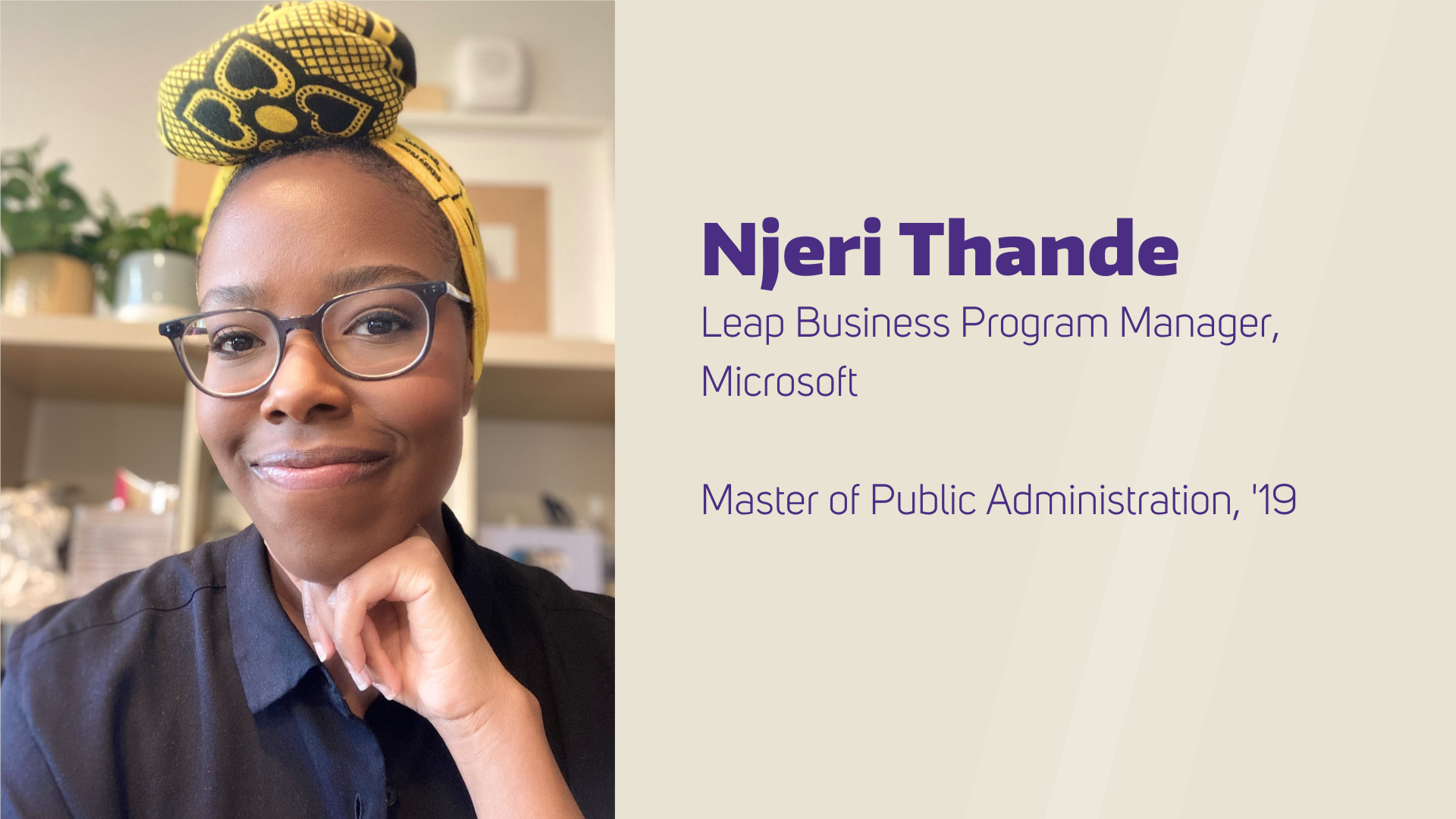
Diversity and Talent in Tech: Njeri Thande, MPA ’19

Njeri Thande

Njeri Thande (MPA ’19) believes in asking the right questions, approaching problems with precision, and engaging in generative work, especially when working for people’s success and wellbeing. As Leap Business Program Manager at Microsoft, Njeri focuses on increasing non-traditional talent pathways and employment opportunities in tech.

What contributed to your decision to pursue a career in support of the public good? Was there a defining moment in particular? 

I think I’ve always been interested in work related to the public good. However, I started my professional career in the private sector after college right after the 2008 financial crisis. At that time, I was more concerned with being gainfully employed, so I didn’t feel like I was in a solid position to scrutinize an organization’s mission. I think I began feeling motivated towards a public good-focused career when, while working at a tech company, I was also volunteering and taking on side projects related to community building and conversations on racial identity. I was feeling pulled to the latter work and, long story short, decided it was time to go back to school. I soon after applied to Evans MPA program. 

Can you share a bit about the work you are currently doing and what a typical day in your work looks like? 

I work for Microsoft Leap Apprenticeship Program as a Business Program Manager. The program was founded 5 years ago as a means of diversifying the talent pipeline into tech with what we call “unconventional talent.” Unconventional talent comprises self-taught learners and bootcamp grads, parents and caregivers returning to the workforce, and community college graduates. Individuals apply for the program and successful applicants are welcomed into a cohort for a 16-week apprenticeship.

Part of my typical day involves co-leading the operations of a cohort—that work looks different every day since our program operates in phases. My work includes training sponsoring teams to understand their roles and responsibilities, working with our learning and development team to develop a best-in-class virtual classroom experience, coaching our mentors and managers through the various program milestones, and providing support for our apprentices. We work with hundreds of stakeholders to run our program. The other part of my typical day is co-leading initiatives related to scaling and continuous improvement.

In what ways are Diversity, Equity, and Inclusion part of the work you have done and continue doing? 

Before Evans, I had the pleasure of co-hosting community conversations on the intersections of race and parts of community life (race and sports; race and the workplace), which was something I really enjoyed. While a student at Evans I joined the Committee for Equity and Inclusion, where I had the pleasure of doing research on belonging with Professor Jurcevic, and supported peers organizing around inclusion and belonging. Later, I had the pleasure of leading a small conference called The Good Trouble Conference, which was a way of convening peers doing work across diversity, equity, and inclusion to share what they were up to and find like-minded community. The phrase “diversity, equity, and inclusion” can be challenging because so many of us hold different worldviews, are interested in different outcomes, and don’t always have a shared theory of change. The work in convening the “Good Trouble” space was valuable to see the range of people’s work and how they were thinking through and engaging in deep issues and concepts like liberation, institutional change, and worldbuilding.

If there was one thing you’d want everyone to know about your work, what would it be? 

The program I work for was founded to diversify tech and capture a talent pool that has often been ignored. I have a lot of respect for our program. And I think it’s important to name that our impact is specifically centered on employment–and that is no small thing. While we create pathways to employment opportunities and train our company to understand the unconventional talent we’re developing and onboarding, we still need the support of other company entities to fulfill the mission of building equitable practices in other areas of the work experience. It’s important to think holistically about DEI in the workplace.

Looking back on your Evans School experience, what stands out as being particularly impactful while you were a student

The Good Trouble Conference was deeply important for me. There are so many interesting, creative, and impactful things that Evans students are doing and it was a pleasure to be able to collect a small snapshot of that work. This field can feel tough as we weather so many crises in our nation and world, but it was such an amazing reminder that good, generative work (even if challenging and uncomfortable) is also being done in our world—and by our peers, no less.

I think being in generative spaces like those also help me continue the practice of unlearning and revising so that as I learn, I can continue to show up with better tools and resources to approach issues of social change.

How does your Evans education inform how you approach your work today? 

My Evans education has provided me with a lot of  – particularly management and leadership skills. I’m better at asking the right questions and precise in approaching problems that have to do with the wellbeing and success of groups of people. No matter where I work, that’s my focus.

Is there a resource you can share that inspires you?

Podcast: “Two Acclaimed Writers on the Art of Revising Your Life”, The Ezra Klein Show. I think Dr. Tressie McMillan Cottom and Kiese Laymon are great on every podcast they join. What is so excellent about this podcast episode is that they are in conversation together and they talk about the brave and necessary work of being critically self-reflexive and maintaining a practice of revising the way that you think and show up in your communities and your work.

Dean’s Forum: Moving Racism Front & Center in Child Welfare

Dean's Forum Logo

On November 19, 2021, the Evans School hosted a conversation about anti-racism in child welfare policy in partnership with the UW School of Social Work.

The child welfare system and policy arena has historically and today continues to demonstrate persistent disproportional racial representation and racial disparities in desired outcomes, such as reunification and adoption. The discussion focused on the historical legacy of racism within the child welfare system and policy realm, and considered initiatives that both de-center children’s removal from their homes and support family-strengthening activities in explicitly anti-racist ways.

Speakers

Angelique Day

Angelique Day
Associate Professor
University of Washington
School of Social Work

John Edmonds

John Edmonds
Supervisor
Olmsted County Community Services

Alan Detlaff

Alan Detlaff
Dean
University of Houston
Graduate College of Social Work

Tess Evans-Campbell

Tessa Evans-Campbell
Associate Dean for Academic Affairs
University of Washington
School of Social Work

Dean Jodi Sandfort

Jodi Sandfort
Dean
University of Washington
Evans School of Public Policy & Governance

Event Recording

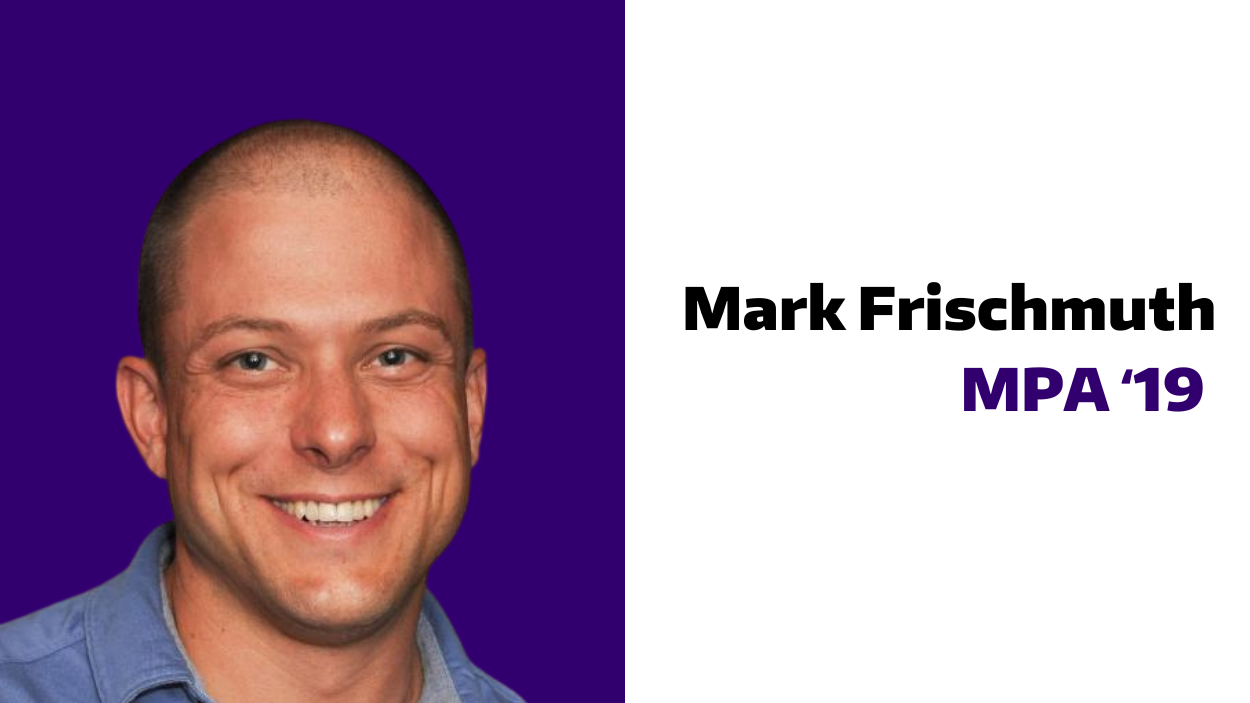
Technology and Advancing the Public Good: Mark Frischmuth, MPA ʻ19

Mark Frischmuth

Mark Frischmuth, MPA 2019, believes that technology can help solve challenging social, economic, environmental, and civic problems while empowering all members of society. At DemocracyLab, he is building on that vision by connecting tech-for-good projects with skilled volunteers and socially responsible companies.

What contributed to your decision to pursue a career in support of the public good? Was there a defining moment in particular?

I have always been motivated by a search for meaning and majored in philosophy as an undergraduate. Two sources of meaning I have found are authentic personal relationships and contributing to the public good. A spark of insight the day after the 2004 Presidential election motivated me to explore how technology could be used to crowdsource public policy by mapping connections between the values people believe, the objectives they seek to accomplish, and the policies they would like to see implemented. It was from that exploration process that I formed DemocracyLab in 2006, and it began a long journey that eventually led me to the Evans school and my full-time dedication to advance public interest technology.

Can you share a bit about the work you are currently doing and what a typical day in your work looks like?

DemocracyLab empowers people who use technology to advance the public good by connecting tech-for-good projects with skilled volunteers and socially responsible companies. Our platform and programs help tech-for-good projects to launch without funding, volunteers to upskill and advance their careers, and companies to build cultures of purpose. DemocracyLab is a volunteer-driven organization and thousands of hours of volunteer labor have been contributed toward the research, design, and development of our open-source online platform. I spend time every day coordinating volunteer efforts, engaging with current and prospective partners, reaching out to companies to solicit employee engagement opportunities, and building relationships with prospective funders.

Can you share how diversity, equity, and inclusion are central to your work and the work you continue doing?

Our world and our communities face many very difficult problems. Many of these problems were created by systems that exploited people, land, and resources for profit. I believe that addressing these problems will require the voice, perspective, and talent of as many people as possible. I believe an extroverted culture of inclusion leads to diversity, and that open-minded and respectful teams of diverse people can create communities and products that advance equity. I have experienced much personal privilege in life, and feel a responsibility to use that privilege to create greater equity at whatever scale I can.

If there was one thing you’d want people to know about your work, what would it be?

One of the most important effects of DemocracyLab’s work is that it increases the sense of agency of members of our community. We help people recognize that they have something valuable to contribute to solutions to public problems, and, that their response to these problems is within their control. The infrastructure that DemocracyLab creates has positive impacts on many other problems in society. By activating skilled volunteers and encouraging them to contribute their talents, we make it possible for organizations addressing a host of other issues to pursue their missions more effectively.

Looking back on your Evans School experience, what stands out as being particularly impactful during that time?

While the Evans classroom instruction was invaluable, I found my interactions and conversations with my classmates to be the most impactful aspect of my Evans experience. The diversity of backgrounds, experiences, and perspectives of my classmates helped me better understand my own worldview and challenged me to think more broadly. The education I received at Evans helps me see my work in the larger context of society and to better understand the complex range of stakeholders whose engagement is important to the success of my work.

What are 1 or 2 resources that inspire you personally or professionally?

A book I read long ago that stuck with me is Ken Wilbur’s A Brief History of Everything, where he made some very interesting points about systems thinking. The biggest takeaway for me was that any particular thing can be understood simultaneously as a whole, as a sum of its parts, and as a part of a larger whole.

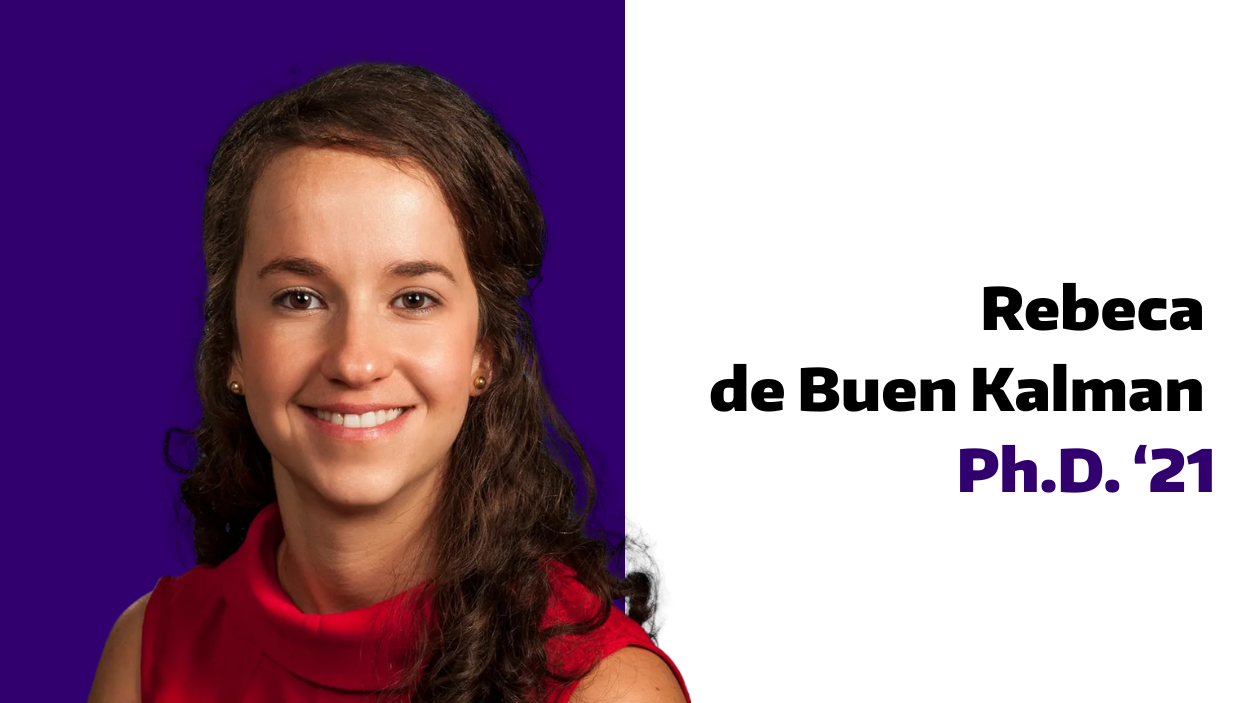
Cycling Policy in Mexican Cities: Rebeca de Buen Kalman, Ph.D. ’21

Rebeca de Buen Kalman

Rebeca de Buen Kalman completed her Ph.D. ’21 at the Evans School, where she focused on the intersections between environmental policy, climate change policy, transportation, and public health. Evans had a chance to sit down with her for a few minutes to talk about her dissertation research.

Your dissertation project is titled, “Pueblos Bicicleteros: Three Essays on Cycling Policy in Mexican Cities,” but you use the evolution of cycling policy in Mexico as a lens into contemporary urban environmental policy. Explain why cycling policy is so central to how major cities address today’s climate challenges.

Transportation is one of the largest and fastest-growing sources of greenhouse gas emissions globally and thus a critical area for climate mitigation policy. Increasing cycling commutes and trips in cities has the potential to reduce emissions and improve and health. Cycling policy can be especially compelling when it is integrated within a larger transportation strategy combined with transit.

Safety and equity concerns, however, must be present as we rethink transit policies. In the cities I studied, most urban cyclists are low-income workers who mostly cycle out of necessity. Framing a bicycle as “one less car” erases the experiences of these cyclists who might perceive the bicycle as a marker of poverty and whose perspective and needs are usually left out of cycling plans.

Why do you think cities in Mexico, as well as in the U.S. and in other places around the globe, struggle to better incorporate cycling within urban transportation strategies?

There are many reasons why incorporating cycling into transportation can be tricky in cities where low cycling rates are the status quo. Most barriers revolve around our current model of mobility, or ‘automobility’, which is centered around the cars and car-centric culture. In most cities, public policies, public spending, and regulations related to street design have historically favored car mobility at the expense of other modes like transit, walking, and cycling, which further entrenches car-centric life-styles. In many places, like the cities I studied in Mexico, some people associate cycling with low economic status and cars with progress and social mobility. Another common cultural barrier relates to society’s tendency to consider bikes as toys or means of recreation, rather than part of the transportation system.

While there are a lot of barriers, there is also a growing appetite from some sectors of the population to move towards multimodal lifestyles that include cycling. Evidence from travel-behavior data reveals an opportunity to reduce car use and substitute cycling for short trips, especially in core urban areas. There also is mounting evidence that younger generations are more environmentally conscious and inclined toward shared and multi-modal transportation when these are available.

We also might not think of cycling policy as a critical element of tackling inequality in modern cities. How does your dissertation show this is anything but the case?

The relationship between cycling and equity is not straightforward. Cycling policy can absolutely be a tool to tackle inequality, but bicycles and cycling policy are not inherently equitable. Bikes are a low-cost and efficient form of getting around in a city. In urban areas like the ones I studied in my dissertation, roughly one-fifth of trips are done by car but the vast majority of public funds for mobility are invested in car infrastructure. Improving cycling conditions through a variety of measures can be a way to improve people’s access to services and opportunities at a very low cost. Improving cycling conditions can also have benefits to pedestrians through improved street design, with important equity implications since riders from vulnerable communities are more likely to be hit by cars as pedestrians.

Measures that are meant to improve cycling conditions, however, are often implemented in visible central city areas and not necessarily accessible to lower-income people who might benefit the most from them. Cycling lanes are frequently implemented on sidewalks or at the expense of sidewalks, limiting pedestrian mobility and accessibility. Sometimes cycling-related policy can even further marginalize cyclists since cycling infrastructure is often determined once motor traffic needs have been prioritized, without addressing the fundamental asymmetry of power that makes cycling unattractive or unsafe.

Readers will be impressed with your research design, which involved the integration of many different data from many different parts of Mexico. How might environmental policy scholars use mixed methods designs to better inform policymaking?

The development of any project related to the built environment is situated in a complex web of actors, institutions, and social processes, where data is often scarce and disperse. I think that mixed methods are crucial for understanding these types of social phenomena. In my dissertation, I studied the trajectories of ten mid-sized and large cities who have implemented cycling infrastructure to different extents. I also took a deep dive into the local social movements that have sparked the adoption of cycling related policies. I used various qualitative and quantitative methods that leverage diverse data sources, including open source and crowdsourced transportation data on infrastructure and travel, administrative data, policy documents, and interview data.

The questions I asked in my dissertation were oriented towards understanding processes and mechanisms rather than questions of cause and effect. To have a full story on each of my cases and parameters that could be compared systematically in my analysis, I had to draw from a variety of sources. I also needed to be through for purposes of validation and triangulation.

Considering the bigger picture, in public policy and management, we ask cause and effect questions because we want to know how interventions impact our desired outcome. But we also need to know how to get things done, the mechanisms at play, and the nuances involved. There is an implementation process between a policy and its effect that requires organizations, institutions, and people. Policy and management are also contextual. We need to draw on various methods to situate ourselves to understand the nuances of public problems and potential policy solutions. Mixed methods are therefore a powerful tool for policy research to become more relevant to policymaking and implementation.

Tell us what you’ll be doing next for your next project at the Evans School.

I am a postdoctoral fellow for Ocean Nexus at the UW EarthLab and the Evans School. Ocean Nexus is an international network of ocean governance scholars based at the UW. Our team at the Evans School works with network members to develop applied policy analysis with an explicit focus on social equity. We are developing a framework to guide the operationalization of equity in ocean governance-related policy analysis through this process. We are also studying how policy problems are discussed in ocean governance research to identify gaps that reduce the applied impact of policy research in this field. Our ultimate goals are to help ocean governance scholars make their research more policy relevant and bring equity to the forefront of policy analysis.

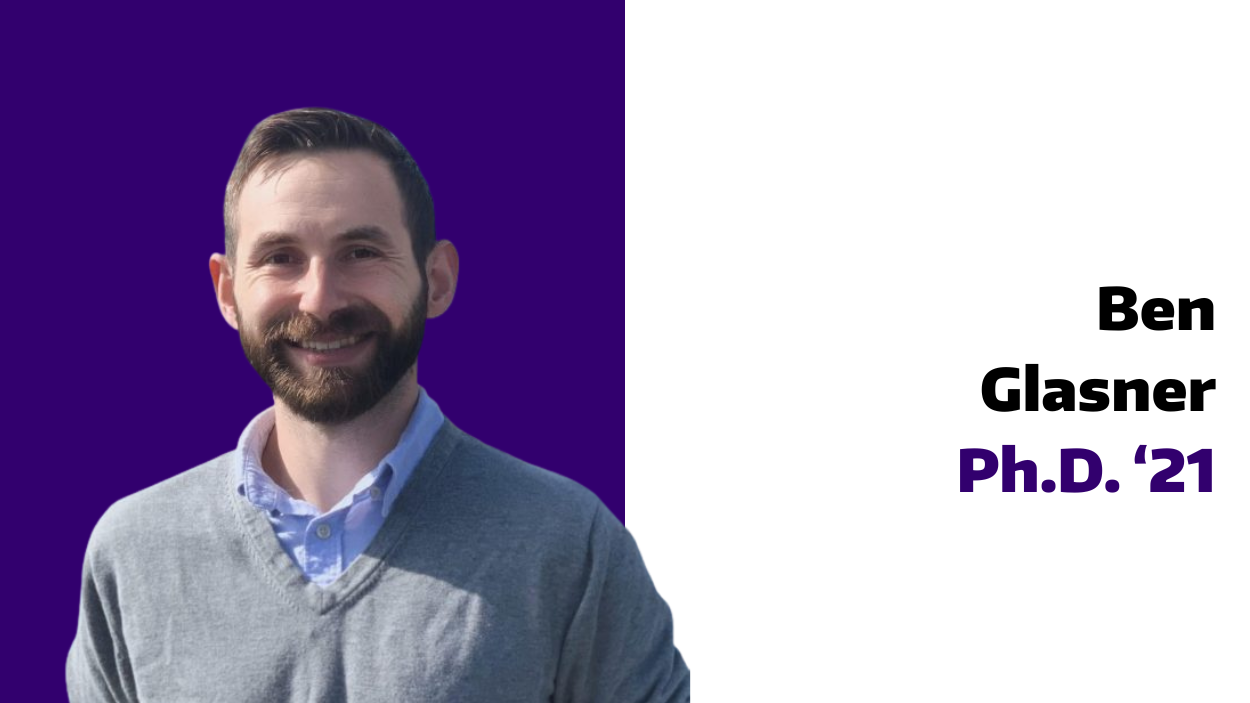
Self-employment and the Gig Economy: Ben Glasner, Ph.D. ’21

Ben Glasner

Ben Glasner completed his Ph.D. ’21 at the Evans School with expertise in labor market policy and the gig economy. He took some time from his work as a postdoctoral research scientist at Columbia University recently to chat about his dissertation work.

Your dissertation research focused on self-employment and the gig economy – explain why this is such a critical portion of the labor market for scholars and policymakers alike?

Self-employment work arrangements, and specifically work within the gig economy, are becoming increasingly commonplace. Yet, these types of work arrangements often are excluded from labor policy or regulations intended to protect and support workers. As a result, policy tools like the minimum wage are not designed for the self-employed. Workers who are operating simultaneously under multiple firms at a single point in time (e.g., driving for Uber and Lyft simultaneously), or whose hours are prohibitively difficult to track don’t receive the same coverage as a traditional hourly payroll employee who punches a time clock.

Such exclusions are nothing new. When the minimum wage was first introduced through the Fair Labor Standards Act, a number of jobs were not covered and those exclusions meant a significant share of black and female workers were not covered by the first minimum wage laws. Such exclusions remained in place well into the 1960s and were key parts of the civil rights movement.

Today, the remnants of past exclusions persist. We have ended up with a patchwork system of supporting workers. From health care to minimum standards of living, where a person works and how that work is done has important consequences to what protections or benefits they receive. I think the gig economy is really the front line of the debate over social support and the division between efficient labor markets and fair labor markets.

How does your dissertation research extend our understanding of the impact of minimum wage laws?

My dissertation project fills key gaps in the minimum wage literature. One key gap I explored was whether higher minimum wages changed the demand for workers or jobs exempted from minimum wage laws. When minimum wages increase, I find evidence of an increase in participation in the uncovered labor market, but it is driven by urban areas with access to the online gig economy. Another part of my dissertation project examines the question of minimum wage effects on multiple jobholding. The puzzle here is that if minimum wages theoretically could both increase and lower multiple jobholding. My work, however, I found that minimum wages had no significant impact on multiple jobholding in aggregate.

What are the key policy research questions we should be asking to better understand the experiences of workers holding multiple jobs?

Today, I’d say there are two key features about multiple jobholding to explore. One, hours and schedules can be difficult to coordinate between employers, which leads to unstable scheduling. Two, because individuals are more commonly combining earnings from payroll positions with self-employment, some workers may use on-demand “employment” through the gig economy to help fill the gaps of an instable schedule. We don’t know a lot about how workers make decisions about holding multiple jobs or balancing hours across jobs. This is particularly important when we consider the different experience of multiple jobholders with high earnings and those with multiple jobs who still struggle to keep their heads above water.

When you talk to state and local policymakers about raising the minimum wage, what advice or guidance would you give them?

Primarily, I’d encourage policymakers to consider the differences between federal, state, and local minimum wage rates in a given setting. I believe minimum wage increases are a positive tool for improving work outcomes, but they are not the solution to all issues of job quality or underemployment. In fact, minimum wage laws can be rather limited tools because they miss workers who are working in the uncovered or the informal labor market. This often means the most vulnerable workers will not be reached by these policies.

Tell us about what you’ve been up to since finishing your dissertation work.

I have just started a new position as a Postdoctoral Research Scientist with the Center on Poverty and Social Policy at Columbia University. While there I’ll be conducting analyses of the effects of major social policies and reforms on the poverty rate and other indicators of well-being. These analyses will include long-term studies of the intergenerational transmission of poverty, but also studies of contemporary policies and their effects. All the work will be under the great team headed by Irwin Garfinkel, Jane Waldfogel, and Christopher Wimer.

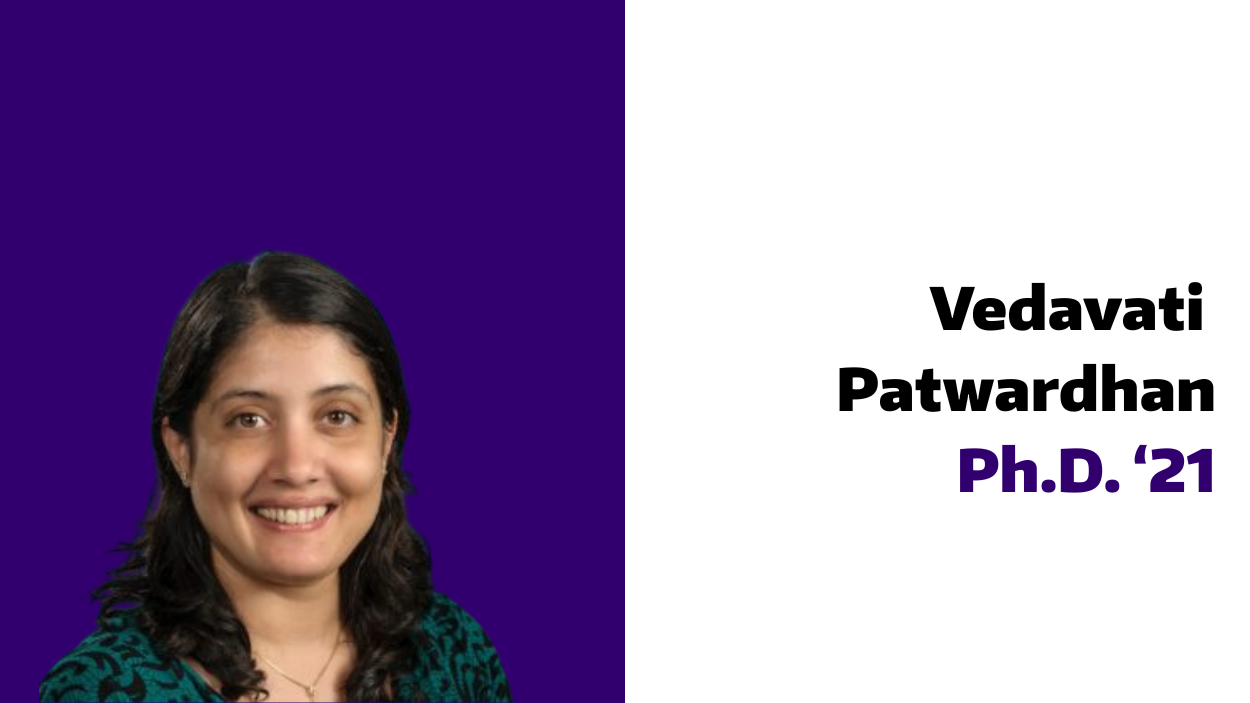
Household Economics and Gender: Veda Patwardhan, Ph.D. ’21

Vedavati Patwardhan

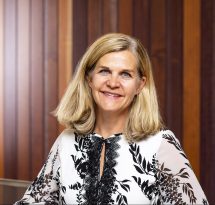
Veda Patwardhan recently finished her Ph.D. (’21) at the Evans School with expertise in household economics and gender. We caught up with her during a break in her day at the Institute for HealthMetrics and Evaluation (IHME) to talk about her dissertation project.

Your dissertation research focuses on how policy interventions and contextual factors shape the roles of women within households in India and Malawi. How did this project emerge over the course of your training at the Evans School?

As a Research Assistant for the Evans Policy Analysis and Research group (EPAR) during my first year as a doctoral student at Evans, I worked on a project conceptualizing the pathways through which empowering female farmers in low and middle-income countries may yield economic benefits. Thinking about the theory behind why gender differences AND inequalities have real consequences for individuals and families piqued a long-term research interest in this area. As that work progressed, I knew I wanted to focus on the intersection of public policy and gender inequality.

I also was motivated by the fact that women’s economic empowerment is an important policy objective internationally. Multi-lateral organizations, foundations, and several governments worldwide are making substantial commitments to gender equality and women’s economic empowerment. Many low and middle-income countries have implemented female-centric social protection and financial inclusion programs. For example, cash transfer schemes, self-help groups, microcredit, bank account provision and public works programs often explicitly target female beneficiaries.

Early in your dissertation, you powerfully note that “control over income is a crucial aspect of women’s economic empowerment.” What were some of the most important insights you discovered about factors shaping how women have control over household income and what having that power means for them and their families?

There are many important findings in my work. One that stands out relates to how the source of household income matters for women’ control over income (WCI). My work in Malawi finds that women have higher sole decision-making for income from public transfer sources like cash and food transfers, as well as remittances, compared with salaries, wages, and farm income. This is very interesting, as research on women’s economic empowerment hasn’t so far considered how the source of household income can really matter for who controls it! My findings in Malawi show women have higher control over transfers than other income sources, even when men are present in the household, suggesting that targeting transfers to women may yield benefits. This also helps unpack why maternal cash transfers like the Mamata Scheme in India (which I examine in another one of my dissertation chapters) have positive effects on children’s health.

This project analyzes data from two quite different settings. How might insights from your dissertation work shape your approach to comparative policy research in the future?

This is a great question. I think that conducting comparative policy research is important for the international development field, as generalizing across regions is difficult and may not always be desirable or accurate. The underlying theme of my work in India and Malawi is similar, but in India, I analyze the effect of a maternal cash transfer program on child outcomes, while my work in Malawi looks at the household and contextual drivers of women’s control over income. Over the course of my dissertation writing, I also realized that analyzing different types of research questions in these two geographies helped solidify my understanding of the existing literature, theoretical perspectives, and research gaps on women’s control over income. I look forward to conducting cross-country analyses in my future research.

What would you say are the biggest takeaways from your work for policymakers and nongovernmental organizations working to empower women in different contexts around the globe?

Policy design is incredibly important. For instance, while examining the impact of a maternal cash transfer scheme in India on child nutrition, I find that children in the poorest households benefit significantly less than those in wealthier households. This suggests that marginalized populations may face obstacles to participation and suggests changes in policy design. For example, policymakers may wish to modify eligibility criteria, or behavioral requirements — such as receiving prenatal care – that could hinder access for marginalized groups.

Paying attention to what drives women’s empowerment is important as well. In Malawi, I find that women’s decision-making over farm income increases following drought. However, this may not reflect an improvement in women’s well-being, if women have a higher workload on the farm and at home. Female farmers tend to have less access to information on climate change and climate-smart-agricultural practices, leading to lower adoption rates compared to men. So, we need policy to recognize the role climatic factors play in women’s farm decision-making. Interventions to improve women’s land tenure security, access to agricultural inputs, and safety nets like cash transfers can play an important role here.

Tell us a little about what’s next for you.

I am excited to start a Postdoctoral Scholar position with the Institute for Health Metrics and Evaluation (IHME), which is a global health research center based at the University of Washington. My work will focus on examining gender inequalities in health.

Dean Jodi Sandfort elected to NASPAA’s Executive Council

The Evans School is pleased to announce that Dean Jodi Sandfort was elected today to NASPAA’s Executive Council to serve a three-year term, 2021-2024.

NASPAA’s Executive Council is the network’s national governing body and is responsible for overseeing the planning, organizing, and supervising all activities, including applications for membership, committees, and policies.

“I am honored to be joining NASPAA’s Executive Council this fall and hope that during my three-year term I am able to move the needle for Public Policy and Public Affairs Schools. NASPAA’s Diversity and Social Equity Committee has developed an ambitious and long overdue agenda for curricular transformation, and I look forward to supporting those efforts across our profession.

The Network is also engaged in serious conversations about doctoral and under-graduate education, so I look forward to bringing the Evans School’s expertise into those discussions as well.” – Dean Sandfort The Network of Schools of Public Policy, Affairs and Administration is the international associate focused upon ensuring excellence in education and training for public service. It oversees the international accrediting body for master’s degrees in the field, provides advocacy with governments about the needs of public affairs education, encourages curriculum development and innovation, operates a student honor society, and oversees a data center that is the fields’ authoritative source.

Dean Jodi Sandfort